
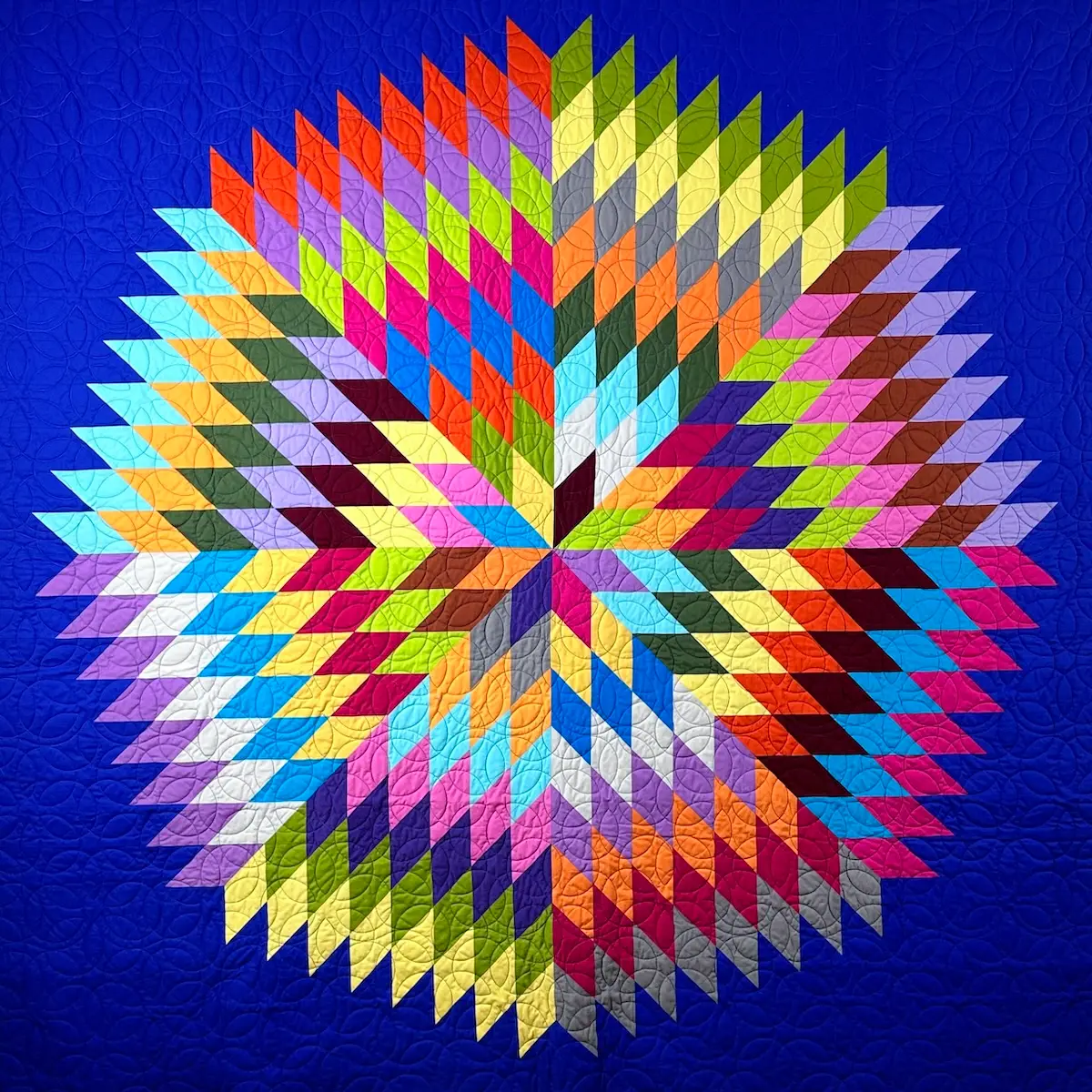
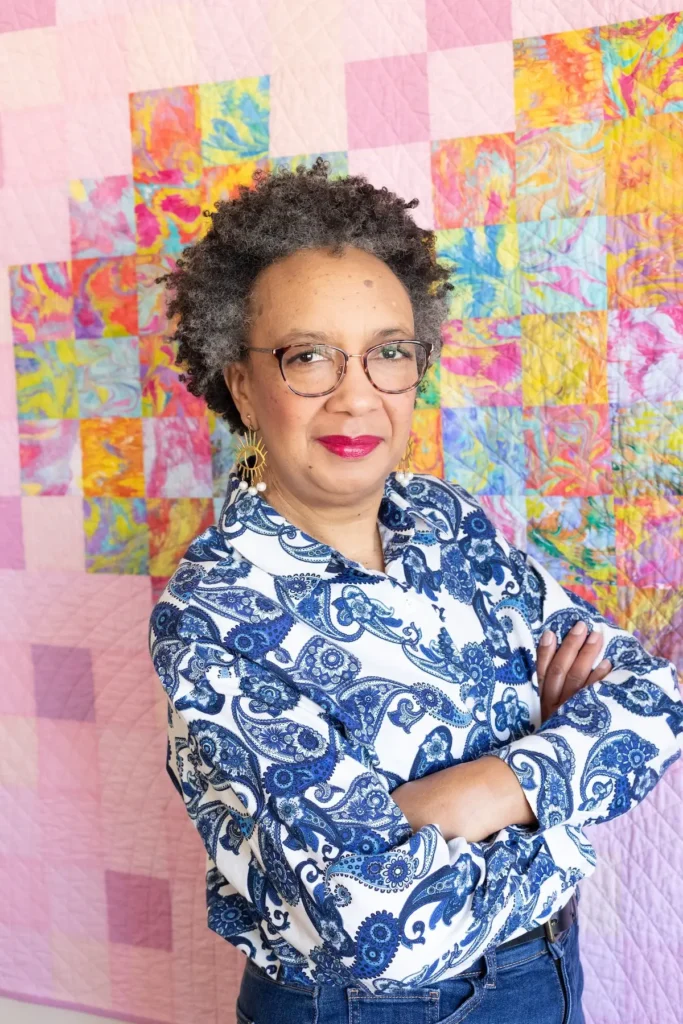
Angee Turner grew up with fabric under her fingertips and a sewing machine always nearby. Quilting found her when she was chasing connection, color, and creativity. In this interview, she shares stories of learning by doing, breaking the rules of improv quilting, and making bold, joyful quilts that hold memory, meaning, and a whole lot of heart.
When did you first learn to sew?
I grew up around a sewing machine. My grandma, mom, and older sister all sewed. I started sewing seriously the summer after the eighth grade. I had no choice.
I was going into high school and wanted new clothes to wear since I wouldn’t have to wear a plaid Catholic school jumper anymore. I could wear a navy skirt or pants with a collared shirt.
My mom told me she and Daddy weren’t buying new clothes and that I had to learn to “sew or be naked.” I knew she meant it. I spent the summer making some shirts, navy skirts, and a couple of pairs of pants.
As an Amazon Associate I earn from qualifying purchases. Read more about our affiliate linking policy.
At first, I was kinda mad, but soon learned my folks would buy new fabric without an argument. Once I gained confidence in my sewing skills, I enjoyed making my own clothes and not looking like anyone else.
How did sewing clothing turn into making quilts?
A few years after I started teaching, I moved out of my parents’ house and moved into my first apartment. One of my paternal grandmother’s quilts had always been on my bed, so the quilt went with me. It was in bad shape. I patched holes with hand stitching the best I could, but the thing was on its last legs.
During two snow days from school, I decided to replicate her 4-patch quilt with scraps from my sewing projects. I spent the first day cutting 4-inch squares and arranging them on the living room floor. I knew nothing about quilting. I just sewed the squares together! I sewed all the squares together the next day.
When the piecing was done, I thought, “Now what do I do?” Being a teacher, I did the most logical thing…. I went to the library! My mom found a quilt shop, and off we went one Saturday to buy what I needed.
Before I knew it, I had a pile of fabric for the border and the backing, 200 1-inch safety pins, a roll of cotton batting, some spools of quilting thread, and tunnel vision.
I don’t remember how long it took to finish. I do remember crawling on the floor to pin the layers together and shoving it through my mechanical Bernina machine. I also sewed through the tip of my left index finger! Once I finished and my finger healed, I was hooked. I couldn’t wait to make another quilt.
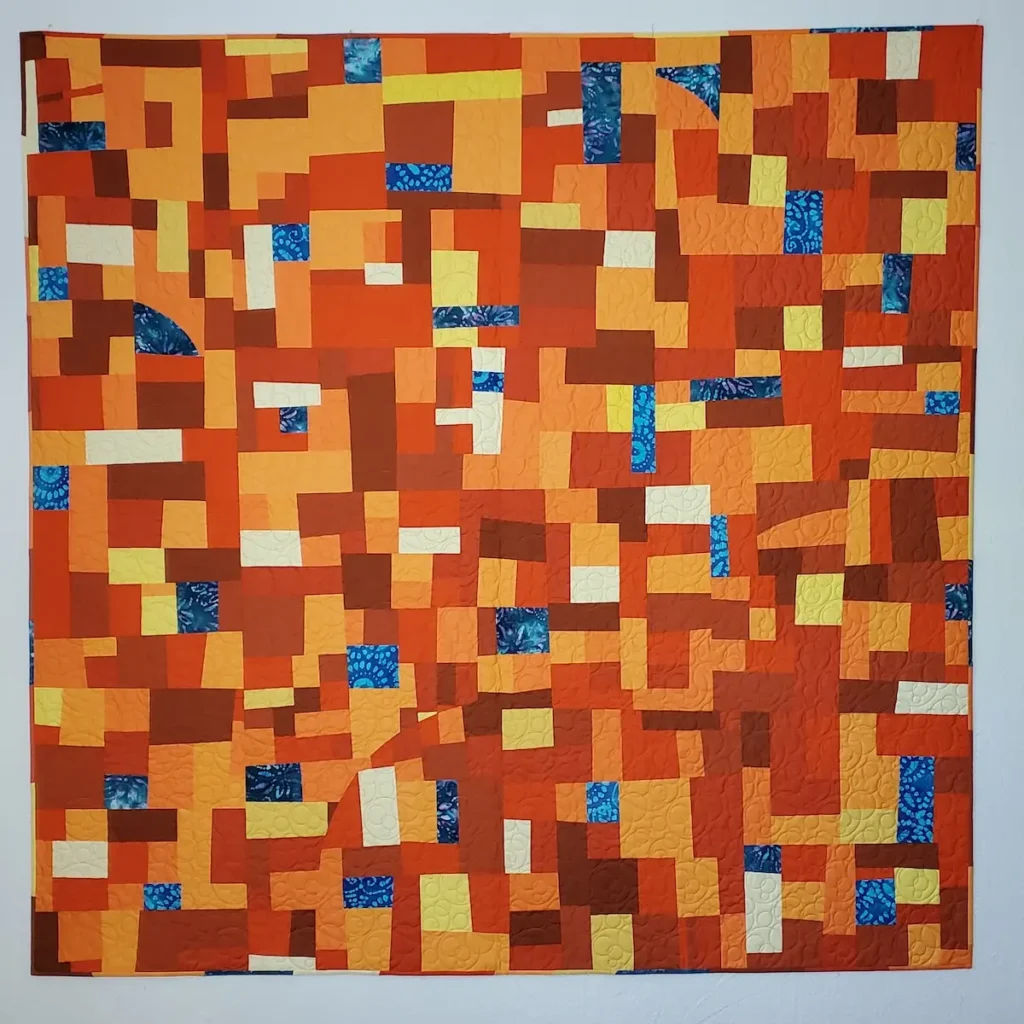
Tell us about the quilt you recreated from your grandmother. What did that moment feel like?
I intended to make something to keep me warm. But I felt a connection to my grandmother, who had already passed away. I knew she would have been proud of me. I was proud of myself.
Was there one project that made you say, “I want to keep doing this forever”?
The first quilt started me on the quiltmaker’s path.
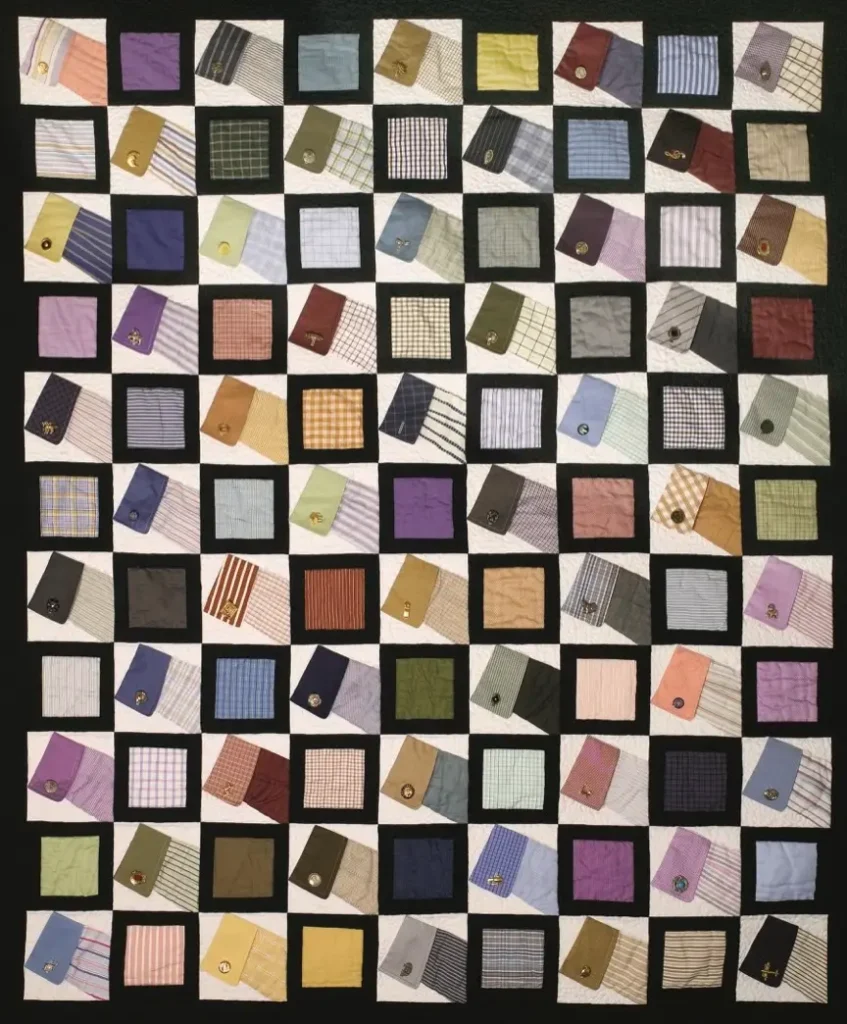
A few years later, I designed and sewed a quilt for a gentleman who owns a bespoke men’s shirt company. He sent me 2 huge boxes of fabric scraps from his factory and told me I could make whatever I wanted.
I designed and sewed a quilt featuring 3-dimensional quilt blocks that resemble French cuffs with a buttonhole and a cuff link. It hangs in his office. That quilt showed me that I can make just about anything I can imagine.
Your color choices are so bright and joyful. Where do you find color inspiration in your everyday life?
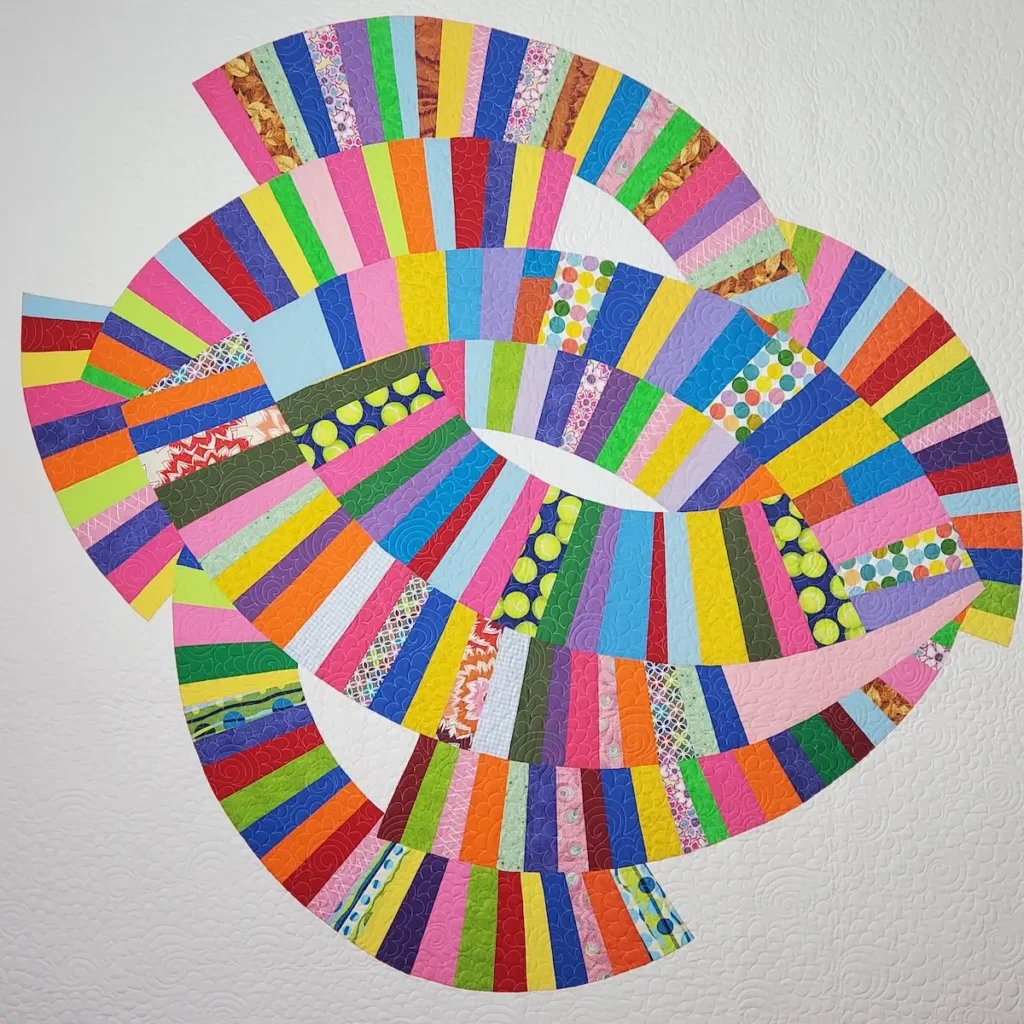
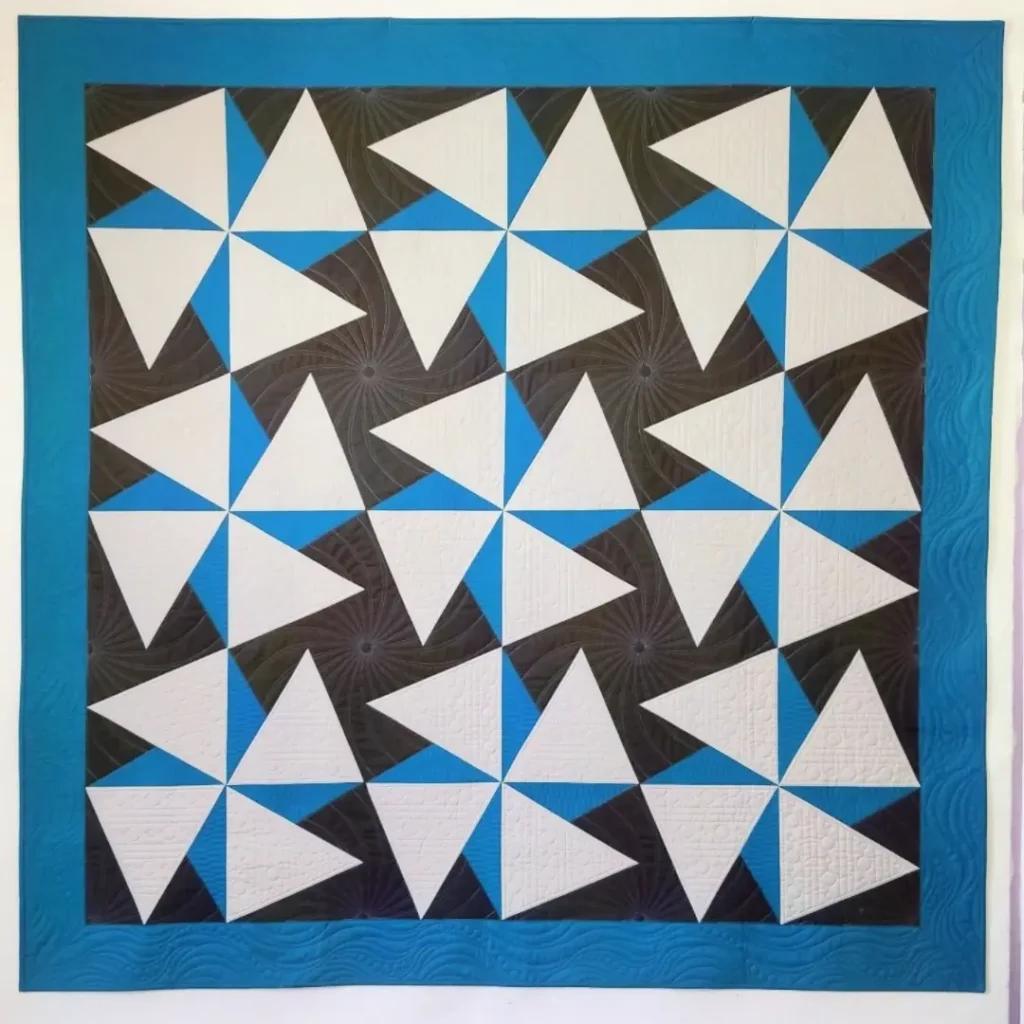
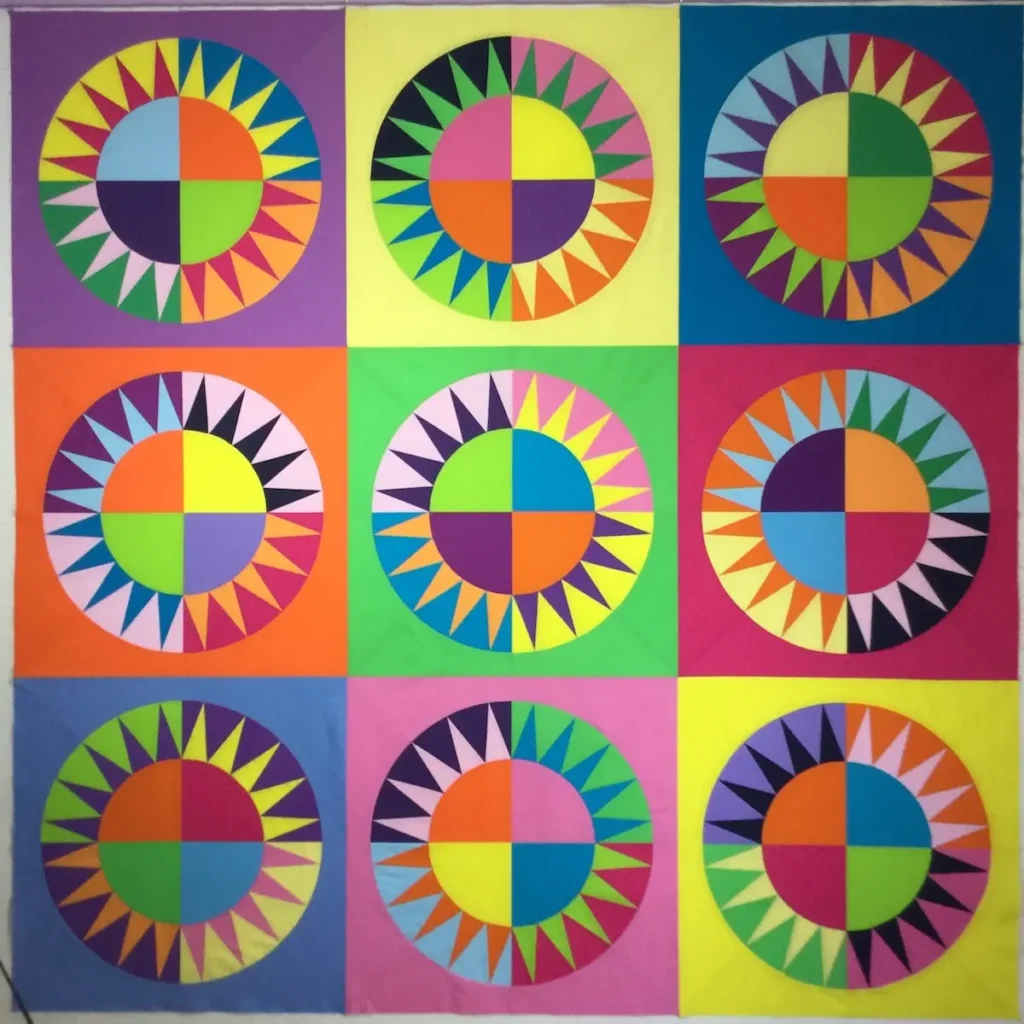
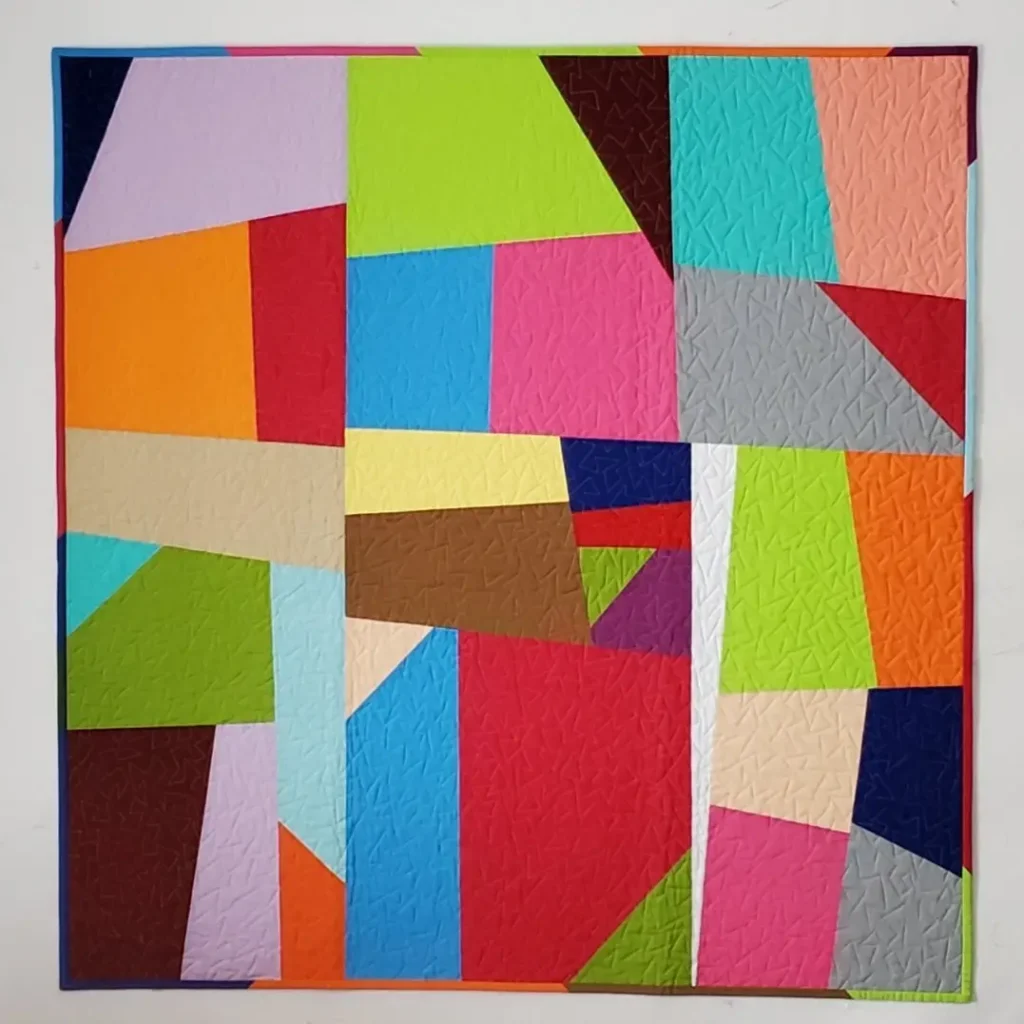
I love jewel tones. Nature gives me lots of inspiration, especially exotic birds. Nature has some of the most wonderful color schemes. Deep blue, purple, green, pink, and orange are my favorite colors. So many of my quilts feature them. Bright colors just make me happy. I have made a few subdued quilts. But believe me, I had to focus!
When you feel stuck, what do you look at or do to get inspired again?
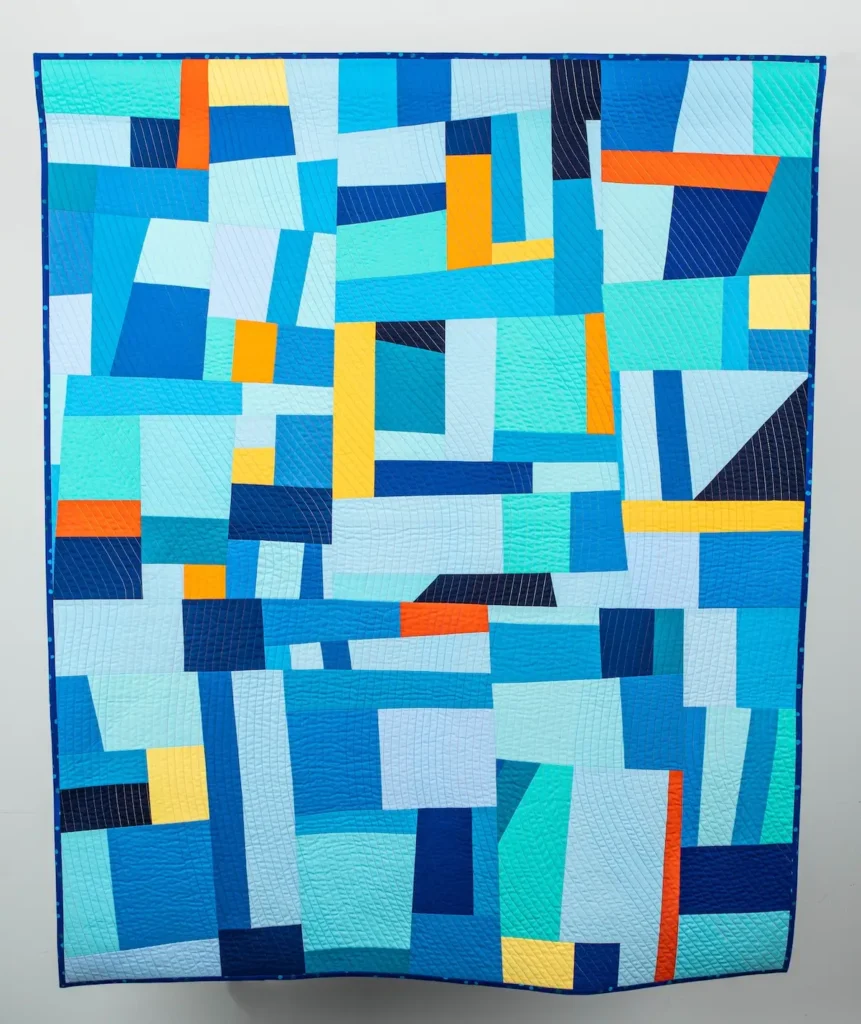
I don’t get stuck often. I get distracted or busy. If I don’t have the time to sew, I stay inspired by looking through my old notebooks of quilt design ideas.
I tell people I have more ideas than time. If I’m not sure which way to go on a project, I will put it aside for a while and work on something else. Folding laundry or working outside in the yard is a great way to clear your mind. A clear mind gives you space for new ideas.
Describe your creative space.
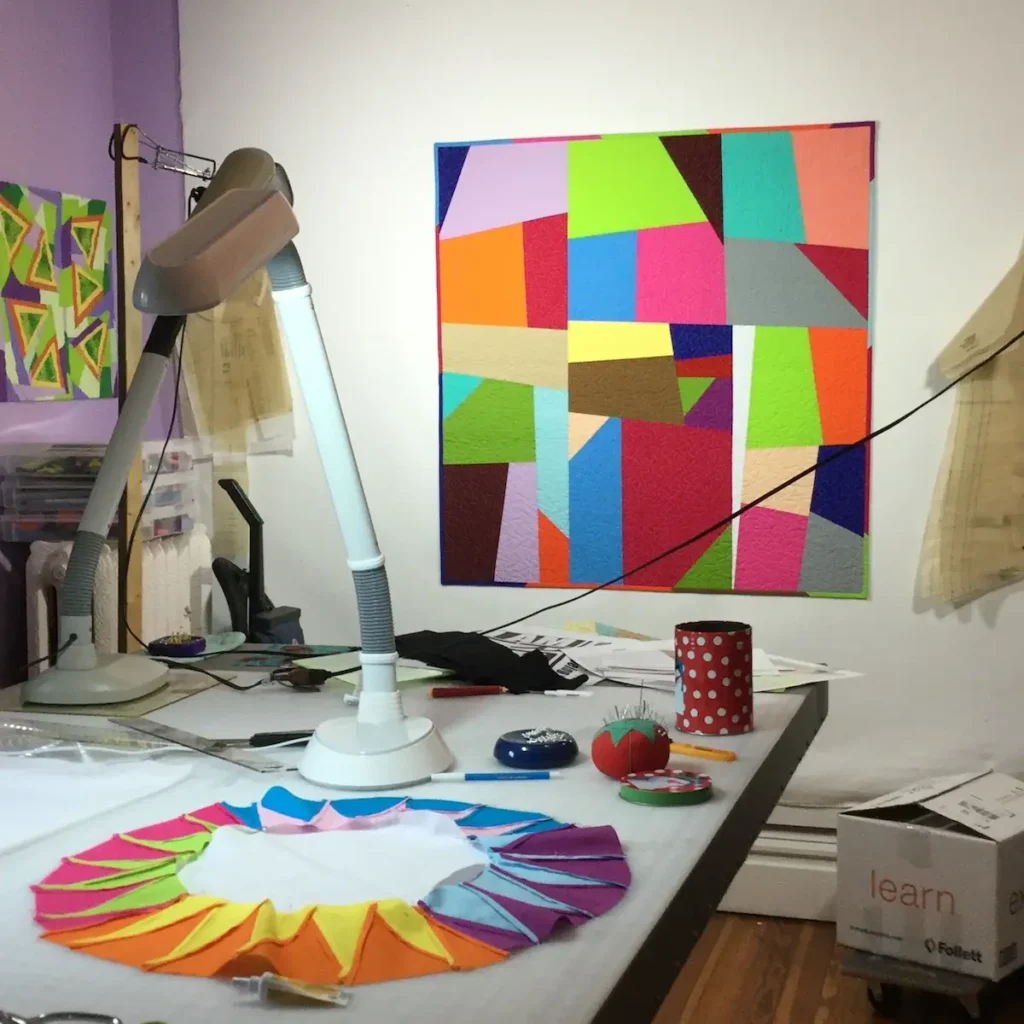
My creative space is the front room of my home. I moved in a little over a year ago, and I am still putting it together.
I have a large sewing machine cabinet, and a 4’x7’ cutting table that my dad originally made for my train sets when I was a kid. I have an IKEA shelf with cubbies for books, magazines, and sorted fabric scraps, a TV cabinet holding plastic storage boxes with notions, and a pattern cabinet. I also have an 8’x9’ design wall covered in batting to hold work-in-progress.
The room faces west and gets a lot of afternoon and evening sun. My favorite time to work there is in the morning because I love the indirect sunlight. It’s a nice room, but my goal is to have a 1000 square foot studio with a 10-foot ceiling and plenty of space for multiple design walls and my longarm. A big white box to play in.
Are there any small tools or habits that changed your work more than you expected?
One of my best habits is that I clean up at the end of a sewing spree and get things ready for the next day. My cutting table is straight and organized when I leave, so when I come back, I can start where I left off. This makes it easier to get a lot of work done in a short amount of time because everything is ready when I am.
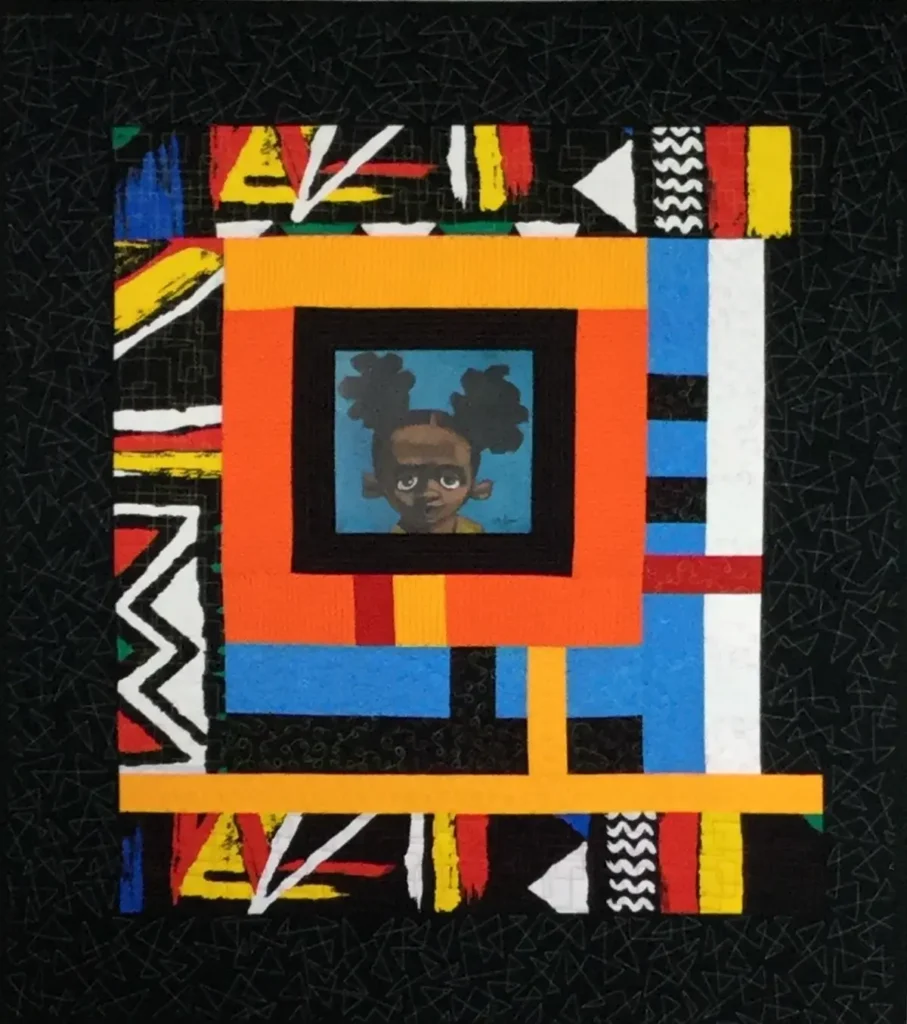
How do you choose fabric? By pattern, texture, or how the color feels?
I love bright, solid colors. But if a print catches my eye, I’ll buy it. I love to use geometrics, stripes, and polka dots on quilt backs and for bindings. I’m not a fan of florals, though.
Friends are surprised at how small my stash is. I used to have a lot of fabric, but over the last decade, I’ve whittled down to the colors that bring me the most joy. I enjoy using what I have on hand as much as possible.
Scarcity forces you to be more creative. I hesitate less when I have fewer options to choose from. I try to buy as little fabric as I need. But if I find a fabric that I really love, I will buy 3-5 yards because I know I will use it.
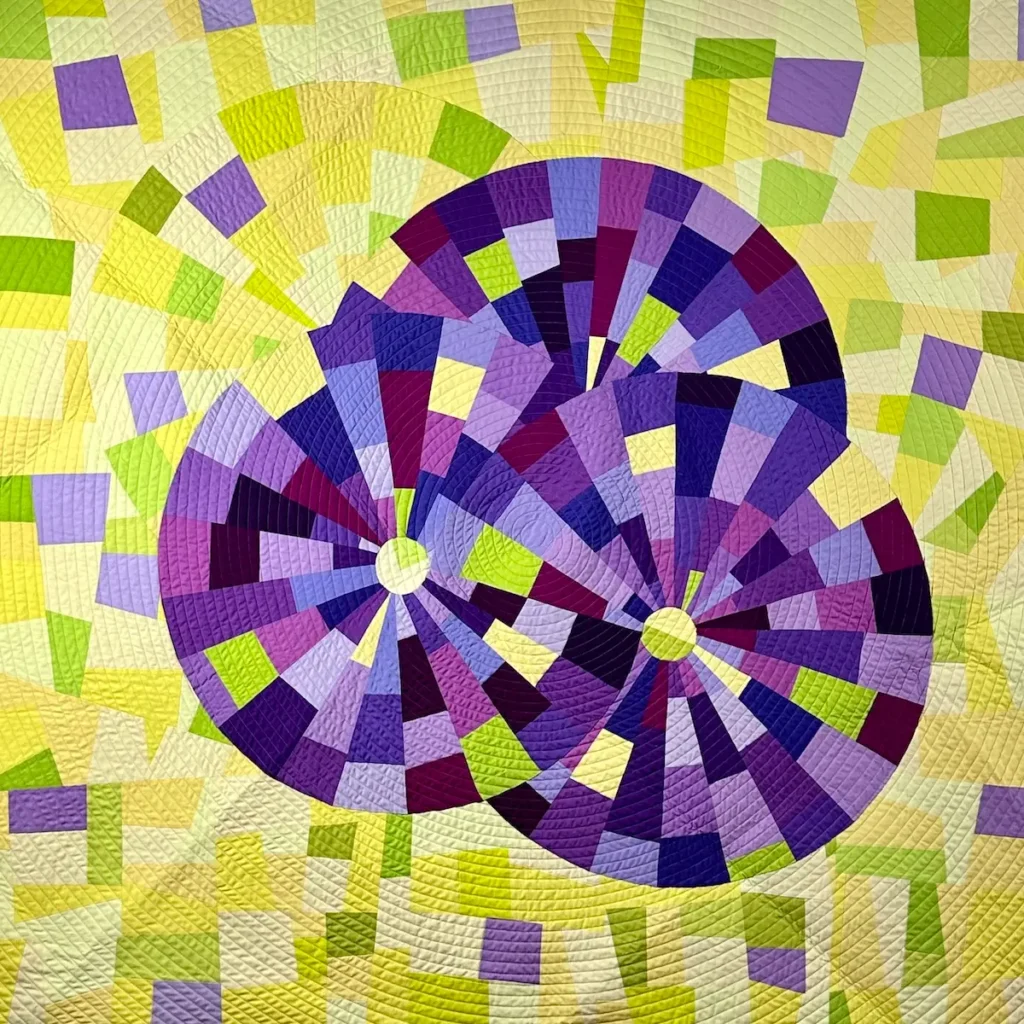
How do you balance bright colors so a quilt doesn’t feel too busy?
Can a quilt be too busy? Sometimes, I add some duller colors or black and white to cool down a bright quilt. Other times, I go for in-your-face color!
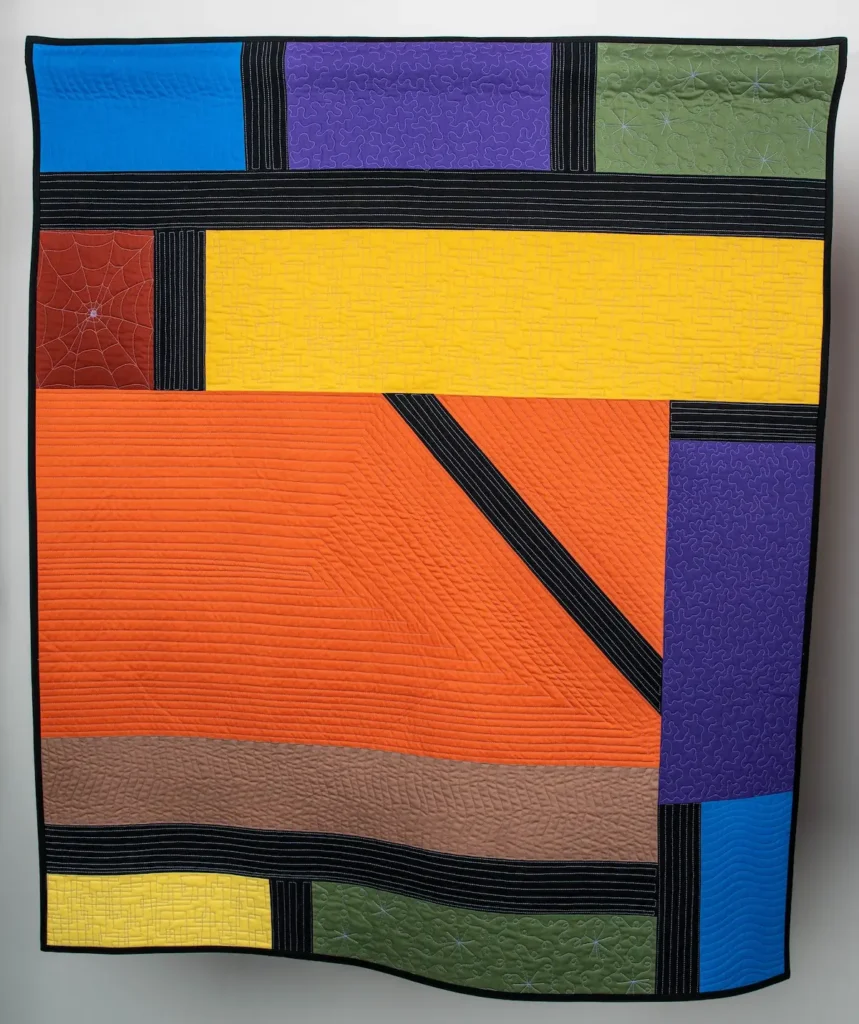
Your quilts feel playful but precise. Do you plan or follow your gut?
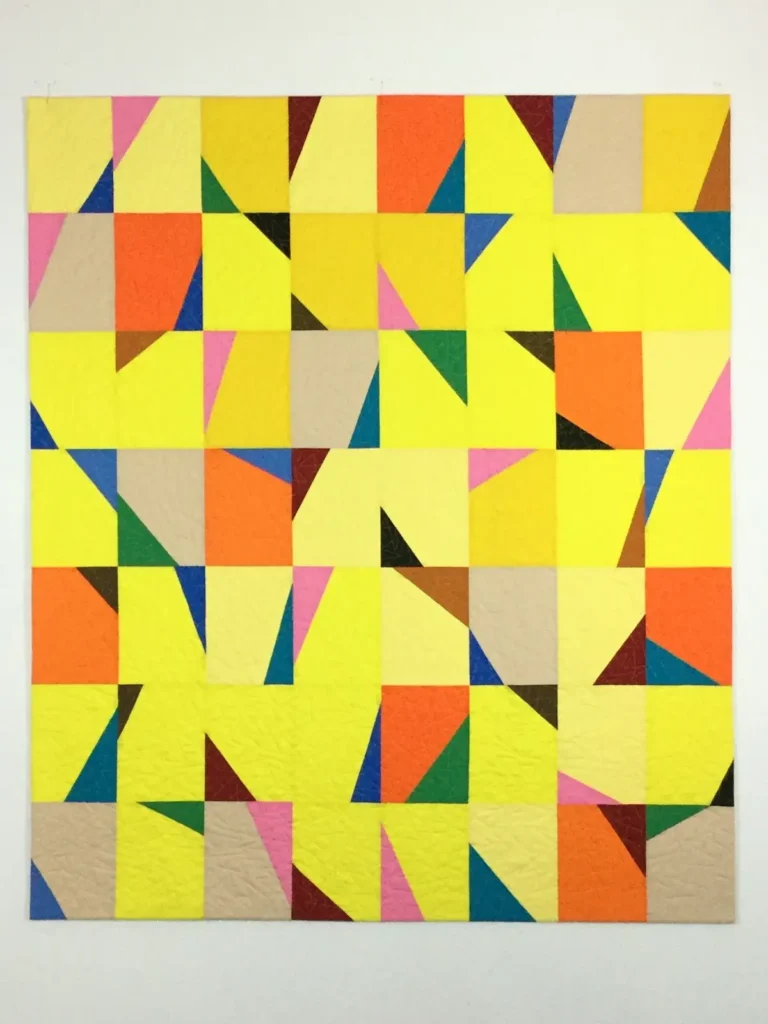
I’ve been sewing so long that my sewing machine is an extension of my fingertips. My piecing is precise when I want it to be and wonky when I decide so. I’m not trying to be perfect. I want to do my best.
My work is a combination of planning and following my gut. I start with a plan and allow myself to be inspired by a new idea. I may want to make something small, but if the idea is too good, it may end up twice as big. I let the quilt tell me what it wants to be.
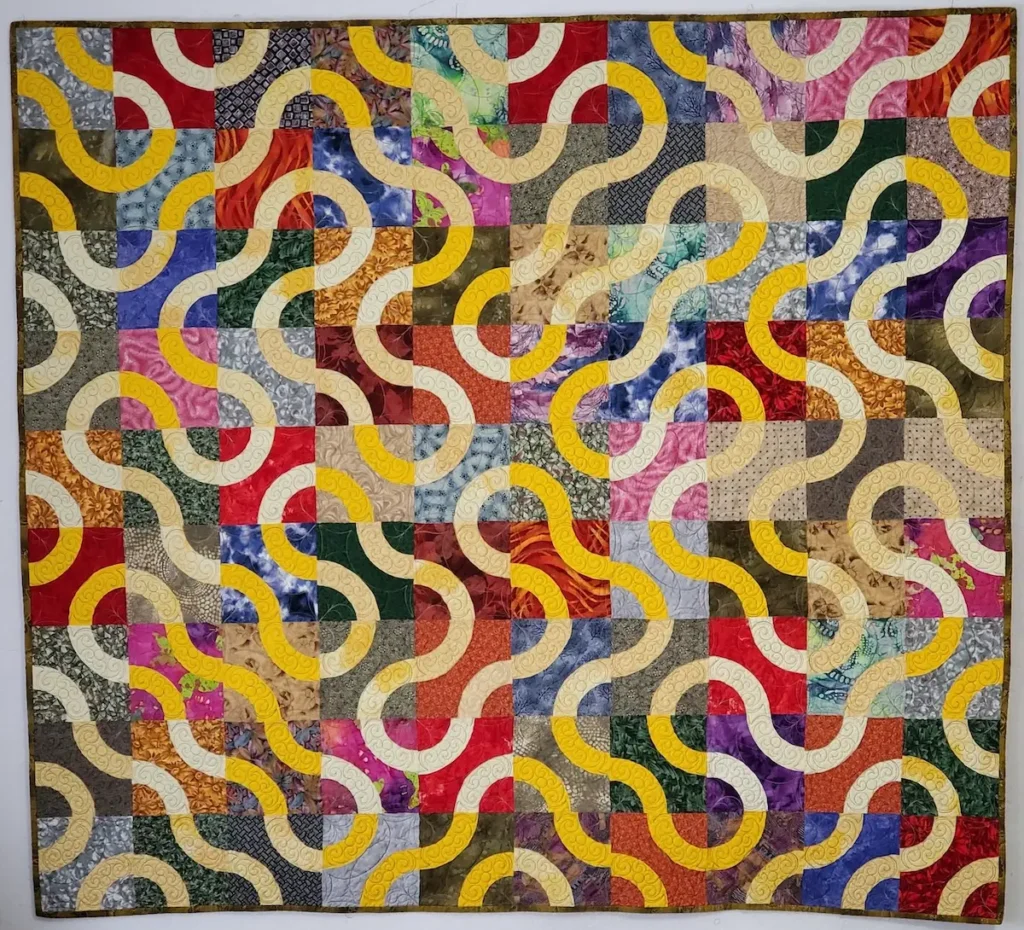
Tell us about a piece that didn’t go as planned. How did you fix it?
I can’t think of a specific work that didn’t go as planned. If the work isn’t “speaking” to me, I’ll put it aside for a while. This one might not work, but it may inspire another idea later on. It might also end up becoming potholders.
How do you know when a quilt is “finished”?
A quilt is finished when I don’t want to change anything.
You teach improvisational quilting. What’s the first improv lesson you give students?
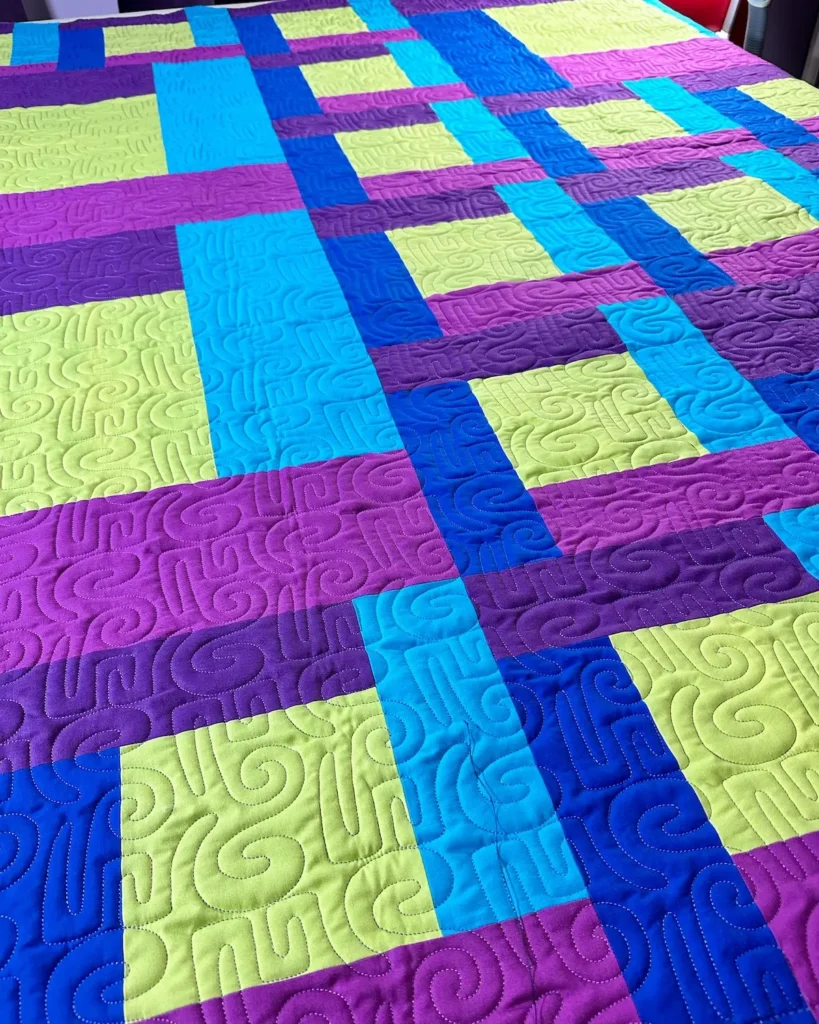
An impactful improv quilt starts with rules, and as you work, you break them.
For instance, you decide to make a quilt using fractured hourglass blocks in muted colors. Those are your rules. But as you’re creating, you add some traditional hourglass blocks in muted colors and a couple of checkerboard blocks, just because you like how they look.
And why not add a few fractured hourglass blocks with some bright blues? You see, the rule-breaking is what makes the quilt interesting. Improv is about saying “yes” and seeing what happens.
How do you find rhythm between making for shows, teaching, client quilts, and time for your own creations?
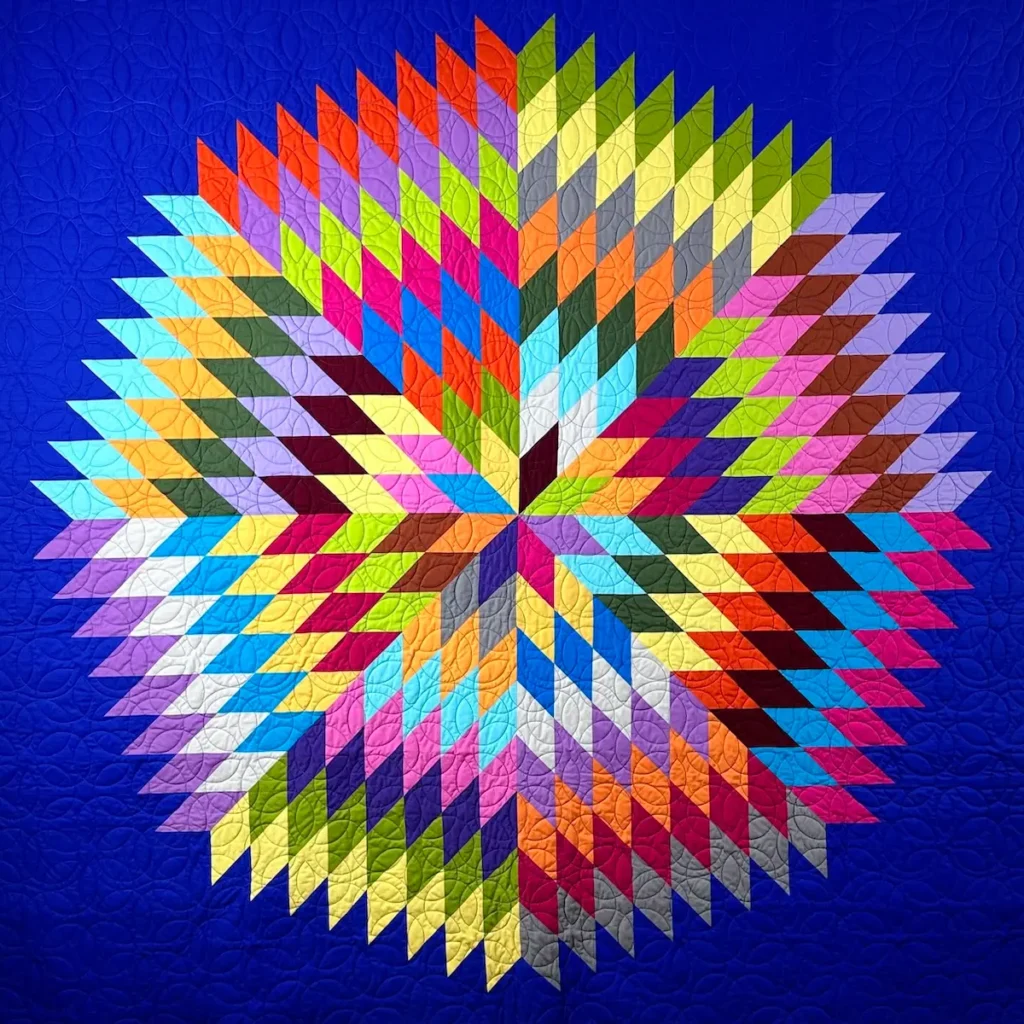
I do everything, but not at the same time. Some months I focus on making new quilts or working on techniques to teach. Other months, I focus on teaching and entering shows. I will say no to good opportunities if they don’t fit in with my goals.
I make quilts because they release the colors of my soul. If people love them, I am grateful. But I ultimately make them for myself.
You say quilting brings peace. How does quilting help you on hard days?
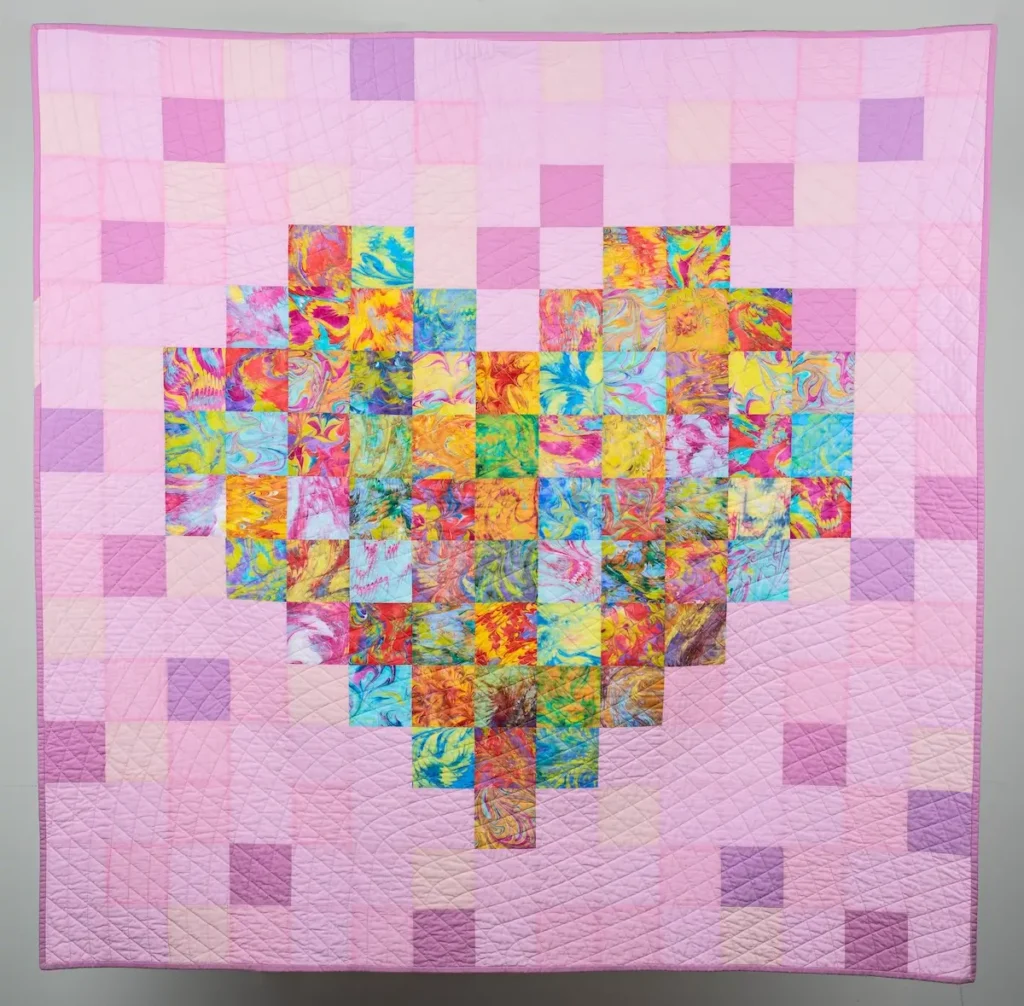
When I’m in the studio, I let the world go. It’s just about the fabric, the idea, and my sewing machines. The world can wait.
Which quilt of yours has the most meaning and why?
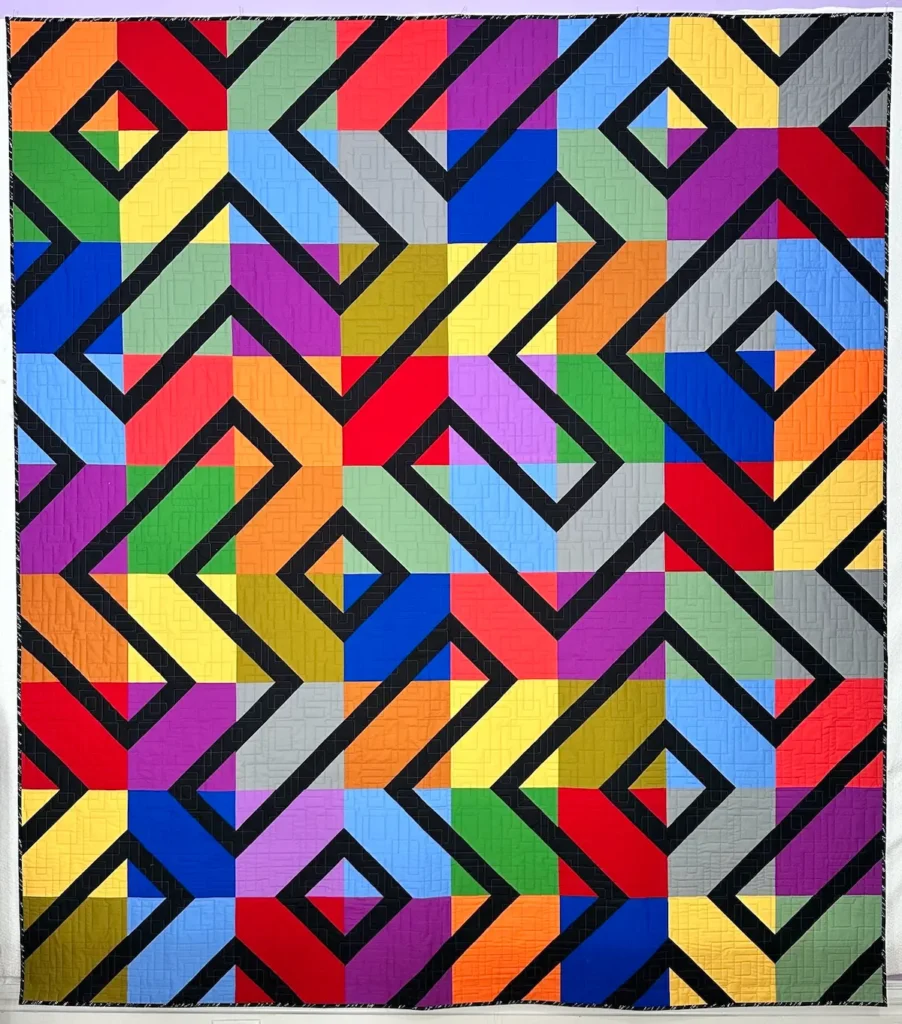
The quilt I made for my mom while she was sick in the hospital has the most meaning. I used her favorite colors: orange, yellow, gold, brown, and purple, and I hand-stitched while I kept her company during the dayl
She sewed clothing and didn’t understand my obsession with quilting. She said I had more patience than she did. That was the only time she saw me work on a piece that long. She never saw the finished quilt. One day, I’ll write the story of how it was quilted. It’s my most treasured piece.
If a young maker asked what part of your heart lives in your quilts, what would you tell them?
I’d say my whole heart lives in my quilts, except for the part that loves puppies and kittens.
Where can people see your work?
They can see my work on my website: www.angeequilts.com or on Instagram: @angeequilts. I also sell quilted pillow covers, sweatshirts, and jigsaw puzzles in my Etsy store: AngeeQuilts.
Interview posted January 2026
Browse through more inspiring modern quilts on Create Whimsy.