
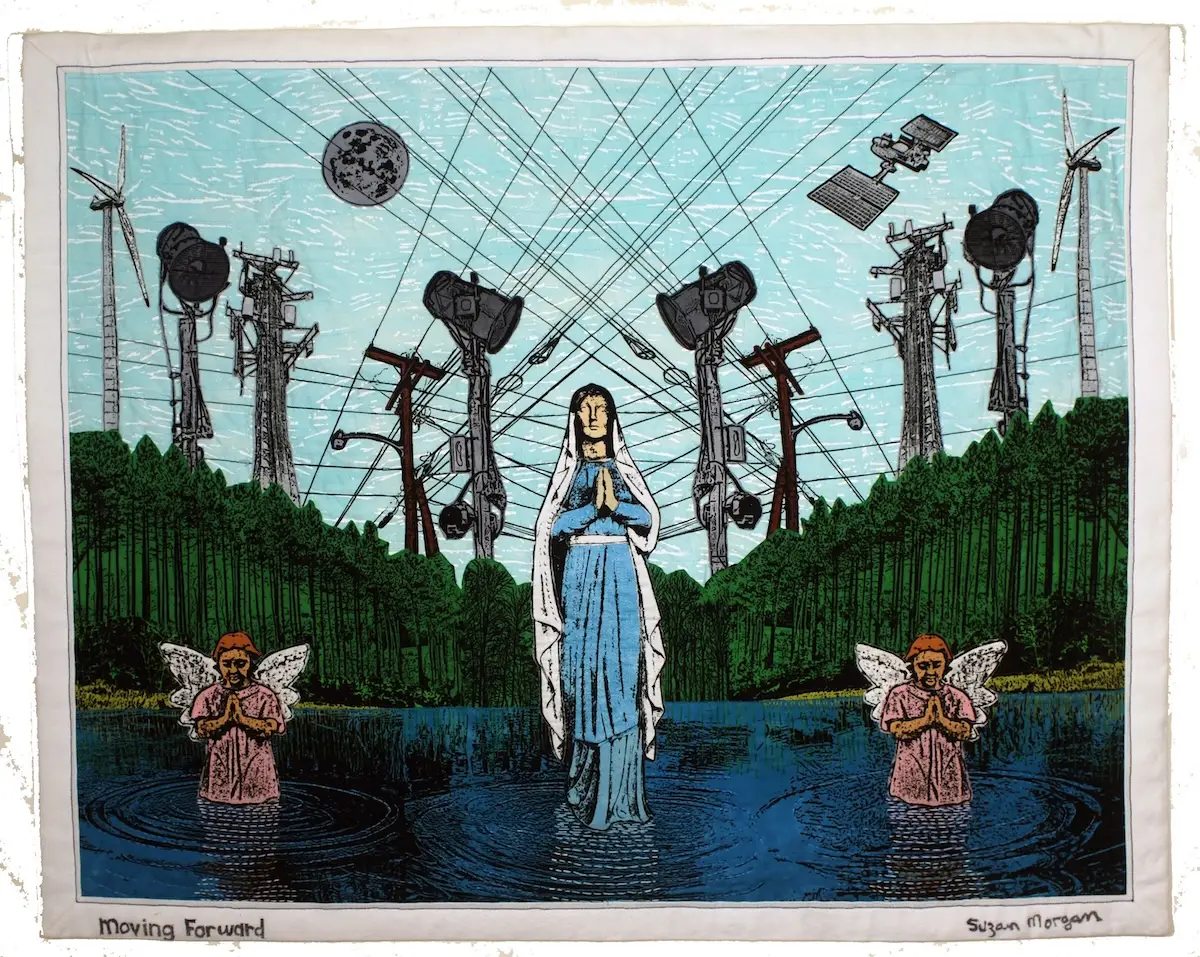
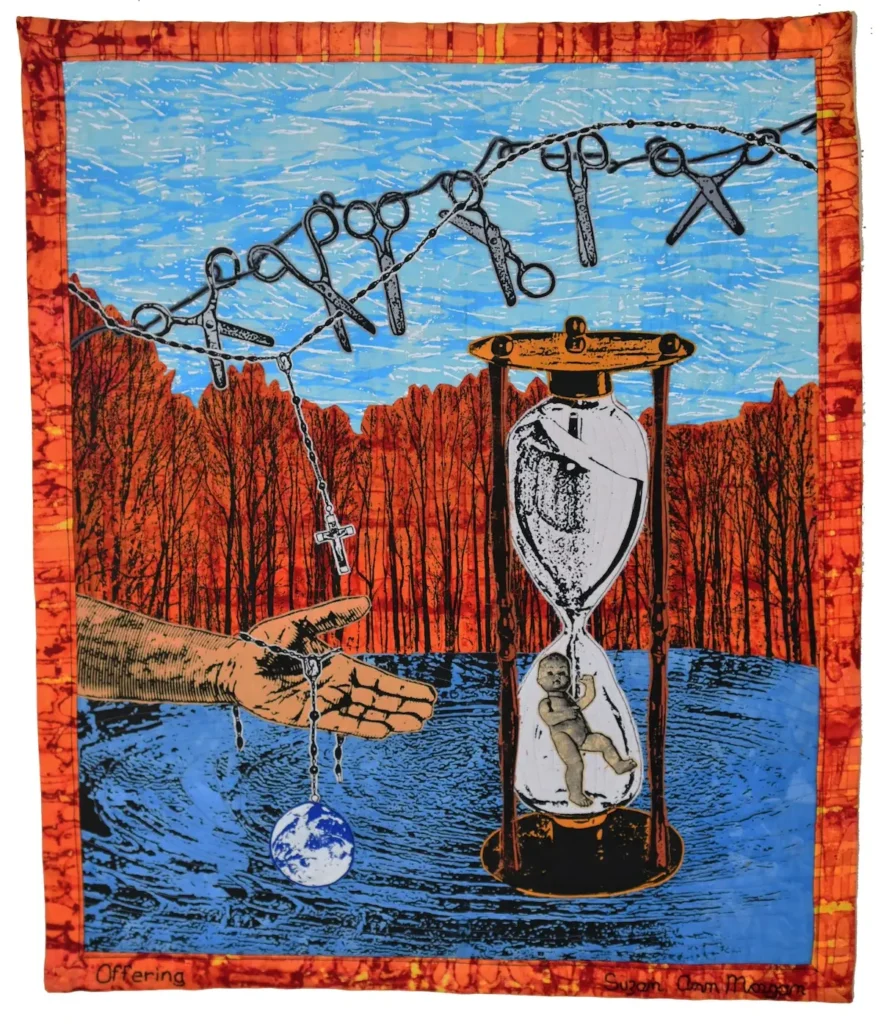
Art quilts can tell beautiful stories, and Suzan Morgan uses hers to ask big questions about the world around us. Inspired by current events and guided by her heart, she creates powerful fiber art that blends quilting, social commentary, and personal truth.
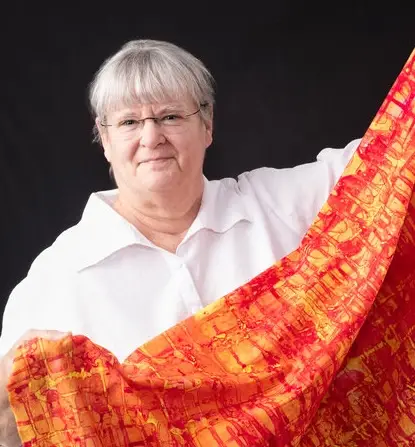
How did you first find your way to making art?
My earliest exposure to the world of art was at the public library. When I was about 13 years old, I wandered into the art book aisle and checked out a book on watercolorists.
At that same time, I was “encouraged” by the ads in the back of magazines proclaiming that “You too can be an artist!” I got a sketchbook and a pencil and drew the pirate they depicted, hoping to send it in and “qualify” for the drawing course. I never did send it in, but was satisfied with my efforts.
Then, in my child’s mind, I somehow came to the conclusion that the only true artists were left-handed! I was not. I did fill up that sketchbook, but I did not have faith that I could be a real artist. I do still laugh about that today!
As an Amazon Associate I earn from qualifying purchases. Read more about our affiliate linking policy.
What drew you to working with fiber and textiles?
It all started with the nuns in grade school who taught us girls to embroider. This was not presented to us as art, but just something that all young ladies should know how to do.
Later, as was fashionable, I learned macrame and knitting. After that, clothing construction presented itself as a way to increase my wardrobe, as buying new clothes was, in the mid-seventies, more expensive. These efforts I did not associate with making “art.” They were “only” a craft hobby.
Soon, I was in my twenties. A pile of clothes to donate turned into my first quilt. It was only made of squares, but I worked on the hand quilting every evening after work.
It wasn’t until many years later that I was blown away by an exhibit of Nancy Crow’s seminal quilt work. When I saw that she hand-dyed all the fabrics, I quickly enrolled in the fibers department of the Oregon College of Art and Craft.
The connection was made: quilting was both a craft and an art! I can look back now and see that this gendered medium can be embraced by a feminist-minded person like me to push the boundaries of the decorative arts as a way to speak in my own voice.
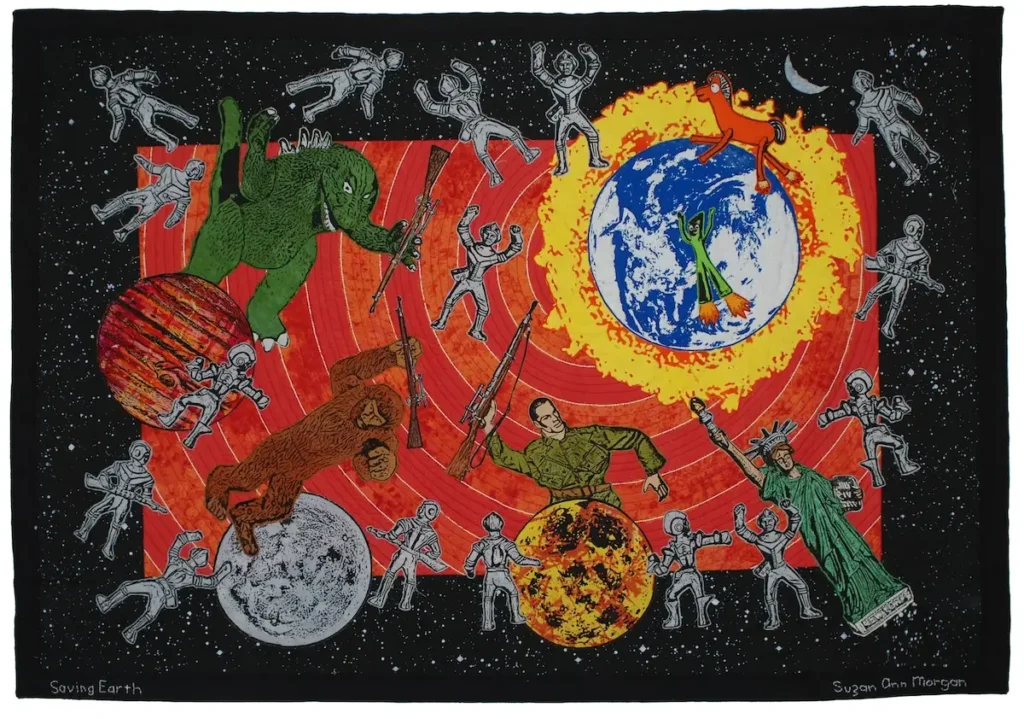
What does “inspiration” feel like to you – quiet and steady, or more like a spark?
Definitely more of a spark.
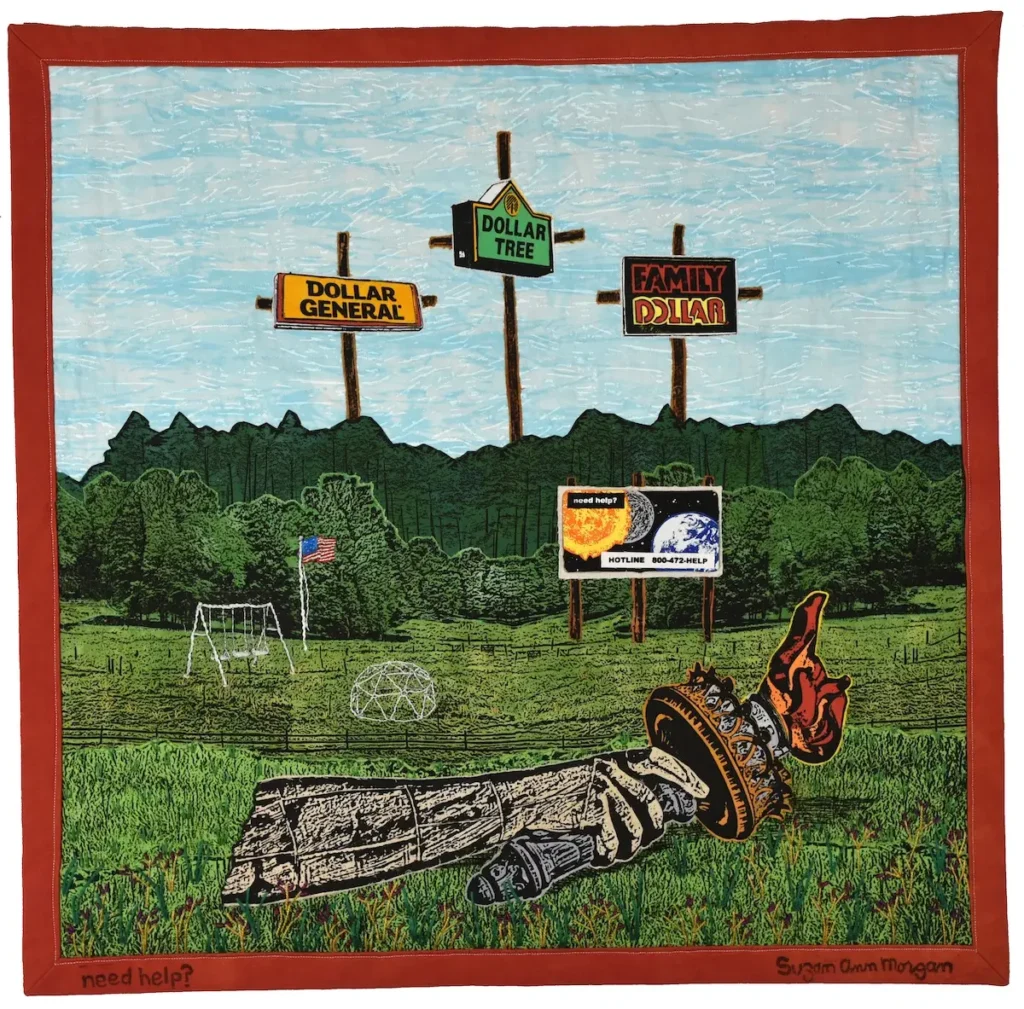
I avidly listen to National Public Radio, supplemented by other media sources, and when something important moves me on an emotional level, it is not unusual for a piece to suddenly form itself in my head.
At times, when no concept readily presents itself and when I struggle to force an idea to make itself known, I fail nearly every time. For me, inspiration cannot be intentionally found, it must come from my gut and not my head.
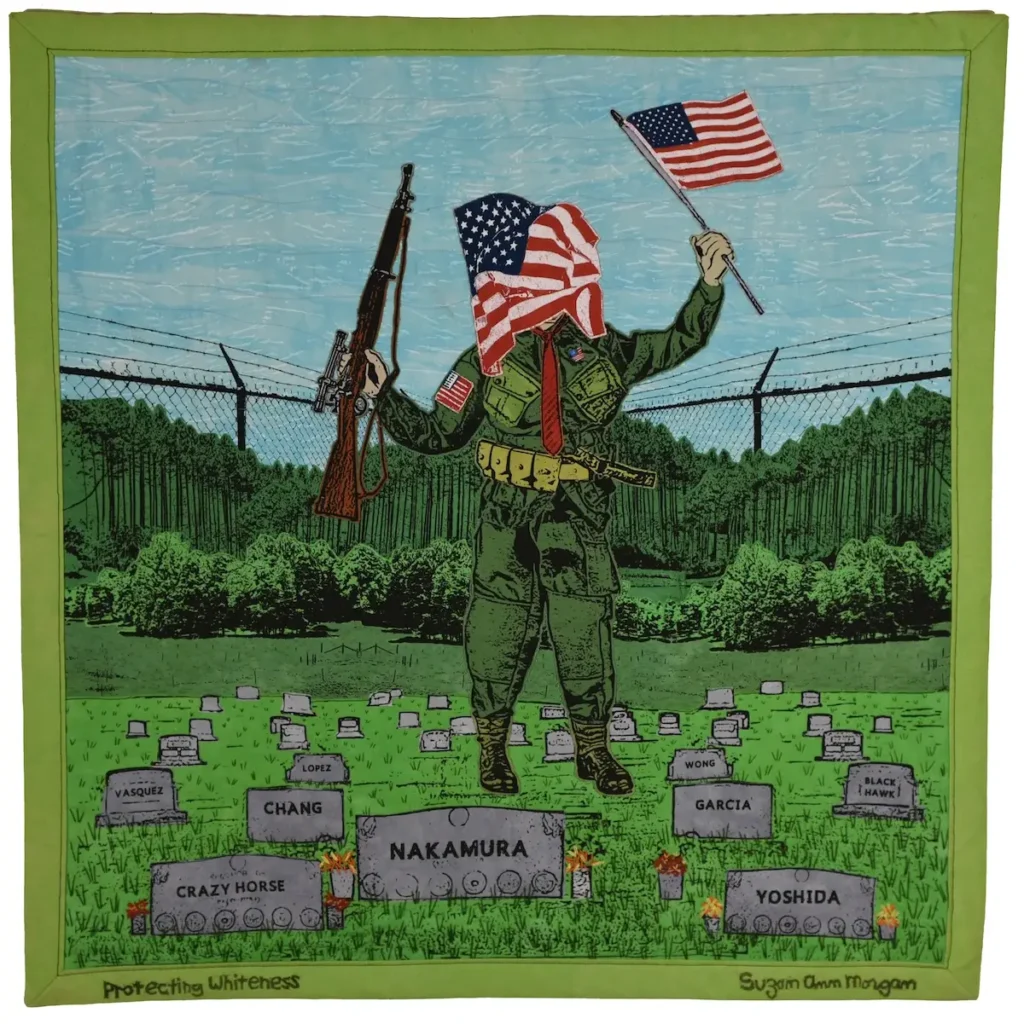
Your work often speaks to social and political issues. When did you first feel called to include those themes?
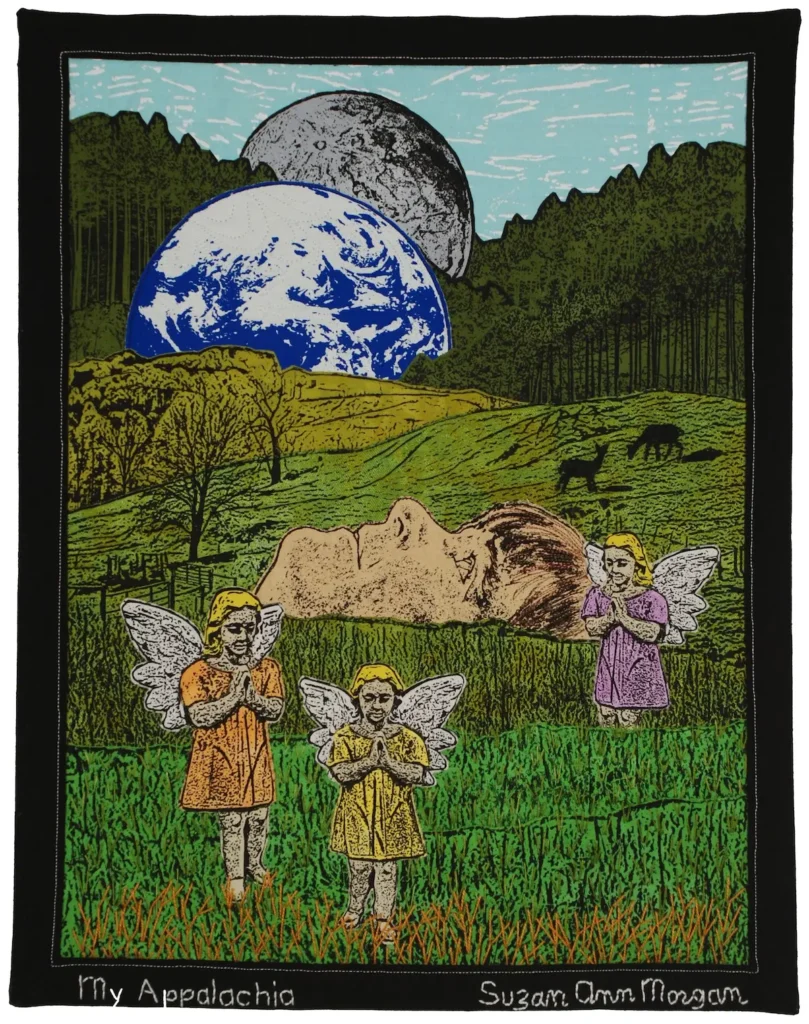
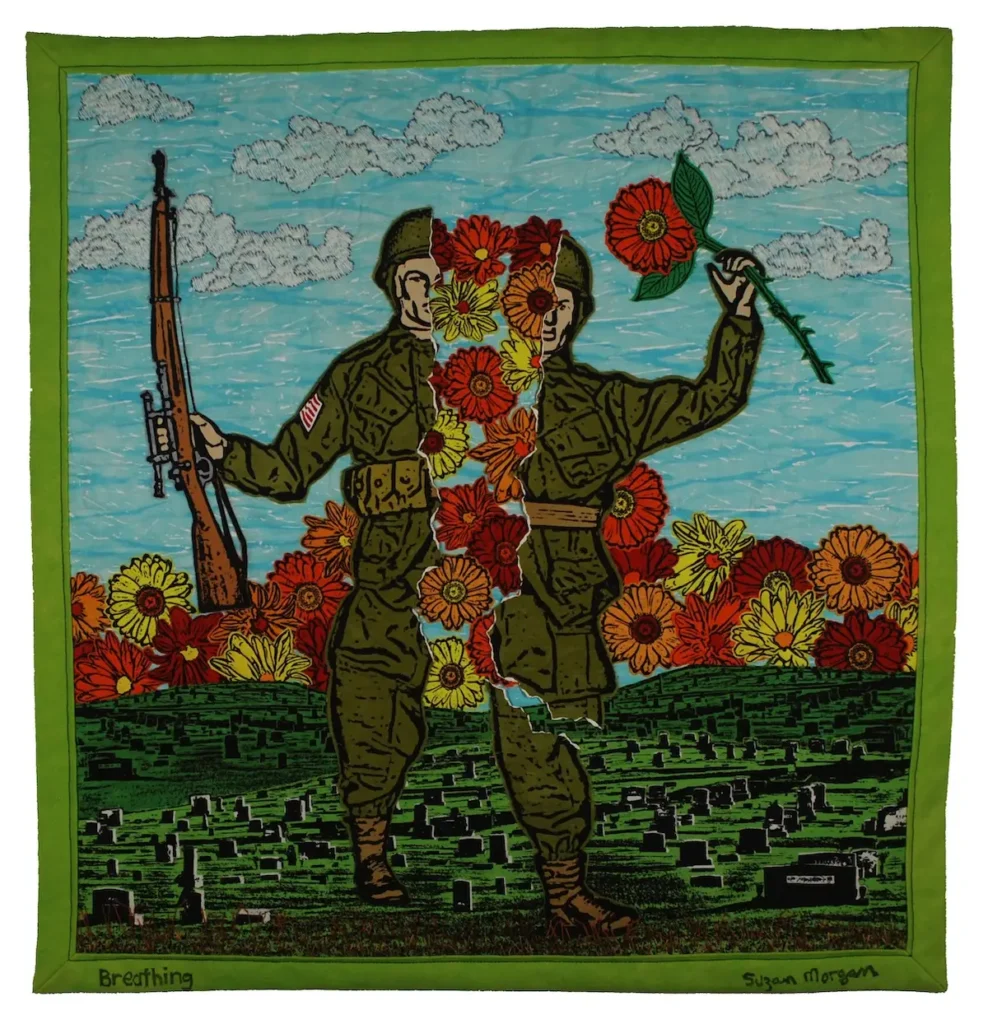
I had always been interested and active in current social and political issues, but when I reached my fifties I had an epiphany. It came to my attention that I would not live forever (surprise!) and it was time to take a leap and speak my mind through my art.
I had developed the confidence at last to really put myself out there. There was no time to waste, sink or swim, I would speak my truth on themes of importance to me. I am 64 now, and find that creating art as a form of social commentary is keeping me young!
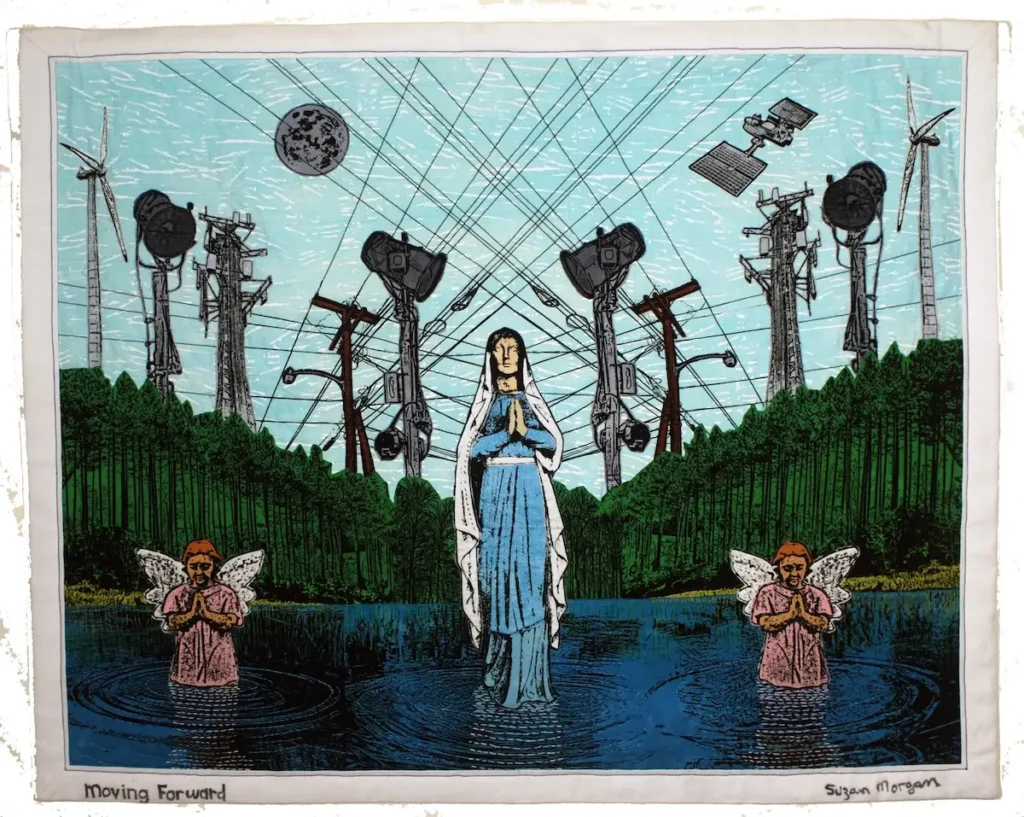
What responsibility, if any, do you feel as an artist to speak about difficult or complex issues?
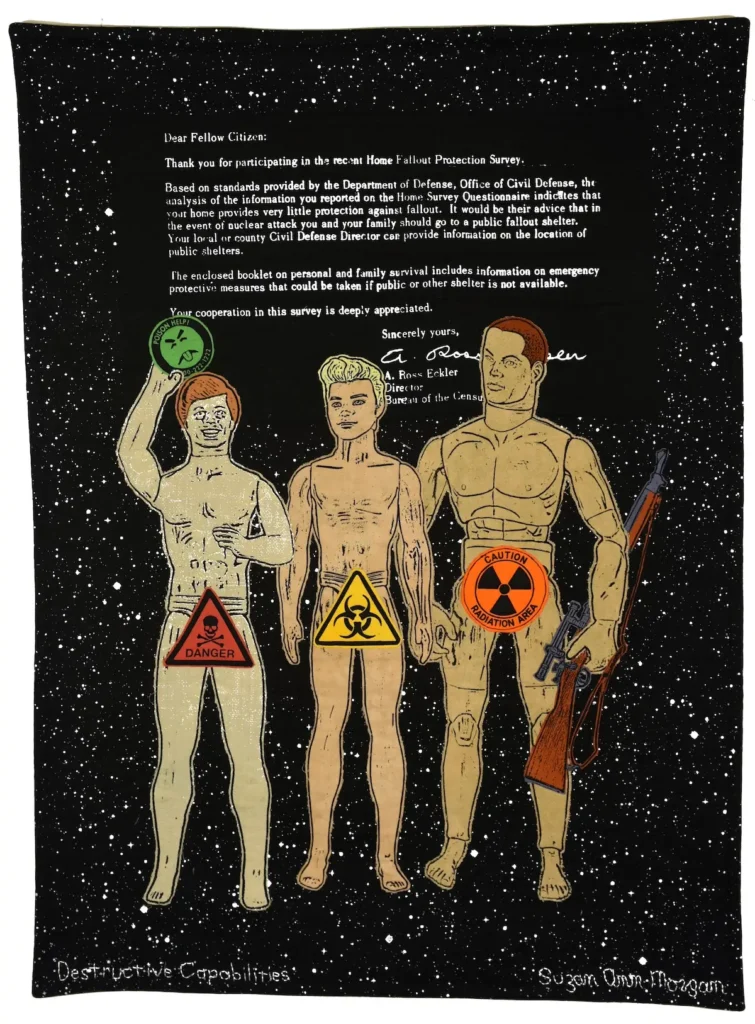
I feel my only responsibility in the creative process is to be true to myself.
It is in my nature to examine the social world around me and, even more importantly, to think critically about that world.
I do, however, feel a responsibility to the viewer to actively listen to feedback and learn from the unique connections each one of them makes when they encounter my art.
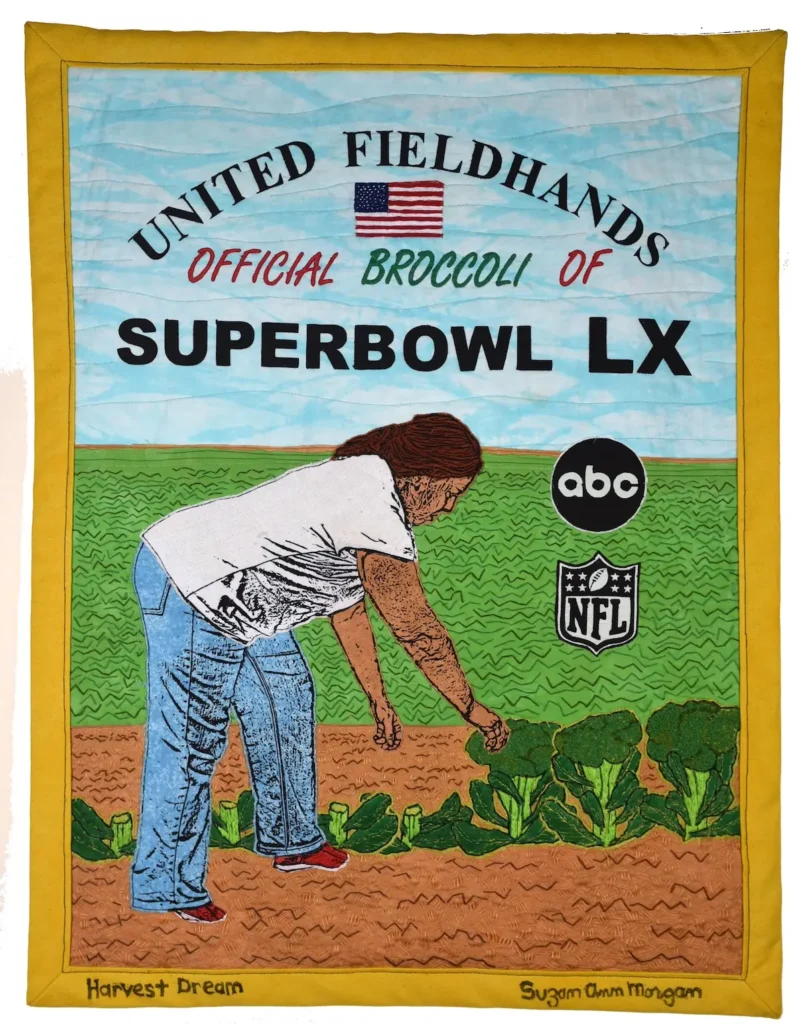
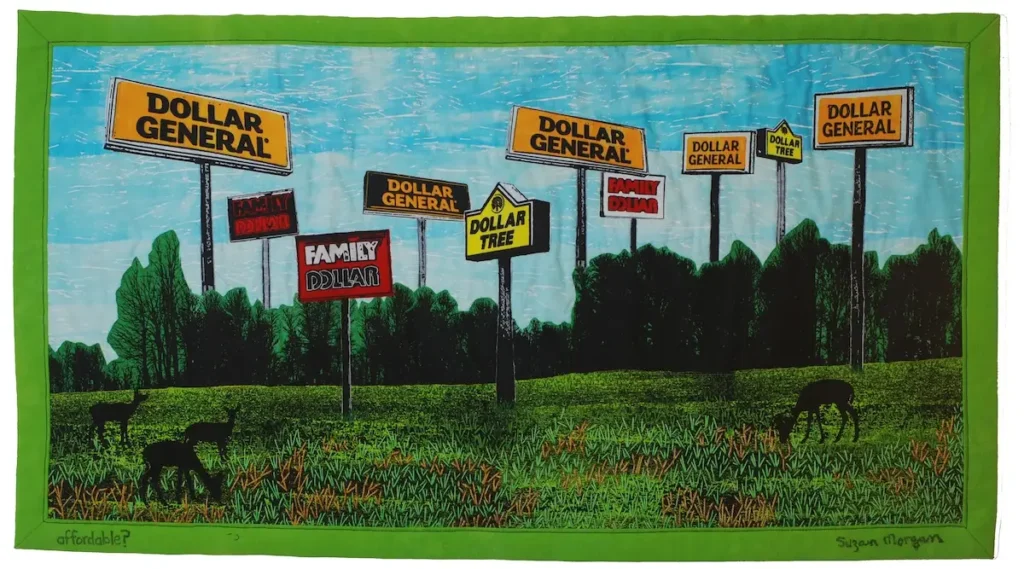
When something isn’t working, how do you figure out what to change?
When that happens, I daydream my way to a solution.
In practice, this means that I maybe don’t pay attention to the fighting scenes in the movies I watch with my husband or am drifting off into nap time. I can visualize the piece in my head, move around components, add new components, or change hues.
I have another chance to figure it out when I make a paper mock-up and can also make smaller changes during the sewing process.
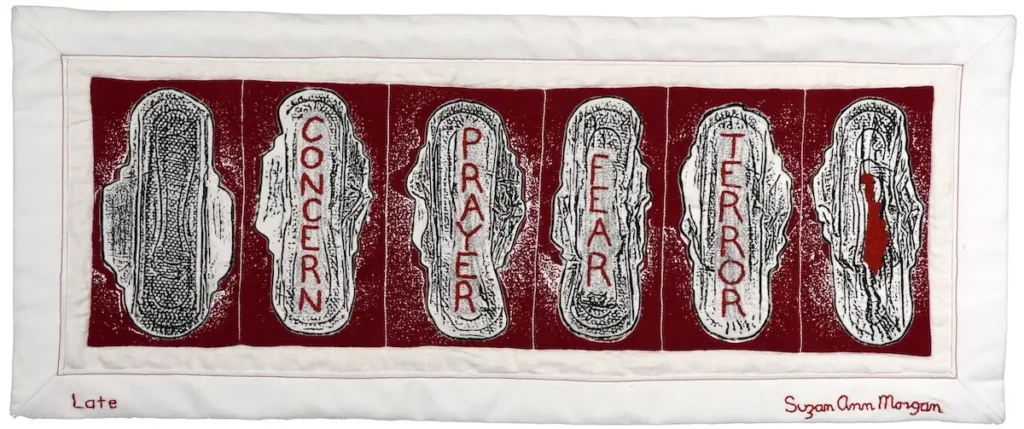
How can artists find their own voice in their work?
I see each piece an artist makes as capturing a moment in time that is true to them. It is a glimpse into the multifaceted diamond that makes up each artist.
I think of my work as a self-portrait at a given time. I would encourage each artist to worry much less about the rules of design and work from the inner them.
As a young artist, I strove to learn the rules, which are definitely valuable, but I have found that the joy in creating lies in baring your soul.
Where can people see your work?
suzanannmorgan.com
Instagram: suzanannmorgan
Interview posted July 2026
Explore more art quilts on Create Whimsy.