
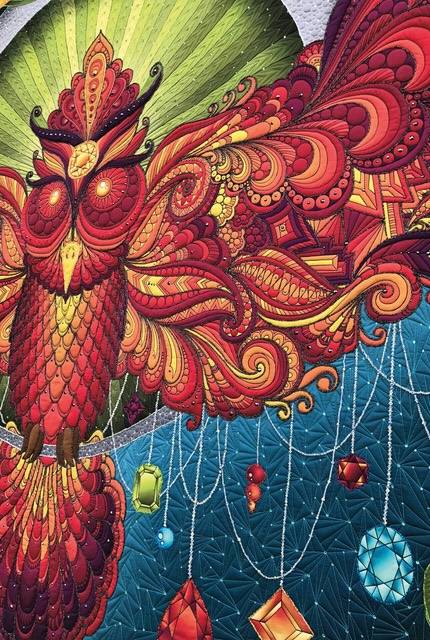
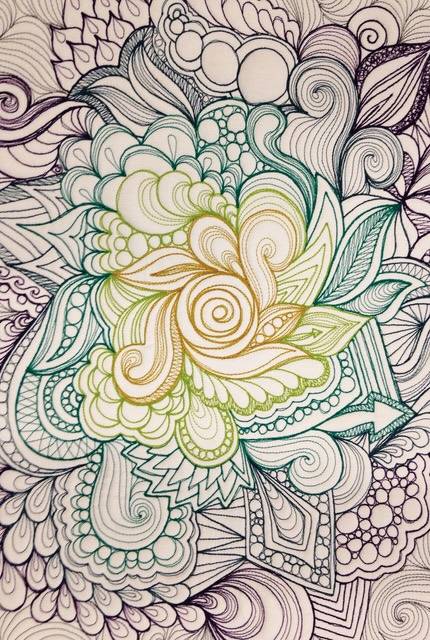
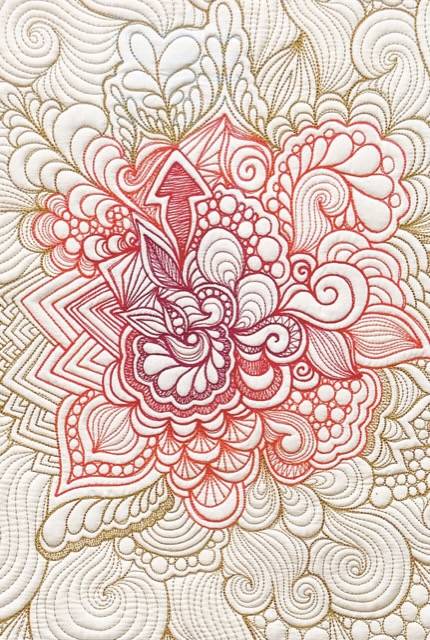
Meet Karlee Porter, an artist who traded paper and pens (or pencils or paints) for fabric and thread to bring her ideas to life. She quilts the way she draws: free, bold, and full of movement.
From a childhood filled with crayons to discovering a quilting machine after high school, Karlee found her true voice in stitching. Her graffiti-style quilts feel playful and fearless, like they were made in one joyful breath.
[Below is an edited transcription from a video interview with Karlee. You can view the entire interview here: https://youtu.be/lTPhFu5VBT0]
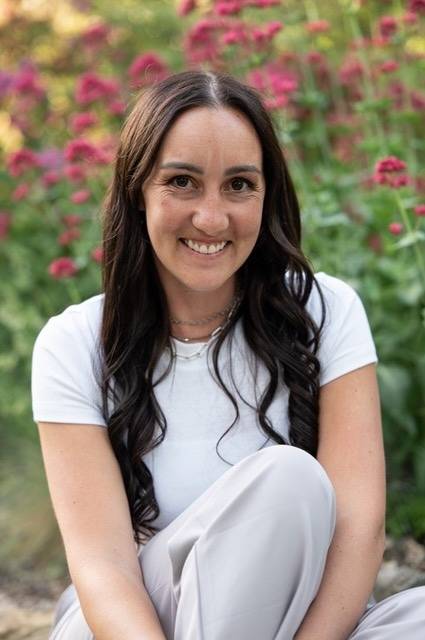
When did you first know that you wanted to make art and quilts? I’m going to say art first and then quilt second because it seems like you’ve been doing art for your whole life!
I like to introduce myself as an artist who happens to use fabric and thread, versus a quilter who makes artistic quilts, because my journey as an artist has spanned much longer than my journey as a quilter. From a really early age, I knew I wanted to do something artistic with my life. I didn’t know exactly what that would look like but I was gathering all the needed crayons, colored pencils, art supplies and things like that.
As an Amazon Associate I earn from qualifying purchases. Read more about our affiliate linking policy.
Right after I graduated high school in 2009, I beheld a quilting machine for the first time. That was my way of falling headfirst upside down into quilting. I’ve been happily stuck with this medium ever since.
Tell me about the first quilt that you made. What do you remember about it?
I remember when I was a little girl, I would make quilts with my mom, my grandma, and my aunts. The quilts that we made were tied quilts, where we would have the big frame on the floor and do the knots and tie them with yarn.
When I was in about fifth grade, my oldest sister was getting married. For her wedding, my mom made a rag quilt, where you put the two squares together and sew an X. And then you sew the seam allowance upward, and then you clip them into little strips, then you wash it, and it frays.
My mom would always take them to the laundry mat to wash them and use industrial washing machines. I remember doing that as a kid and making a few of those for little baby quilts.
Sewing and quilting weren’t on my radar much in my adolescence or in my early adulthood until I started testing quilting machines as a job, working in the manufacturing production department of a quilting machine company.
My experience using a quilting machine was very scientific, industrial, and monotonous. But I was building muscle memory. It wasn’t until after I had a pretty strong foundation of muscle movements for a long arm quilting machine that I started to say, “Oh, wait. I have all of these sketchbooks and all of this artistic stuff.”
From that point backwards, it was all very separate. I was using sketchbooks and paint and watercolors, and then I was testing quilting machines. When those two paths converged, I just started applying all of my artistic drawing and sketching type stuff onto fabric with thread instead of paper and markers or whatever.
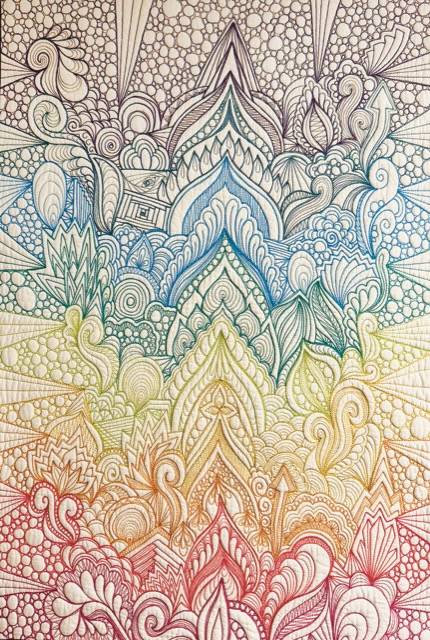
Do you still draw a lot?
I do draw. I still am very fluent with just drawing versus using a quilting machine. They’re two very distinct muscle memory feelings. When the iPad came out, I want to say it was 2016, the iPad Pro and the pencil, I converted my practice of drawing digitally.
I still draw in analog style, but I also digitally keep track of drawings and stuff with my iPad.
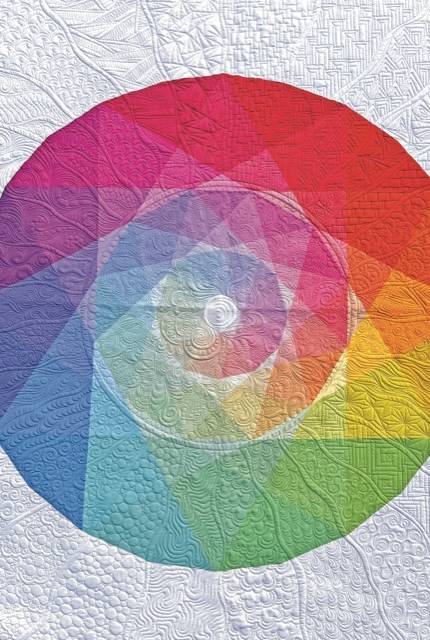
What was the biggest surprise when you started selling your quilting designs and teaching?
It’s hard to pick one biggest surprise. Maybe one of the bigger surprises of my journey with teaching people how to quilt is that there are quilters all over the world who are willing to pay me to come and hang out with them and teach them how to quilt. That blew my mind.
I published a quilting book called Graffiti Quilting in 2014. In the summer of 2015, it took off like wildfire, and I went to six different countries to hang out with quilters and teach them how to quilt. That still blows my mind that people in Australia were saying, “Hey, come hang out. We’ll pay for your flight. We’ll pay for your hotel. We’ll pay for your food. We’ll pay for your time so you can teach us how to quill.” I’m like, whoa. Okay. I would say that’s one of the biggest surprises of my career.
The doors that it opened for me and the opportunities that I was given still amaze me, because I was going to do my art anyway. It was like a cherry on top that people want to learn it and understand it and see it. It was an honor and a privilege to be able to travel around and hang out with other quilters and like-minded artists who seem to have as much sponge in their bones for learning how to quilt as I did.
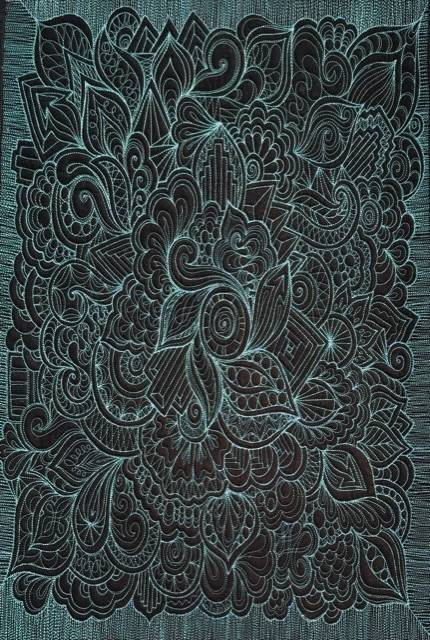
Where did your graffiti style come from?
I was born and raised in the city of Ogden Utah. It’s about 30 miles north of Salt Lake City. The area of Ogden is really super diverse.
It’s one of the districts in the state of Utah that has some of the richest people in the state, as well as some of the poorest people. There was this vast diversity within this about ten-square-mile town.
I had an interesting upbringing because I lived smack dab right in the middle of Ogden. If people are familiar with Ogden, or you can look this up on Google Maps, I lived on 24th in Jackson. It was right below Harrison, where it was more of a poor area, but very close in proximity to people who were very affluent and privileged.
A lot of my upbringing was in a neighborhood where a lot of Hispanics lived. A part of their culture included low rider cars, barbecues in the backyard, and laying out cardboard to have breakdance battles.
Graffiti was a pertinent art form within such a diverse community. I remember seeing graffiti throughout the city of Ogden. I want to clarify that this is different than tagging. Tagging and graffiti are two very separate things.
I’m not talking about just the ugly spray paint that someone just puts on the side of a telephone box or somewhere. This graffiti was found in alleyways, buildings, and walkways. There’s a parkway trail in Ogden that runs from downtown up to the mouth of Ogden Canyon, where there’s a waterfall, and along that trail, over time, there have been evolving art murals.
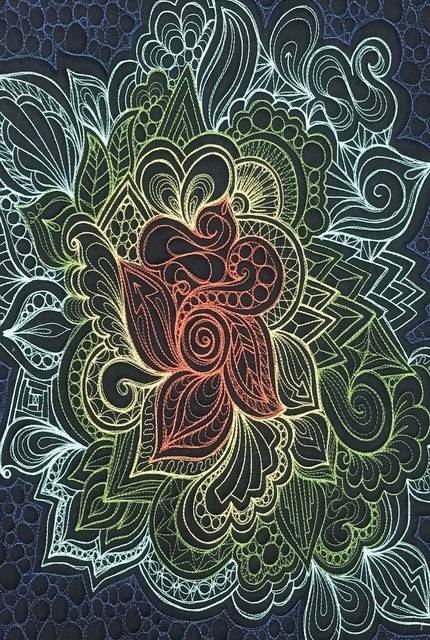
In high school, I was one of the art nerds. I was one of the kids in high school who skipped classes to sneak into the art room. I had a handful of friends who were part of this crew who were also trying different types of graffiti.
The graffiti aspect has played a role in how I approach my quilting by allowing me to do something on the fly without extensive planning and to develop a discernible style.
The most pertinent connection for me with graffiti is the same thing that I find really beautiful about street art – the notoriety that comes when the work just speaks for itself. Graffiti is as far away on the spectrum of artists as you can get from a gallery show. Where you have street art, it lives for its own sake, and you’ll probably never know the artist – all the way to a gallery where the work of a known person is being showcased. I think it is a really beautiful sentiment as an artist that it doesn’t matter who I am. My art can be seen by people, and they can decide how to interact with it based on the pure visual aspect without any preconceived notion about the person who made the art. I really like that.
For me, as an artist, it is a notch in my belt to think that you can love my art even if you don’t love me. You can appreciate the beauty, because sometimes it’s fleeting and passing.
Another thing I love that’s so beautiful is that graffiti is very ephemeral. It comes, and it goes, and it gets painted over, or it’s on a train, and you’re driving, and the railroad crossing bar comes down, and you think, “Oh great, now I have another ten minutes added to my day.” Then, the beauty is watching this train with these pieces of art that you’re never going to see again. All you get to do is appreciate that fleeting beauty as it crosses your vision.
There’s something really beautiful that facilitates the feeling that we’re all just living in this world, we’re all making a mark in this world, and hoping that we can create something beautiful, even if someone only appreciates it or sees it for a fleeting moment. It’s still something that exists and is beautiful.
Graffiti definitely has had an influence on how I view art in general.
If somebody wanted to get started graffiti quilting, what kind of tools would they need?
Any machine that allows you to free-motion quilt. You could technically start before that with just a piece of paper and a pencil. Graffiti quilting is very technique-based. The idea is understanding the concepts of the anatomy of different shapes and forms, and how they can function and work together, and then building a composition from that. If someone wants to explore how to do my graffiti quilting style, they could take it back to paper and paint or Sharpies or something that is non-fabricated.
For quilters, the bare minimum you need is a machine that allows you to free-motion. It could be a domestic machine where you can lower the feed dogs. Or a legit quilting machine that is made for free-motion quilting. All you’ll need is a little quilt sandwich. A fat quarter of solid white fabric, a fat quarter of batting, and some sort of backing fabric. You can do something easy and simple to start.
Sometimes, as quilters, the default quilt is this huge quilt that’s draped across a bed. But when I think of quilts, I think of textile art that hangs on the wall. Even just starting very small in actual fabric is a really good way to dive in with low stress, where if you ruin it, it’s just a fat quarter.
What do you see as the most common mistake that beginners make when they start out graffiti quilting? And how can they fix it?
From the thousands of people that I have taught how to quilt or something about quilting. I think the number one mistake is fear.
There’s a lot of anxiety as quilters to feel that things need to be perfect, especially because, in quilting, we come from the culture of patchwork, right? When we’re patchwork piecing, the seams are meant to line up. The pattern is designed to line up. There is precision baked into the technique of patchwork. Naturally, that training of perfection bleeds into the quilting.
I think it’s a common misconception that people think that the way we have to treat our piecing with precision is also how we have to treat our quilting with precision. And to me, that thinking is a mistake.
I try to help my students to loosen up and be a little freer. I want them to realize that yes, there are rules in quilting, but it’s less important to follow the rules and more important to understand the rules. If you want to break them, you can defend your decision, and you can break rules pragmatically so that those rules can become guidelines that can guide your creative intuition without forcing you into a box or forcing you down a shame spiral because there’s no precision there.
I think fear can sometimes be in the driver’s seat as a creative in general, not just quilting, but all creative aspects. I think that’s one of the first roadblocks that I find in my students, the fear. If I can help them get over that and feel comfortable and safe, then the creative juices just flow on their own.
Do you sketch first, either analog or on your iPad first, or do you just jump in with an idea and just get going?
Yes and no. It depends on a lot of different factors.
It can depend on what the end result of the quilt or what the project is going to be. It can depend on how anxious I feel.
I typically use my drawing practice as the place that reminds me not to be afraid. I’ve learned with quilting, the risk of messing up is a lot lower if I’m using my iPad, where I can easily just erase it, versus fabric where I have to unpick it if I hate it.
It just it really depends on the project, but I would say with graffiti quilting in general, my rule of thumb is I only draw whatever I need to draw in order to overcome the hump of the fear and feel the excitement to get to my quilting machine.
A lot of times, I don’t draw anything. It all manifested through the quilting, one motif at a time. I don’t plan it out. When I get to a new little space, I’ll take a deep breath and then decide what I want to add.
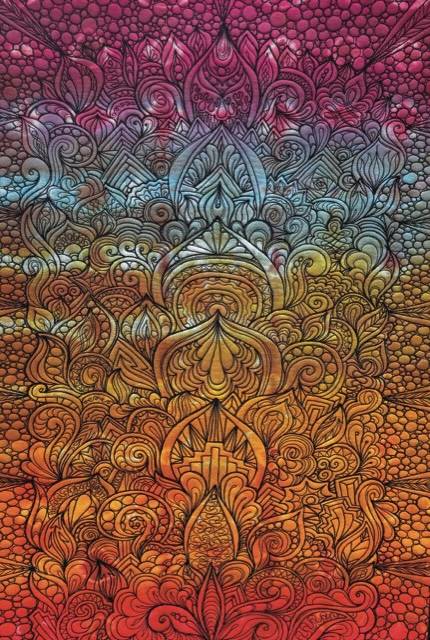
Tell us more about Honest Fabric. What encouraged you to start that business?
Honest Fabric is a custom-printed quilt top collective that my husband and I started in 2018. It is my love letter to the quilting world and especially to quilters who want to spend more time quilting. Because I have a backwards interest in the quilt-making process, where for me piecing a quilt top is optional, the magic for me happens at the quilting machine.
I like to skip whatever I can skip to get to the quilting machine. That’s where I express myself, in quilting.
Honest Fabric was founded to specialize in quilt top printing. We don’t print any yardage like Spoonflower. We only print ready-to-quilt quilt tops that people can take straight to their machine and spend more time quilting.
There are different facets of Honest Fabric. It was founded on the logistical aspect of quilting, where you don’t have to piece anything. You can have a beautiful panel that is large format, the size of a bed, if you want.
The largest size that we print is 88 by 104. So, you can easily have a bed quilt without a single seam in it, but still have a beautiful design. I wanted panels that were large format, but I wanted them to also be beautiful in their own right.
This is a part of the quilting world that has opened up a lot in the last few years, and I take a little bit of credit by helping the industry move that way by showing Honest Fabric.
Before Honest Fabric, panels were not available for quilters to take straight to the quilting machine. They were only 44 in wide because they were printed on bolts along with the rest of the yardage, always feeling like afterthoughts to a yardage line of fabric, which is fine. I didn’t want the panel to be an afterthought. I wanted it to be the main event.
We partner with a collective of designers. Lots of different independent artists license their artwork for the panels. The tenets of the mission statement behind Honest Fabric are being fair trade, American-made, and eco-friendly. All of our panels are printed here in the United States.
They’re eco-friendly in that they are printed on demand. So we don’t print anything until it already has a loving home to go to. We don’t keep excess amounts of stock, and being fair trade in the sense that we make sure that our designers are being paid fairly for the licensing that we employ for their artwork.
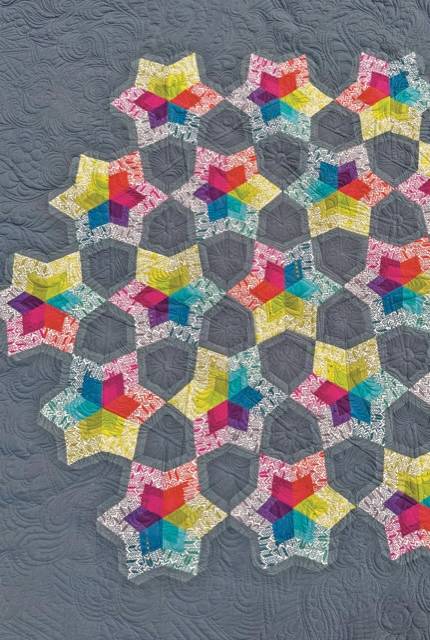
Has having your own fabric printing business changed the way you design quilts?
Yes. The cool thing about large-format custom-printed fabric is that I’m a digital person. I have a background in computer-generated graphics, like Photoshop and Illustrator. I’m able to design something digitally and then, instead of trying to figure out how to achieve that exact look through traditional methods like piecing, appliqué, or painting or drawing on my fabric, I can just print it out and then let the quilting enhance it.
Another thing that’s cool about that is it relieved a lot of stress because I wasn’t spending a hundred hours making my quilt top, only to be afraid that I’d ruin it with the quilting, like so many people are. It’s also a really beautiful way to be able to practice your free-motion quilting in a very low-stress environment.
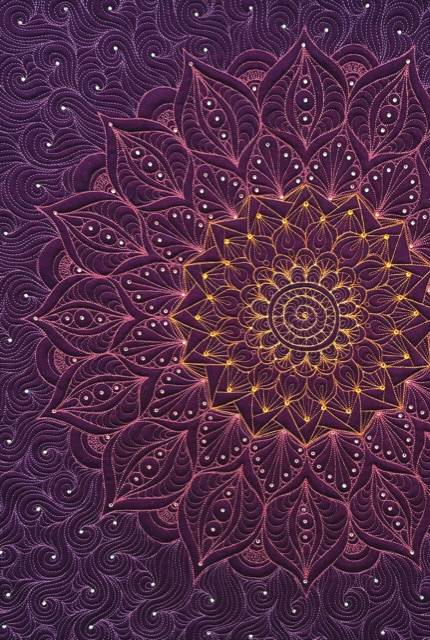
Describe your creative space.
I like to call it my CEO desk because it’s like one of those fancy ones with the hutch above it, with filing cabinet drawers, and it’s really spacious. The footprint of my desk is about 10 by 10 ft. It’s my main workspace. Anytime I’m piecing or binding or whatever, I have a nice flat top area that is about 10 feet deep.
Then I have a sit-down quilting machine that slides into a table. And, I have a long arm stand-up machine that is 12 feet wide.
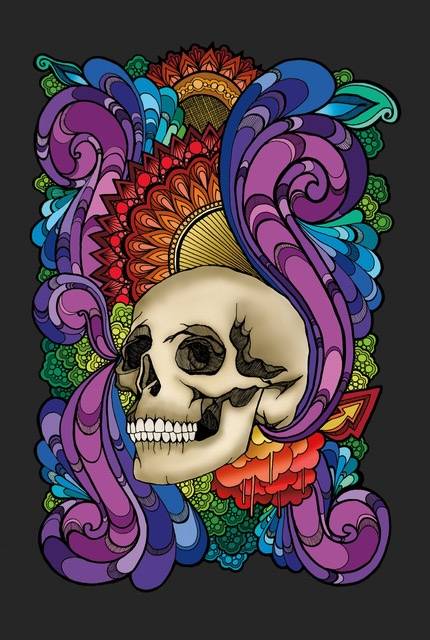
You’re doing your own designs, you’re running a business, you’re teaching, and have a busy family. How do you get all that done?
To be honest, I don’t. It really depends on the day. One thing that I love and hate about being an independent professional is that I am a really strict boss, but I’m a really lazy employee.
Finding that work-life balance has always been something that I used to think of as a struggle, but now I see it as such a huge luxury. I don’t really have a typical day because I can have the bandwidth to be able to say, “Okay, I need to spend a solid 10 hours undisturbed to be in my creative process,” and some days I respond to five emails.
A little background context of my work-life balance. I have three kids. They’re ages 9, 5, and 3. My husband works from home a few days a week, which is also really incredible.
I could not be doing what I’m doing in my work if I didn’t have him in the background being an amazing, supportive partner. Some days I will spend 12 hours filming videos for my YouTube channel. On other days, I will spend 12 hours working on a quilt. Some days, I will spend 3 hours digitizing a design. And some days I will not even come into my studio. It all just kind of depends on the day.
I’ve also learned that for me, it depends a lot on the season as well. In the last few years, I have really struggled with seasonal depression, and I’ve also learned about myself and how to manage my own seasons the way the earth has seasons. I’ve learned how to be more and more in tune with the earth in terms of seasons, because my body feels so deeply affected based on the weather. Learning how to manage that is an ongoing process for me so that I can work in a sustainable way.
I’ll go through these waves. I have my four seasons of the year that dictate different things, and I am really mindful about my monthly menstrual cycle and how that affects things, too. I’ve learned how to harness the power of that instead of seeing it as a curse, like we were taught. I’ve learned how to regulate my workflow so that it can work in harmony with my body.
For instance, I usually know that on the first day of my period, I spend it in my bed with a heating pad, and that’s a good day for me to work on emails, where the only thing that has to move is my brain and my fingers.
And then, when I’m in my premenstrual phase, I know that that can be a good time for me to ask for time and space so that I can go within myself and not be distracted by outside things.
Sometimes my work is heavier on those days, but not in the logistical email sort of way. It’s more like I want to really pour myself into something creative and process some emotions. I use my artwork a lot to process emotions as well. My period in January is going to look a little different than my period in July.
Utah is supposed to get a lot of snow, but climate change has not been helpful in that. I definitely feel myself being inside in the winter. I’m not really a winter sports person, for being a Utahn. I find that my productivity dips in midsummer because all I want to do is be outside with the sun on my back and dirt in my fingernails.
How do you rest or recharge?
I am definitely a cinnaphile. I really like just zoning out and watching a movie or binge-watching a TV show. I also love riding my bike, riding my onewheel, swimming or hiking.
I’ve learned that food is a really good recharge for me. Not in the sense of like caloric intake, but like decadence and exploration. I’ve learned that my love language is really delicious food that I did not have to cook myself. I find that that’s something for me that’s really important. My husband and I prioritize our date night, which usually revolves around what food we’re going to eat because we both just really love to enjoy delicious food.
I’ve learned that my nutrition has a huge impact on my mental health, and I am learning how to balance that. Instead of eating five Reese’s Peanut Butter Cups, I go to a fancy chocolate shop and indulge in something that is worth the calories. It’s more like a love for myself than a gluttony sort of feeling.
What’s one lesson you learned running a creative business that has surprised you?
Realizing that most people don’t know what they’re doing and that’s okay. Learning that I can be one of those people who doesn’t have to have all the answers. Everything is figure-outable. I think that’s been a good one.
Another one that is much more recent that I’ve learned is that it’s interesting being an independent artist.
Being a small business owner is one thing, but I don’t have employees. I’m wearing all the hats.
For a lot of years, when I became a professional in the quilting world, there were a lot of boundaries. To be successful in this particular industry, here are all the boundaries that you have to abide by or the lanes that you have to stay in.
I’ve recently learned more about the empowerment that comes with choosing to step outside of those boundaries, knowing that it’s going to be okay and that there is no shortage of people who want to support you as an individual, and you will find your people.
I have found my voice when it comes to speaking out about social justice or politics. January of this year was a turning point. I had a lot of thoughts and opinions, but I was very much keeping them to myself because I was afraid that people who disagreed would cancel me or try to make me feel bad for the things that guide my value system.
At the beginning of this year, I started taking more of an authentic and vulnerable approach and saying it’s no longer okay. I no longer feel okay about trying to trade who I am for money. It was really liberating to see that the more vulnerable I was, the more I was willing to use my platform for things that were important to me the better I feel. I reached outside of my own privilege and extended it to people who don’t have the same privilege as me. It has been really liberating and beautiful.
I don’t know for sure if I would be making more money if I stayed in that lane or if I am more financially successful because I’m willing to be louder. It is not something that matters. And that’s been really liberating to realize.
I also realized that not having to prioritize my income as the first thing that stops me from being authentic in and of itself is a huge privilege that is not lost on me.That’s been a really surprising thing, but also really liberating to realize. What is the point of financial success if it’s not to uplift, encourage, and enrich the industry that I profit from?
Another thing that’s helped me to overcome the fear is like taking the plunge off a cliff into water, where it’s safe. I’m not going to get hurt, but it still is very scary. You can’t jump off a cliff halfway. It’s taught me that if I’m going to be vulnerable, authentic, and transparent about who I am, the things that I value, and the things that I choose to support, I’m going to say it with my whole chest.
That’s been really liberating. I’m not just going to be like, “Hey, yeah, oh, so yeah, I definitely don’t like Trump.” Now I can be like, “No, this is how I feel. This is what I’m going to say.” You don’t have to agree. Also, the unfollow button is right there. It’s been so liberating because I’m assuming that it’s given other people the liberty to do the same. I saw other people doing it, and that gave me the courage. I’m not trying to take credit for being brave. Other people were braver than I, which allowed me to feel a sense of bravery as well. That’s been interesting.
It’s an interesting experience to be a person who is a brand and navigating that balance knowing I’m not a big corporation who has no face. My business is called Karlee Porter Design because my name is Karlee Porter.
Where can people learn more about your work, your book, your printed fabrics, and everything else that you do?
For the fabric, you can go to honestfabric.com.
For everything else, you can go to karleeporter.com. That’s my main hub where I try to keep everything organized. Anything you want to find, you could typically find there first.
Rapid Fire Fun:
Sketchbook or tablet? Both, but mostly tablet
Morning maker or late-night stitching? I think my body says late-night stitching, but I’m still working through the shame that I feel for going to bed at ungodly hours.
Favorite fabric print right now, or maybe one of your panels? Oh, let’s see. I don’t want to just plug my own stuff, but I have two fabric designers that I really love and have loved for a long time. Anything from Allison Glass or Juicy Juice. Those are my two very favorite designers. I love their artwork, but I also love them as people even more and have good friendships with them. They are original supporters, and I have cool stories about them from when I was a nobody, and they were definitely a somebody. Being able to collaborate with them was really cool. Knowing who they are as people just makes me love their fabric even more. Aside from that, their color palettes just really speak to me.
Best creative advice you’ve ever received? There’s a YouTube video that everyone should watch with Ira Glass.
The essence of what he says is that we have taste. We have really good taste, and that’s the thing that attracts us to whatever our art form is. Our skill is down here, and closing the gap is the hardest thing that we’ll do, but we have to fight through it to close it. There’s one part where he says you have to fight your way through it, and that really resonates with me.
So, when things feel that you’re in a block, it’s okay to sometimes just do quantity over quality to keep building your skills. It’s like doing creative reps. Not everything is going to be this award-winning, amazing masterpiece. And that’s okay. It’s actually important that it’s not, because all of those non-masterpieces are the reps of the process that you have to create to figure out your masterpiece.
What are you curious about right now?
I would say probably the last year or so, I got back into making seed bead bracelets on a bead loom. My older sister gave me a bead loom when I was a kid, and I did not know how to do it. In recent years, I’ve started doing beading again.
It’s been really interesting and intriguing to learn the context behind beading, especially when it comes to indigenous Native American culture and how beading has played a role in their culture.
I’m definitely very curious about understanding the deeper roots of the Indigenous culture and African culture. Maybe the driving force behind it is learning the difference between appreciation and appropriation deeply when it comes to cultural significance. It’s fun to think about stuff like that. It’s good for me to make sure that as I grow in my own artistic skills, I am respectful of the origins.
Is there anything else you’d like to share with us today?
Just make something. Make something with your hands. Either get the sun on your face, or the dirt in your hands, or make something that didn’t exist. One of the most beautiful things about being an artist is that there are things that can only be created by you. We need your art.
See the video interview with Karlee:
Interview posted May 2026
Explore more machine quilting inspiration on Create Whimsy.