
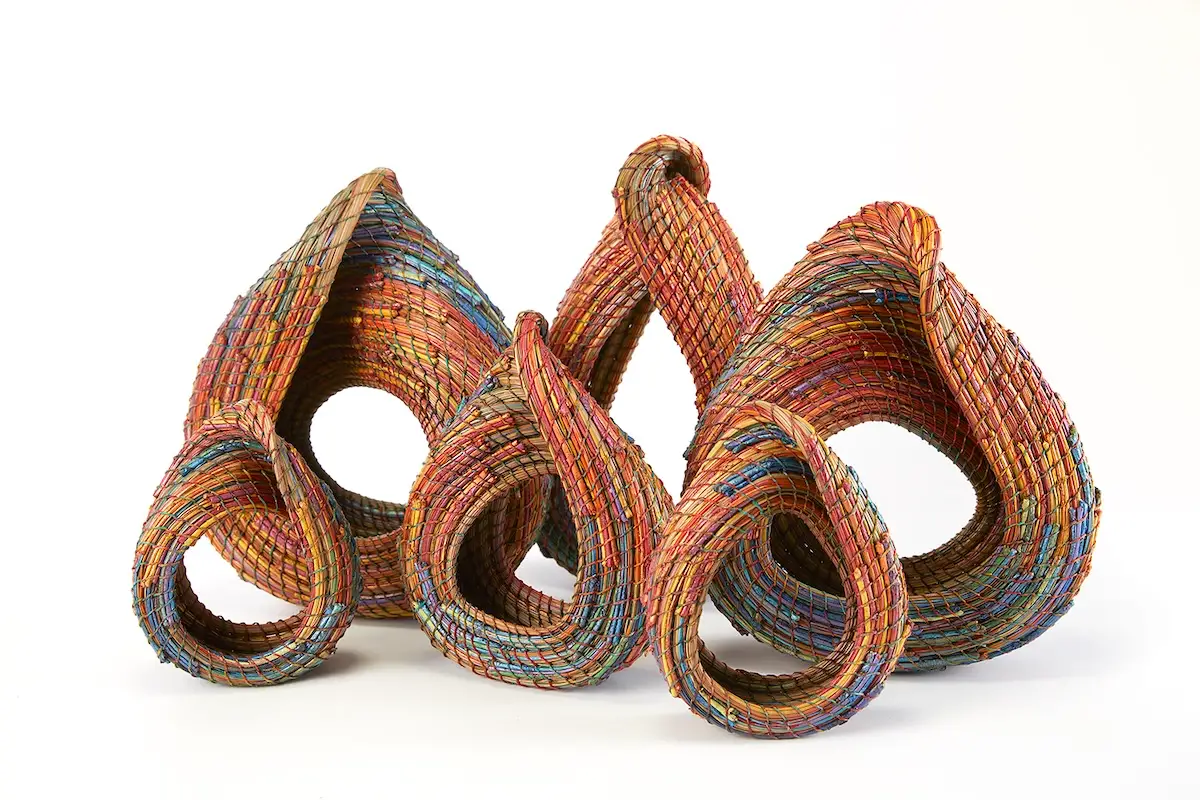
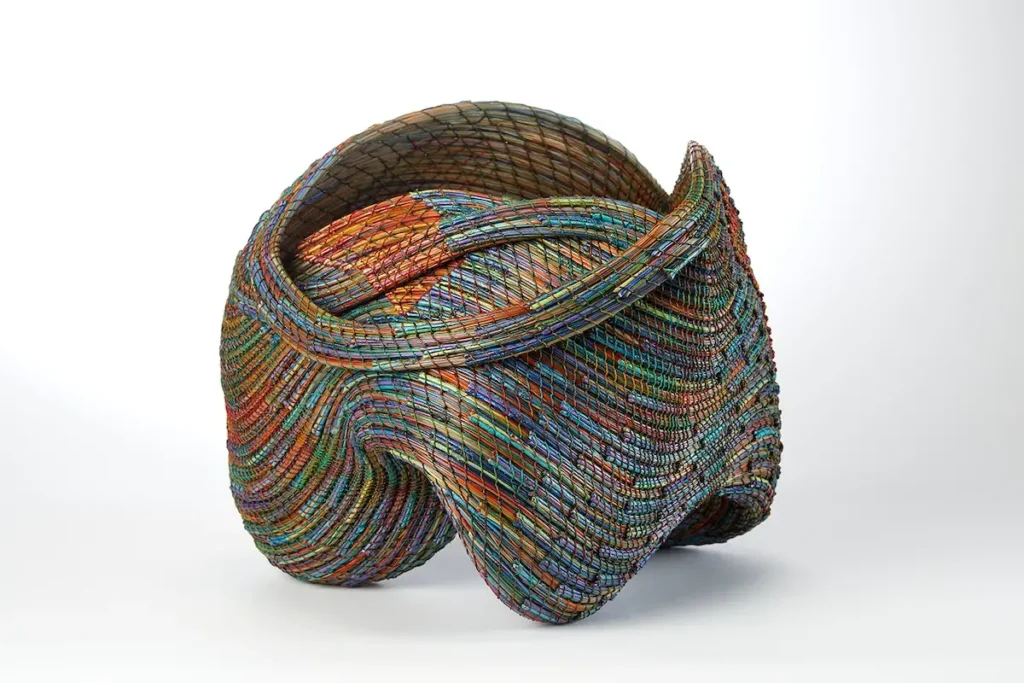
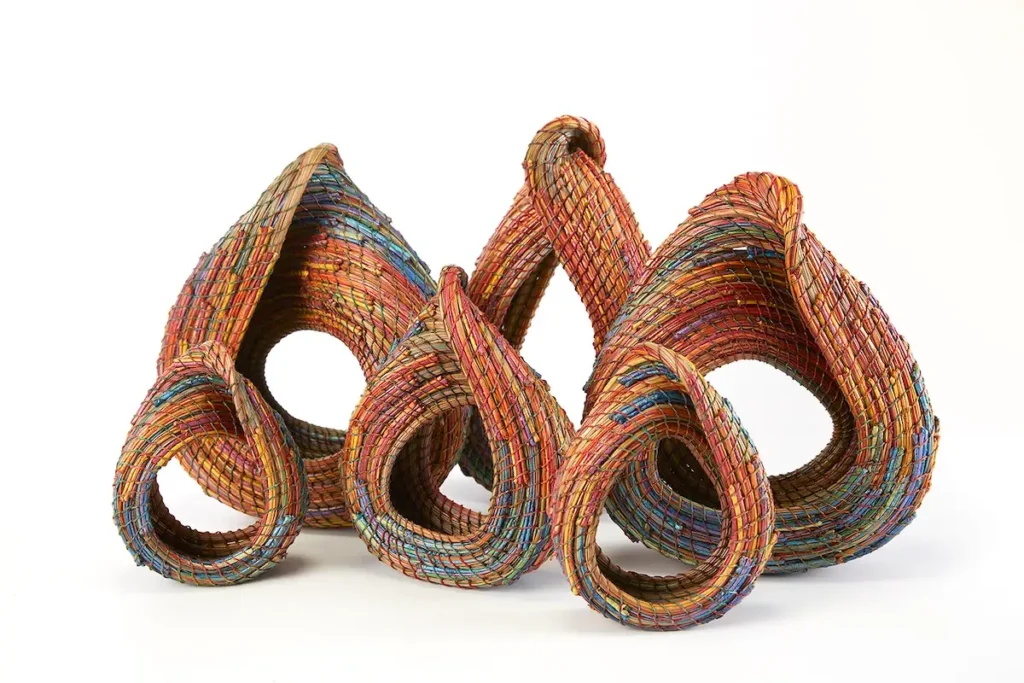
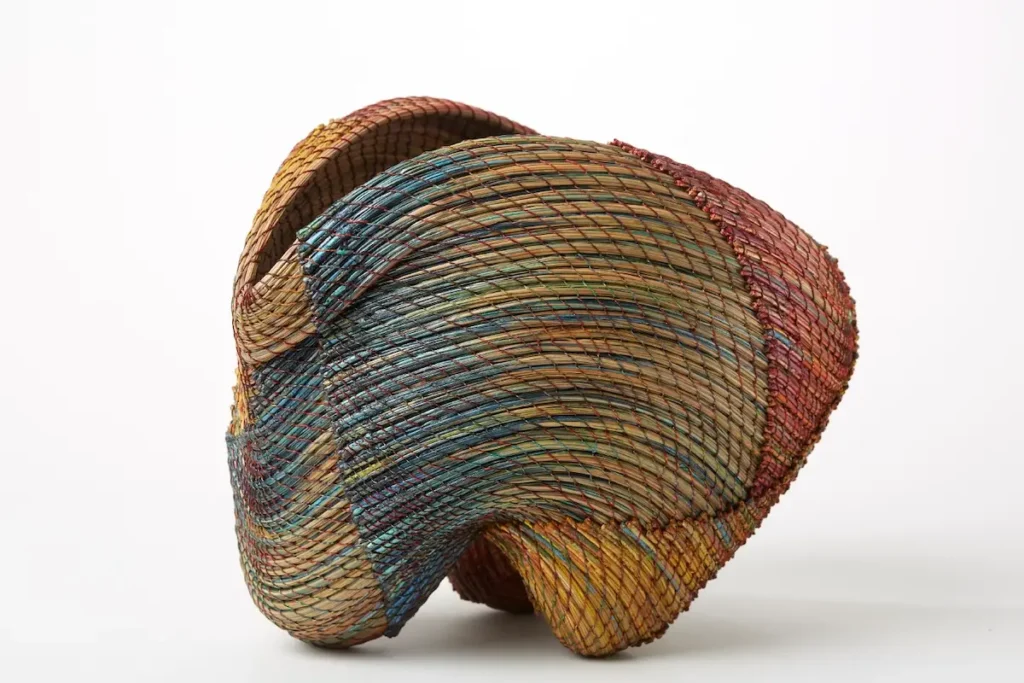
In the Sandhills of South Carolina, artist Clay Burnette gathers longleaf pine needles and turns them into beautiful, one-of-a-kind baskets. Instead of following strict patterns, Clay lets each piece grow slowly and naturally, coil by coil. His work is inspired by curiosity, nature, and the joy of not knowing exactly what the final shape will be. The result is a collection of sculptural baskets that feel both earthy and full of imagination.
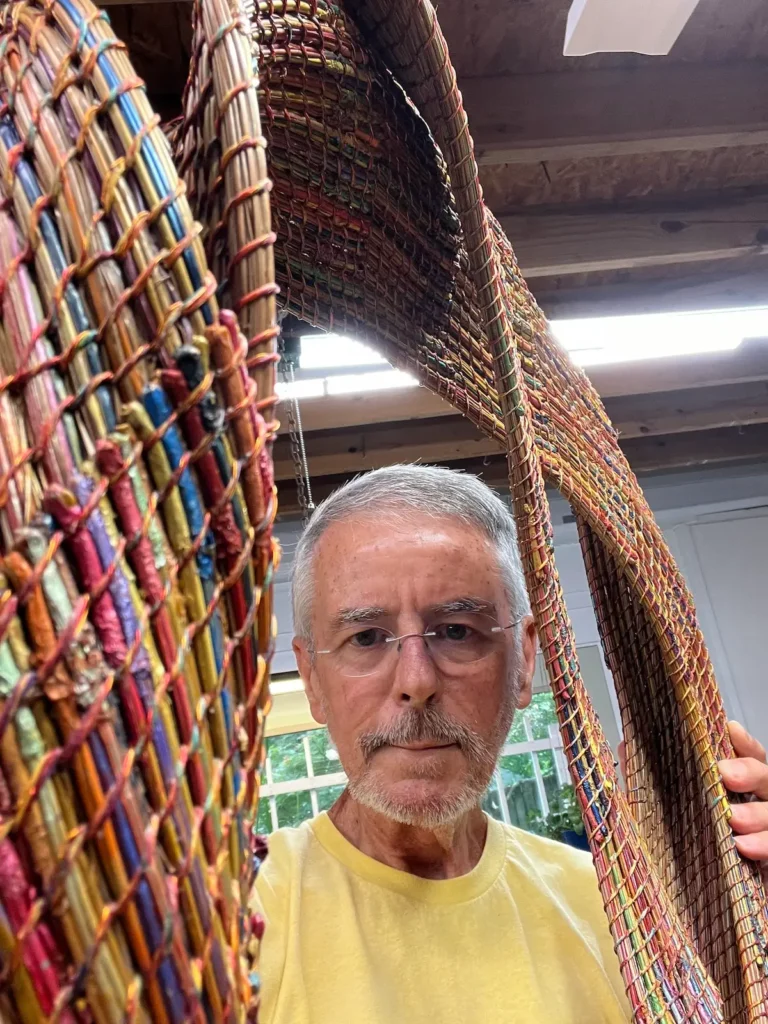
What first drew you to making baskets with pine needles?
Longleaf pine needles thrive in the Sandhills of South Carolina, where I live. They are a renewable natural resource.
Do you remember your very first basket? What was it like?
My first basket was a small, traditional round form. I was focusing on creating a round form that incorporated both open coiling and closed coiling techniques rather than exploring contemporary shapes at that point.
As an Amazon Associate I earn from qualifying purchases. Read more about our affiliate linking policy.
After making a few rounds of traditional shapes, I realized that I needed to explore contemporary shapes so that I could explore the unknown. Organic forms caught my attention, and I began to explore organic, free-form pieces with emphasis on form, not function.
Were you taught to weave or did you figure it out on your own?
I taught myself to coil by wrapping wool yarn over rope. The core was covered or closed.
I moved to the Sandhills of SC, where longleaf pine trees grow both naturally and are planted in fields as a major forestry crop. The length and flexibility of the indigenous longleaf pine needles became a natural resource that works well with open coiling, where the coil material is exposed.
What did basketry mean to you when you first began?
I grew up in the country in a mountainous area of NW Georgia and spent almost all my leisure time exploring the native flora and fauna in the area. I never learned the basics of drawing. I could visualize images, but did not have the skills to transfer those images to reality until I taught myself to coil.
When I taught myself to coil, everything suddenly clicked. I realized that coiling was a technique that could be used to create endless forms with no preconceived idea as to what the end result might look like.
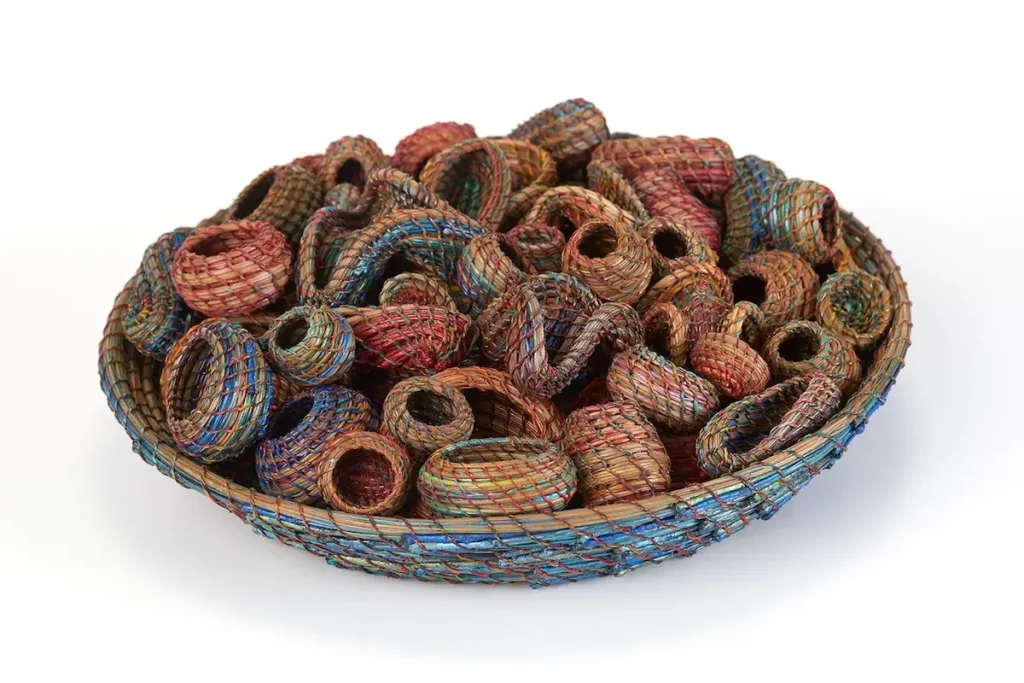
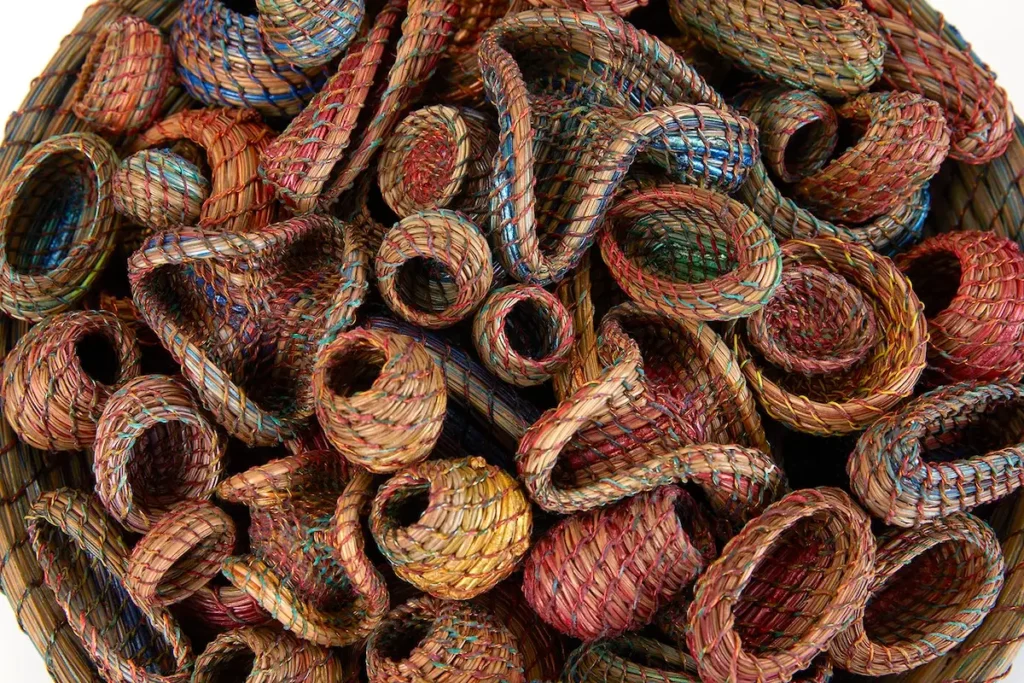
How did your connection to the longleaf pine and nature shape your work?
Longleaf pine needles are a perfect material for coiling. They checked all the boxes for me. They were readily available, were free to gather, and were a renewable, natural resource.
I enjoy spending time outdoors and am happiest when I am trekking in the Sandhills trying to find the longest pine needles in the area. Most longleaf pine needles are 10-12” long, but through observation, I realized that longer needles grew on young trees that had not started branching out yet as they grew.
I gather from these young trees and am able to collect needles that are 16-18” long, sometimes as long as 21-24”.
What was your biggest challenge when you were starting out?
Time
How do the shapes and colors of pine needles influence what you make?
I gather pine needles directly from the tree when they are fresh and green. I do not damage the tree as I pull the needles from the tree trunk.
I bundle the needles and take them to my studio, where they are placed on drying racks. The drying process takes several months. I then choose to either begin coiling them in their natural color or dye and paint them before I begin the coiling process.
Do you feel your work continues the traditions of basketry or pushes beyond them?
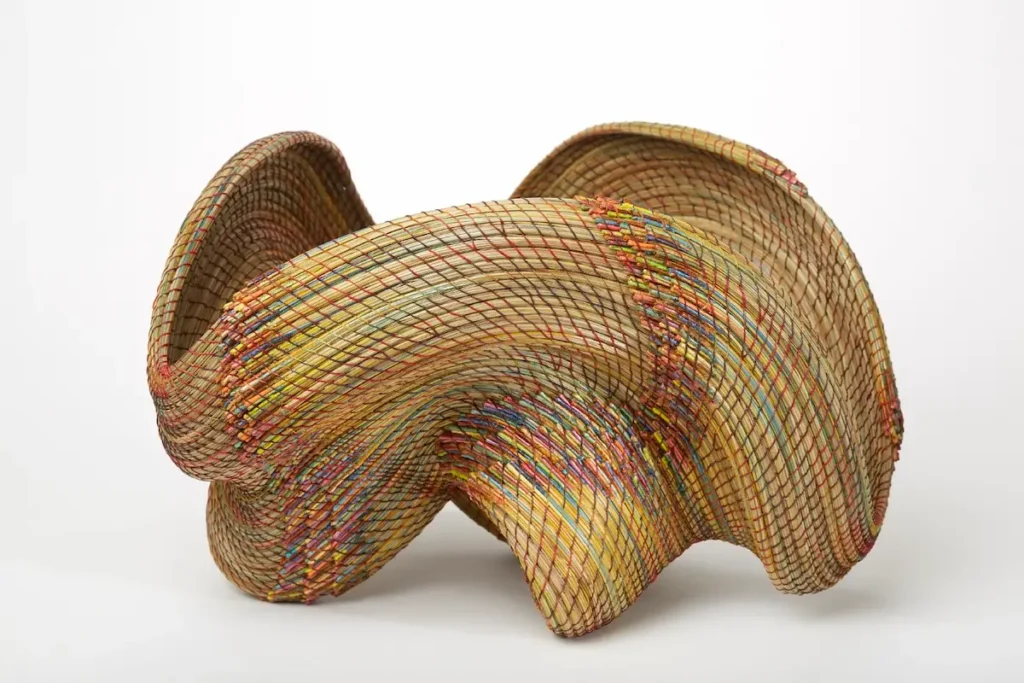
I am not a traditional basketmaker. I prefer form over function, mainly because I become bored coiling repetitive round traditional forms. I prefer the challenge of spontaneity.
Can you walk us through your studio set-up — where the magic happens?
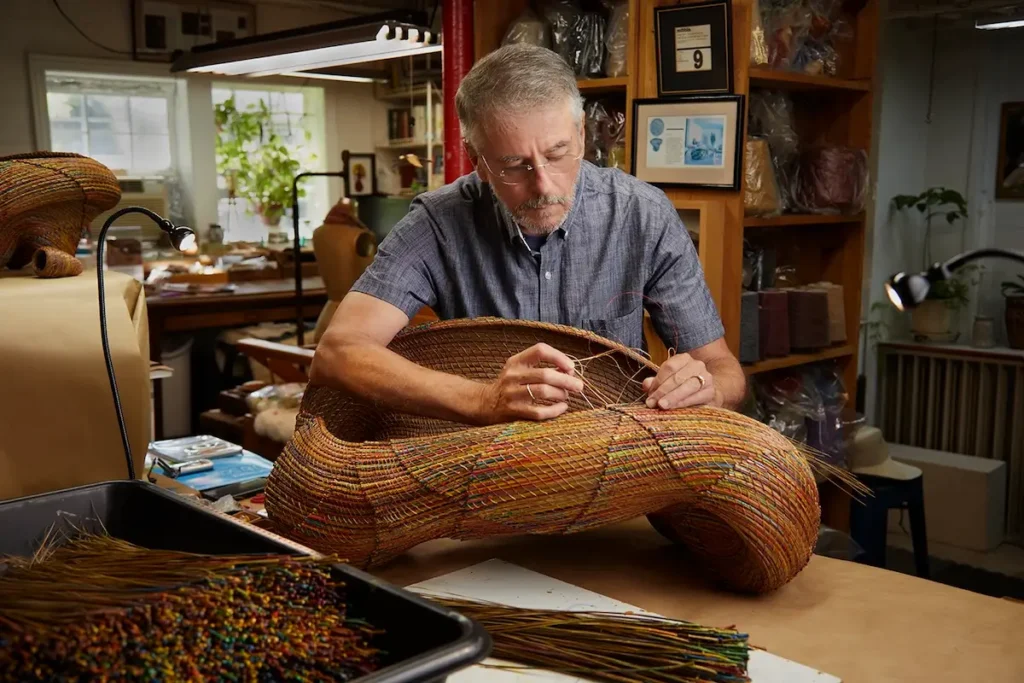
My studio is 20’ x 24’ includes a four harness floor loom, floor to ceiling shelves lining the walls, and four 4’ folding tables that provide a work surface, along with various pedestals and cabinets.
A small kitchenette with a stove and refrigerator fills one corner. I store both natural and dyed and painted pine needles in cardboard boxes and various-sized storage containers. Shelves include cones and skeins of weaving yarn and completed baskets.
Outside, I also have a lean-to greenhouse filled with numerous houseplants, as well as a large goldfish pond and chicken coop. My studio area is located in the center of a residential block neighborhood and is not visible from the street, allowing me lots of privacy.
What are the essential tools and materials you can’t live without?
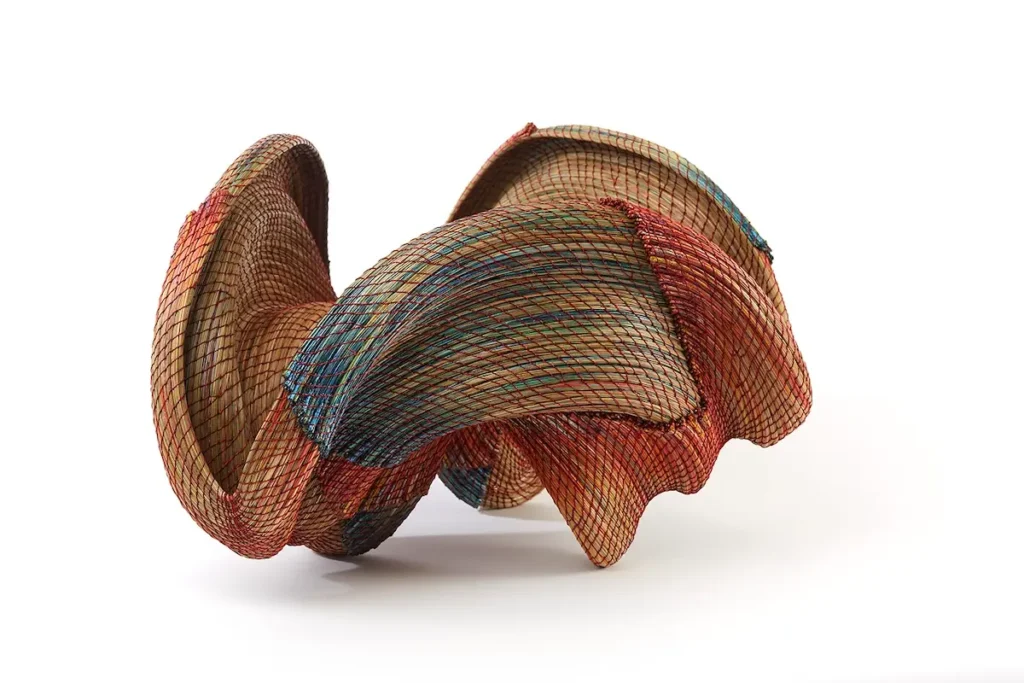
My tools are simple – a large steel upholstery needle and a pair of sharp pointed scissors.
How do you gather, prepare, and choose your pine needles?
I gather fresh needles from young longleaf pine trees located on our property, about 50 miles away from my studio.
Years of gathering fresh green needles taught me that the longest pine needles grow on young trees that are from 2-8’tall and have not started branching out yet.
I gather by pulling the needles from the tree trunk, doing no damage to the tree. I then spread the fresh needles on drying racks in a shed at my studio. After drying, which normally takes several months, the needles are bundled, stood up in a dye pot, and the first 4-6 inches are dyed, leaving about 2/3rds of the needles naturally colored. I then dip the dyed needles individually in various colors of acrylic paints for extra coloration. After soaking the needles overnight in water for pliability, the material is ready to use.
Do you work with sketches or plans, or do the baskets evolve as you go?
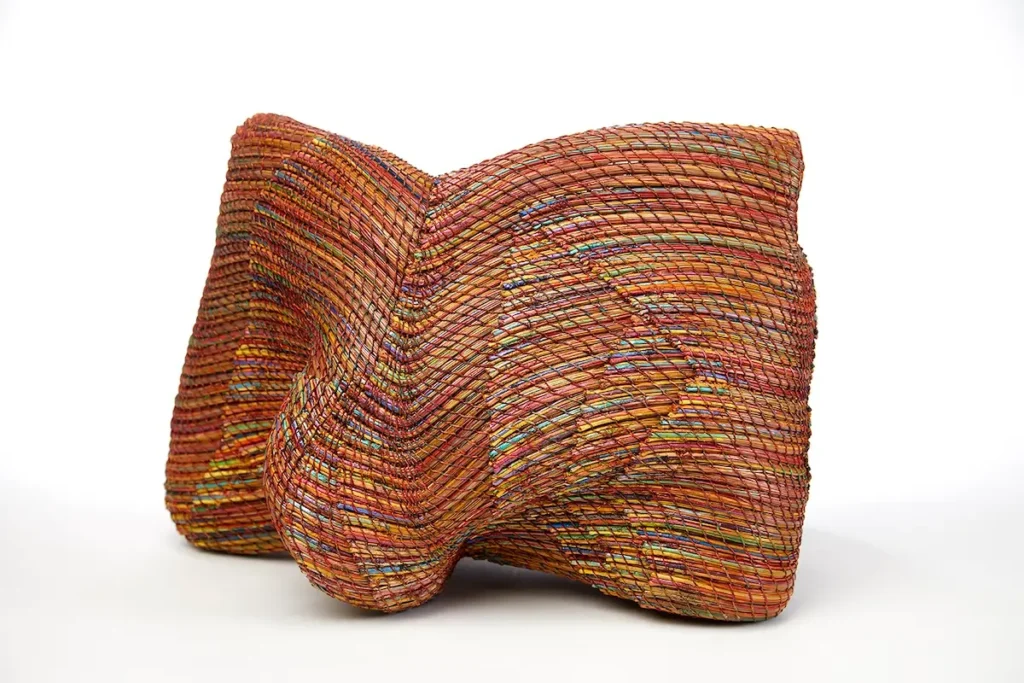
I make no preliminary sketches before I begin a piece. I prefer the mystery and spontaneity of not having a prescribed outcome.
How do you decide when a piece is finished?
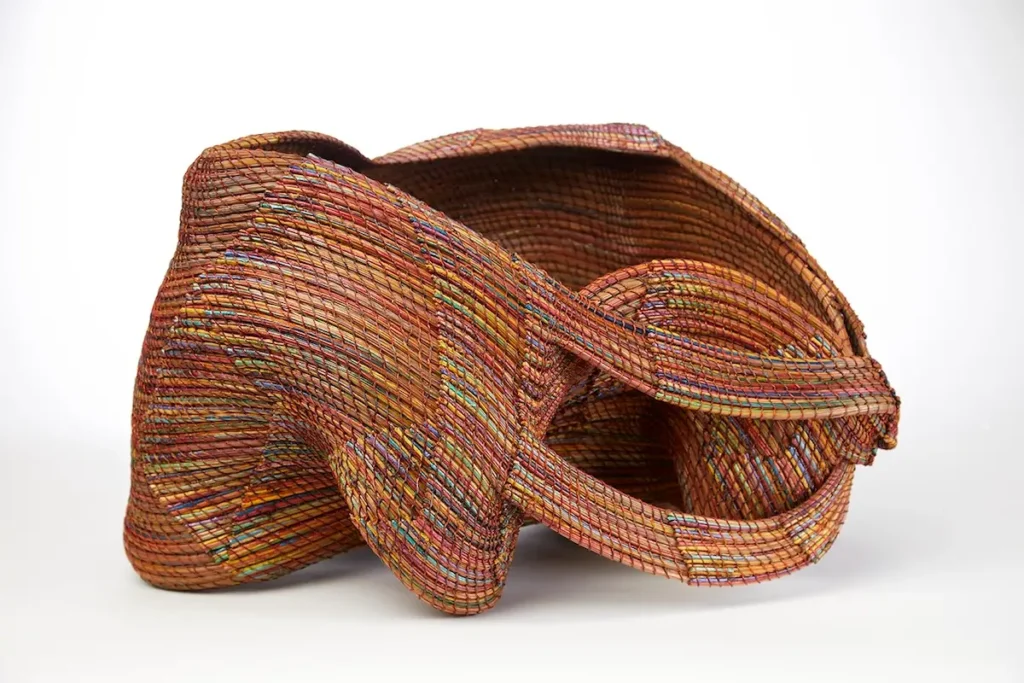
Since coiling is a very slow process, I have time to determine shape as I coil the core pine needles in place. When I have reached the desired shape, I simply stop adding pine needles to the core, which allows the coil to taper slowly.
What’s the most unexpected tool you’ve used in your creative process?
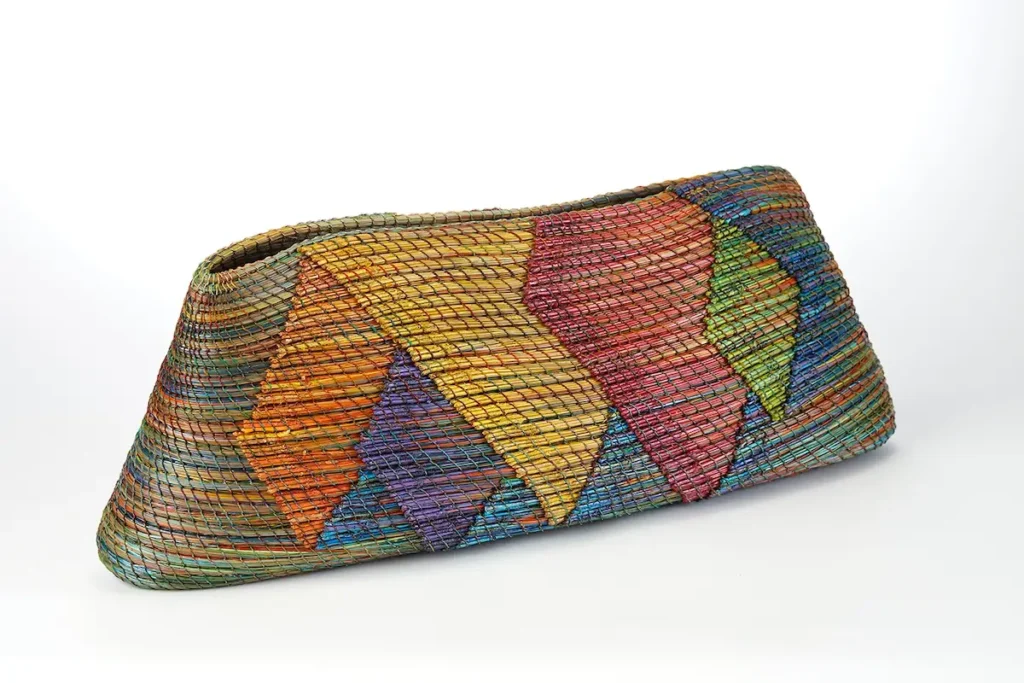
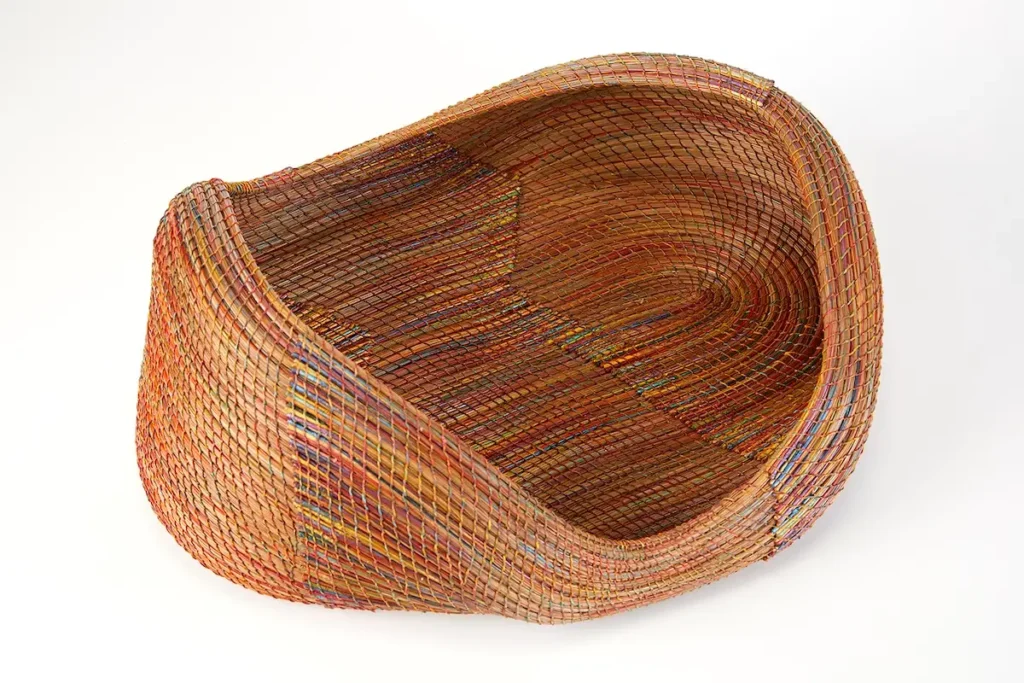
After being displeased with the limited colors available of waxed linen, I started creating my own binding material by twisting various gauges of hand waxed linen thread and copper wire. A dremel tool is used in the twisting process.
Have there been times when a piece surprised you and took on a life of its own?
Since I make non-traditional forms and make no preliminary sketches, almost all my pieces surprise me. I live for the “what ifs”.
Do you ever step back from a piece and start again?
I oftentimes have 6-8 pieces in progress at one time. This allows me to put a piece aside if the piece becomes perplexing. I then work on a less challenging form until I can return with fresh eyes.
Is there a basket you struggled with that ended up becoming a favorite?
Most larger forms contain struggles. When I create a tripod or quad pod base, there are oftentimes areas that become too tight to stitch into. I then have to decide to suspend the coil and reattach it in a more open area in order to continue with the shape.
The excitement of not knowing what will happen after reattaching the coil oftentimes ends with me favoring the final object even more than usual.
What has been your proudest moment as an artist?
After 50 years of coiling, my basket-making career has been filled with many proud moments. I live for the present and look to the future much more than reflecting on past accomplishments.
If you could give your younger self one piece of advice about creating art, what would it be?
JUST DO IT! Everything does not need to be planned. Be spontaneous and explore the unknown.
Where can people see your work?
www.clayburnette.com
Facebook – Clay Burnette
Etsy – pineneedlebasketscb
Instagram – @clayburnettebaskets
Gallery – Blue Spiral 1 Gallery – bluespiral1.com/artists
Or google my name and click on IMAGES.
Rapid-fire Fun:
Favorite season for gathering needles? I mostly gather pine needles in the wintertime. Undergrowth brambles, insects, and snakes are dormant during cold months, making my job easier. Also, South Carolina has oppressive heat and humidity during the summer months.
Studio playlist or silence? I mostly prefer silence whenever I work in the studio, but occasionally listen to podcasts. Most of my stitching is done at night, where I oftentimes watch mindless TV or the latest news programs.
A tool you wish you had invented? To quote Cher, IF I COULD TURN BACK TIME. Life moves quickly, so enjoy every moment.
One word that sums up your creative life? Curiosity
Interview posted March 2026
Browse through more weaving inspiration on Create Whimsy.