
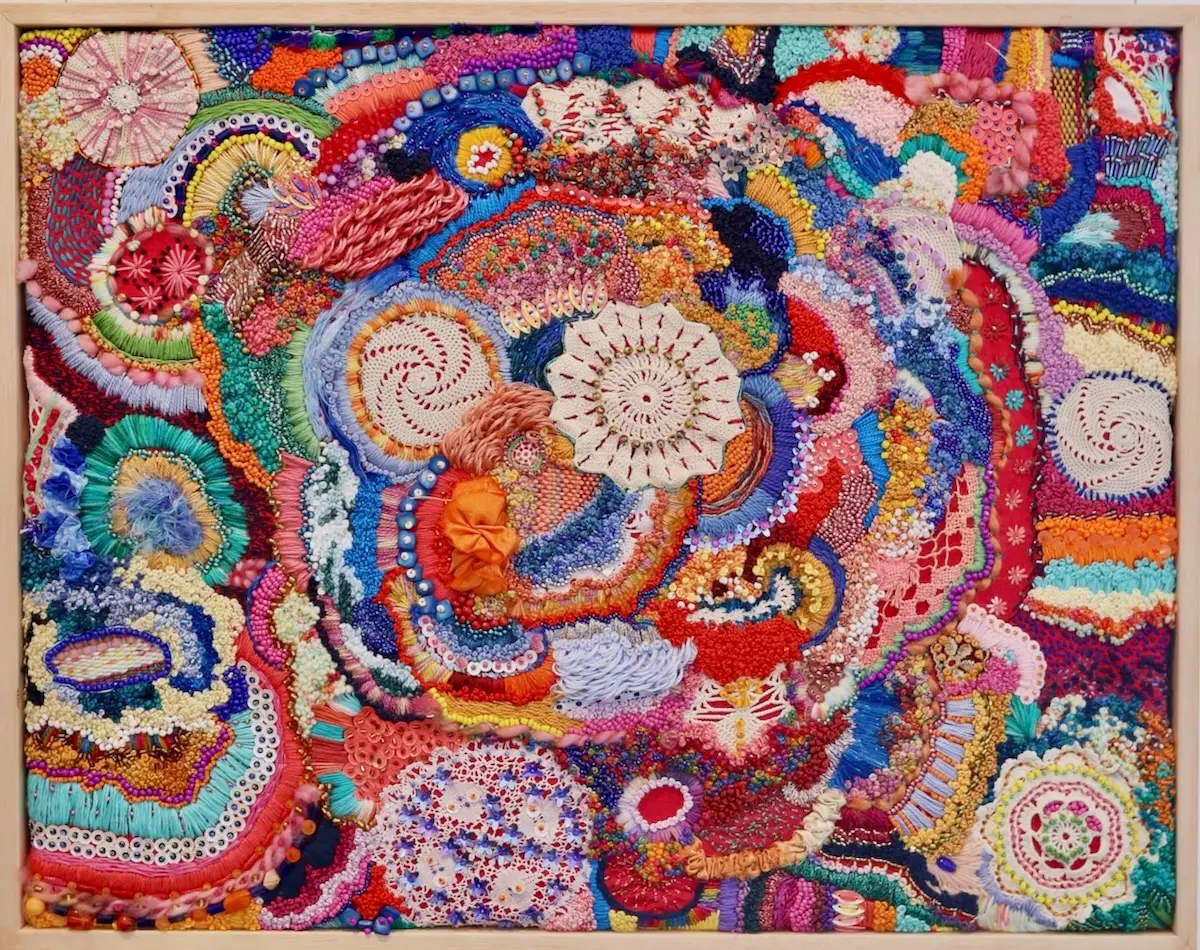
Step into a quiet, light-filled studio where paint and thread dance together, and you’ll find Elizabeth Sullivan at work.
Her art feels like a slow walk through nature, full of color, texture, and tiny stitched marks that build into something magical. From childhood stitching kits to richly layered canvases, she creates pieces that grow gently over time, guided by feeling, curiosity, and a love of detail.
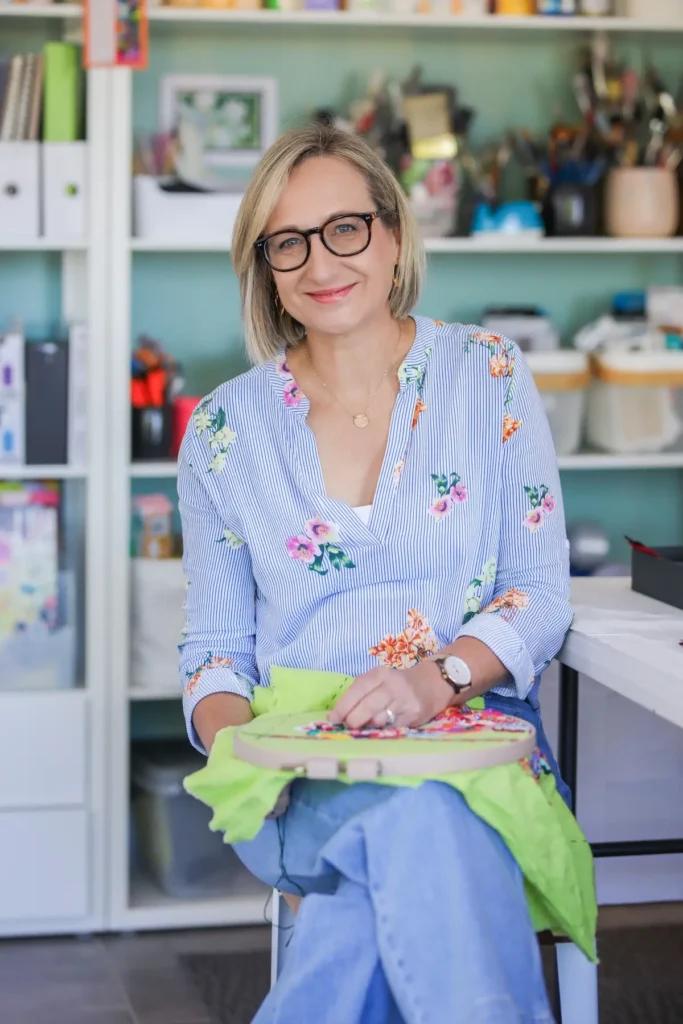
When did stitching first enter your life? Do you remember the first piece you made that felt special?
Stitching entered my life as a child. I loved working on kits; cross stitch, long stitch, and latch-hooking.
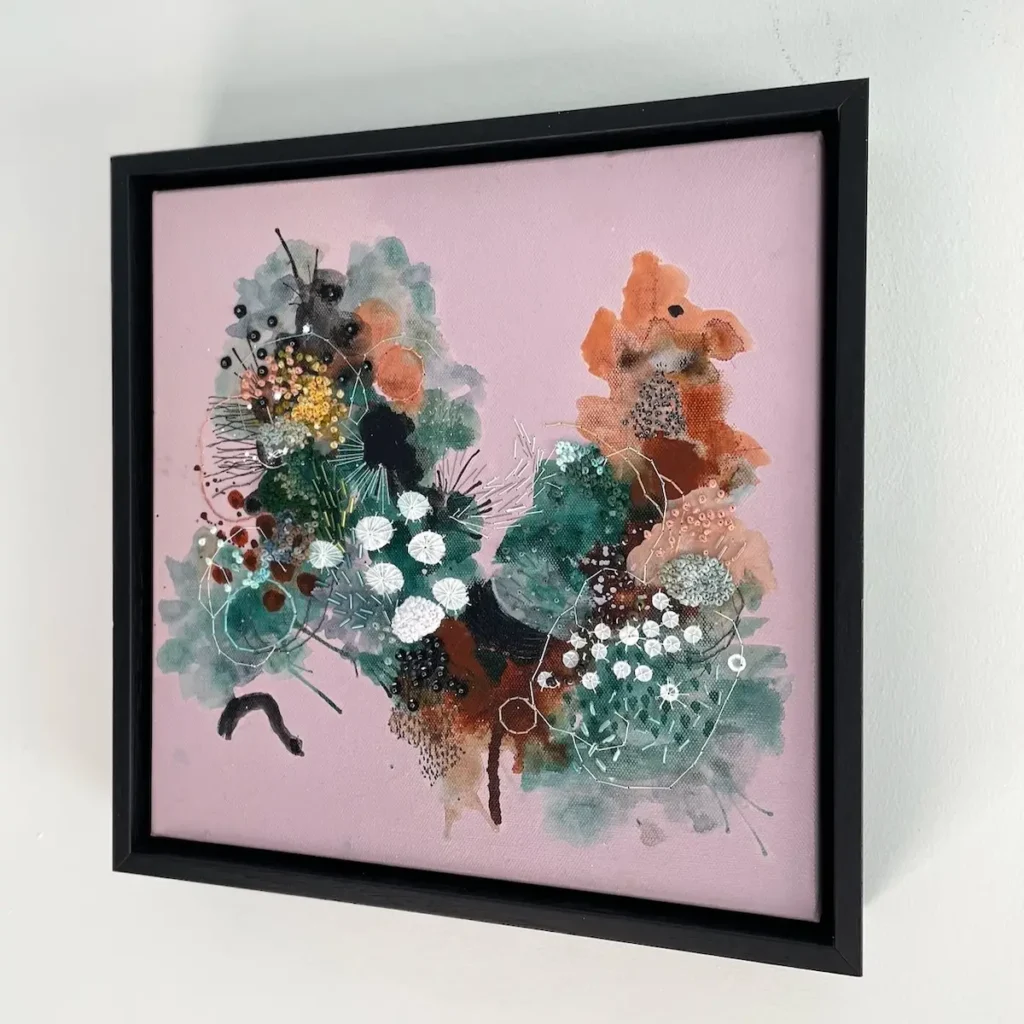
It wasn’t until I was well into adulthood that I returned to stitching. At that point, I began incorporating thread into my painted works on paper and canvas. The stitch shifted from being something prescribed to something more exploratory. It was another way of marking the surface, adding depth and texture.
As an Amazon Associate I earn from qualifying purchases. Read more about our affiliate linking policy.
One of the first pieces that felt significant was a work titled Tide Pool. It was an early stitched painting on canvas where it felt that the stitching was integral to the overall work. It marked a shift. I felt it added a uniqueness to the painting. For that reason, it remains special.
You were born in NZ and have lived in several different places before settling in Sydney. How have those different landscapes shaped your creative voice?
I think it’s been less about specific places and more about life experiences and the passage of time.
My art practice really began later, when my children were at school, and I had a little more time. That said, the places I’ve lived have undoubtedly shaped my creative voice in a more unconscious way. Each environment, combined with the experiences of that time, seems to leave a subtle imprint rather than anything literal or directly referenced.
It’s less about depicting a landscape, and more about absorbing it over time, and allowing those impressions to surface gradually through the work.
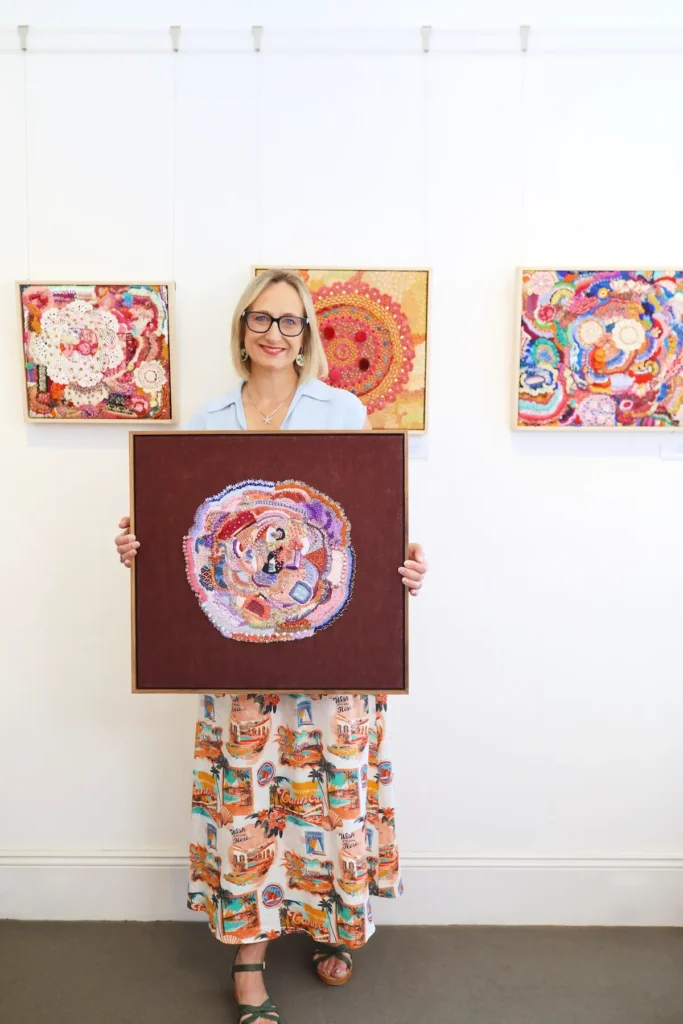
Was there a turning point when you began to see yourself as an artist?
Not as a single moment. It felt more like a gradual shift as I began to develop an art practice.
Developing a visual language takes time, without pressure or expectation, to learn and experiment, and to understand how you want to work.
As I continued, I began exhibiting in group shows and engaging more with the broader art community. It wasn’t a clear turning point, but rather an accumulation of time, consistency, and immersion.
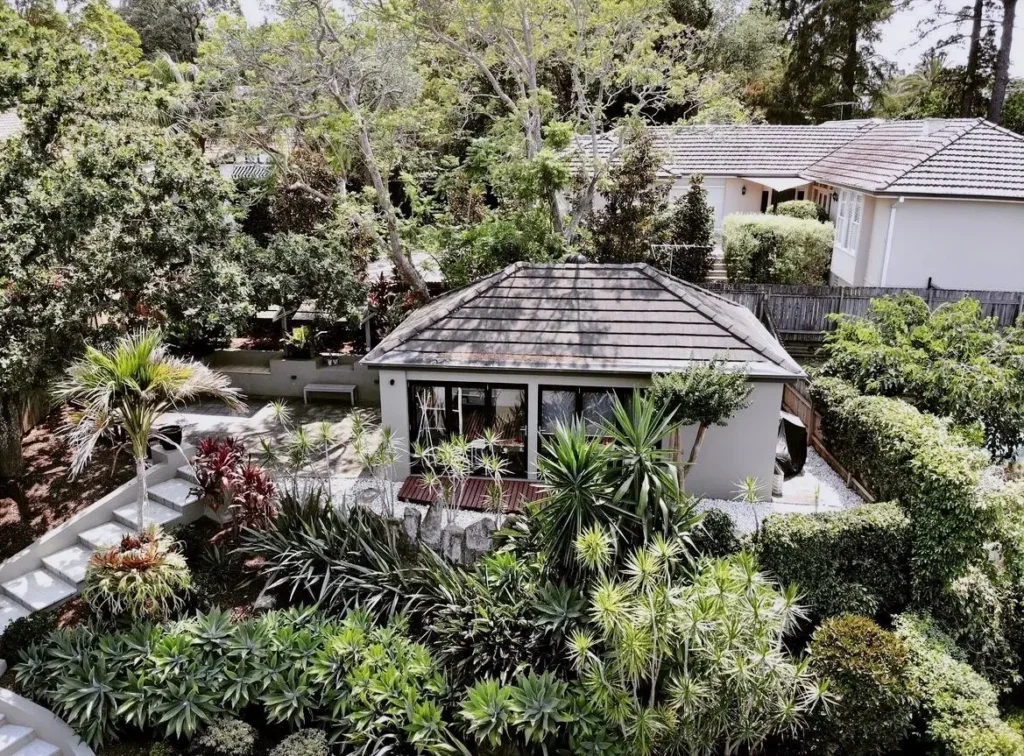
Describe your creative space.
I’m very fortunate to have a self-contained studio at the top of our garden. It’s quiet, separate from the house, and elevated, overlooking the garden (which is beautifully maintained by my husband!).
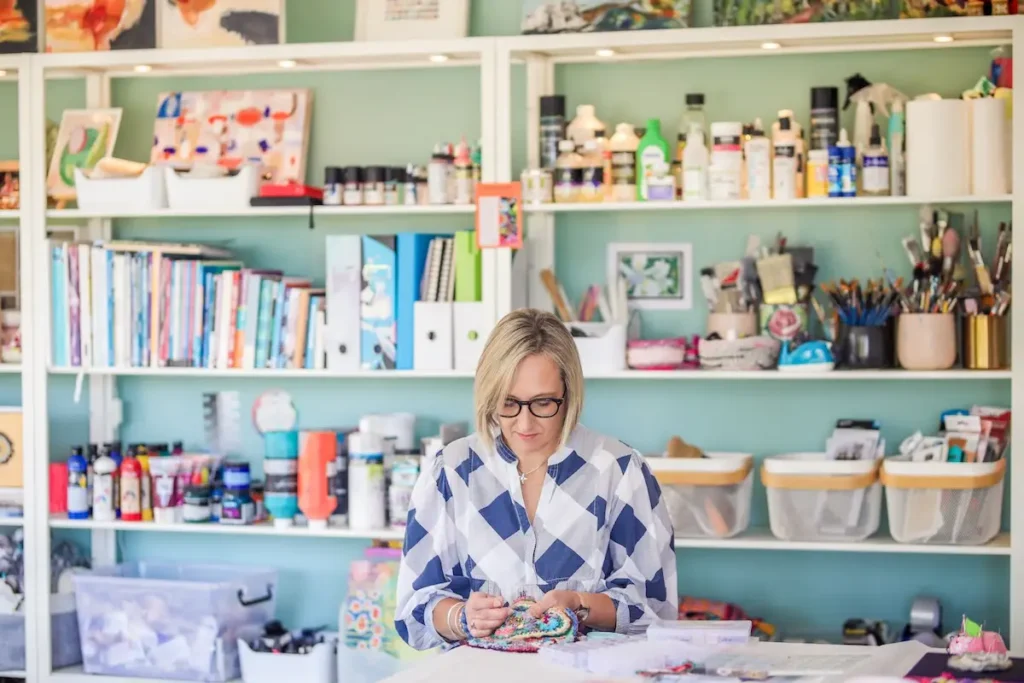
The space is light and airy, with bi-fold doors on two sides that open fully, allowing the outside to flow in. I work across a number of tables, with floor-to-ceiling shelves filled with materials for painting, mixed media, and stitching.
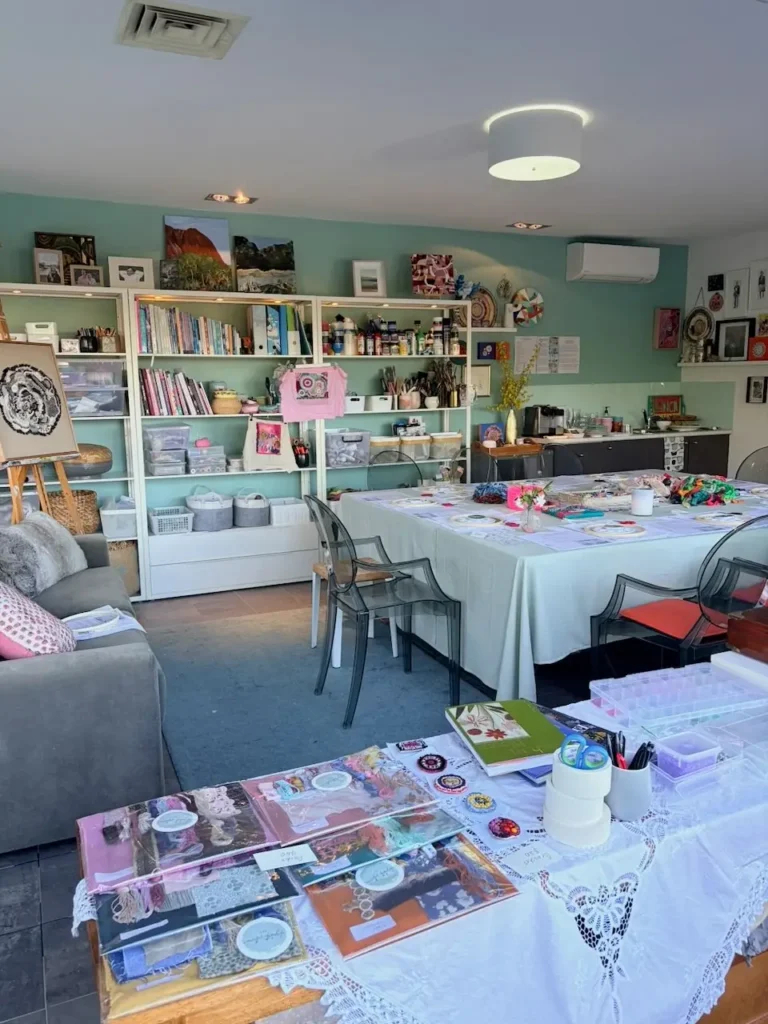
There’s also a comfortable sofa, a small kitchenette, and a bathroom, so I can spend extended time there without interruption. Natural light moves through the studio throughout the day. I’m able to easily reconfigure the space, moving furniture around, to better suit running workshops or for my own work.
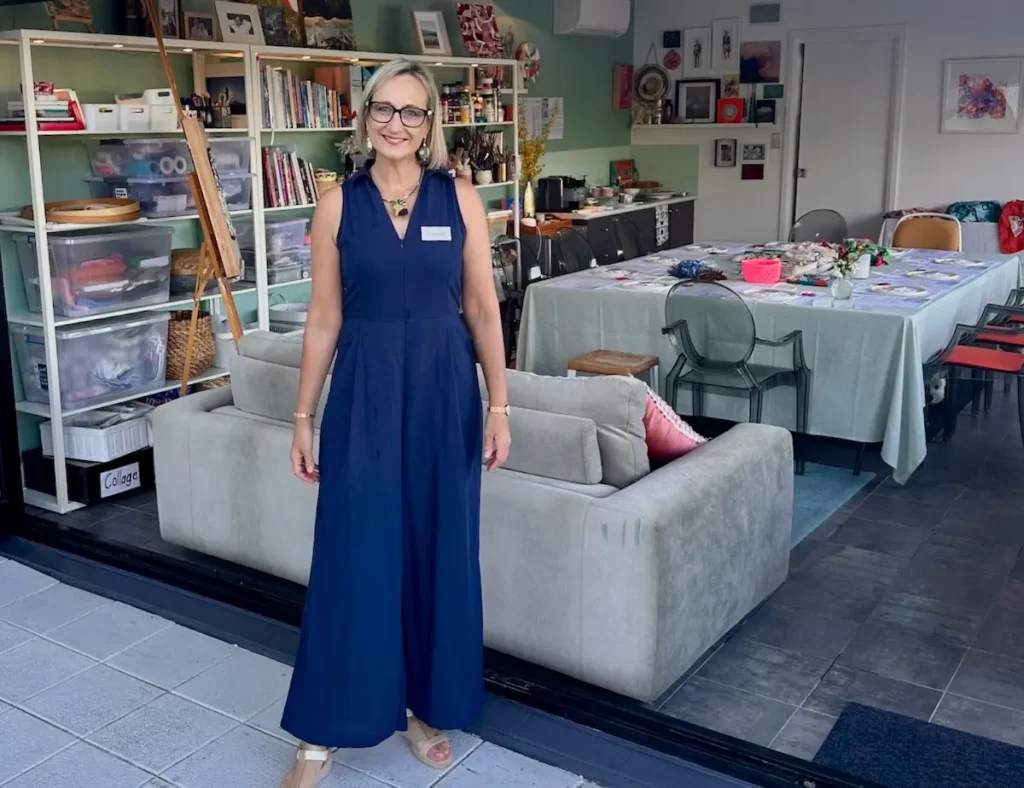
It’s a very personal space, shaped by a collection of art and stitching books, along with meaningful objects; family photos, artworks, and collected pieces. I think it aptly reflects my personality and I love spending time there each day.
Nature seems to play a big role in your work. What kinds of places spark ideas for you?
Nature plays a strong role, but not in a literal sense. It’s less about specific landscapes, and more about the details within them.
I’m drawn to the shapes, patterns, colours and textures that appear in natural elements, for example: leaves, branches, bark, plant life, rock pools, and coral reefs. There’s a quiet complexity in those forms, and a natural sense of rhythm and repetition.
Just as much as what I see, it’s how I feel when I’m outside. Light, weather, and atmosphere all influence the work in a more subtle way. Those impressions tend to stay with me and surface gradually through the process.
What usually comes first in a new piece: colour, texture, or a feeling you want to express?
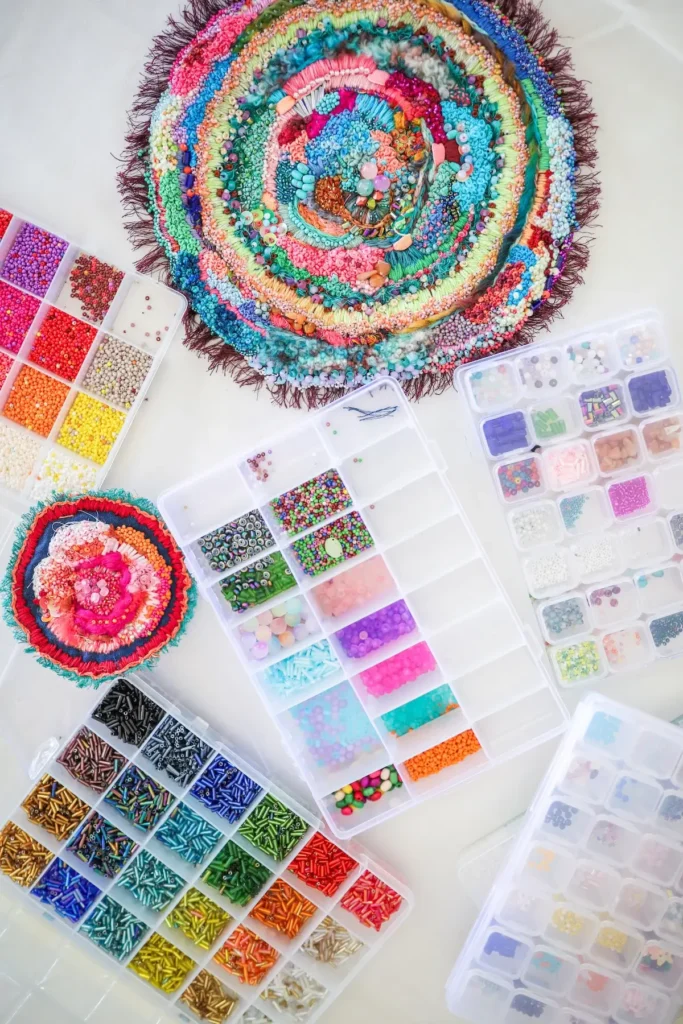
Because I mostly begin without a plan, a preliminary sketch, or a specific idea, colour is usually the starting point.
The choice is instinctive and made quite quickly. It’s less a considered decision and more a response to how I’m feeling in that moment. That initial palette tends to set the tone for the work, even as it evolves.
From there, texture and form begin to emerge through the process, but colour is what opens the piece and gives it direction.
You’ve described a process that begins freely and then becomes more deliberate. What does that shift feel like while you’re working?
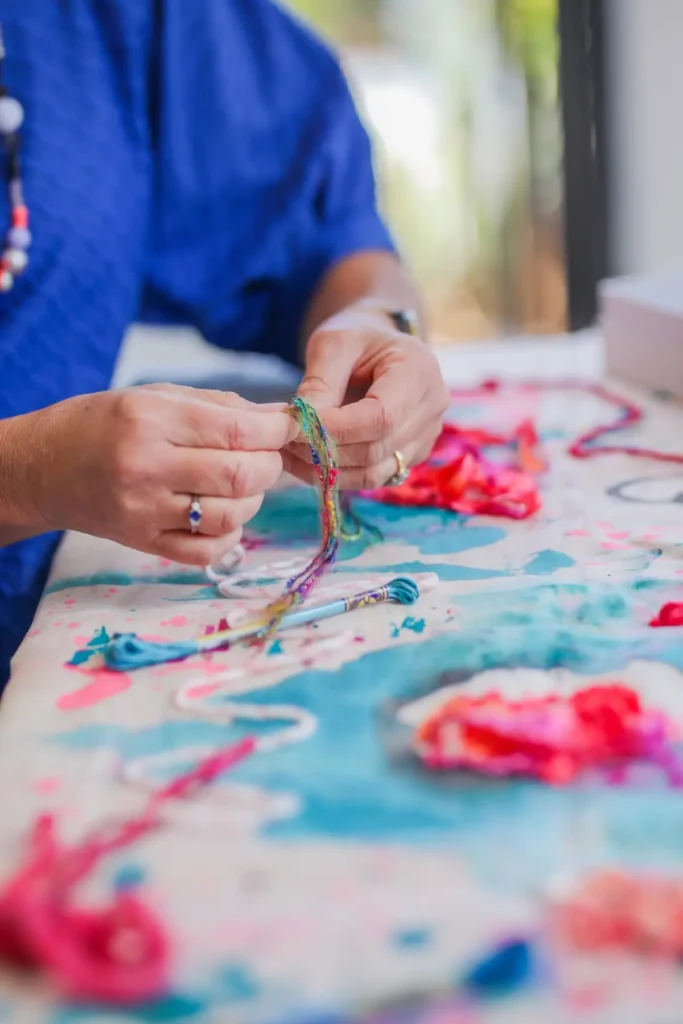
Yes, at the beginning, it’s very open. I’m simply responding to each stitch and allowing the work to grow without expectation. That stage feels quite free and exploratory, often incorporating additional materials (beads, sequins, pieces of fabric/textiles, trims for example), as the surface begins to build.
There comes a point where the piece starts to reveal itself. Forms and shapes begin to emerge. That’s where the shift happens.
From there, my process becomes more considered. I start to think about composition; how areas relate to one another, where density might need to be balanced with space, or where a quieter section might sit alongside something more complex. Colour shifts become more intentional, and layering is used to build depth and structure.
The final stage is about resolving the piece. This may involve softening or covering areas by stitching over them, adding detail or embellishment where needed, and refining the balance across the surface until it feels complete.
How do you know when a piece is finished?
I tend to return to the checkpoints grounded in the principles of design.
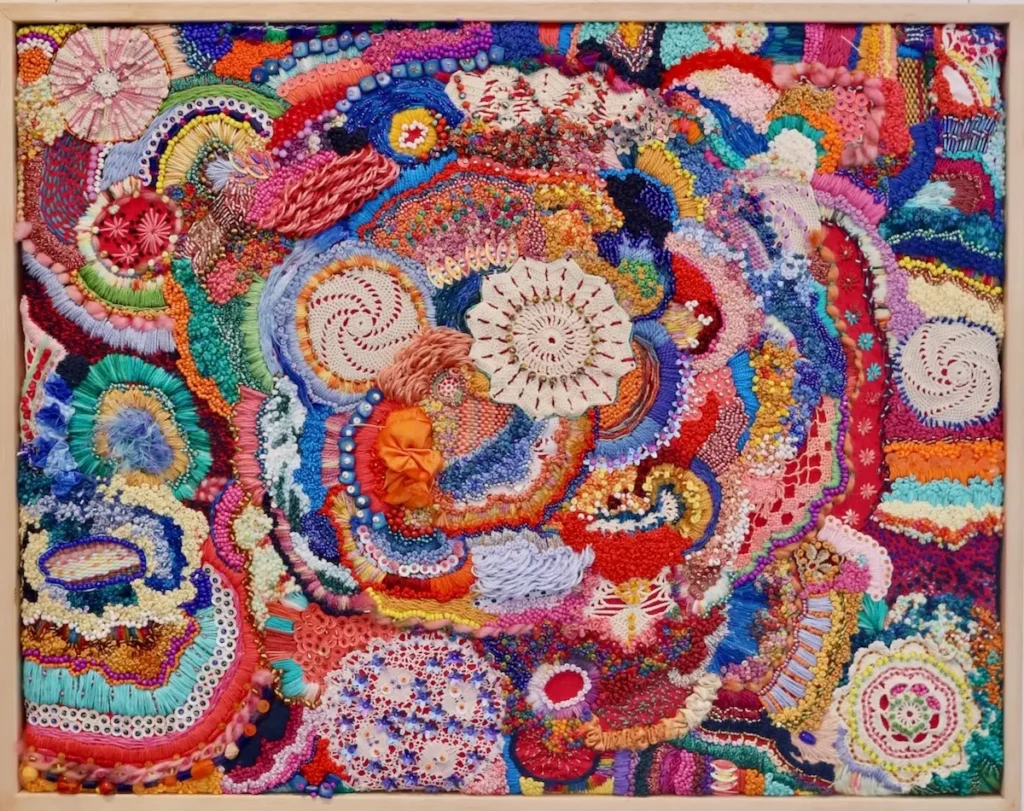
I look at composition; whether the eye can move across the surface with ease, and whether there are clear areas of focus. I consider balance between density and space, and whether there is a sense of rhythm and continuity through the piece.
There’s also a question of harmony and unity; whether the elements feel connected rather than competing.
When those aspects settle, the work usually feels resolved. It’s less a fixed endpoint, and more a sense that nothing further is required.
When a piece isn’t working, how do you step back and find a solution?
There are always pieces that don’t quite flow, or where I feel unsure how to move forward.
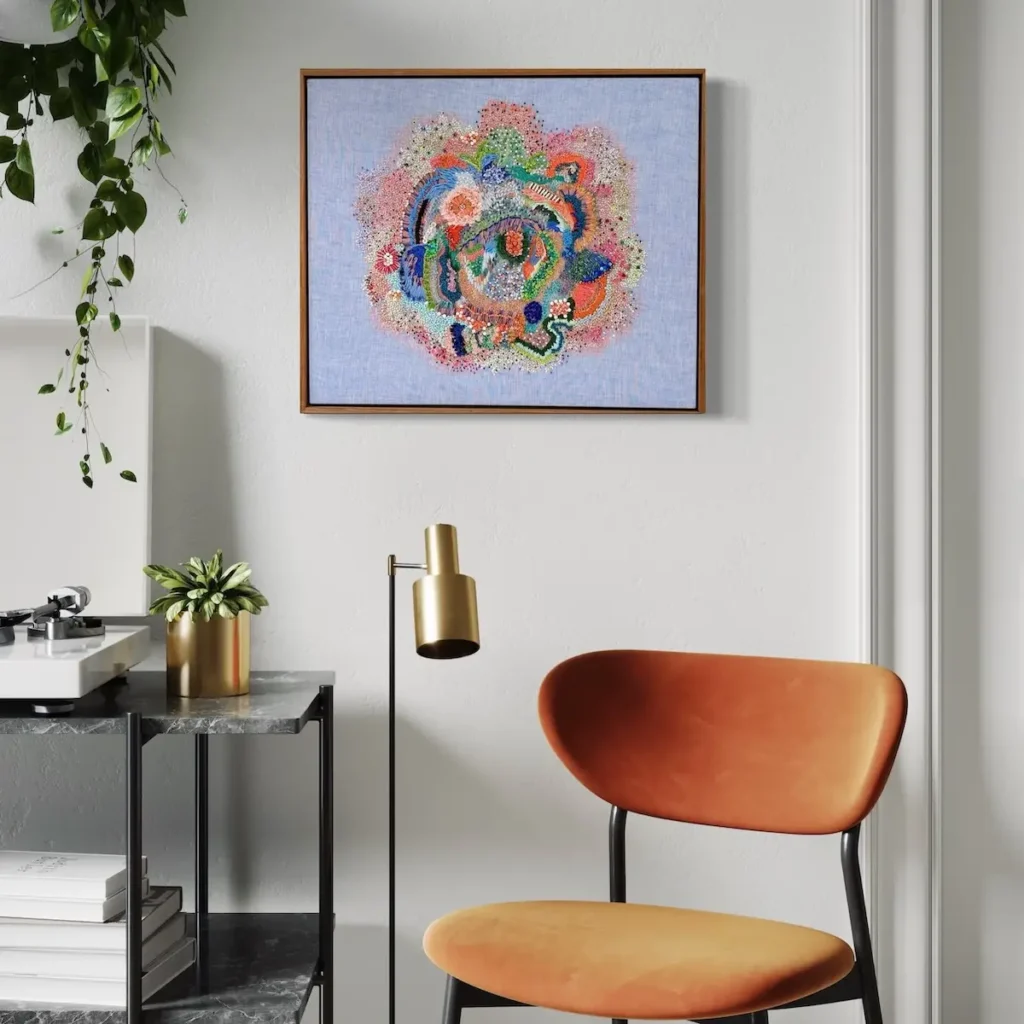
For that reason, I tend to work across multiple pieces. If I reach a point where one feels stuck, I’ll set it aside and shift my attention to something else. That distance is useful, it removes the pressure to resolve it immediately.
Often the works begin to inform each other. An idea, colour combination, or approach that emerges in one piece can unlock something in another.
Some pieces remain unresolved for extended periods; weeks, months, sometimes longer. I’ll revisit them occasionally to see if something has shifted. When it does, it can feel quite unexpected.
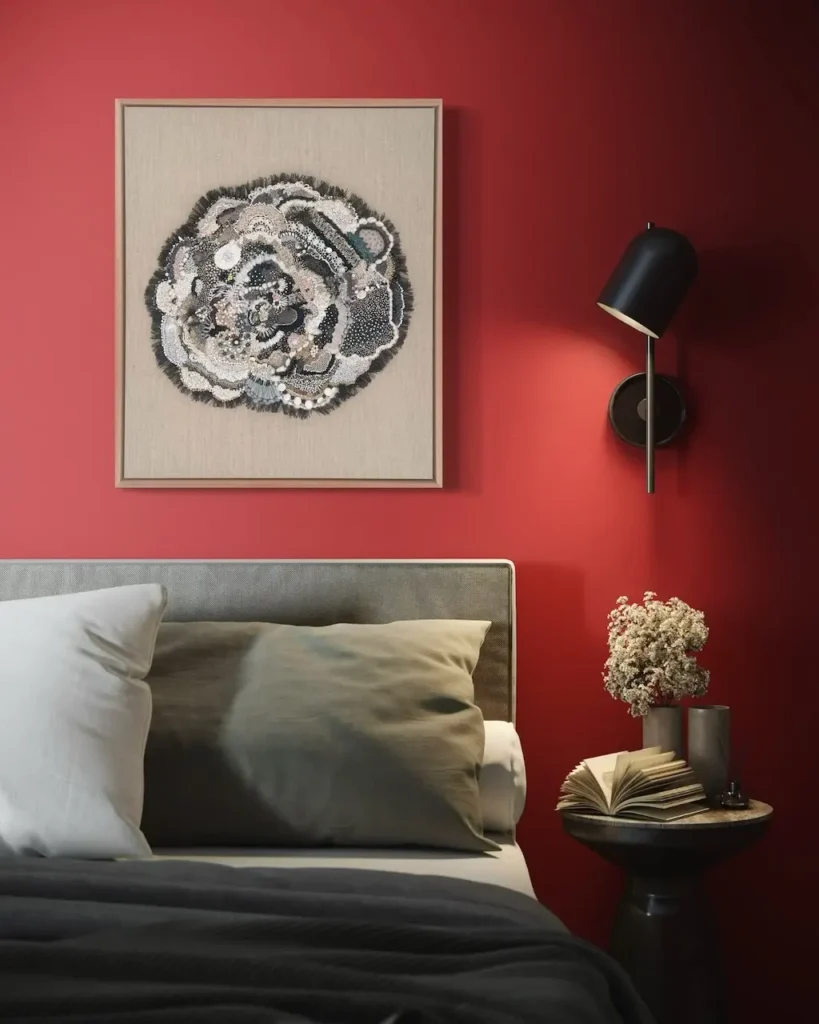
What kinds of challenges come up when working with layered textiles and embellishments?
As the work builds, it can become quite heavy and bulky, particularly if I am working a large piece of linen. That brings practical challenges, as I prefer working with a hoop. Once there are multiple layers of thread, beads, and embellishment, it becomes increasingly difficult to hoop the fabric effectively.
As I’ve started working on larger pieces, I’ve been adapting my approach, developing ways to stitch without a frame or hoop. That’s still an evolving process.
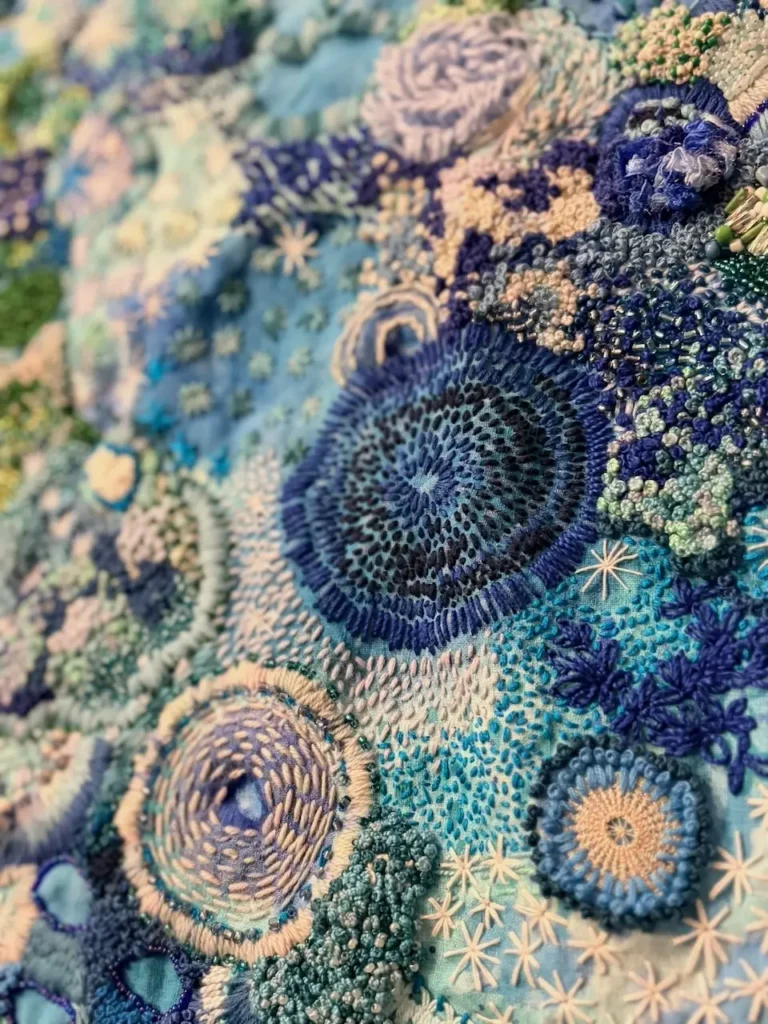
The materials themselves can also be demanding. Stitching into canvas, in particular, is physically tougher on the hands, and tends to be when I notice sensitivity in my fingertips.
There’s also a broader physical aspect. Sitting for extended periods, often leaning into the work can place strain on my neck, shoulders, and back. It’s something I’m increasingly aware of and trying to manage alongside the making.
Where can people see your work?
I’m very active on Instagram, where I share work daily. It’s the most current reflection of what I’m making and the process behind it.
My website also has a dedicated gallery and shop, where finished pieces can be viewed and purchased. I use Facebook and Pinterest as additional platforms to share and document the work.
Offline, I exhibit through galleries and host workshops in my home studio. Details of upcoming exhibitions and workshops are updated on my website.
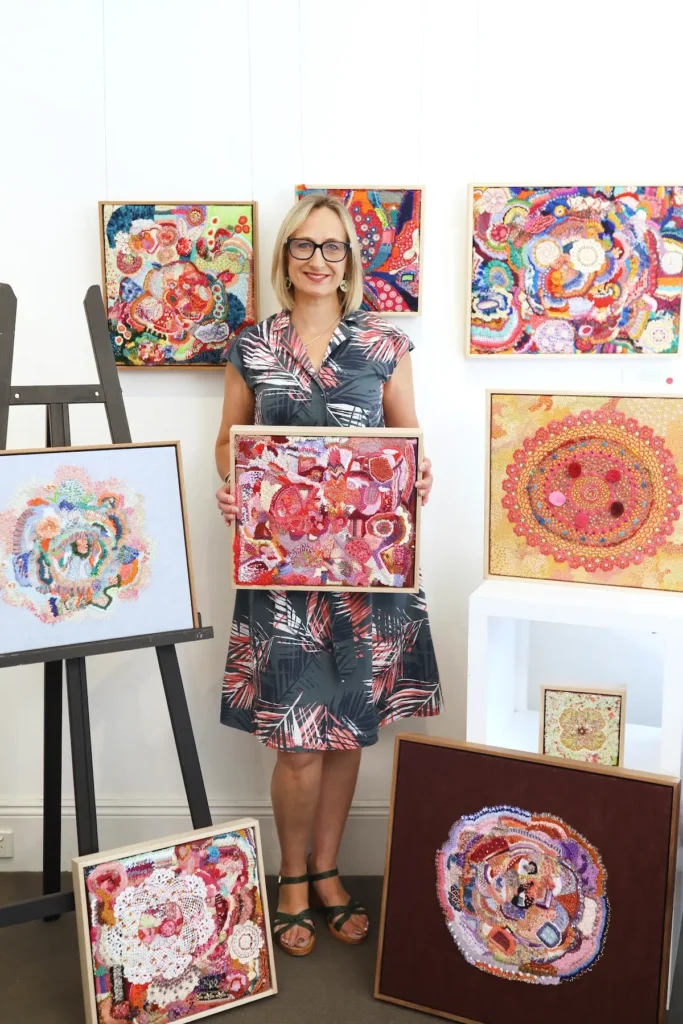
Rapid-Fire Fun:
- Favourite thread colour right now? Fuschia
- One word that describes how stitching makes you feel? COMPLETE
- A material you’re excited to experiment with next. Fine wire
- One small creative habit that keeps you inspired? Browsing my personal art/stitch library of books
Website: www.elizabethsullivanart.com.au
Instagram: @elizabethsullivanart
Facebook: @esullivanart
Pinterest: @easullivanart
Interview posted May 2026
Explore more stitch inspiration on Create Whimsy.