
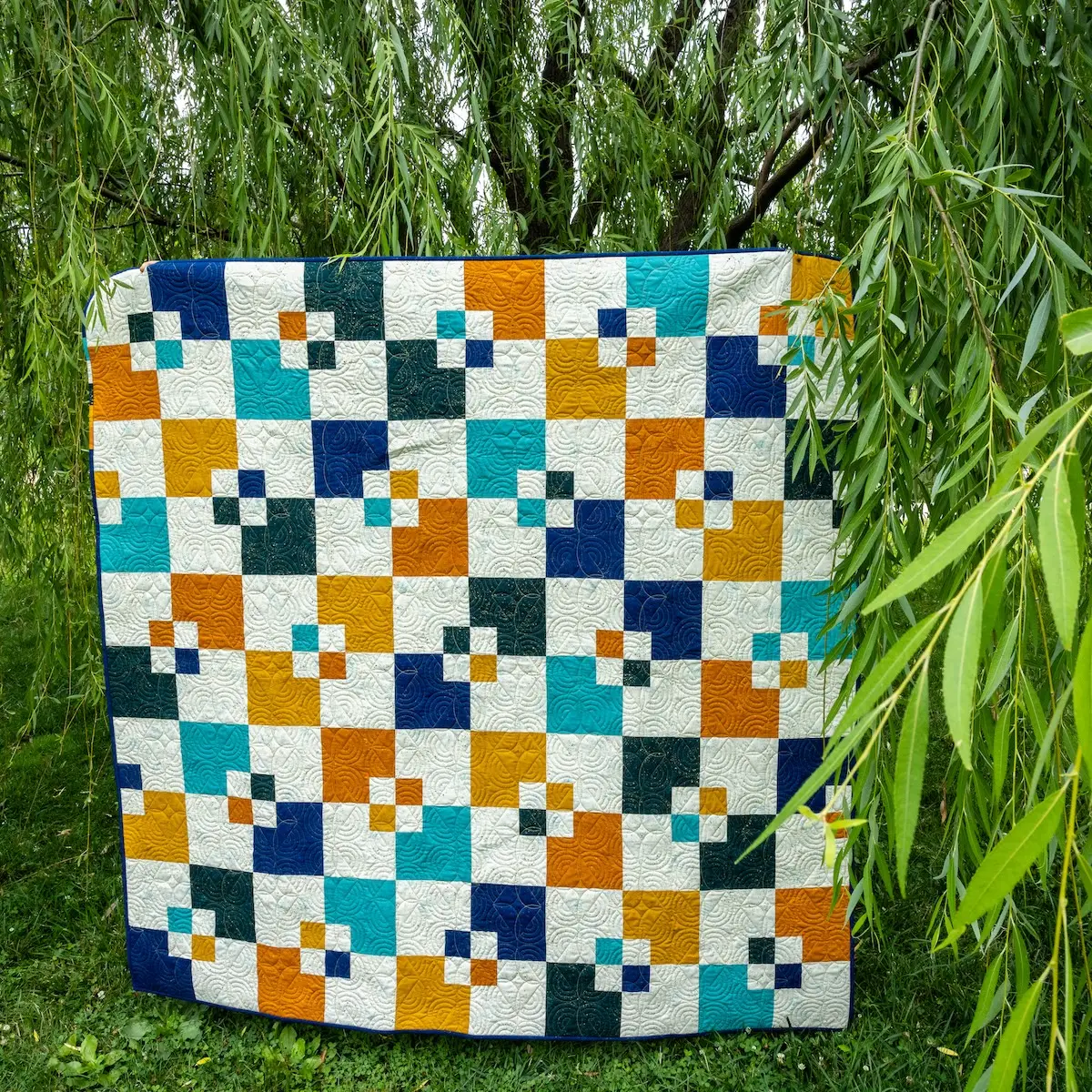
Meet Lilo Whitner-Fey, a creative force who blends heart, hustle, and a whole lot of thread into her quilting journey. In this interview, she shares how her path unfolded, what fuels her work, and the lessons she’s learned along the way. It’s an honest look at building a creative life one stitch at a time.
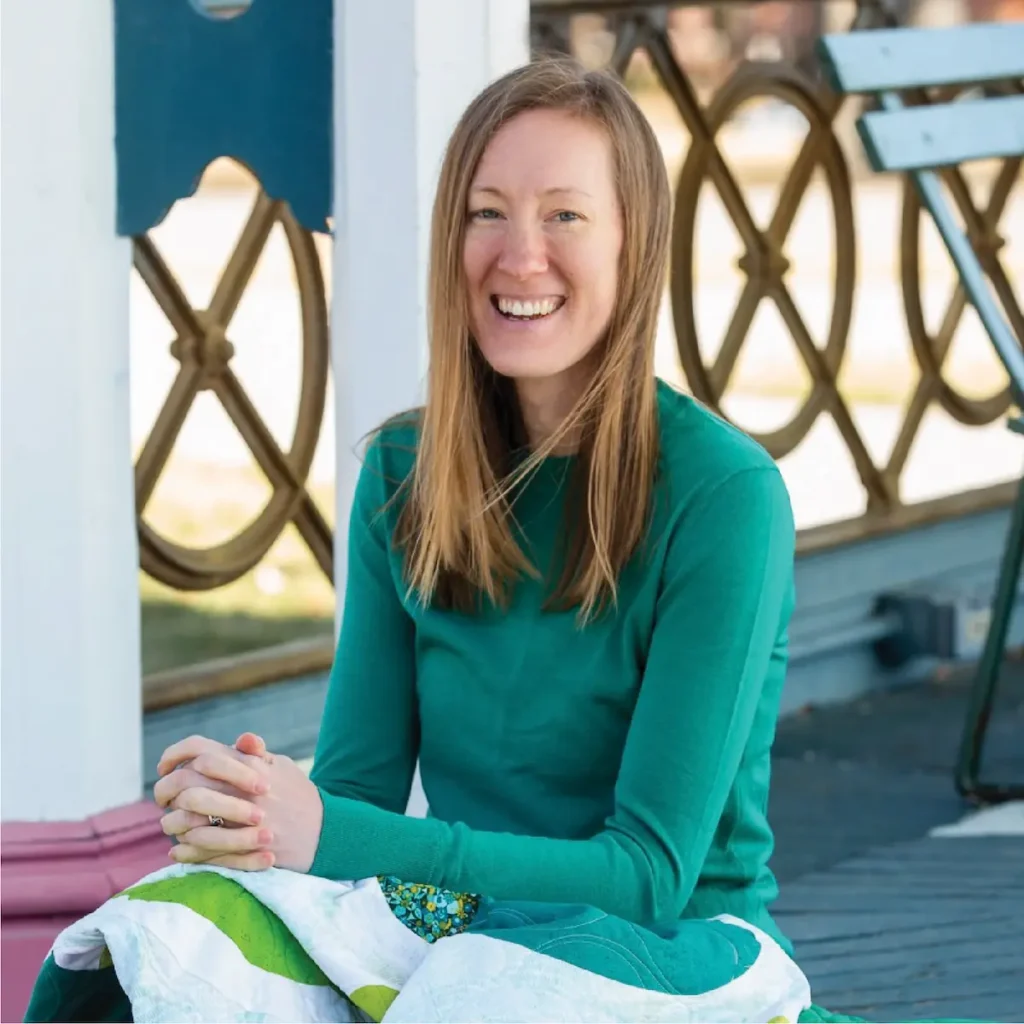
What inspired you to launch Trace Creek Quilting?
TCQ came about as a practical solution to a growing family and seeing the need for a career change.
We had a one-year-old and were expecting our second child. My oldest was the first dropped off at day care every day, and the last picked up. My commute was frustrating, and the industry I was in was becoming problematic for support staff like myself.
At the same time, my mother and I had made so many quilts in the past year that my mother decided to purchase a longarm. Also at the same time, my husband got a new job that gave us a little cushion if I wanted to try something new. I convinced him to let me leave ‘gainful employment’, my mom to let the machine live at my house, and I jumped in feet first.
As an Amazon Associate I earn from qualifying purchases. Read more about our affiliate linking policy.
I was very lucky to have their support and resources to be able to capitalize on the opportunity.
Growing up in a quilting family, how has that influenced where you are today?
Interestingly enough, I had very little interest in quilting or sewing until I owned my own home and was married. It was then that I could see the value in creating something handmade to beautify my home and scratch that creative itch. Because I had all of these quilters in my life, it was waiting for me when I was finally ready to tap into it.
My mother and I talk about quilts, fabrics, and patterns all the time. While our preferences are very different, she keeps me rooted. I think I help expose her to new ideas, and we encourage and support each other in our own individual journeys.
What do you love most about longarming as a craft and creative expression?
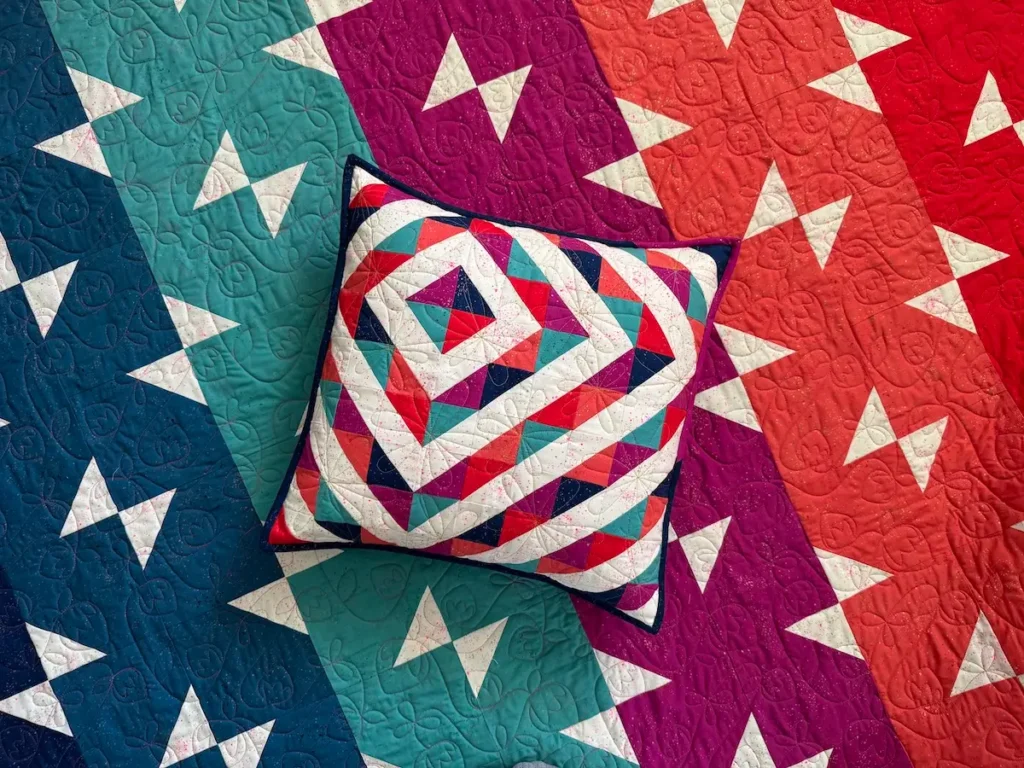
I find my joy comes from who and what I am exposed to through this business. I get to see all the fun fabrics and quilt patterns, some right when they are being developed or becoming available in the industry.
I get to work with some incredibly talented quilters, designers, and business owners all of whom bring their own magic to this world. I am very content with the small, but valuable, role I get to play in making so many wonderful quilts come to life.
Walk us through a typical day (or week) in the TCQ studio.
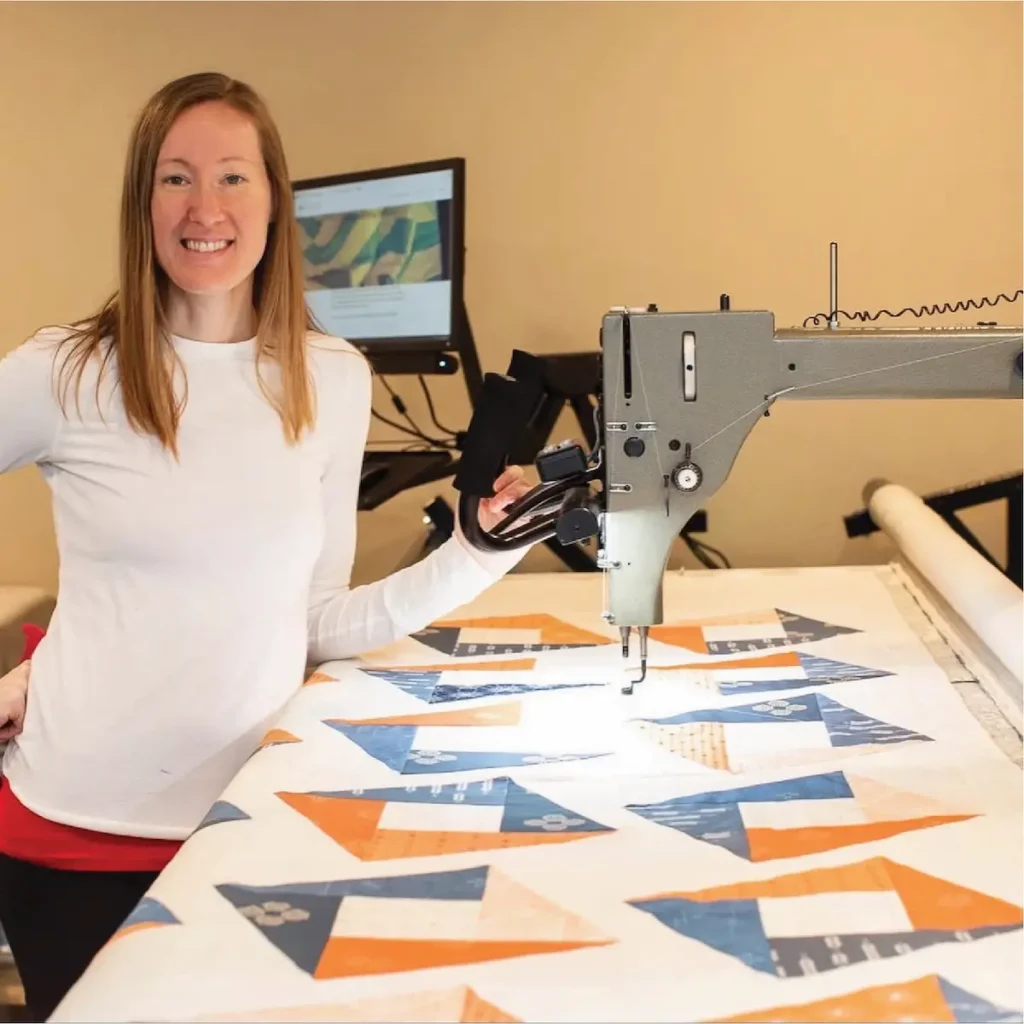
I think of my workload in terms of a full Monday – Friday week. Each day is orchestrated in its own way to help keep the full production line moving smoothly.
Monday is when my admin comes to invoice all the clients and keep me straight on my books. One of the girls who quilts for me switches out her batch on Monday mornings, and the other comes on Wednesday afternoons.
My in-studio assistant comes two days a week for prep work and less glorious tasks such as cleaning and inventory. My photographer and I meet on Thursdays, and the neighborhood girl who packs up all the projects comes on Sundays.
I’m basically the project manager, ensuring all the right projects are in all the right places at all the right times so everyone has work and quilts are completed in the most timely fashion.
How do you approach choosing pantographs or quilting motifs for a quilt?
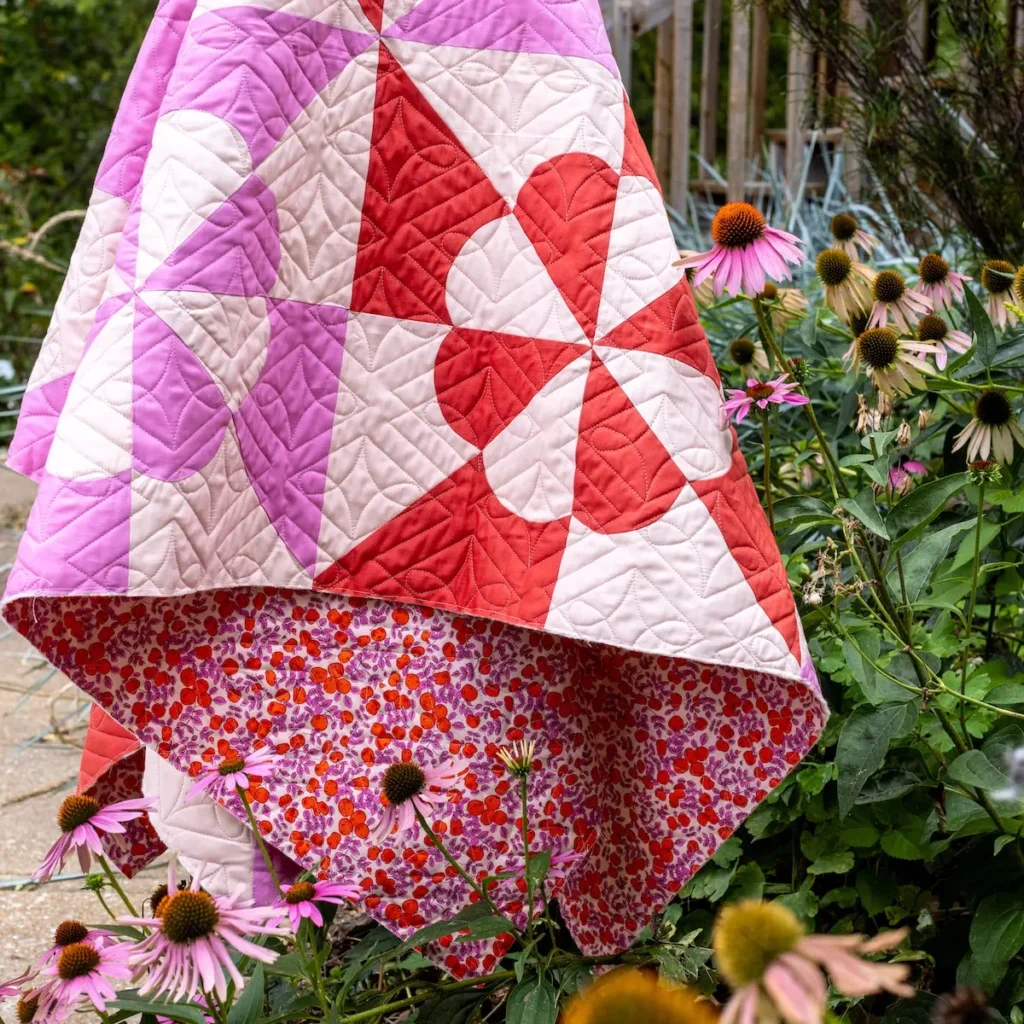
I’ve always found this a hard question to answer – there are a million factors that go into picking a panto.
First is making sure the client loves it, so I take my prompts from them whenever I can. Even if they want suggestions from me, I try to get them to name me a few they are attracted to so I have a general idea of what styles work for them.
After that, I look at the quilt as a whole. Is it traditional, modern, or somewhere in-between? I take the fabric into consideration – is there something we can mimic, enhance, or take inspiration from? All solid fabrics provide a very different canvas from all Kaffe fabrics. How about the quilt pattern – does it need space to shine through, or is it super busy? Even the thread color can impact what pantos we consider.
Once we get past the aesthetics, I can consider other, more practical factors. If a quilt is pieced badly, has extra fabric in it, or has super thick seams, I’ll need to take that into consideration. If we are rushing the quilt, I will likely lean towards pantos that stitch out more quickly.
Finding that balance between effective, efficient, and enhancing the quilt is a bit of an art form and works best when we are familiar with our panto offerings, the styles and quirks of the designers, and our customers.
Are there favorite designs that have special meanings? Or ones that clients frequently request?
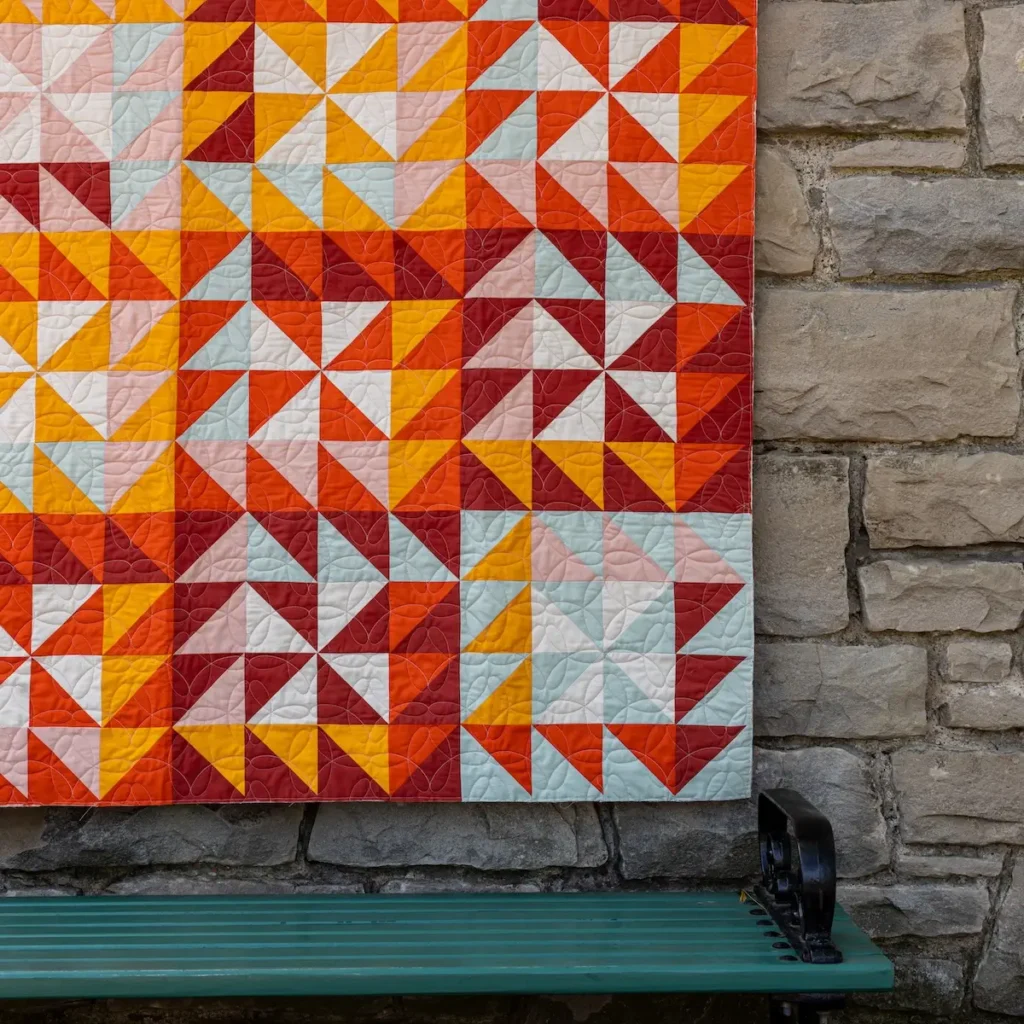
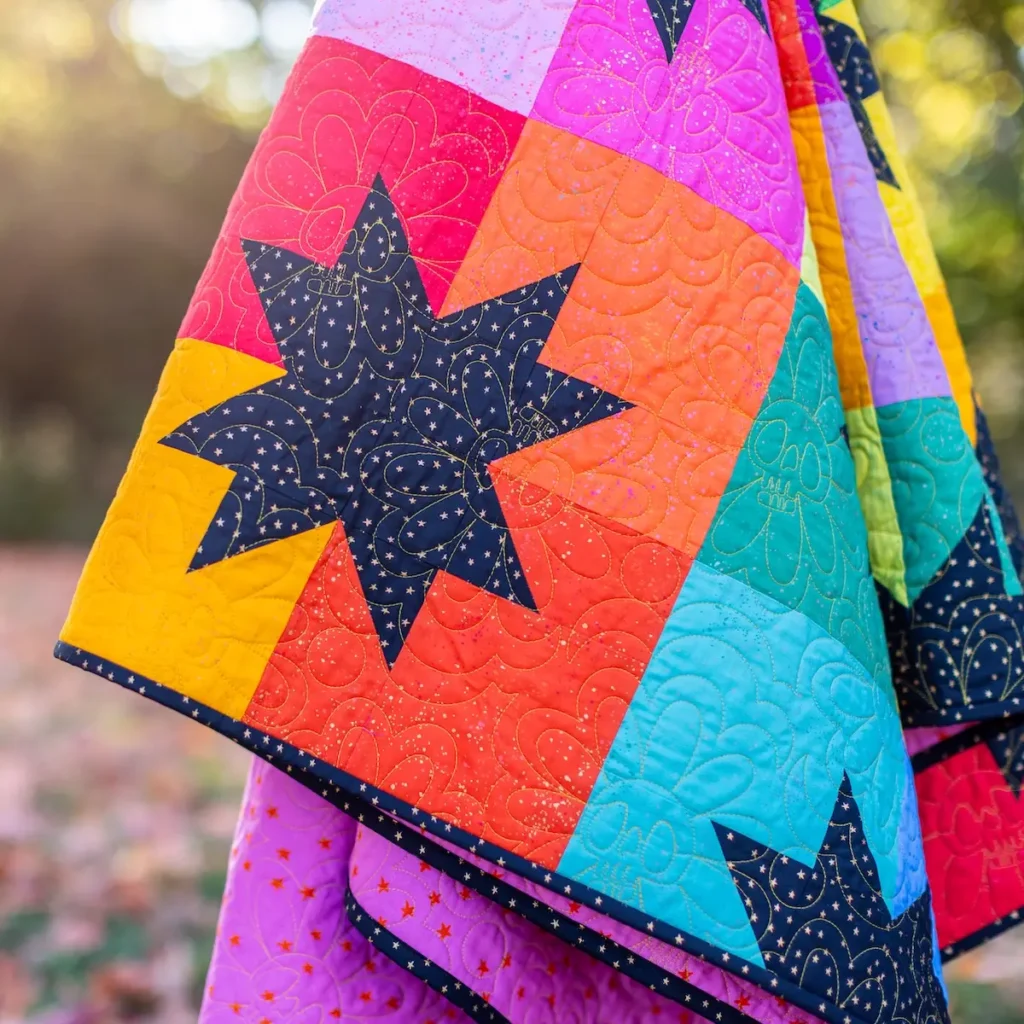
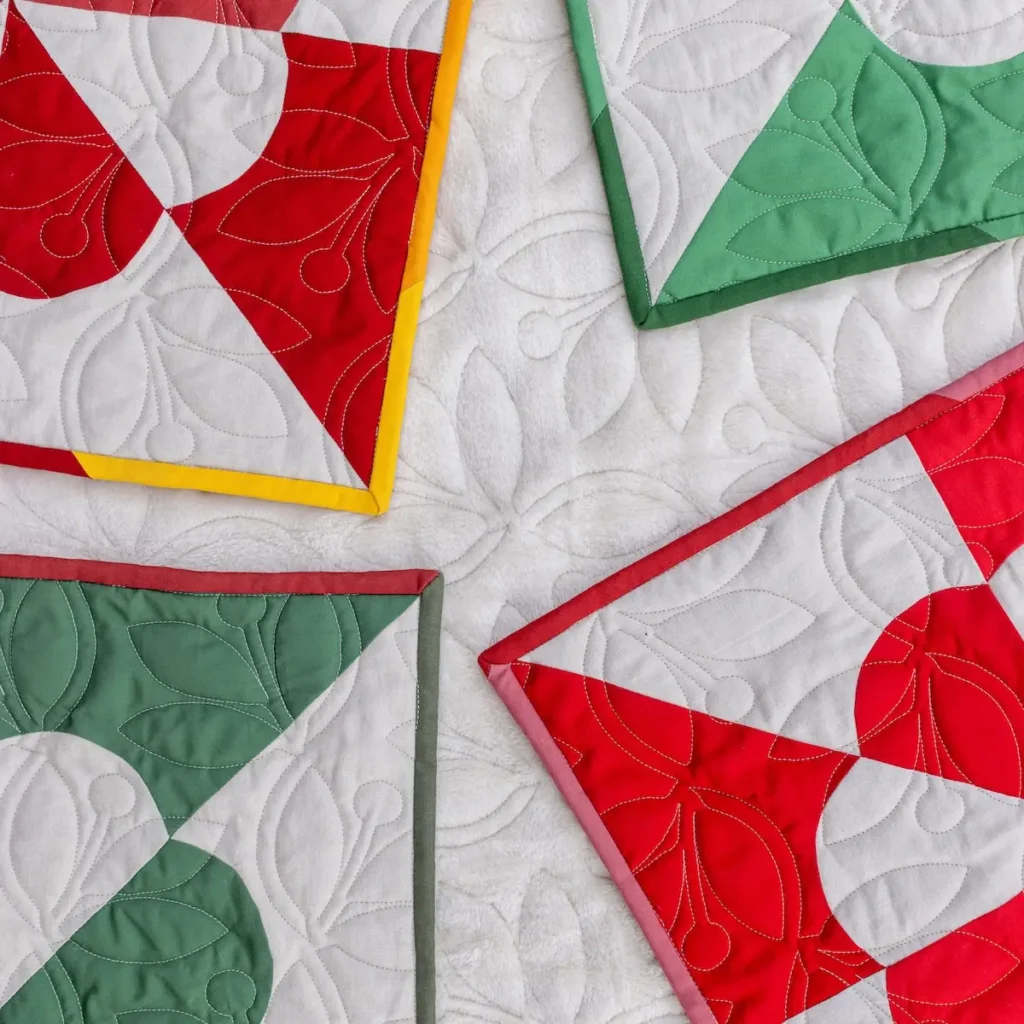
We have over 400 pantographs available for folks to pick from and we are always happy to purchase a new one on special request. Some of our most popular pantographs are Ginger Snap, Rosemary, Light City of Fountains, and Modern Curves.
Share with us a challenging project you’ve tackled. How did you problem solve your way through it?
When I started this business, I felt like the examples I saw from some established longarmers (the old guard, if you will) had lots of limitations, rules, and expectations that I found intimidating. Things like which way seams had to be pressed, backings that had to be perfectly square, etc.
I found that most of my own quilts didn’t meet those expectations, and it discouraged quilters who were less confident and less experienced. This was a great opening for me – to build the business, I took on a lot of quilts from folks who thought their work wasn’t good enough for typical longarming. We were both willing to take a chance!
Now we get projects from quilters of all skill levels, but because we have always been willing to take on the harder, odder projects, we receive challenging quilts regularly. Extra thick t-shirt quilts, backings with a gazillion seams, and quilt tops that do not lay flat, just to name a few.
We look at each one as an opportunity to become better longarmers. By taking these on, we learn what solutions work, what do not, what to watch out for, and how to return the quilt to the customer so everyone is satisfied.
While future projects with those same challenges are not necessarily easier, we continue to build that tool set to tackle them successfully.
You’ve grown from a one-woman studio into a full team. How did you begin that journey? What shifted along the way?
While I love quilting, the purpose of this business is to support my family, both financially and by being present in their lives when they need me.
As I continued to gain clients in the first couple of years, it was evident that to achieve these goals, I could not continue to do it alone.
My first employee prepped t-shirts so they would be ready to be included in a quilt. She was amazing, and over time, I continued to add in great people when and where we could. At this time, we’ve grown to a staff of myself and 6 part-time employees, and I can’t imagine it any other way.
I talk about each member of my staff on our About Us page, so it is clear we are a team, and I’m not in this alone.
Were there key milestones along the way that shaped TCQs growth?
There were two big moments that helped shape TCQ.
First was when I realized I needed help. Opening myself up to hiring others was a huge shift in mentality about what we could accomplish and what my goals could be. Once I took that step, I realized how unlimited we were as long as I could find the right people. That mindset has guided me with every twist and turn, evaluation of where we are and where we want to go, and in shaping new goals.
The second was COVID. Like so many others, we had to pivot in a big way. At first, I was angry. I felt the pandemic was forcing my hand in several ways; we had to drop our memory quilt production, I had to let one employee go, and we had to stop meeting with people in person. But as we made those shifts and found ways to keep things up and running as best as we could, we became more streamlined and efficient. We were able to build up and focus on the more profitable longarming side of the business as well as market ourselves to those who were willing to mail their quilts to us. It truly shaped us into who we are and how we operate today.
How do you balance managing a busy business and family? Do you have rituals or routines that help you switch between work mode and family time?
To be completely honest, this is something that after all this time I still struggle with.
When you run a business at home, it is hard to turn it off or walk away from it. I’m always on my phone checking emails, on social media, or answering calls.
I’m often running a quilt and cooking dinner at the same time, advancing the quilt between yelling at the kids to brush their teeth and giving hugs and kisses when tucking them in.
While I strive regularly to ensure this business has the balance that supports my family best and can always do better, I also understand the value in having my family see me at work.
It is important to me that the kids know it isn’t easy, but that in doing so, I’m contributing to the family. They see the joy, the struggle, the perfection, and the mistakes that come along with earning a living.
What’s the most unexpected joyful moment you’ve had that blends your roles of business owner and mom?
It’s a weird one… There was a day when my daughter was not feeling great, and I waffled back and forth about keeping her home. I had a lot to do in the studio, and she wasn’t feeling thaaaat bad. (I grew up in a time where you went to school unless you were throwing up, you know?) I decided to let her stay home, and after about an hour, she fell asleep on my studio floor, wrapped up in some leftover minky backing.
It was this moment where not only had I managed to do the right thing on that day, but it was a really validating moment showing that by building TCQ, I had done the right thing overall for my family. Sometimes you wonder if the struggle is worth it, and that was one of those moments where it was super clear that it totally is.
You recently invited quilters to share “why they quilt”. What have you learned about the heart of quilting through those stories?
This is still fairly new, and we hope to gain some more interest and more stories as we move through 2026. I’m not quite sure when we will start to share these stories, but once we get more organized, we will make an announcement.
If anyone has a story, whether they feel it is worth hearing or not, we would love for them to share it with us!
What we do know just from our own experiences and from those around us is that quilting is so much more than a hobby where you sew some fabric together. It is usually a connection to the past, a therapy, and a source of joy.
What advice would you offer someone starting a longarm quilting business? Especially while raising a family?
There are so many, many things one could say! I have three things I think are probably the ones I keep in my head most often these days. (Number 3 is my favorite.)
1. It is hard work, it does take time, and you will make mistakes. As long as you are open and honest with yourself, your family and your clients, you will push through all of those things.
2. This, too, shall pass. Whether it is good or bad, nothing stays the same. Enjoy the perfect moments (winning bobbin chicken, getting dinner on the table while running a quilt, and nailing the panto and thread color on a picky client’s quilt.) But also be ready to breathe and steady yourself through the tough times. You will find a solution, you will make it through.
3. A dear friend once said, ‘There is no such thing as a quilt emergency.’ You can walk away from any quilt at any time to take care of yourself, your family, and the things that matter the most. Don’t forget what you are doing this for in the first place, and don’t let anyone tell you their quilt is more important than that.
Where can people learn more about you and Trace Creek Quilting?
We share the most on our website, www.tracecreekquilting.com, and through our newsletter. We also post regularly on Instagram to showcase the quilts that come through the studio. We are also always happy to answer emails and phone calls should anyone want to know more!
I don’t think of myself so much as an artist or even artistic. I would classify myself as a creative problem solver. I don’t necessarily have original ideas, but I can find a way to go from point A to point B in a way that enhances or compliments the end result. I think it is why longarming suits me, it’s the final touch that completes the vision folks have for their quilts. I think it can be important to distinguish between these things as it takes a village to bring creative things to life. You can still have value, bring ideas to the table, and play an important role even if you are not the one in the spotlight.
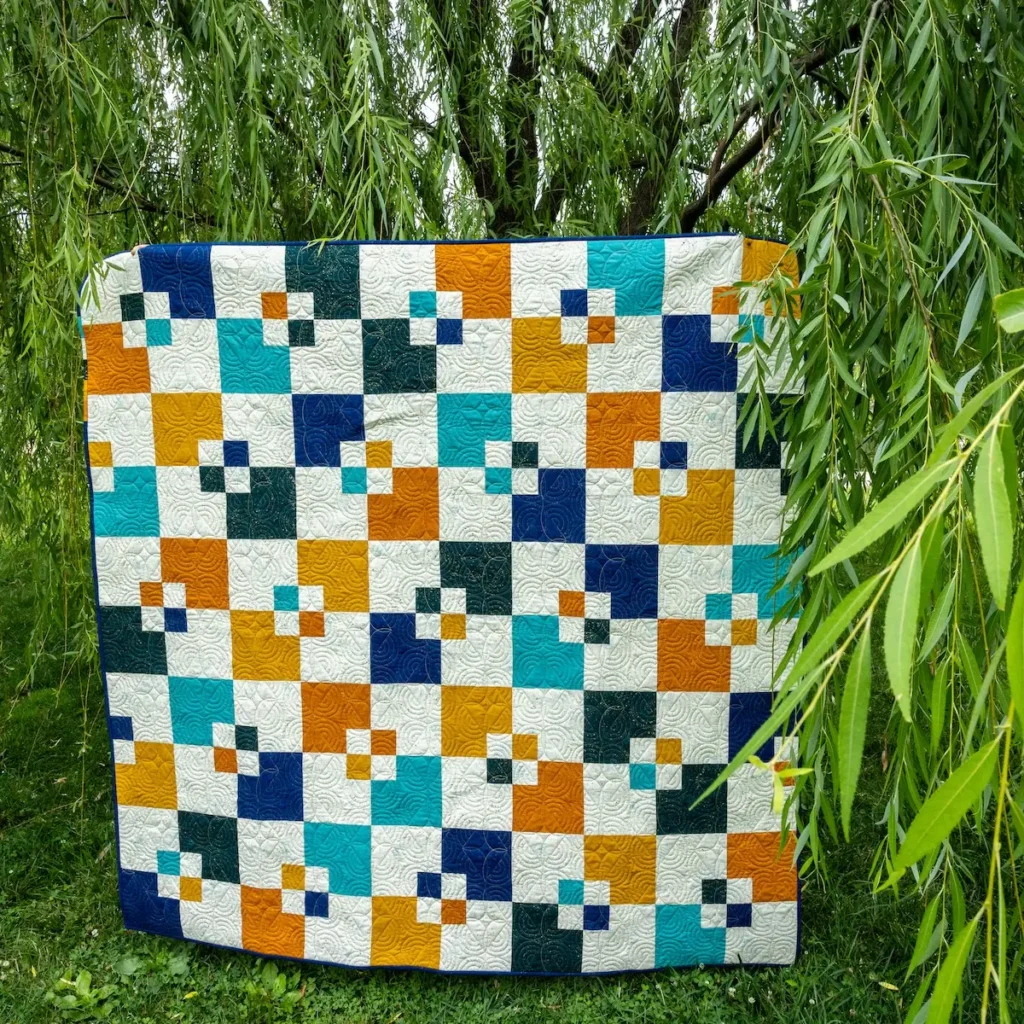
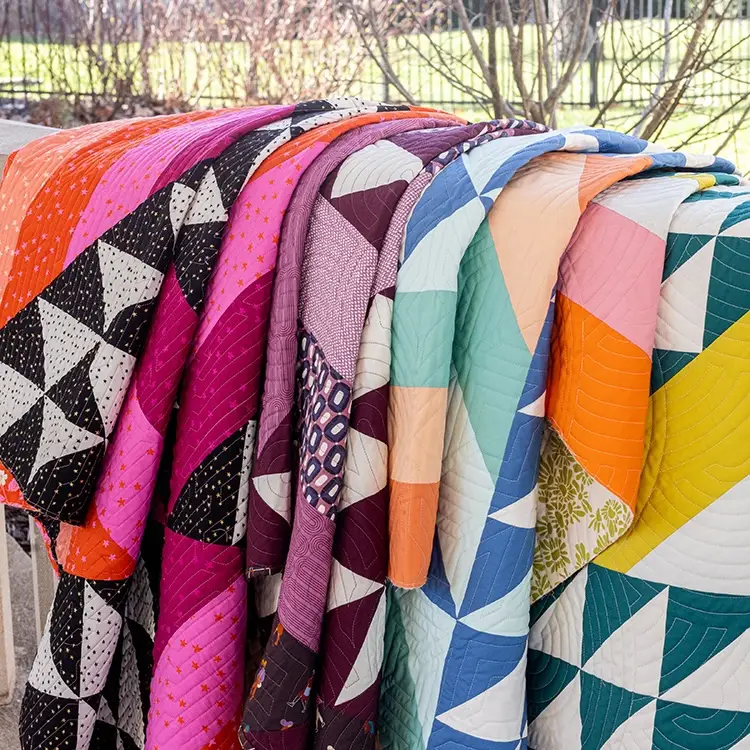
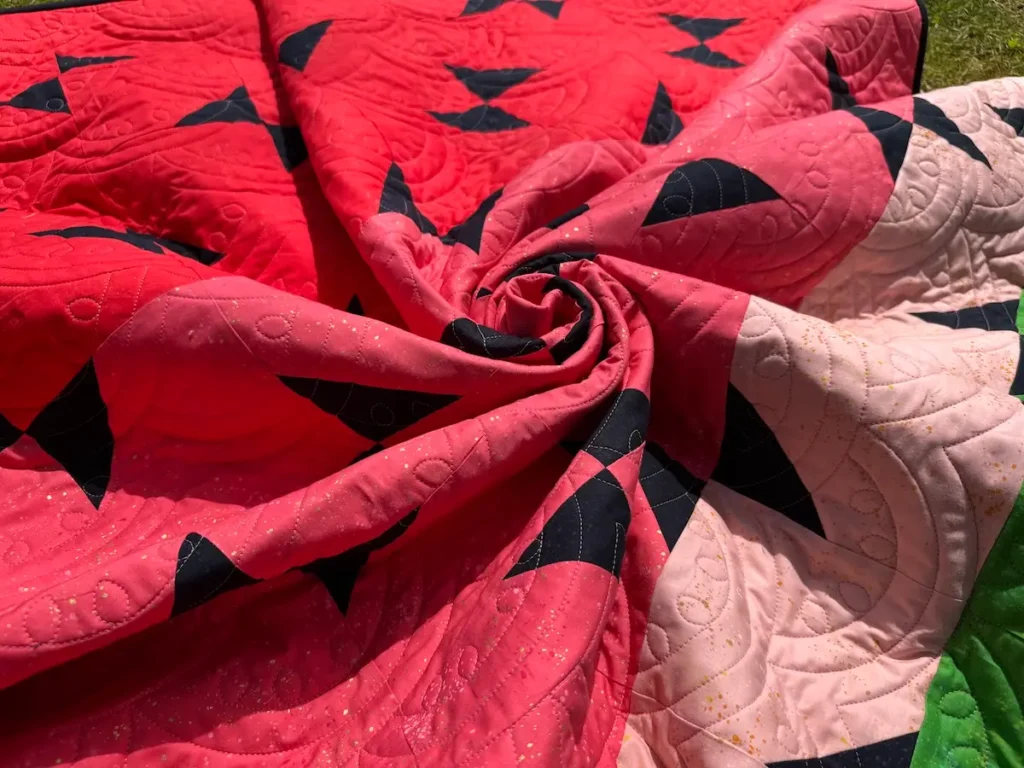
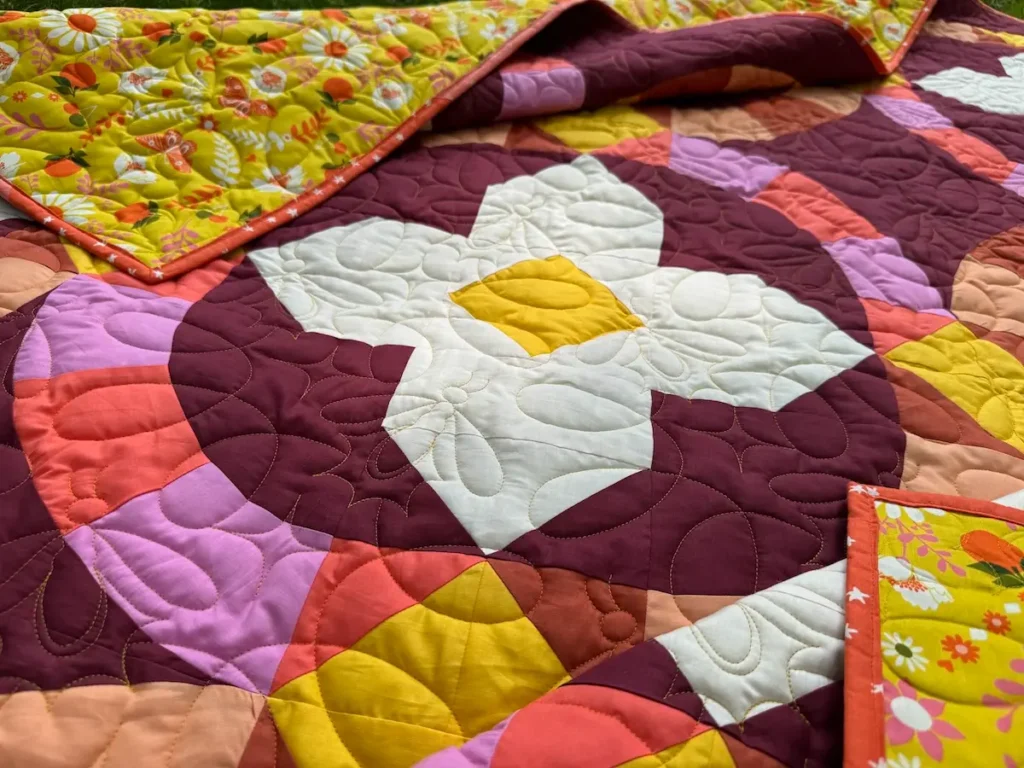
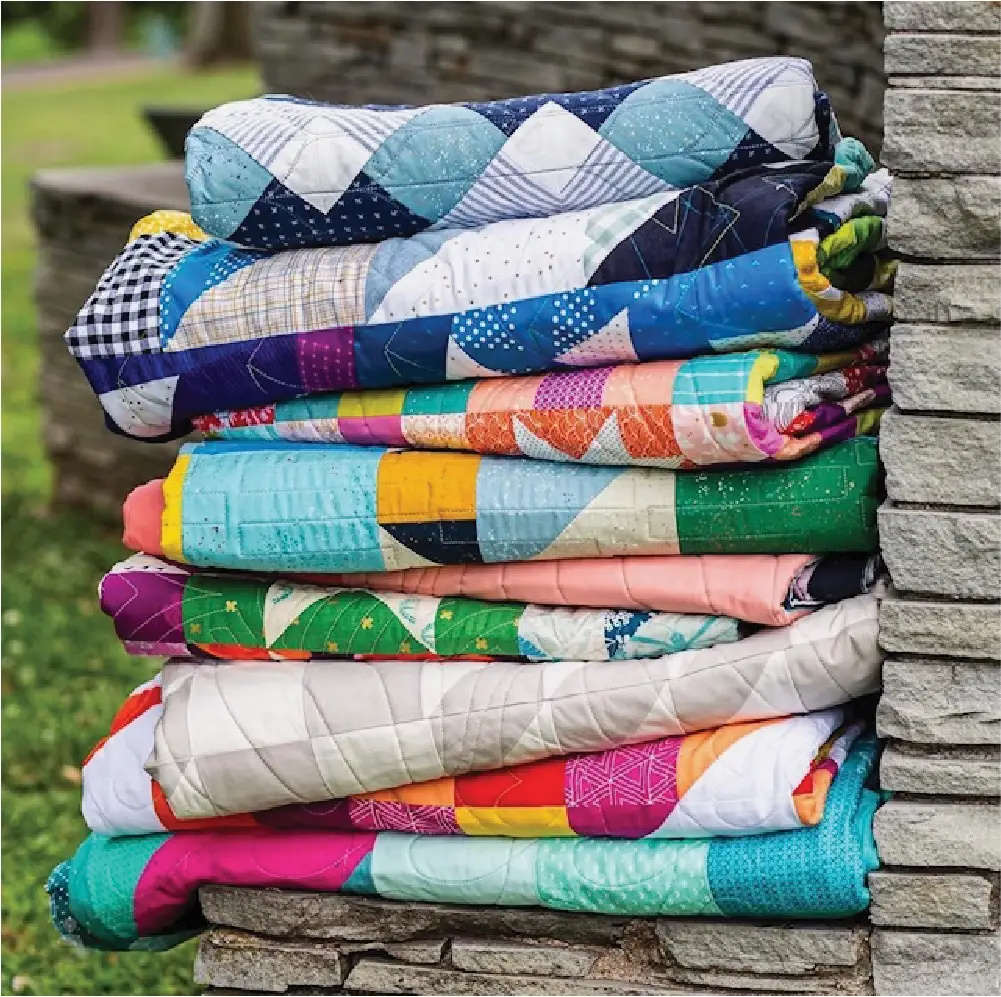
While Trace Creek Quilting is primarily a longarm quilting company, we do several things that compliment the longarm services. TCQ has released several quilt patterns that are fun, fast, and easy. We also offer quilt photography services as we know it’s tough to capture the true beauty of our work.
We also work hard to create partnerships with others in the quilt industry, including pattern designers, fabric designers, fabric shops, and other longarmers. Not only do we love the community aspect of these projects, but we also love promoting each other to bring awareness, fun projects, and benefits to each other and our customer bases.
Interview posted March 2026
Browse through more quilting inspiration on Create Whimsy.