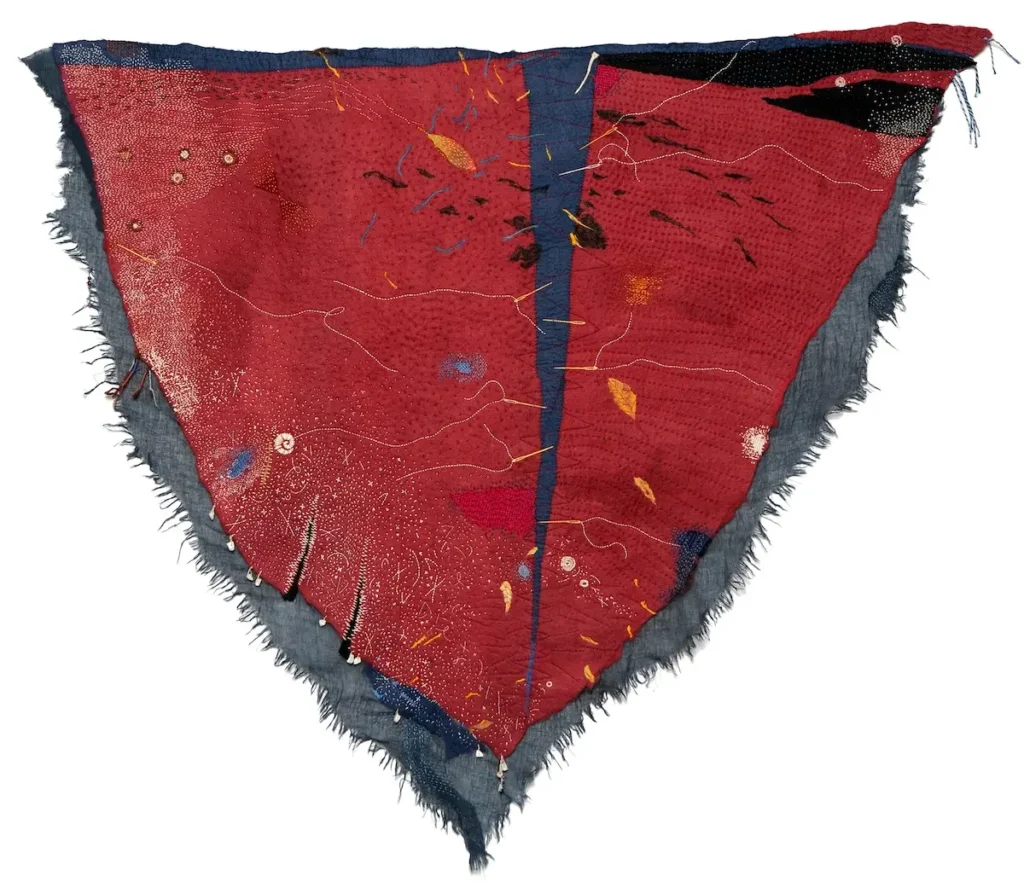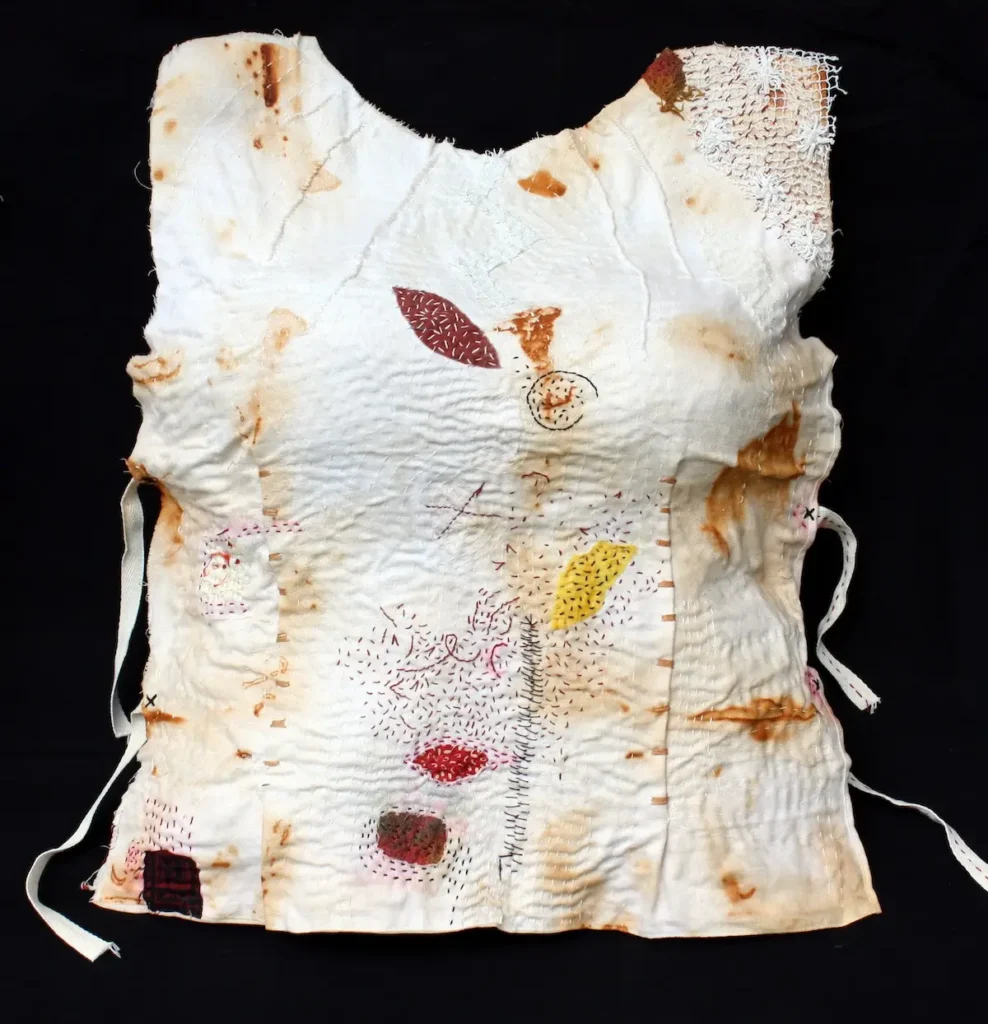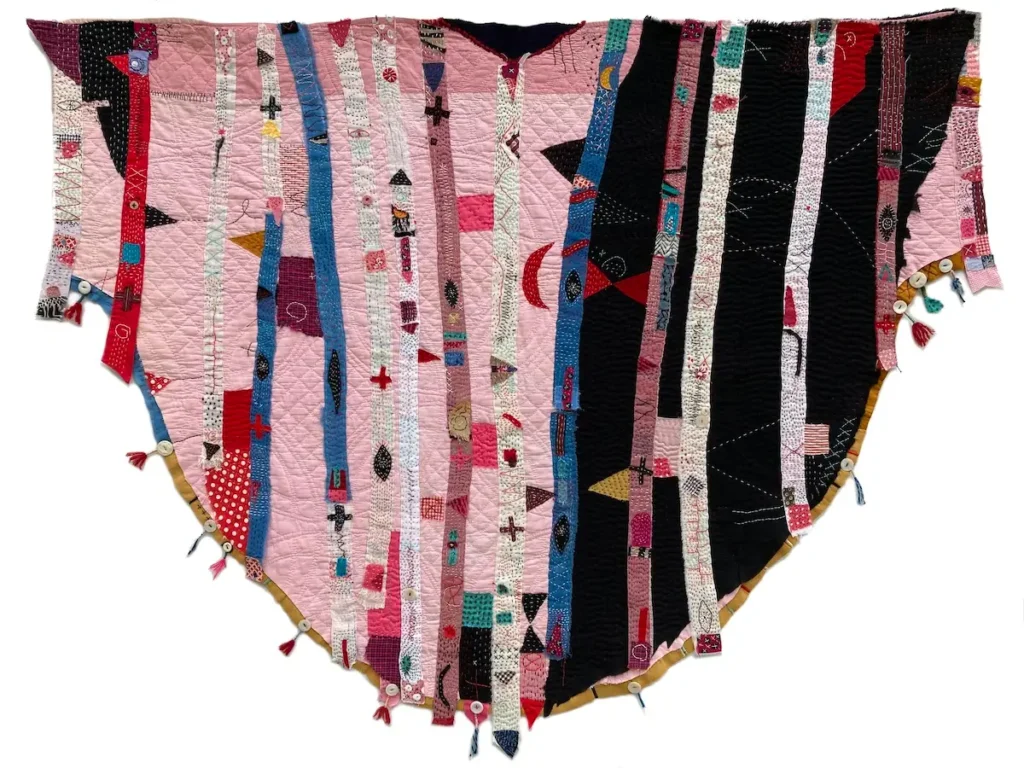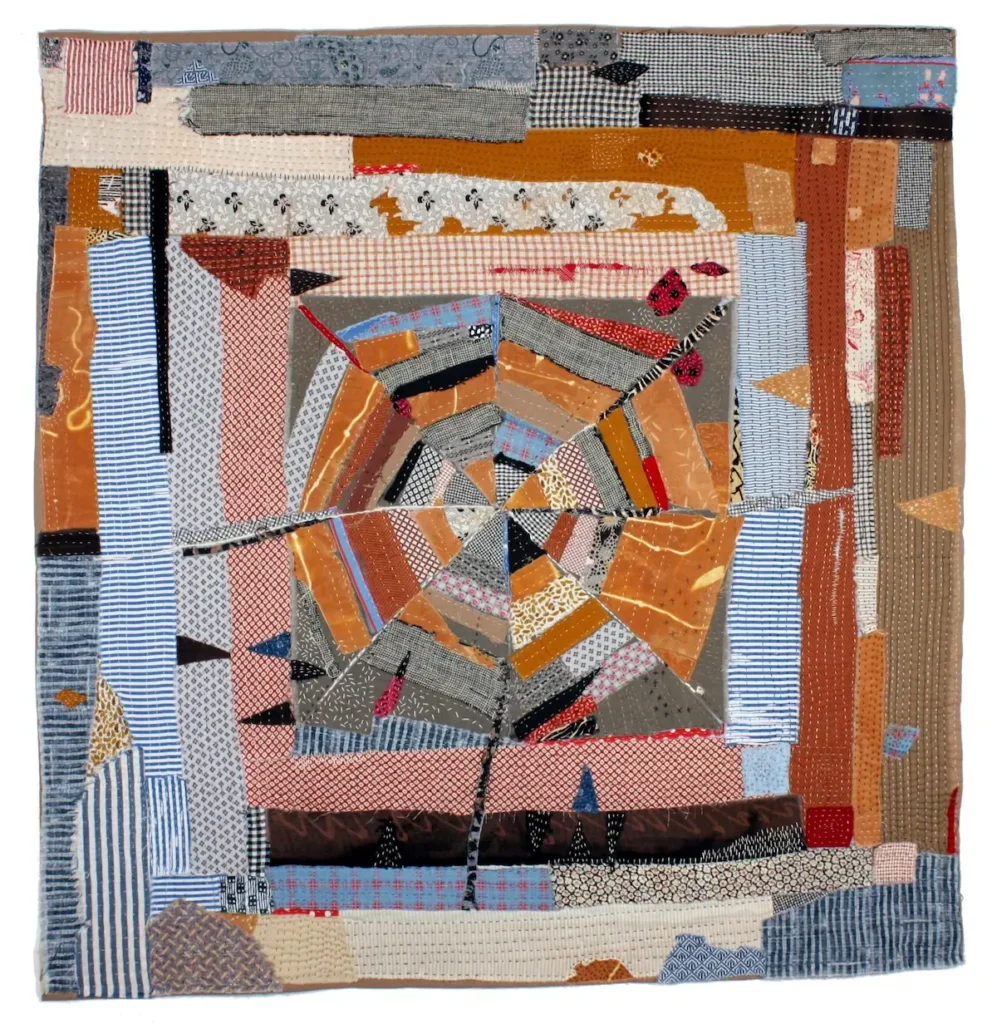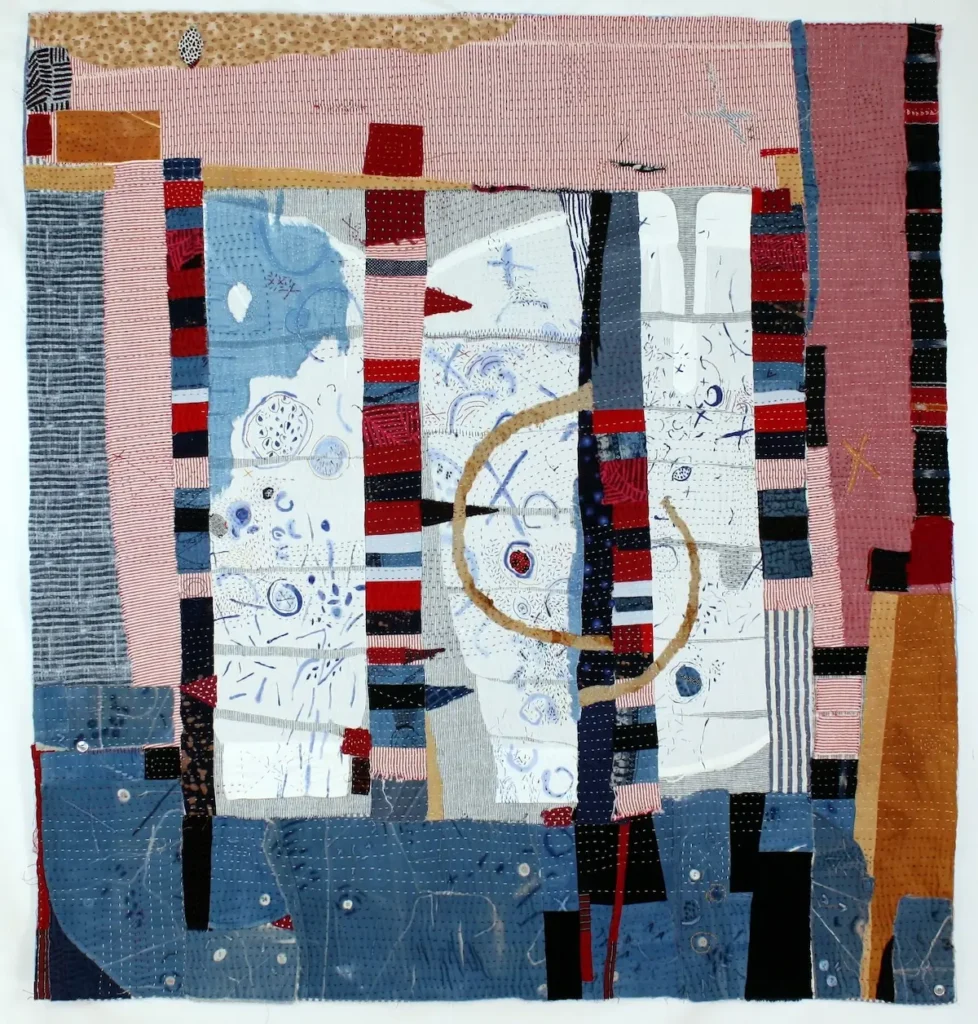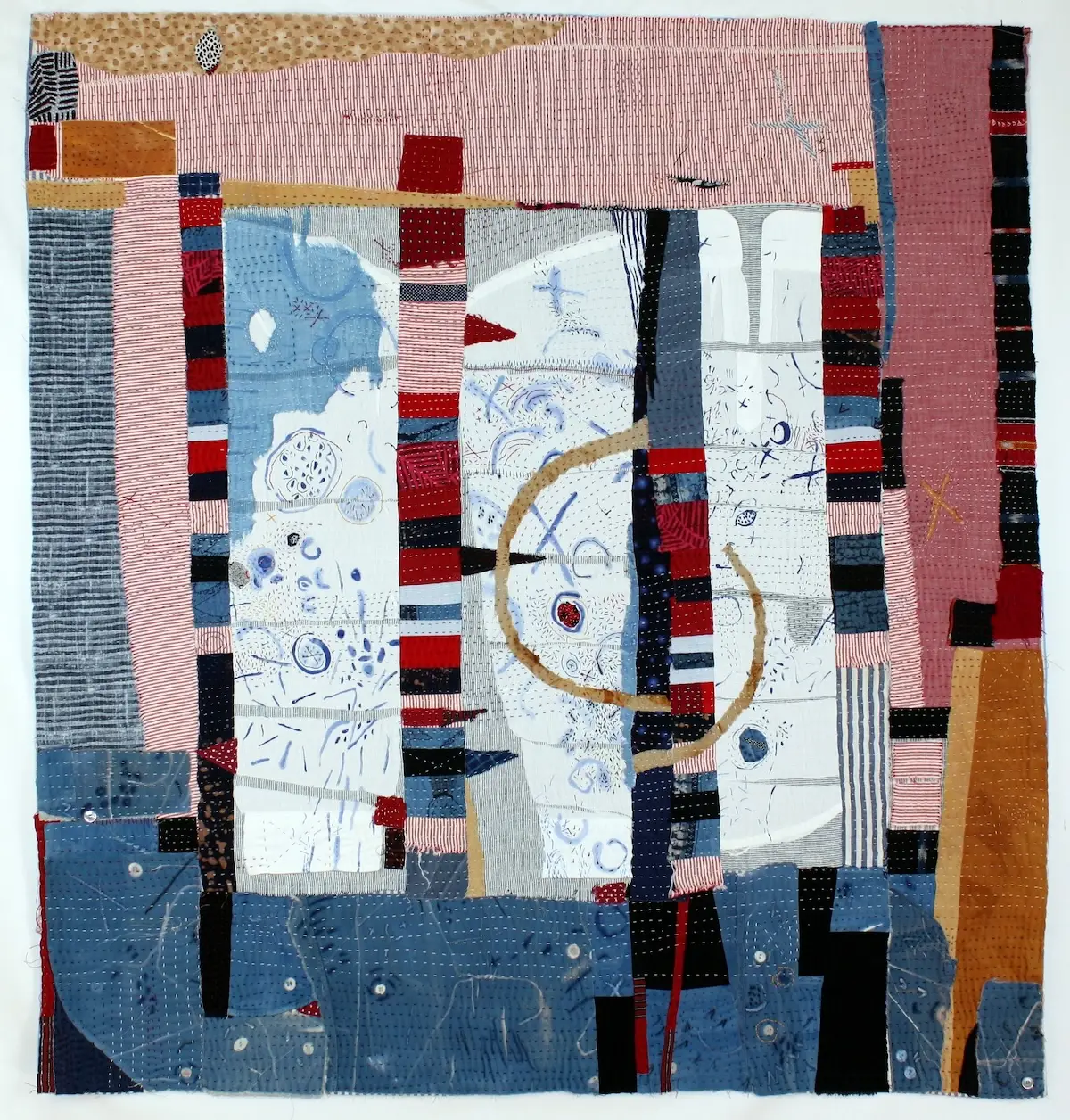
Helen Geglio stitches together from memory, meaning, and a deep respect for the hands that came before her. In this interview, she shares how teaching, research, slow stitching, and repurposed textiles shape her fiber art practice. It’s a thoughtful look at making as both storytelling and an act of care.
Thinking back to your first memories with making… what stands out?
I was one of those kids who was artsy from the start. In kindergarten, I was identified as the “class artist,” and that was a good place to land for a quiet little girl.
We didn’t have art education in elementary school, but my parents encouraged me by signing me up for Saturday classes sponsored by the Detroit Institute of Arts. For a few hours each week, we were guided through drawing, painting, and shaping clay. The door was opened.
What did teaching art in schools teach you about making your own work?
As an Amazon Associate I earn from qualifying purchases. Read more about our affiliate linking policy.
My teaching life has shaped my artistic sensibilities. I learned so much about visual thinking from my students and discovered new ideas and a diverse world of artists by learning to develop curriculum.
I now look at artwork in a different, focused, and more multi-dimensional way. I also know how important high-quality art instruction is for every student at every level.
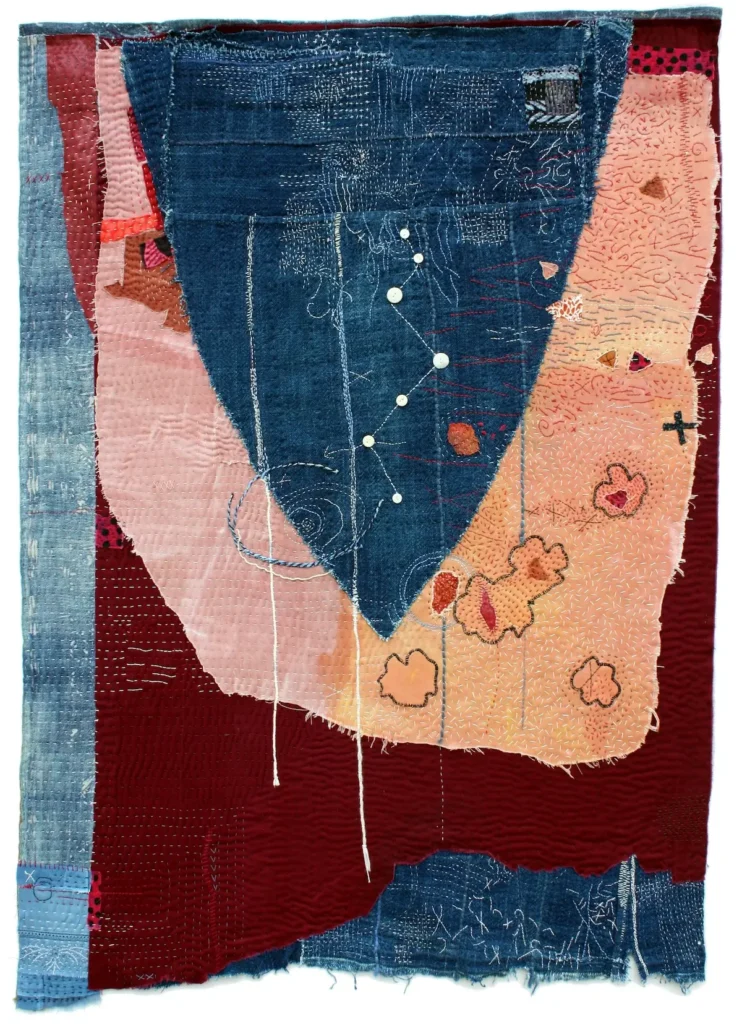
Art is what connects us to our humanity and to the world around us. I have made several series of art about teaching. Out Loud is all about the insistent energy of my middle school students and their need to speak and be heard.
Have you always worked in fiber?
I love cloth, but I did not grow up in a sewing household. I learned to sew at school and enjoyed making my own clothes well into adulthood.
When I went to art school at a large state university, there was no textile program, and it wasn’t even on my radar.
Moving to Indiana got me interested in the beautiful Amish quilts made near where I live. I checked out dozens of books from the library, and I taught myself to quilt by making several traditional quilts; nevertheless, my art practice remained rooted in drawing and painting.
And then, in 1994, St. Mary’s College, here in South Bend, exhibited a stunning group of contemporary quilts that simply amazed me. That experience ended up being a turning point in how I would move forward as an artist. I made and exhibited my first art quilt and began to develop my skills, moving almost exclusively to fiber around 20 years ago.


You often work with old, repurposed cloth — what draws you to these materials?
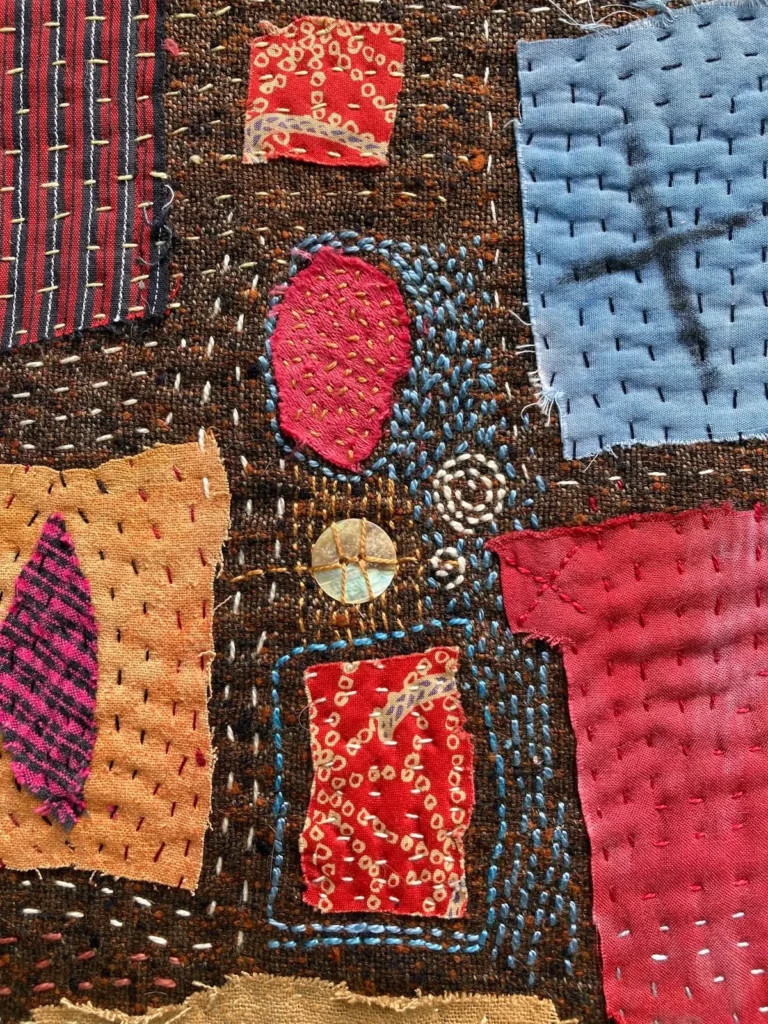
I am drawn to cloth that has lived another life.
I collect and curate my own textile history of handwork, although the identities of the women who so skillfully crafted these items are lost to the stream of time.
When no one remembers the person who made the doily, dresser scarf, or embroidered pillowcase, these labors of love end up in thrift shops and yard sales.
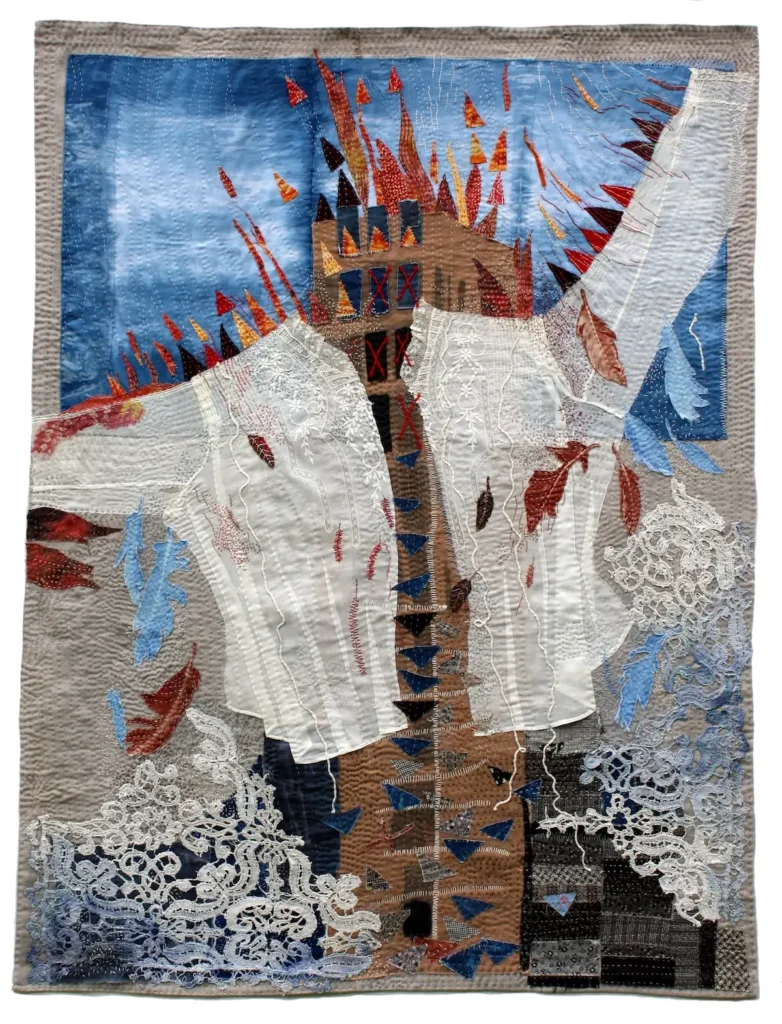
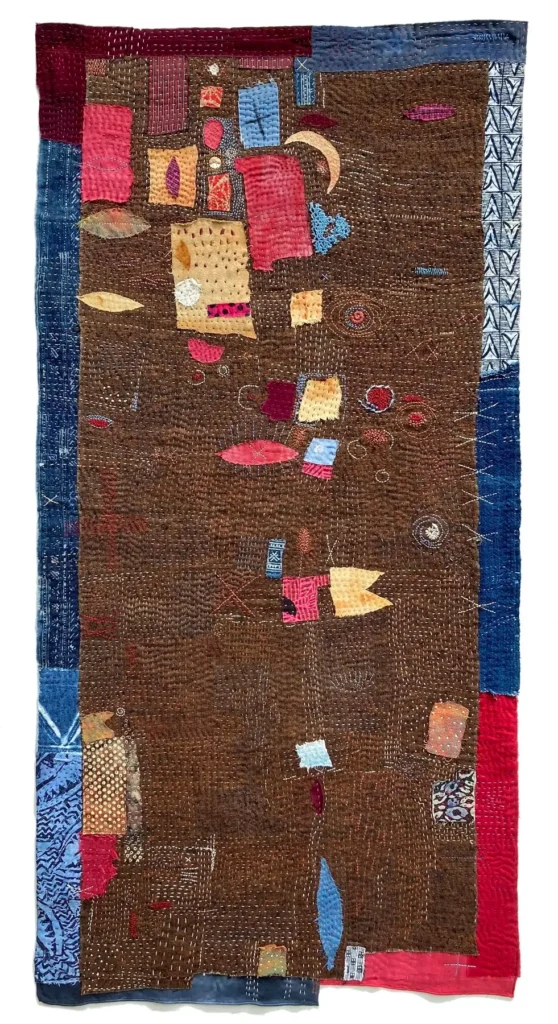
I am happy to honor these unknown makers by giving their handwork a new life in a new context. Often, people who have heard about my work will offer me domestic textiles to use in my art, and those worn and damaged quilts and quilt tops, christening gowns and vintage clothing, pieces of lace and intricate crochet work, eventually find their way into my artworks.
I have a WWI era nurse’s apron, several fragile infant gowns, a lovely Japanese indigo-dyed mosquito net, hundreds of feed sack pieces, and so much more, just waiting in the wings for the right moment.

What does slow and mindfulmaking feel like in your hands?
The whole idea of slow stitch resonates with me.
I enjoy the pleasure of pulling a needle through cloth, of using hand stitching to create a visual vocabulary that is my own.
I have also discovered that the mindful nature of sewing by hand is very restorative and can be an important connection to well-being. We live in troubled times, and yet the ancient rhythms of needle and thread can ground us and help us make sense of the world.
There is something protective and affirming about making things by hand and following along the paths stitched by generations of other women before us. For me, hand stitching spans time, place, and culture.

Can you describe a day in your studio?
When I retired from my job as a full-time public school art teacher, I decided that I was finished with being held to a regimented schedule.
I wanted my journey as a full-time artist to have a new rhythm, and I wanted to have a flexible and open attitude toward my studio time.
My work tends to go in spurts, with rest and research between projects. When I am in the middle of a series, I am working in the studio a lot; other times, I am attending to the other places of my life.
This is a natural way for me to approach the creative process. I don’t find it helpful to make “rules” for myself, such as sewing something every day, taking on a social media challenge, or spending a designated number of hours in the studio. I am self-disciplined, and I trust myself to know when and how I need to work.
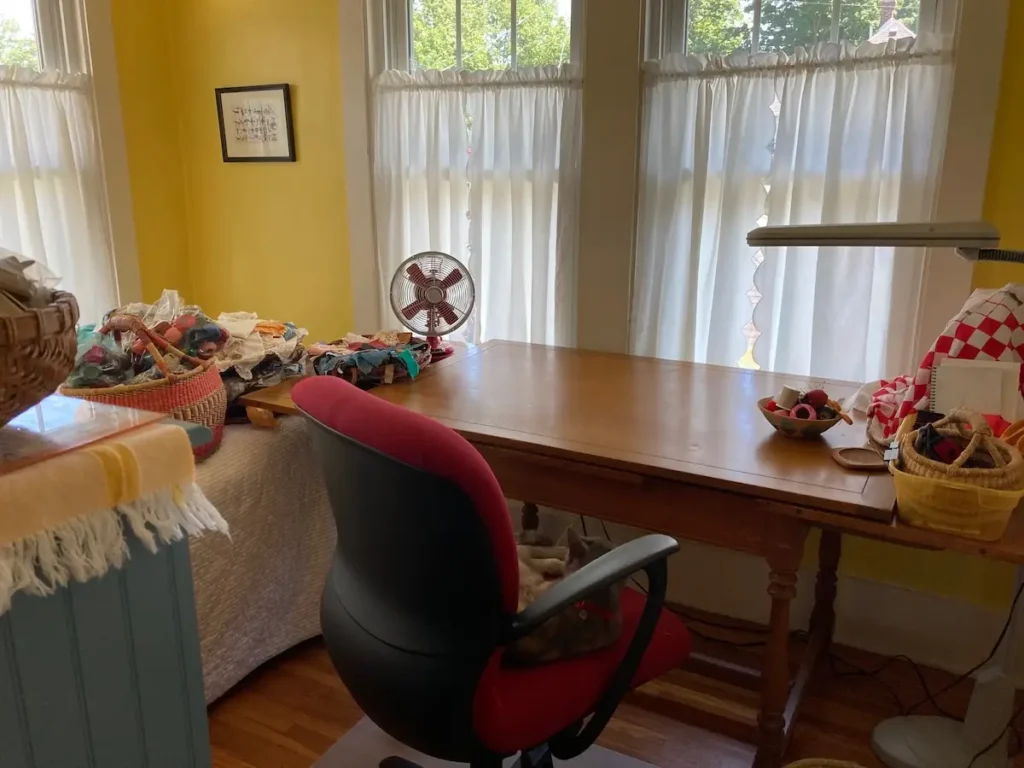
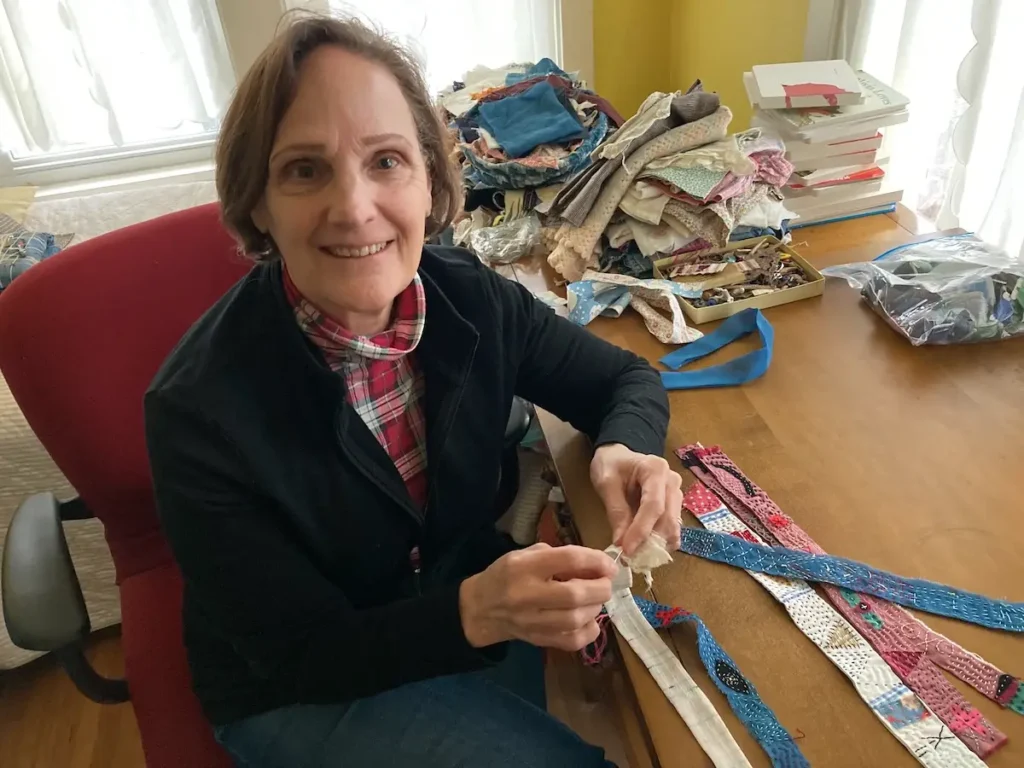
My studio is actually a tiny 7 x 10-foot bedroom, painted yellow with 4 lovely windows facing south and east. It gets great natural light, and I do most of my sewing in the daytime.
I realized early on that if I waited to have the perfect workspace, with everything stored and organized, tools arranged and ready, I would never get started. So, I just set up an old dining table, filled a dresser with miscellaneous sewing things, and started making.
I have a closet with shelves that hold most of my fabric collection, and big baskets of thread. Under the twin bed, I keep tubs of yarn, small objects, and more thread.
The bed is a staging area for flat baskets of smaller pieces of fabric, and sometimes one of my cats. In the room next door, I have an ironing board set up and a wall to pin what I am working on.
There is a comfortable chair to sit and look. When I think about it, I probably spend as much time looking as I do sewing.

Where do your ideas start?
I am an idea-driven artist. I am interested in the lives of women and in our connection to textiles.
My collection of antique and vintage fabrics is a great source of ideas, as well as the many traditional and global textiles I have collected over the years.
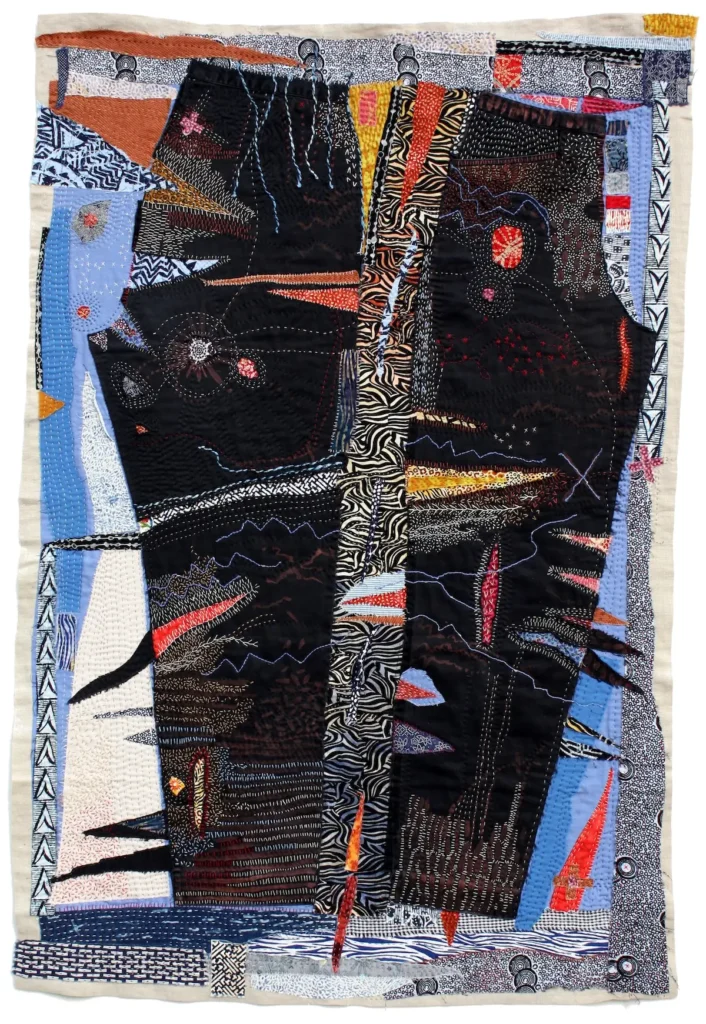
At the heart of it, I want to tell stories, often through a feminist lens. My work is very abstract, but there is a narrative quality to what I do and how I put a visual image together.
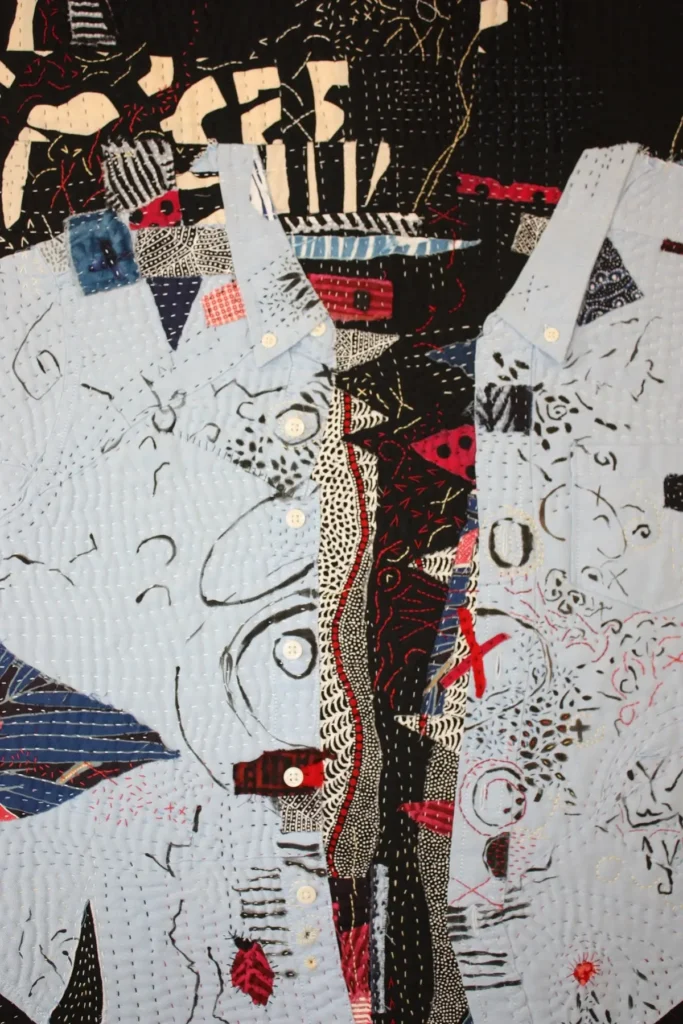
For example, I have constructed a series of work around the Triangle Shirtwaist Factory fire, a diary of a woman living in a sod house on the Nebraska prairie, a found bundle of white men’s dress shirts, a quirky homemade apron from the Depression, and a sweat-stained, deconstructed sleeve from the turn of the century.
One of my biggest projects was a series of fourteen Wisdom Cloaks to celebrate the knowledge, experience, and resilience of women across time and around the world.

What role does research play in your work?
Research is fundamental to my art practice and is a big part of who I am—an endlessly curious person. When I get a kernel of an idea, I go down the rabbit hole to find out more.
During the pandemic, I made a series of textile breastplates called Women’s PPE, and ended up researching a visual history of armor, as well as a cosplay universe I had been completely unaware of.
I also use the internet and the library to find out about fiber techniques and other artists. Pinterest has been a wonderful way for me to collect and organize a lot of the ideas and images I find.
I don’t use a sketchbook much, but I do write down things I want to look into, as well as words and phrases that catch my imagination. Lastly, I enjoy getting out to exhibits and museums to see other artwork and meet other artists.

Describe a little about your work process.
At the beginning is the idea, then the search for the right materials.
It is important to note that I am not technically oriented. So, you won’t find me painstakingly using complex embroidery stitches or following strict guidelines when using fabric dye.
Sometimes I need to change the color of things or make marks, and I use dye and fabric paint to do that.
To begin, I choose a substrate, usually a double layer of linen or loosely woven cotton, then I gather a palette of fabrics and begin to arrange them. Also, I particularly enjoy working with a wool substrate, wool pieces, and yarns, as I did for the Wisdom Cloaks.
My construction technique is very much like collage. I get the basic structure pinned and then hand-baste everything together with big stitches in rows close together.
I rarely use batting. I do not use a hoop or frame, so the basting keeps all the layers together while I am working and turning. Once I begin the hand stitching, I let the stitches lead where they will.
My favorite stitches are the running stitch, back stitch (for line definition), seed stitch, French knot, and cross stitch.
I am a stitching maximalist, and the dense stitches give me a pleasing surface design as well as a nice heft to the finished piece.
DMC perle cotton, in a variety of colors and weights, is my go-to thread. I am adding and subtracting small elements throughout the process, getting back from the piece to look and make changes. The stitching is my favorite part, and I often listen to audiobooks while I am sewing.
A largish piece will take me about a month to complete.

What do you do when a piece feels stuck or confusing?
Spending time looking will usually get me through a difficult spot, but when the going gets really rough I call on my network of art friends.
It is amazing how something can become clearer when another set of eyes sees it.
When all else fails, I put a piece away for a while and move on to something else. I have been known to make drastic changes with scissors.

How do you decide a piece is “done”?
I keep a finished piece up for a few weeks, make tiny little tweaks, then put a sleeve on it and take photos.
Photography is challenging for me and takes a lot of setup, so once the shots are taken, the piece is completed and ready to measure, title, and enter into exhibits.

How has showing your work shaped your art? What’s been one of your favorite exhibition moments so far?
When I first transitioned to fiber art, I took a wild chance and entered a couple of big national juried exhibitions. My quilts were accepted for both Visions and Quilt National.
I was a total newbie, but this recognition gave me the confidence to continue in the direction I was going and some validation that I was on the right path. Since then, I have exhibited widely (and experienced the inevitable rejections), sharing my work with a broad audience across the country, and even internationally.
SAQA Global Exhibitions have been an important way for me to get my art out into the world, and I am honored to be represented in a number of these traveling exhibits. I don’t usually make a piece specifically for a show, with a few exceptions, but I find that my body of work is often on point with a variety of calls for art.
In 2024, I was invited to be part of a contemporary quilt exhibit called Whip Stitch at the South Bend Museum of Art. My friends and family were all able to see some of my work right here in my hometown museum, and I gave a gallery talk there for my own community. That was a favorite moment for sure.

Where can people see your work?
My website, www.helengeglio.com is regularly updated with galleries of my work.
On the website, I also publish a newsletter every couple of months about where I am currently showing (as well as what I have been reading), and I provide links to publications, online exhibits, and exhibition venues.
I post on my Instagram account when a new newsletter goes on the website. Follow me on Instagram @hgeglio to see work in progress and get notice of openings, shows, and newsletter drops. I only post every few weeks, so you won’t be inundated!
There is nothing like seeing textile work in person, and I show all over the country. My next big juried exhibit is Art Quilt Elements, opening at the Wayne Art Center, Wayne, PA, March 23 – April 25, 2026.
Rapid-Fire Fun:
- First thing you make in the morning? I make a cup of coffee and read the news.
- What inspires you most right now? I have started a new series called Openhearted. I want to lift up those who have opened their hearts to welcome the stranger, to care for their neighbors, and stand for justice. There is goodness in the world, and these openhearted ones inspire us all.
- One thing you wish everyone knew about making art. Art is not about making and selling a product. Making art is about what you value, what lights you up, and how you want to share that message.
Here is a link to a pretty extensive recent interview with Angela Truscott at Take Two At Courses that can be viewed or listened to. https://taketwoart.com/featured_stories/podcast/helen-geglio
Interview posted January 2026
Browse through more inspiring art quilts on Create Whimsy.