
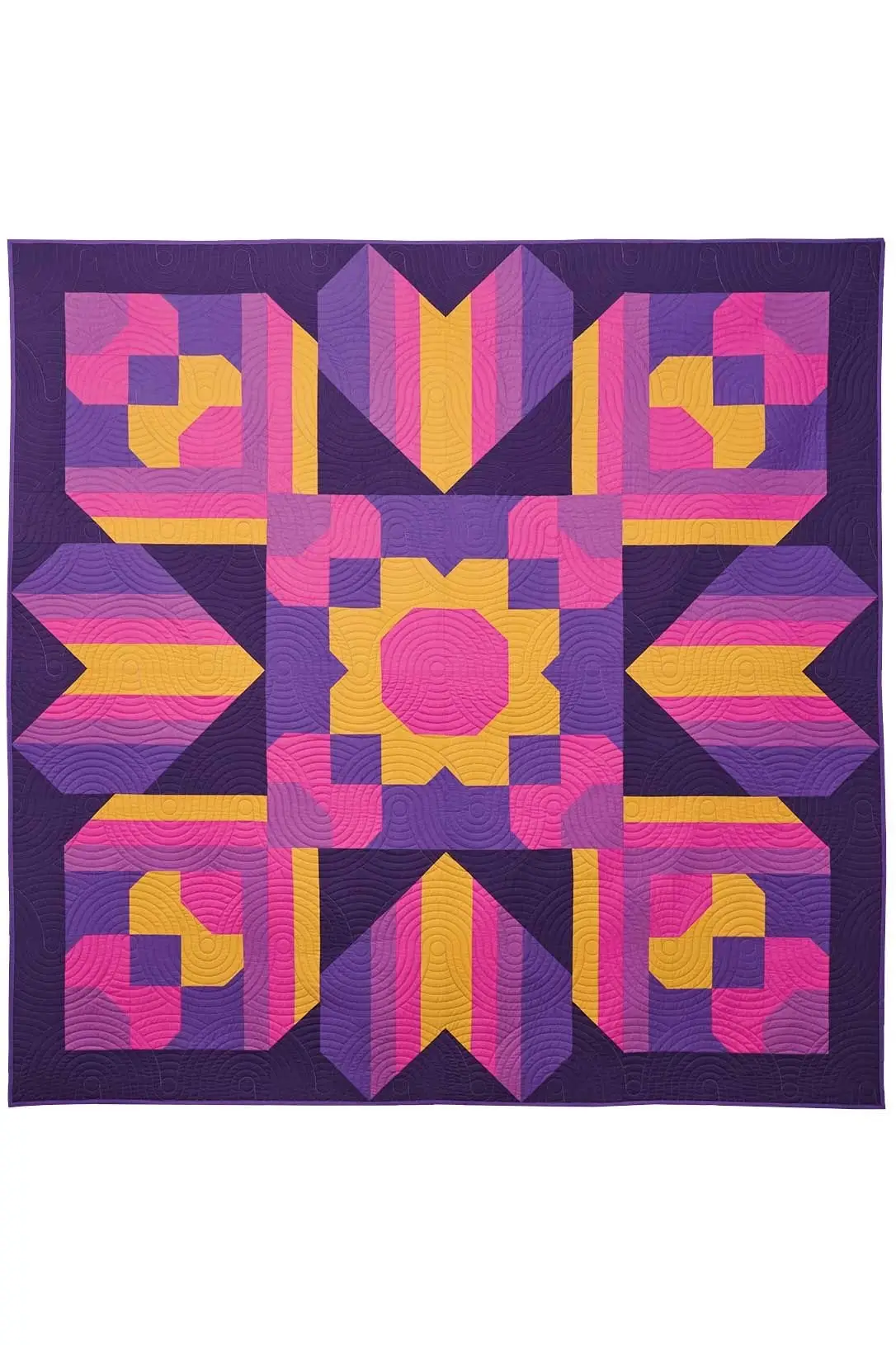
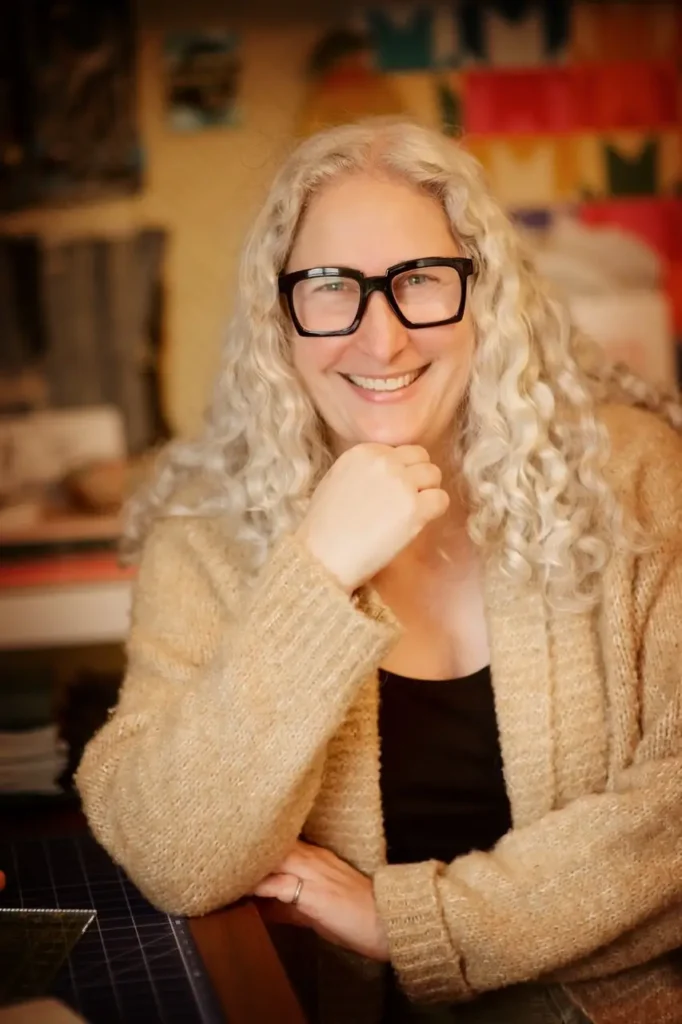
Michelle Freedman began her creative path with early sewing, which led her to fashion and theater, including years as an outerwear designer for major brands. Today, she’s a quilt designer, bringing that deep knowledge of structure, layering, and construction to quilts inspired by vintage textiles, thoughtful planning, and playful design.
How did you first learn to sew or quilt? What was your very first project?
I started sewing long before I ever made my first quilt. I stitched little things by hand, like sunbonnets, aprons, and rag dolls.
For my seventh birthday, I received my first “real” catalog pattern. It was for a jumper dress, and my mom helped me follow the instructions, cut the tissue-paper pattern and fabric, and sew it together on her sewing machine, which had belonged to my great-grandmother. It was a treadle machine that had been converted to electric and had a knee pedal and no reverse stitch. That was the first time I understood how fabric, directions, and construction all worked together, and I was hooked.
I also had an elementary school teacher who set up an art table in the back of the room for students who finished their assignments early, and I always gravitated toward embroidery, where I could use burlap and yarn. My cousin, who babysat me, taught me needlepoint and chicken scratch embroidery. I think there was a brief obsession with rug hooking as well.
As an Amazon Associate I earn from qualifying purchases. Read more about our affiliate linking policy.
I didn’t really know anyone else who sewed, so I was just that kid who loved what she loved.
In your bio, you mention sewing sunbonnets, aprons, rag dolls, and dreaming of being like Laura Ingalls Wilder. Why did that appeal to you?
I was captivated by the vivid descriptions of what the characters wore in the Little House books and the bolts of fabric in the General Store.. It was such a different world from my suburban life of malls and 7-11s in Los Angeles, and I loved imagining every detail.
Even then, I think it was an early indication that I had a gift for visualizing a design and figuring out how to make it. I often orchestrated neighborhood adventures in makeshift period clothing with my best friend and sister. Too bad cosplay wasn’t a thing back then!
Do you remember what you made when you thought, “Hey, I really like doing this”?
In junior high, I spent a year in home ec while recovering from surgery, and my teacher let me make whatever I wanted. Having that freedom showed me how much I loved creating something from start to finish.
By high school, I was re-making and sewing outfits from thrifted clothing and making pieces for friends, from prom dresses to theater costumes – ala Andi Walsh from Pretty in Pink. I went on to study design in college, and my first job was making costumes for ballet and Broadway shows, which gave me an incredible foundation in both creativity and technical skills.
I later applied those pattern-making skills while working for the iconic Patricia Field and several other indie and commercial fashion design brands in the city.
At what point did sewing or quilting move from “just for fun” to a real craft, or even a calling?
After high school, I moved to New York City to study design. I worked as a fashion designer and costumer, discovering that I had a knack for designing outerwear. In many ways, this foreshadowed my later work as a quilter, because I was already thinking about structure, layering, and technical construction.
I loved creating unique textile designs, illustrating the complicated construction of layered pieces, and developing the samples to bring them to life. This experience led me to move to Oregon and work for companies like Nike and Columbia Sportswear.
I still had never made a quilt at that point, but all of these skills were quietly building the foundation for my work as a quilt designer.
Has your taste or aesthetic changed over the years? If yes, in what ways?
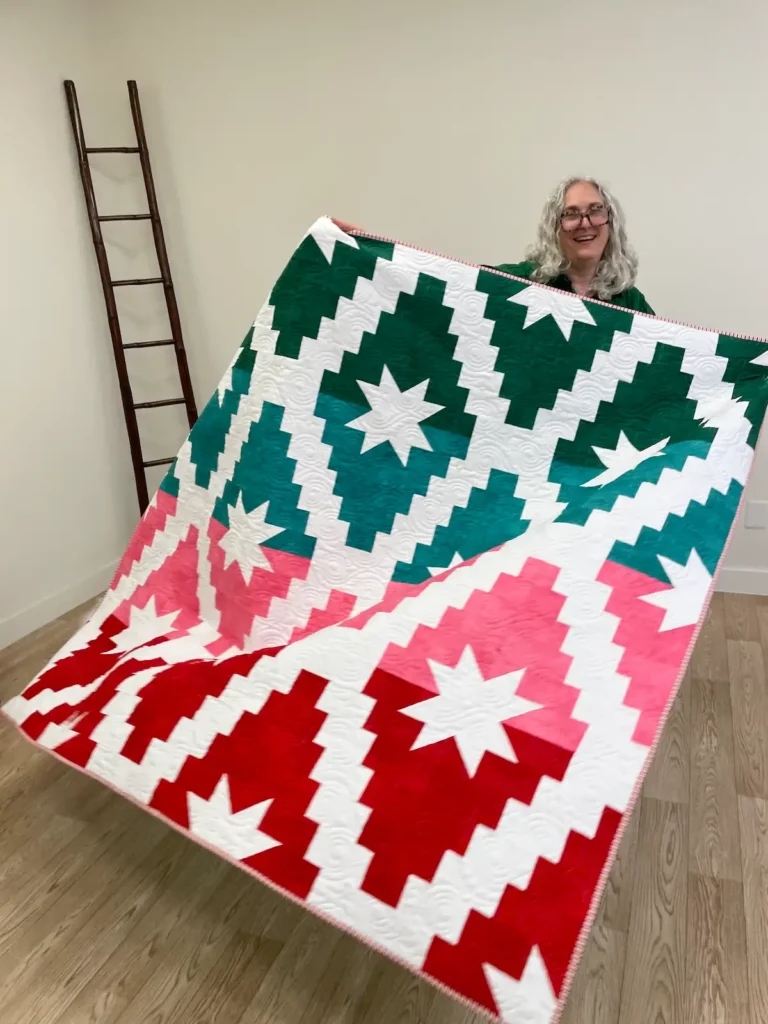
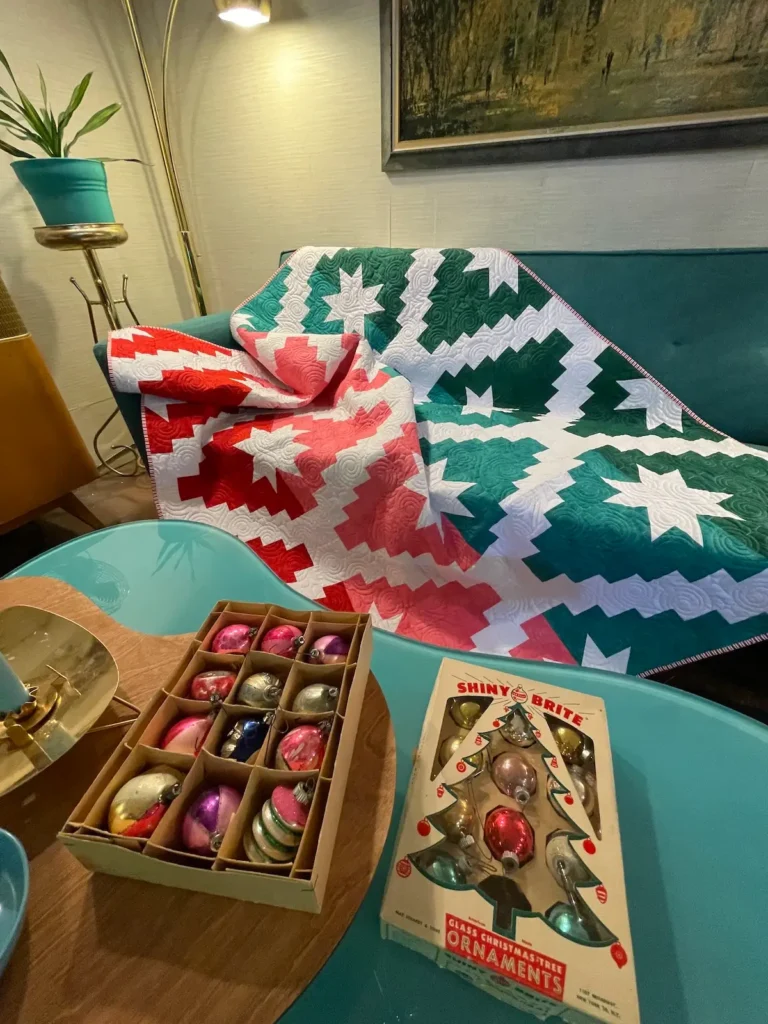
I’m still that same girl who poured over the JCPenney catalogs, dreaming of what new comforter and pillow shams I would decorate my room with if I could. I love mixing and matching patterns and gravitate towards vintage designs and textiles that tell a story.
When I first started designing quilts, I focused almost entirely on technique. I was confident in my sewing skills from making clothing, so I assumed quilting would be easy. Not even close. I quickly realized quilting was a whole new endeavor, with its own construction challenges and design theory. I had to learn the “rules” before I could bend them, and that process shaped what I like and how I approach design now.
Over the years, my taste has matured as I’ve experimented more with color, scale, and composition. I’m drawn to playful, oversized blocks, unexpected combinations, and designs that balance creativity with clarity.
My aesthetic now reflects both the skills I’ve built and the joy I get from pushing ideas in new directions.
How did you come up with the name Stitch Well & Prosper? What does it mean to you?
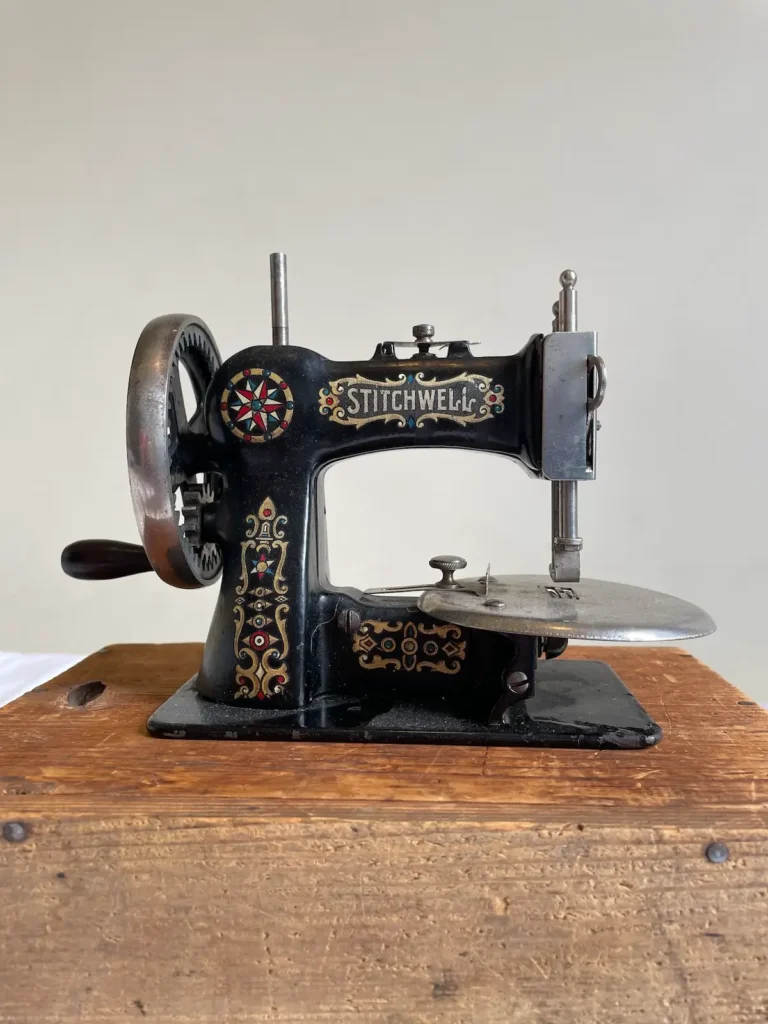
The name is part toy sewing machine and part Star Trek. I have an antique Stitchwell toy sewing machine from the 1920s, and I’ve always loved how optimistic and encouraging that name sounded.
When I started brainstorming a name for my patterns, I kept coming back to Stitchwell. It had this warm, friendly feel, almost like the start of a salutation. That made me think of Leonard Nimoy’s famous line, “Live long and prosper.” Once the connection clicked, I realized Stitch Well had the same rhythm as “Live long,” so adding “and prosper” felt almost automatic.
Later, I discovered that the phrase “Live long and prosper” has significance in Jewish culture, which also resonated with me on a deeper level.
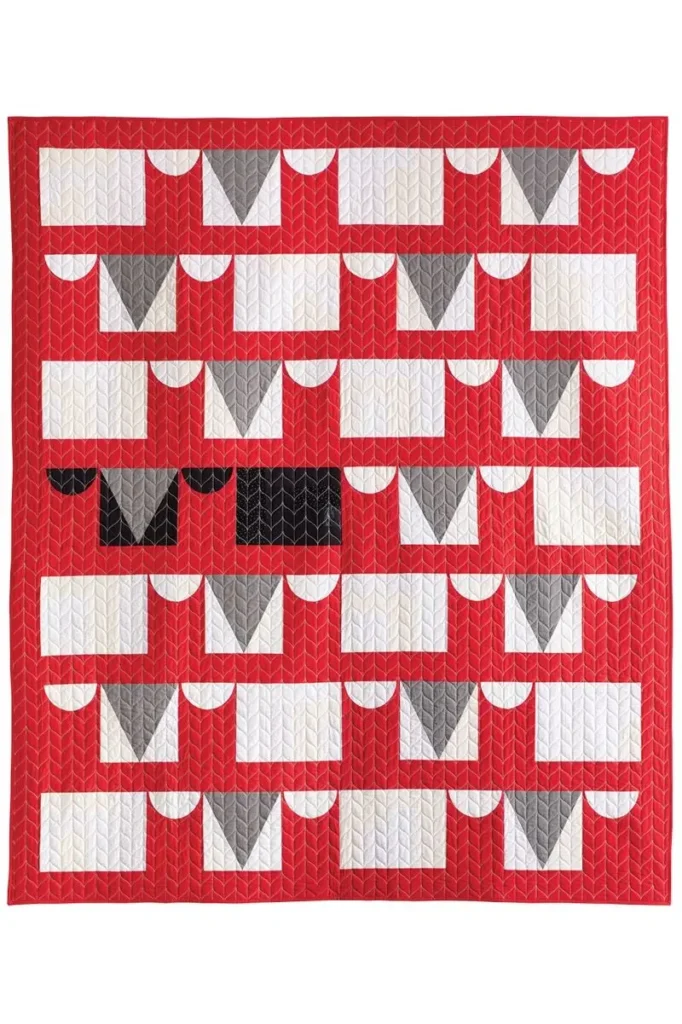
Tell us more about your fondness for vintage quilts. What are some of your favorites you’ve collected over the years?
The first vintage quilt I really connected with I found it at a flea market that had fabrics from the 1940s and 50s. It was tattered but filled with fabrics I couldn’t resist. At home, I began taking it apart to save the fabrics that were in good enough condition to keep and maybe use for a project or design inspiration. As I unpicked, I discovered a second quilt underneath, made from feed sack fabrics, and beneath that, another quilt of silk and wool. The innermost quilt literally disintegrated in my hands, but I salvaged what I could. That experience was an aha moment, one that taught me to appreciate the layers of history in vintage quilts and the stories woven into their fabrics.
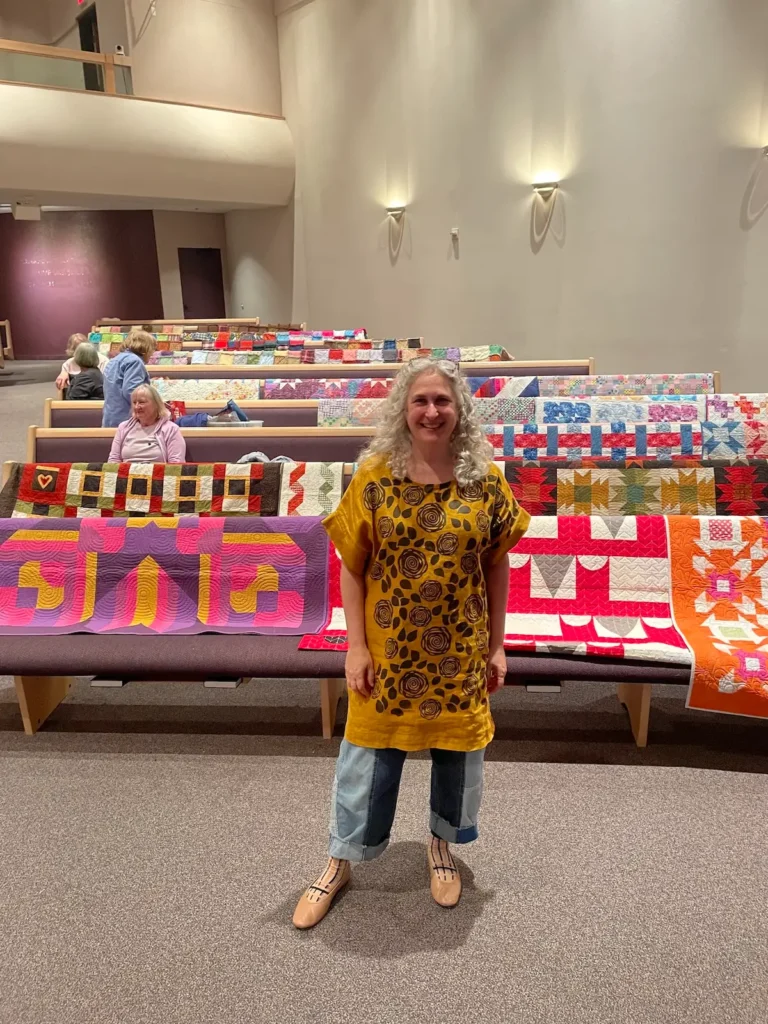
A year ago, I inherited a remarkable collection of antique doll quilts from the mid 1800s – 1930s, along with quilt blocks, full-size quilt tops, finished quilts, a library of books and magazines, and more. I’m currently figuring out how to catalog this incredible collection and keep the quilts protected. Part of the condition of the inheritance is that I share these quilts, so I’ve had several opportunities to lecture and teach using them, helping to continue their stories and educate others about this unique part of quilting history.
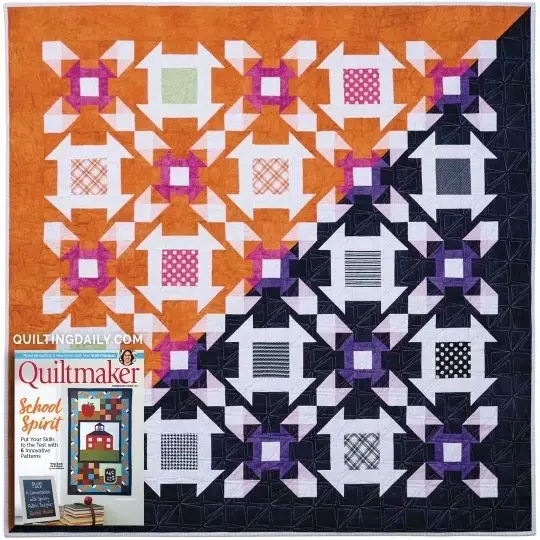
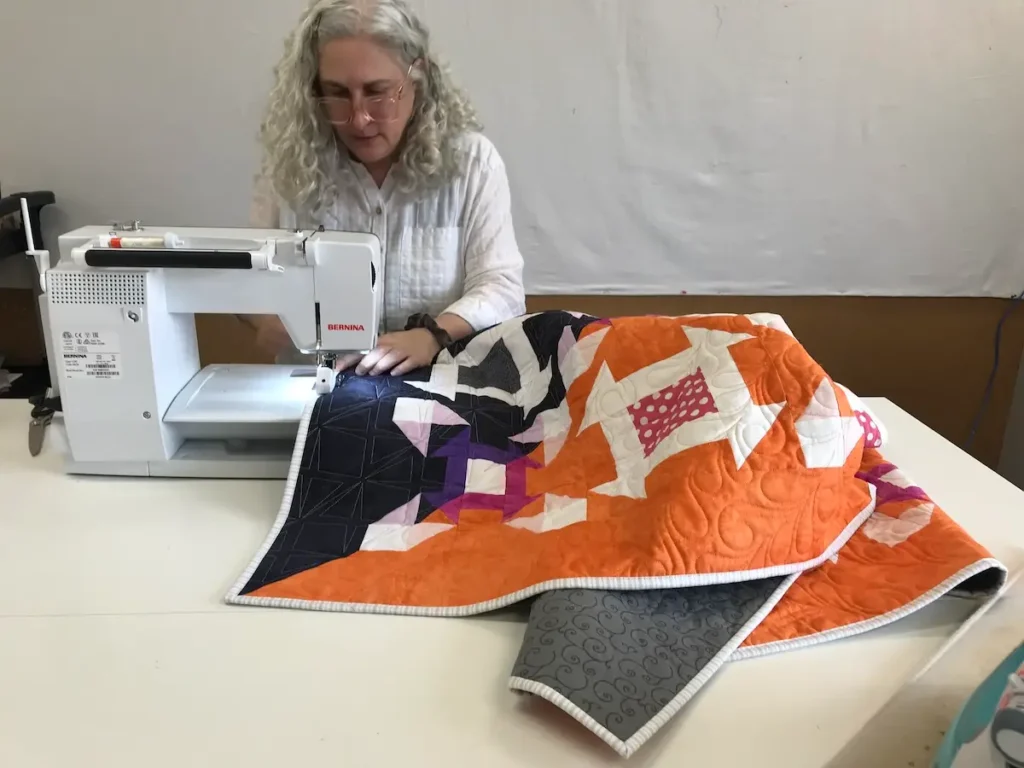
When you have time to make for yourself, what types of projects do you turn to?
After years focused on commercial work and projects for magazines (which I love designing, don’t get me wrong), I’ve been more intentional about finding my own voice and seeing where it can take me. Co-founding The Reprintery in 2023 opened the door to even more experimentation, combining printmaking with quiltmaking in ways that have been both rewarding and playful.
I gravitate toward plaids from upcycled shirts, solids I rarely use in commercial work, or fabrics I’ve dyed or manipulated. I love hands-on, process-driven techniques like dyeing, resists, embroidery, and appliqué. These are the projects I reach for when I want to reconnect with the tactile joy of making.
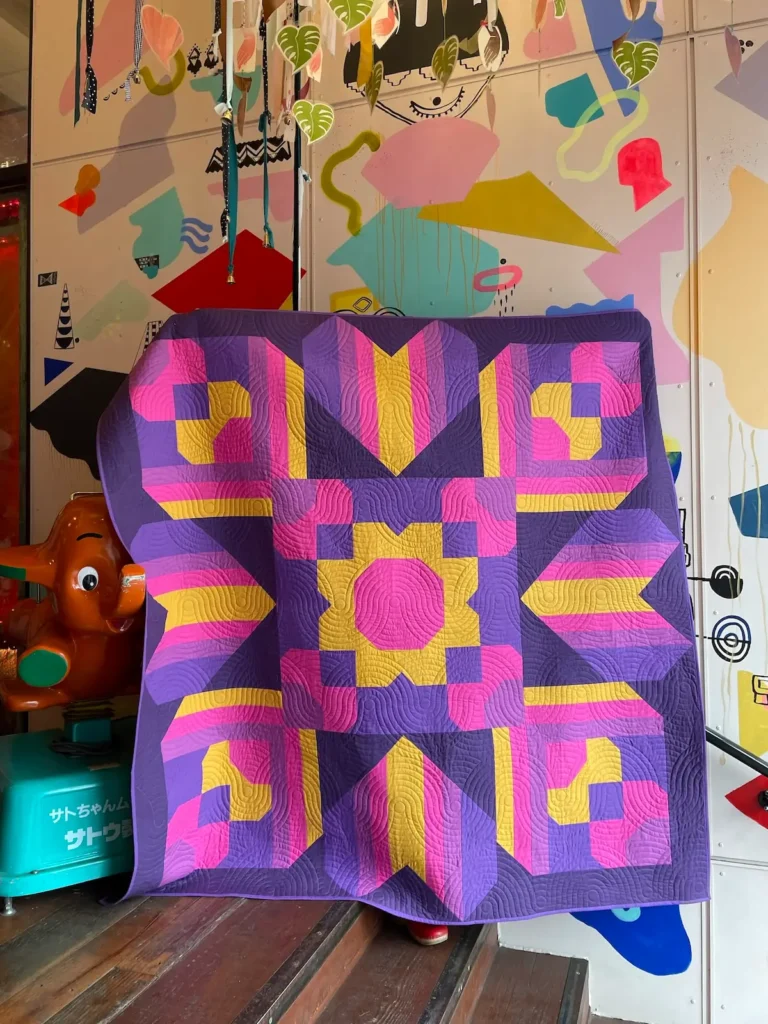
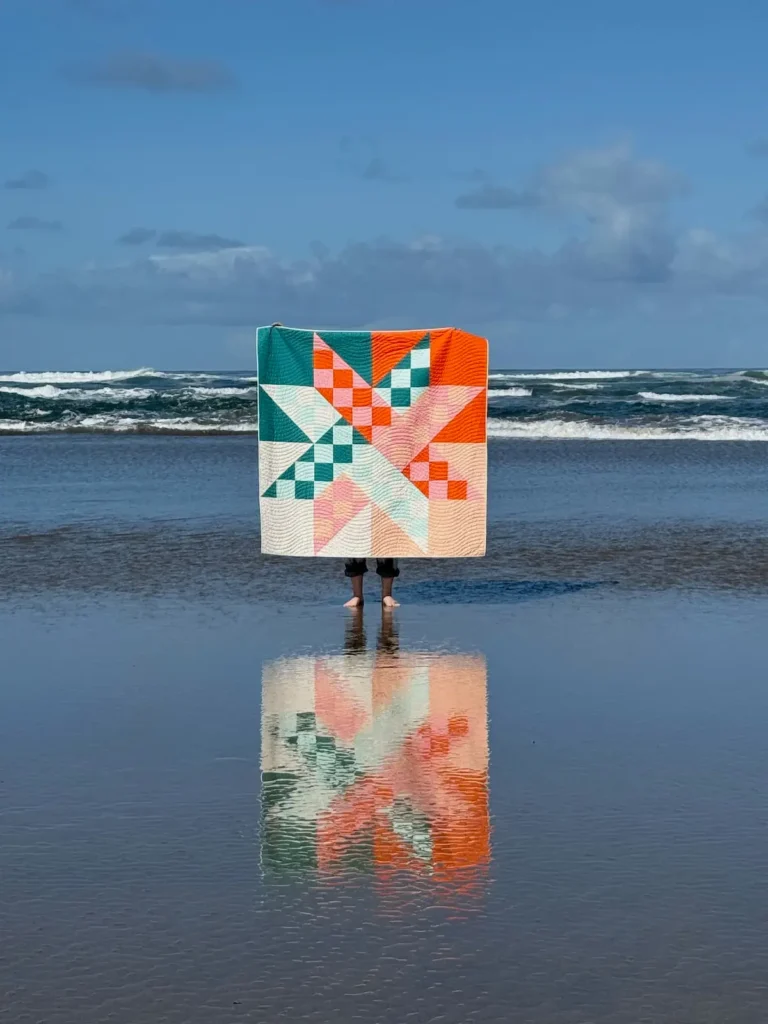
Traditional blocks, especially star shapes, continue to inspire me. Two recent designs, the Sparkler Quilt and California Stars, are essential big pieced stars! I really love playing with scale and color, and creating something that feels a little bit traditional and a little bit modern, a little bit country, and a little bit rock and roll (shout-out to Donny and Marie!)
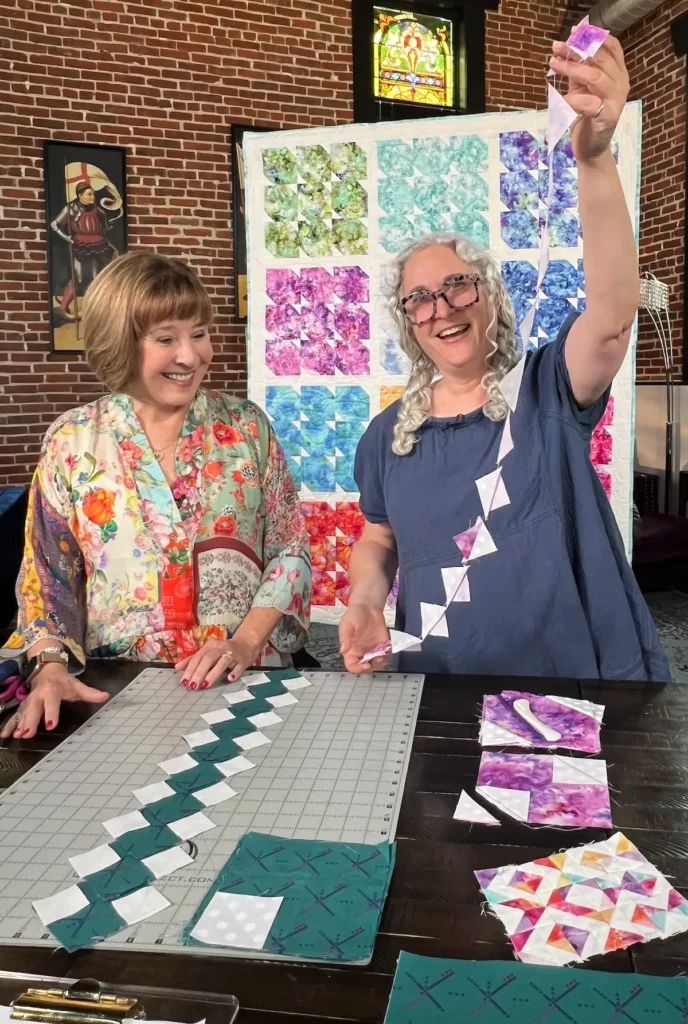
I’m also interested in writing and the creative process. I filmed a segment with Alex Anderson about a quilt I call the Magic Waffle Quilt, inspired by a period when I lost my sewjo and how I overcame it. Teaching this quilt in workshops gives me the chance to dig into the creative process with others, which I find deeply rewarding.
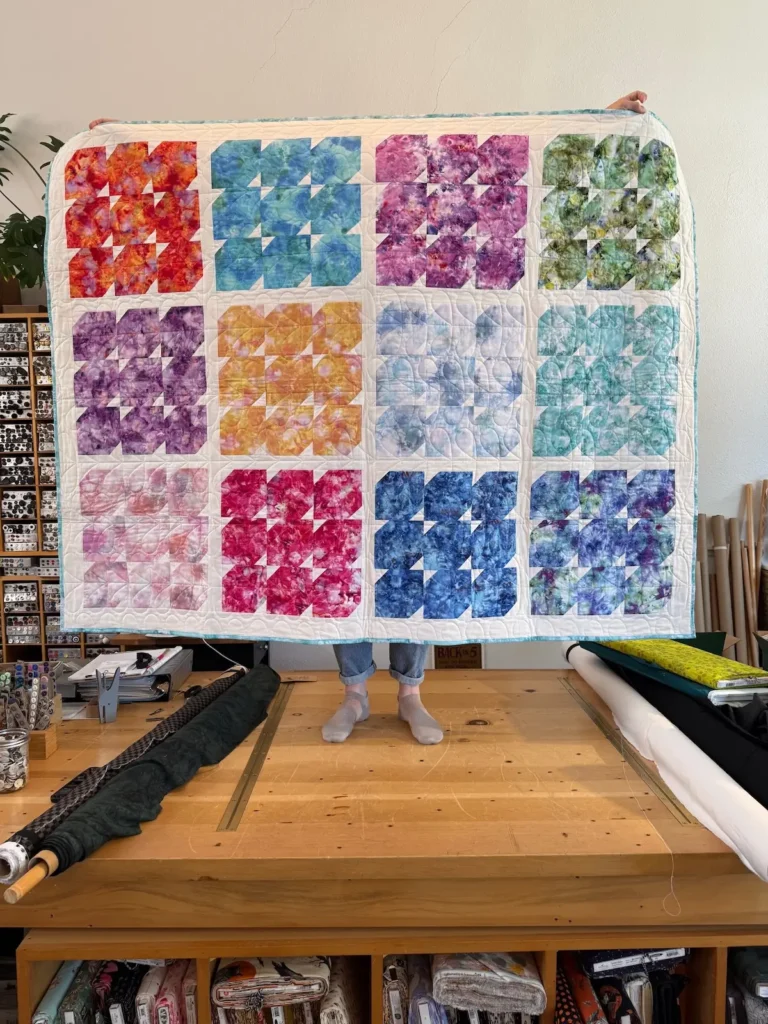
How much of your work is planned ahead, and how much surprises you as you go?
Most of my work is planned.
I map out the math, the color placement, and the final size, and the biggest surprise is usually that it actually works and looks exactly like I imagined. That is the payoff for all the planning.
Of course, sometimes it does not work because I miscalculated or missed a detail like a directional print or forgot to add seam allowance. Those moments happen less often now, but they are where discovery happens. Maybe I should invite a few more of those surprises.
What does your studio look like? How do you organize your space?
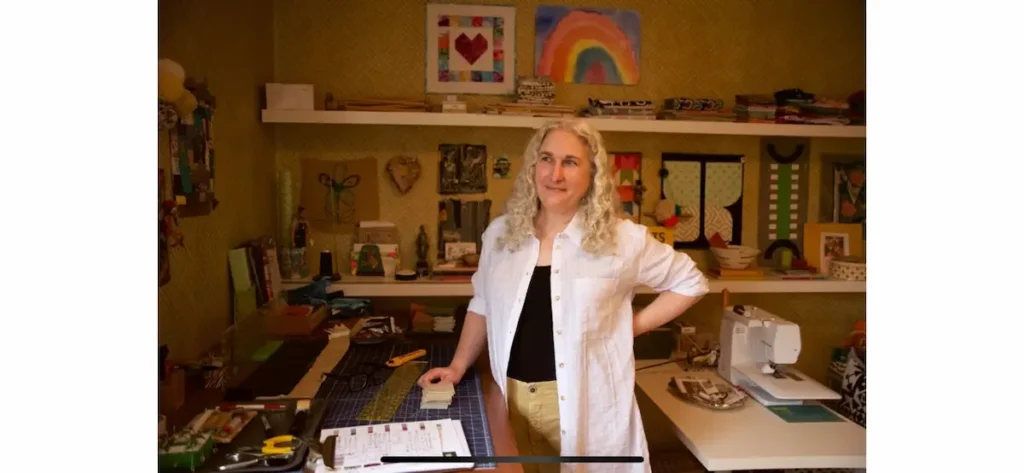
Up until a month ago, I worked out of a bedroom in my 1950s ranch house, with fabulous green wallpaper, a big closet, and a south-facing window. It is filled with my favorite things, including artwork, mementos, and all my sewing supplies, making it truly my creative corner.
My organization is quirky, a little like The Mixed-Up Files of Mrs. Basil E. Frankweiler, with old sewing boxes, vintage suitcases, and tins holding all my tools and treasures, making every project part of the adventure. The light sometimes flickers, whether from a short in the wiring or a friendly house ghost, and I have a movable design wall I can use as needed.
Recently, I also leased a shared studio space with Charlotte Flory, who is the other half of The Reprintery. It has beautiful windows and white brick walls, a large cutting table, and room for our machines, fabrics, and two big design walls, giving us space to expand our practice and explore even more.
When you start a new quilt design, what are the first few things you do?
The first thing I usually tackle are the shapes of the blocks or piecing, and then its all math. I want to know if it will actually work, what size the pieces need to be, and what the finished quilt will measure. I may not have every detail figured out yet, but this helps me start visualizing the overall size and shapes so I can fine-tune the design as I go.
I usually have a sense of the colors and the scale of the prints I want to use, but I spend a lot of time making sure there is balance and variety. I think carefully about how the colors and piecing work together to create something that feels dynamic and exciting.
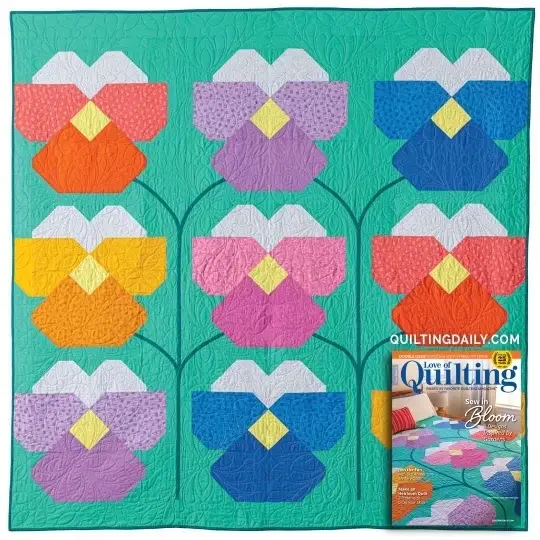
Do you ever make sample quilts or mockups before you commit to a full design?
Yes, I am a big fan of mockups because they let me take a first idea and see what can be refined, chain pieced, or cut differently, which often leads to new ideas.
For example, I might originally plan to piece a block using half-square triangles, but if I rotate it a different way, I might see that it could be made with flying geese instead, which eliminates a seam.
I enjoy trying to figure out how to remove a seam or a step while still getting the same result. Sometimes you do not know if it will work until you try, and I always learn something from the process.
What’s your favorite part of designing a quilt pattern? What’s the hardest part?
My favorite part is when the quilt is finished, and it looks exactly like I imagined. It is really exciting to see an idea come to life.
The hardest part is navigating mistakes and the self-doubt that can creep in, but I try to treat those moments as part of the creative process. I even give that inner critic a name, and our “debates” often help me clarify my next steps and make stronger choices.
Writing the pattern is also challenging because it takes focus to explain each step clearly and illustrate it in a way that others can follow. But that challenge is also what makes the finished pattern so satisfying. It’s a chance to share a design I love with others and see them enjoy making it.
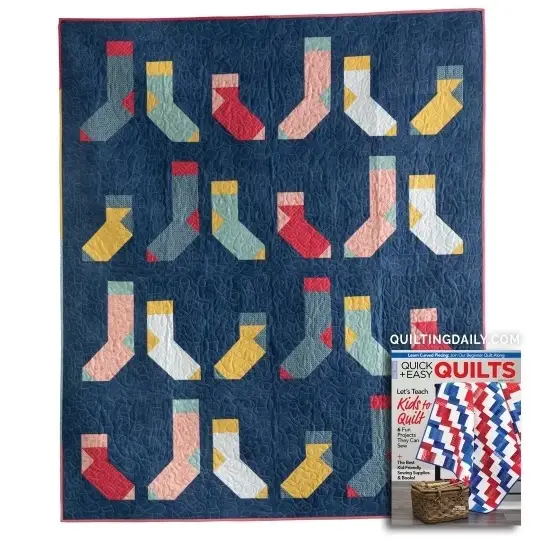
When a design doesn’t look right, how do you know and how do you fix it?
I typically iterate on all my ideas and choose the one I feel is the strongest. I go through a thorough vetting process before making a final decision.
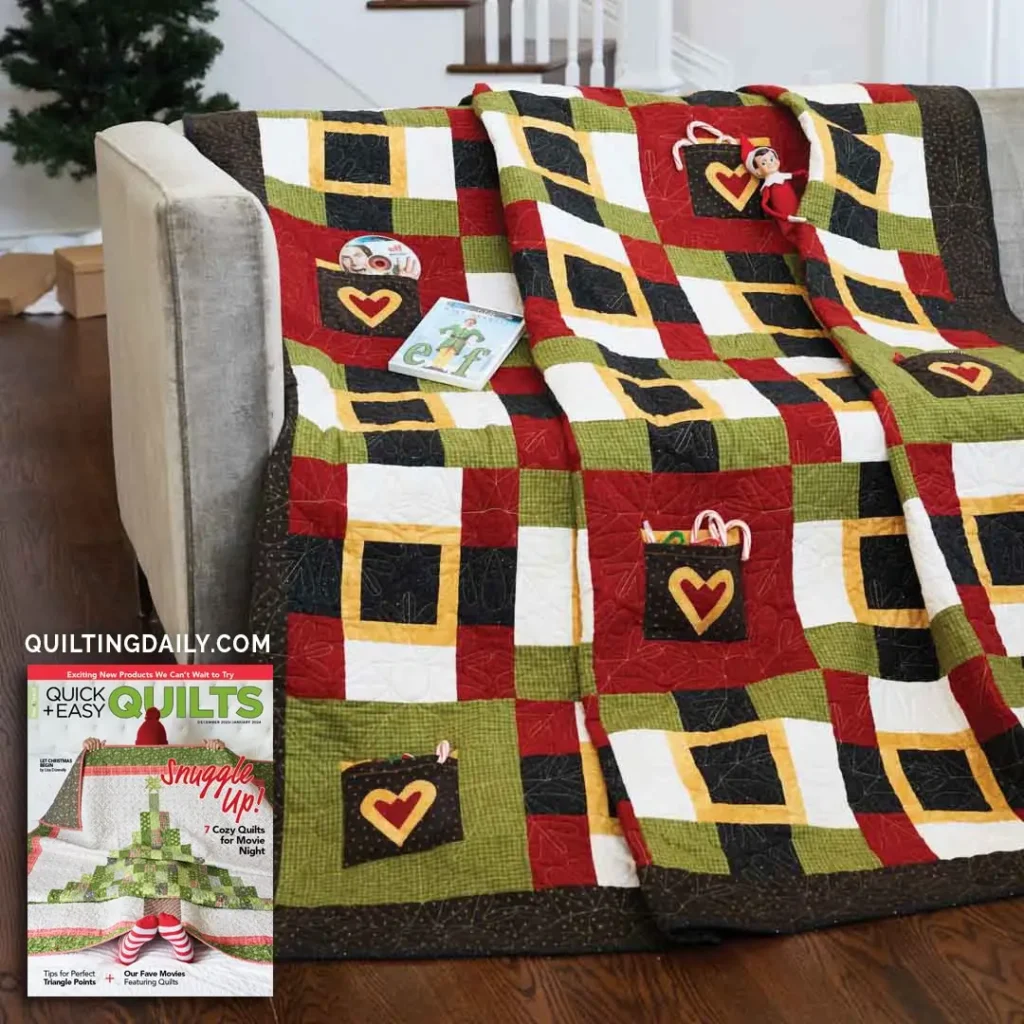
I ask myself questions like, can this design work in more than one size, or will it only work in a specific format? Could it easily become a runner or a pillow? Will I need to do anything unusual to piece the sides or top and bottom to make the quilt look balanced?
If I feel stuck, I sometimes ask friends and colleagues for their opinions. Feedback is incredibly valuable. I honed this skill in art school, where critiques often helped me see things I could not notice on my own and ultimately elevated the design. I carry that practice into my work as a professional designer, and I try to teach it whenever I can.
Learning to iterate on ideas and incorporate feedback is what makes a good design even stronger.
What lessons have you learned over the years about designing quilts for other people as patterns?
Early on, I received great advice to write instructions the way I would explain them to a friend. That helps keep the directions clear and approachable. I also work hard to be consistent in my language so it is predictable for makers, including how I use abbreviations and explain cutting or piecing steps.
I always hire a technical editor to review my patterns because they catch mistakes and offer suggestions for clearer explanations. I never skip this step. I also check the names of blocks and techniques to ensure that what I am creating is original and authentic, which is important to me as a designer.
When you design a quilt, do you think about who might make it or who might use it? Does that influence design decisions?
Always. I have two guiding questions for every design: Is this fun to make, and can it be made using different colors or fabrics? Both need to be a yes, or I pause and redesign until they are.
I don’t picture a specific person, but I do think about the maker’s experience. I consider what it takes for someone to spend time creating the quilt and try to make that process enjoyable. I also love thinking about how the quilts will be used once they are finished.
What’s your all-time favorite quilt you’ve made that you still love?
I think my all-time favorite quilt is probably the one I haven’t designed yet. I love the creative process itself, and the moment I feel compelled to draw or create is always my favorite.
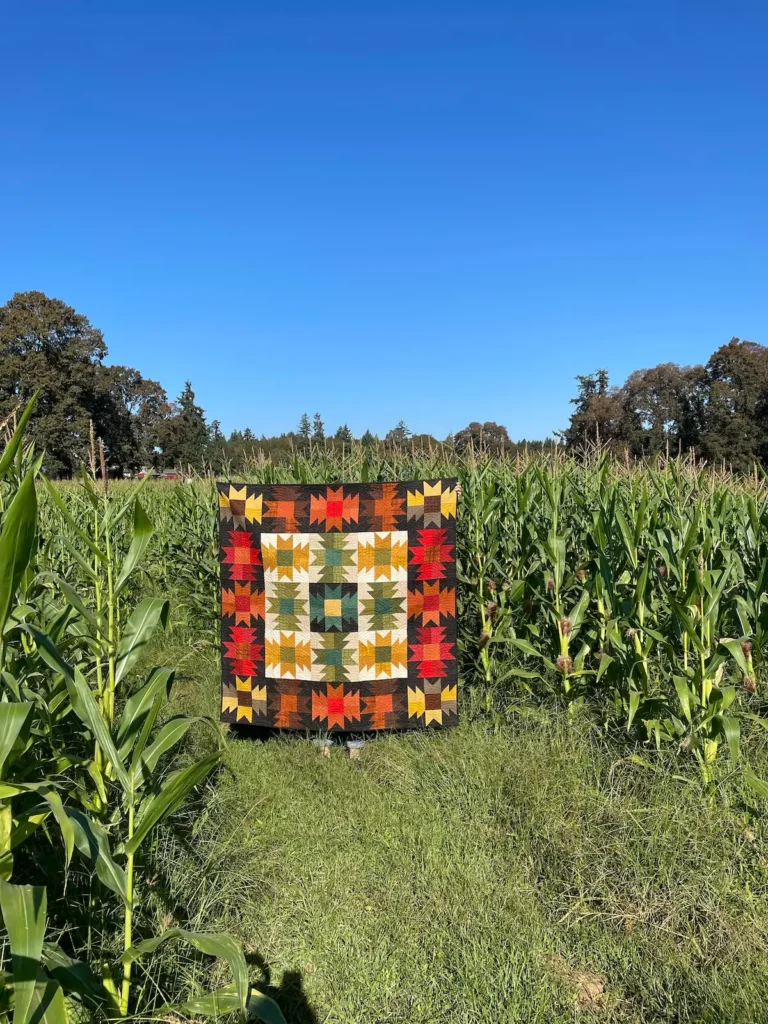
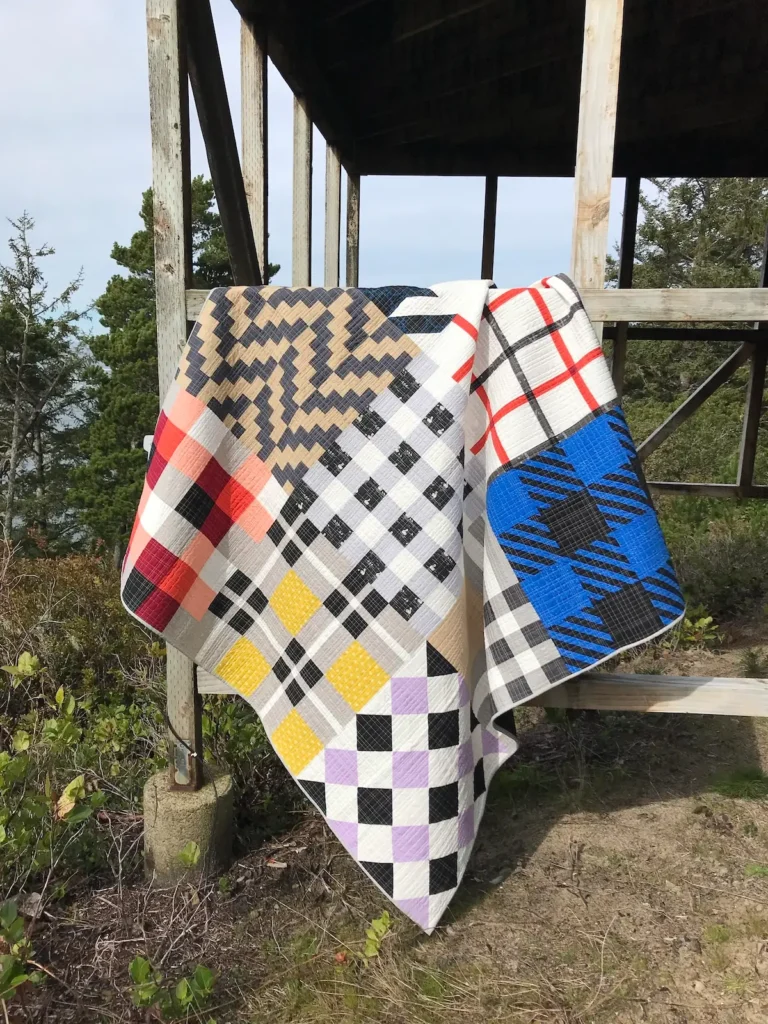
That said, there is one quilt I truly love: the Bespoke Sampler I made as a block-of-the-month for my guild back in 2018. It captures the most authentic elements of my design aesthetic, inspired by vintage, a nod to traditional textiles, playful piecing, big oversized blocks, and tied to my career as a designer. Sharing it with others and seeing the variations of each month’s blocks was incredibly rewarding.
Music, podcast, or silence while you work?
It depends on the day.
When I’m at home, I love playing records. I enjoy the way they shape my time, since I have to get up and turn the record over, which keeps me from sitting too long. I also have favorite podcasts that I look forward to each week, though I rarely listen to them while sewing.
For serious work, I need silence or use focus timer apps to stay fully present.
Morning person or night owl when it comes to stitching?
I’m definitely a morning person. My most creative ideas usually come first thing in the morning and on morning walks.
At night, I tend to wind down, though if I get into a flow, I can work for hours without noticing the time. I also tend to get second winds that can last late into the night, but I always wake up early, so I generally don’t invite those.
Winter in the Pacific Northwest gets dark early, so mornings are really the best time for me to think and create.
Where can people see your work?
You can follow my work on Instagram at @stitchwellandprosper for personal projects, @thereprintery for my collaborative art project, and @maywoodstudio for patterns I design for the brand. I also sell my own patterns on my Etsy shop.
Over the years, my quilts and patterns have been featured in magazines and books, and I have a few upcoming publications next year that I’m really excited about. I also teach and give lectures, so following my social media is the best way to stay up to date on new patterns, workshops, and exhibitions. I’ve appeared on two episodes of The Quilt Show, which is a fun way to get a glimpse of my creative process, and the Reprintery was recently featured in Uppercase Magazine for a spread detailing our collaborative work.
Interview posted January 2026
Browse through more inspiring quilts on Create Whimsy.