
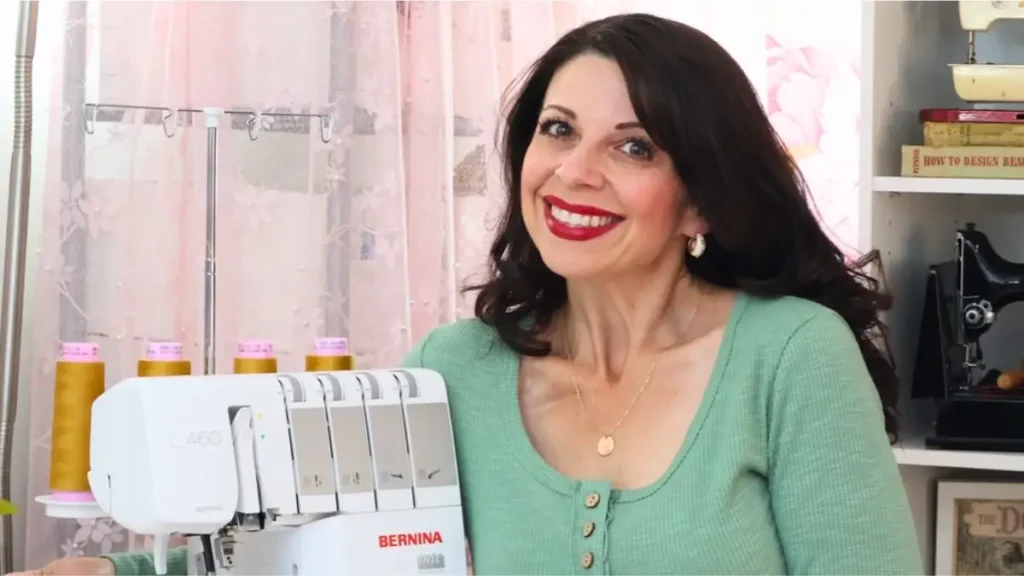
From hand-stitched Barbie clothes to building a serger-loving community, Sue O’Very, known in the sewing world as Sookie Sews, has always believed there’s no such thing as doing it “wrong.” In this interview, she shares how early encouragement, a passion for clear instructions, and listening closely to students shaped her path as a designer and teacher.
Tell us about your very first sewing memory. What did you make and how did it feel?
My very first sewing memory is making Barbie doll clothes. Some were stitched by hand, and others on an old green Singer sewing machine that lived—oddly enough—in my brother’s closet. He didn’t sew, but it must have been the easiest place for my mom to store it.
I remember making a red-and-white gingham skirt with lace and an elastic waist for my Barbie. Instead of hemming it in the round so her legs could go through, I stitched straight across the bottom and closed it up completely. My mom was so sweet—she turned it into a tiny coin purse and carried it in her handbag for years. That moment made me feel proud, supported, and creative…even when I got it “wrong.”
You moved into pattern design after years of sewing. What was the moment you thought, “I’m going to design my own pattern”?
As an Amazon Associate I earn from qualifying purchases. Read more about our affiliate linking policy.
I actually went to college for fashion design and went straight into costume design at Busch Garden Tampa, FL, so I’ve always been a pattern designer professionally.
I transitioned into the home sewing industry around 2000 when I worked as a shop manager. One day, my boss told me she needed someone to teach a class. I said, “I’m not a teacher—I don’t even know how to do what you’re asking.”
She replied, “The best way to learn something is to teach it.”
That moment changed everything. That’s when my teacher side officially emerged, and I began designing my first patterns for the home sewing industry—initially unofficially, right there in the shop.
In your early sewing years, what frustrated you most, and how did that shape the way you teach today?
I was frustrated by how overly complicated and wordy many pattern instructions were. I always felt there had to be a clearer, simpler way to explain things. That frustration pushed me to focus on clarity and consistency.
In 2003, I also began producing video content with my dad, realizing that about 80% of creatives learn best by seeing—not just reading. This was long before YouTube, and I was producing my own DVDs. That early insight still drives how I teach today.
When did “Sookie Sews” become the name for your work? Is there a story behind it?
“Sookie” was a nickname my second husband gave me. There were no other Sookies in the sewing world, and my students loved calling me that—so I got rid of husband number two but kept the nickname.
My legal name is Susan, and many people call me Sue, so I can usually tell how long someone has known me by what they call me. As long as you call me something, I don’t really mind—but in the sewing world, I’m Sookie.
Where do you find ideas and inspiration for your projects?
Almost entirely from my students. They ask thoughtful, practical questions, and those questions often turn into short videos, which then become full projects or courses—like Serger Escape, my beginner-focused course designed to help overwhelmed serger owners finally unbox, thread, and love their machines. https://sookiesews.com/serger-escape/

What is the simplest project you’d recommend for someone who just got a serger?
I always recommend joining my Year of the Serger challenge first. It’s a free, weekly serger-only newsletter filled with tips and encouragement, plus a Quick Start Guide to help set up both your serger and your space. It’s not about the calendar year, it’s about your year. https://sookiesews.com/year-of-the-serger/
Ultimately, when Serger Escape opens for enrollment, that’s my top recommendation — it’s designed specifically for brand-new or intimidated serger owners. I also run the Serger Dream Club, a private off-social-media community that’s currently only accessible through Serger Escape. It’s intentionally focused—and for now, closed to new members. But once they are a part of the Year of the Serger Challenge, they will be invited to join.
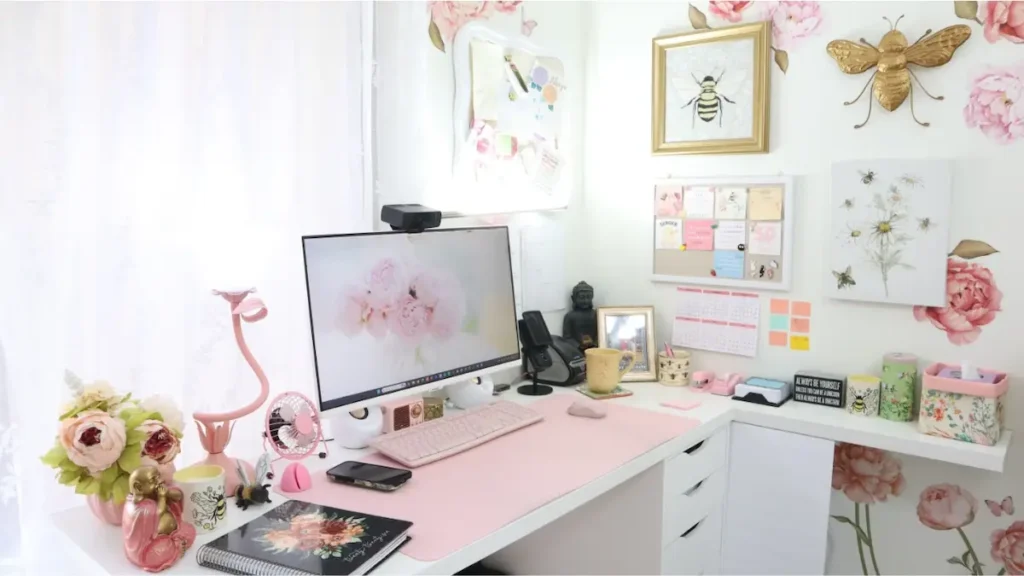
Describe your creative space.
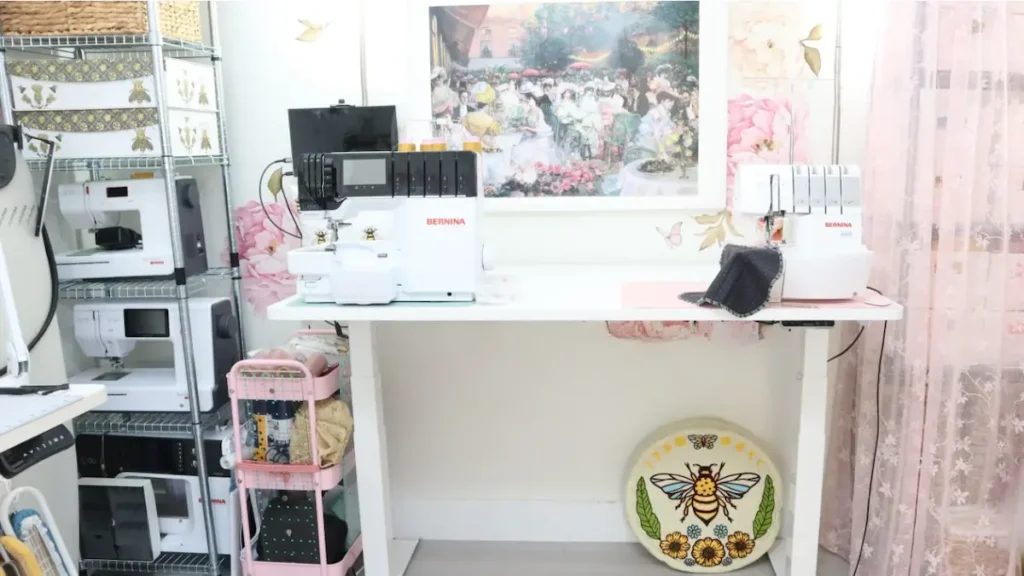
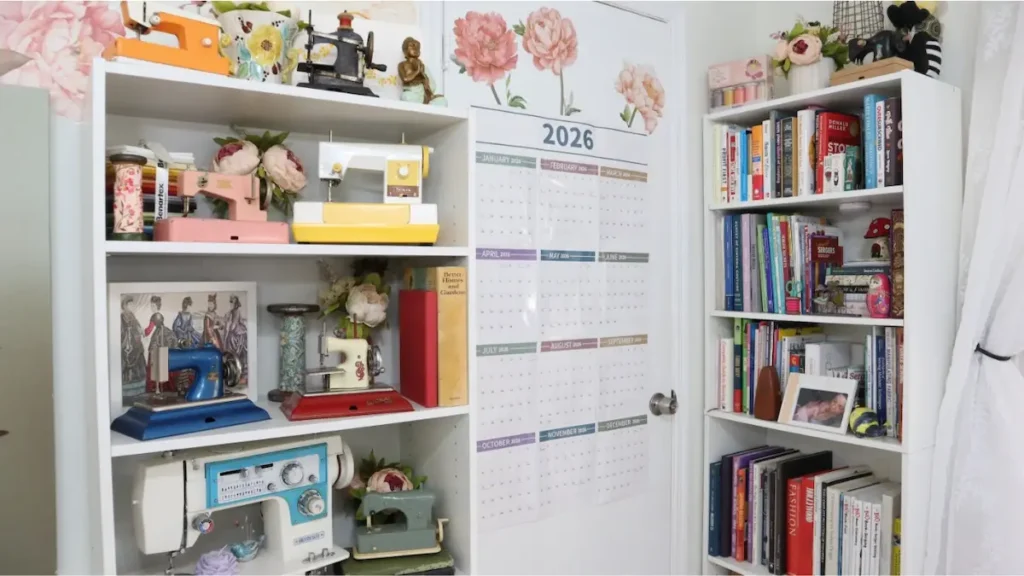
For the first time since 2008, I have my own sewing room—with a door I can close if I choose to. It’s right off the main living space, so I often keep it open to stay connected to family activity.
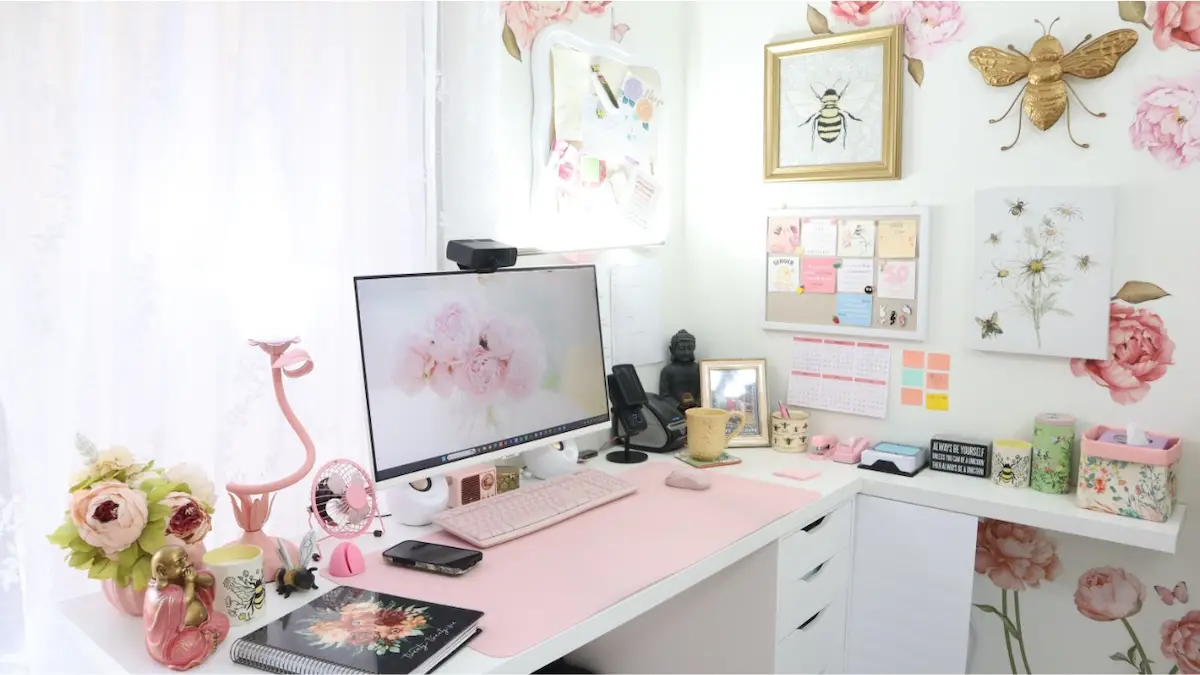
The room is filled with pinks, greens, yellows, bumblebees, peony flowers, lace, lots of sergers and embroidery machines, height-adjustable tables, and my computer. I also have a view outside, where bunnies, squirrels, and even iguanas visit my window daily.
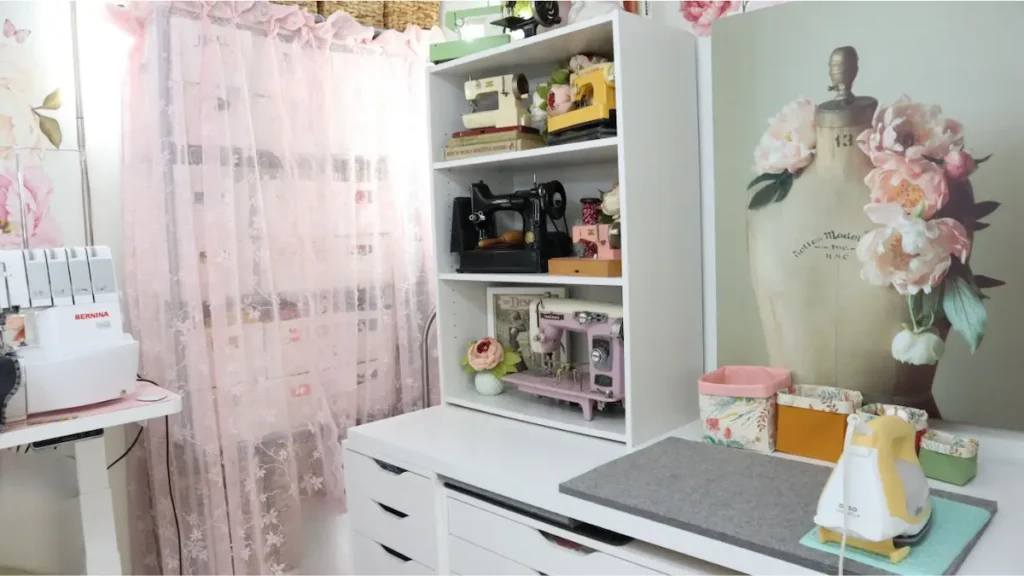
Walk us through how you set up your serger workspace.
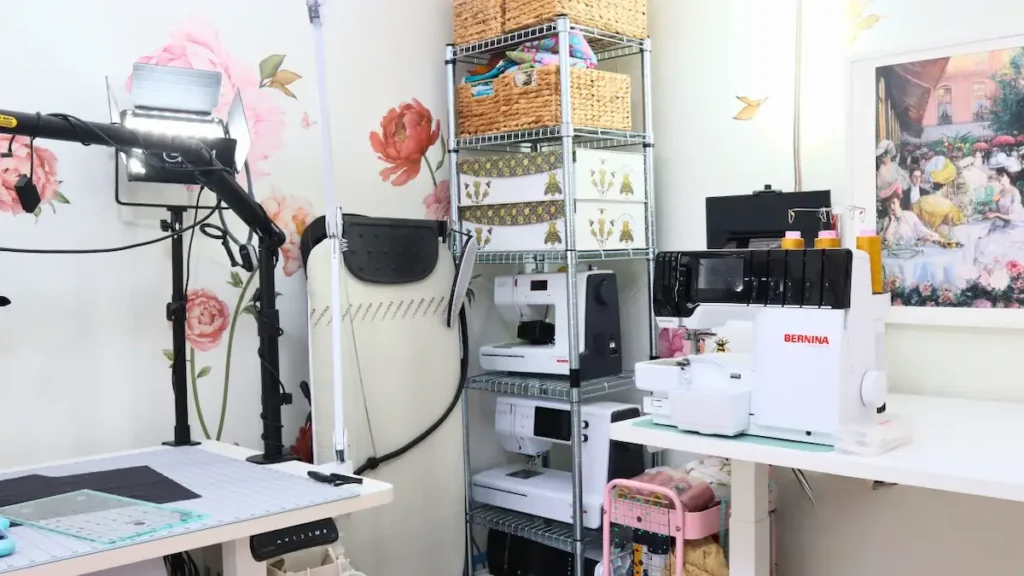
Nothing in my sewing space is permanently fixed—everything is movable and flexible. My sewing and embroidery machines live on shelves and come out as needed. Since sergers are my main focus, they stay on my counters and tables.
I use the LauraStar ironing system that moves as needed, an Oliso tabletop iron, and keep tools in baskets and drawers within reach. I also collect dozens of vintage miniature sewing machines for inspiration on shelves for decorations and to double as my set to be camera-ready.
How do you decide which projects become patterns?
Patterns come from what’s needed most—usually based on repeated requests from my audience.
My process is extensive:
- First prototype with notes
- Second version while writing steps
- Third while photographing
- Fourth while creating diagrams and refining instructions
- Testing with pattern testers
- Final revisions
- A fifth version during filming
A single serger pattern and video course often takes 200+ hours to create.
What’s your favorite part of the design process?
Honestly? When it’s over—and I see my students’ finished projects and their aha moments.
How have your patterns evolved over time?
My language is clearer, more consistent, and every pattern now includes video hosted on my own website. That evolution has made learning easier and more accessible for my students.
Have you ever had a pattern fail after testing? What did you learn?
Not in a long time—mostly because I ask my audience what they want. I’ve learned that just because I want something doesn’t mean they do.
How do you stay inspired when you’re tired or stuck?
I’m deeply committed to routine. I’m part of the 5 AM Club and highly recommend the book by Robin Sharma—it changed my life.
From 5–7 AM is my personal time: yoga, meditation, journaling, walking, and gentle work. I accomplish more before 9 AM than most people do all day. The only days I feel stuck are the days I sleep in.
How do you keep the fun when the business side gets heavy?
I’m very intentional about stepping away. I take days off, enjoy time with my family, and set clear, healthy expectations with my customers. I make it a point to get to the beach at least once a week, go thrifting with my daughter, enjoy the occasional spa day, and spend quality time with my boyfriend—whether that’s with his family, our friends, or just slowing down together.
I work early in the day, but by around 2 PM, I’m usually offline. That time is reserved for family, relationships, or slipping back into a creative flow that feels restorative rather than demanding.
What’s one piece of advice you wish someone had told you when you started?
Have an identity outside your business and take care of your health. I used to work until 2 AM, thinking it helped—it didn’t. Now I go to bed at 10 PM, wake up at 5 AM, and work focused and distraction-free. Like I said, by 2 PM I’m done with work and enjoying my family.
What’s a tiny habit you do every sewing day that makes a big difference?
I clean up my space as I stitch, always. I’ve shared spaces for most of my sewing life, even while running a business these last 17 years with my “office” being in the dining room. My space always needed to look tidy when finished. That habit stuck, and now I start each day with a tidy, welcoming space.
Where can people see your work?
Everywhere as Sookie Sews. I post daily on Instagram, share full-length educational videos on YouTube, and teach through my courses and programs.
Instagram https://www.instagram.com/sookiesews/
YouTube https://www.youtube.com/@SookieSews
Facebook https://www.facebook.com/TheSookieSews
Join the Year of the Serger Challenge https://sookiesews.com/year-of-the-serger/
Join waitlist for Serger Escape (open enrollment in March 2026) https://sookiesews.com/serger-escape/
Interview posted February 2026
Browse through more sewing inspiration and projects on Create Whimsy.