
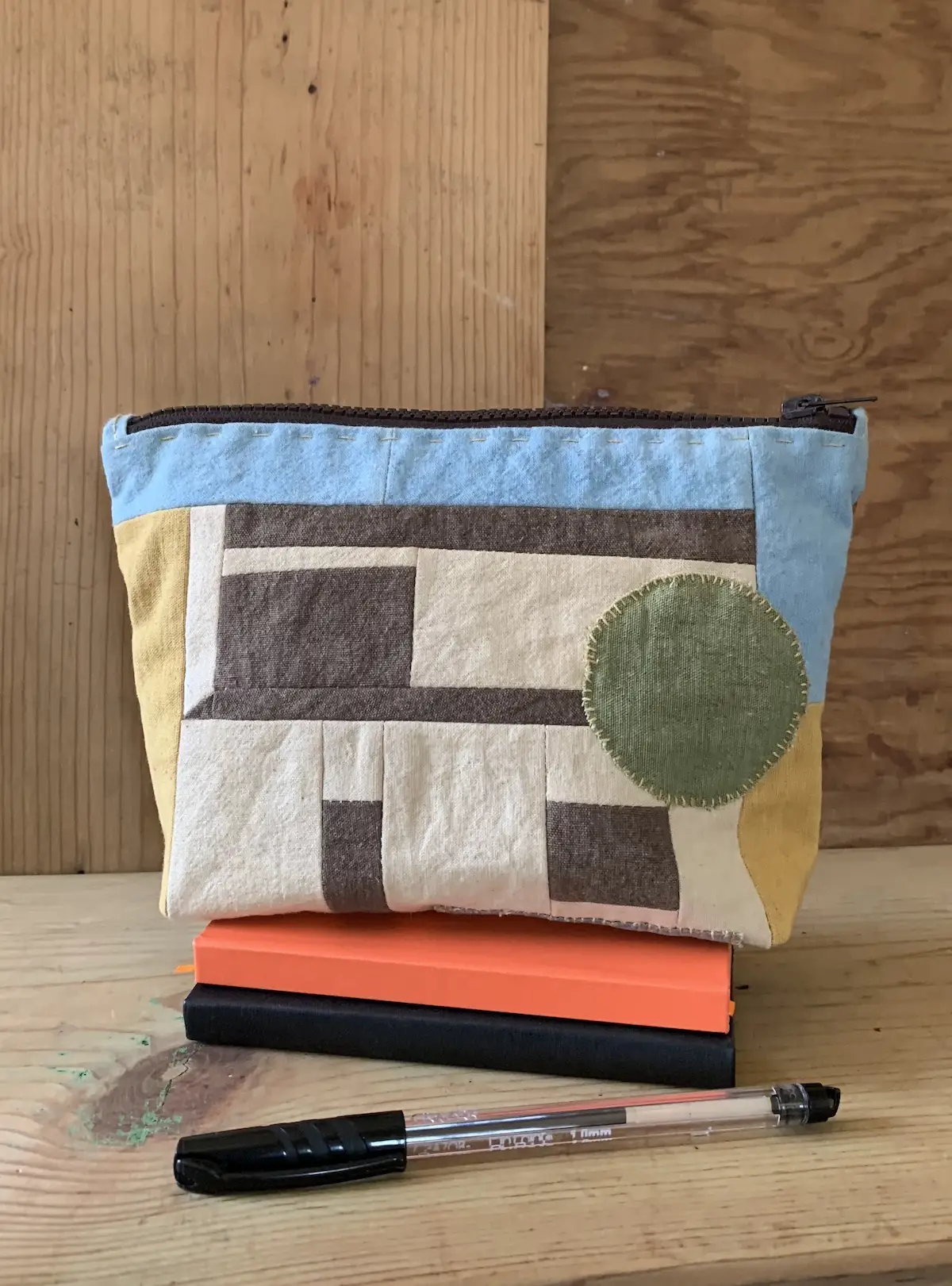
Suula started more than twelve years ago as a personal activity of creative expression. Today, it is a collaborative project in constant search for alternatives and processes with low environmental impact in obtaining botanical and mineral colors, using traditional methods and their application in different supports. With this framework of action, Mildred and Sama allow themselves to learn techniques that require manual work, linked to the nature of the materials and time.
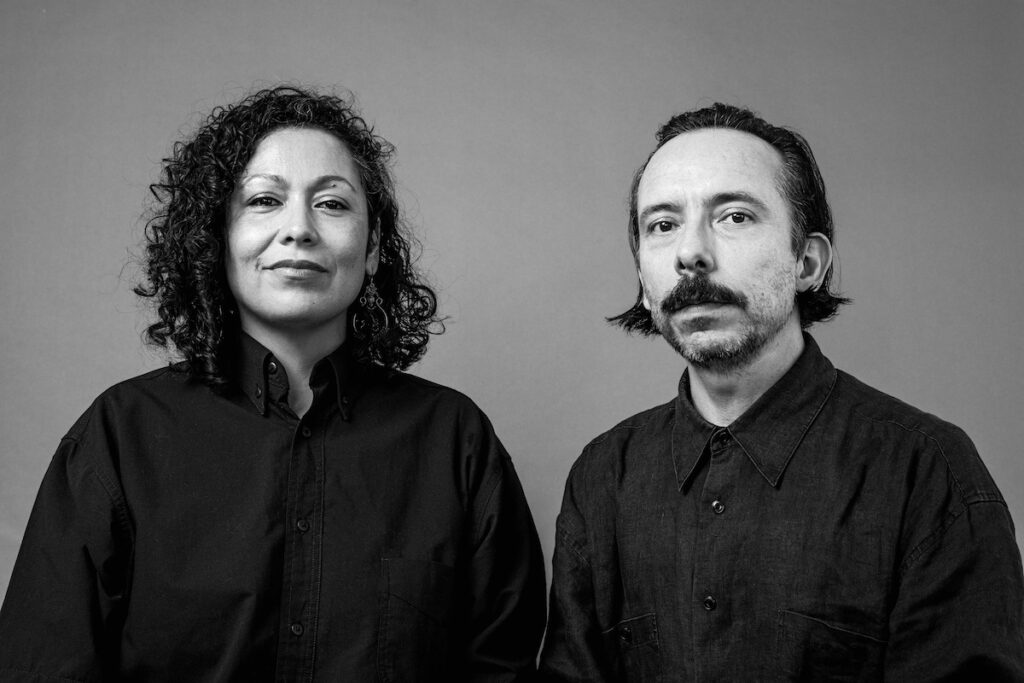
They look to elevate production with a greater social and cultural significance. Seeding multiple artistic endeavors, they aim to create pieces with almost animistic energy, creative experimentation, constant learning, and the development of techniques and their registration.
Tell us how you first discovered natural dyeing.
Mildred: As a student I liked dyeing bags and clothes I made myself, but my dyeing options were commercial dyes that were harsh on the skin and the environment.
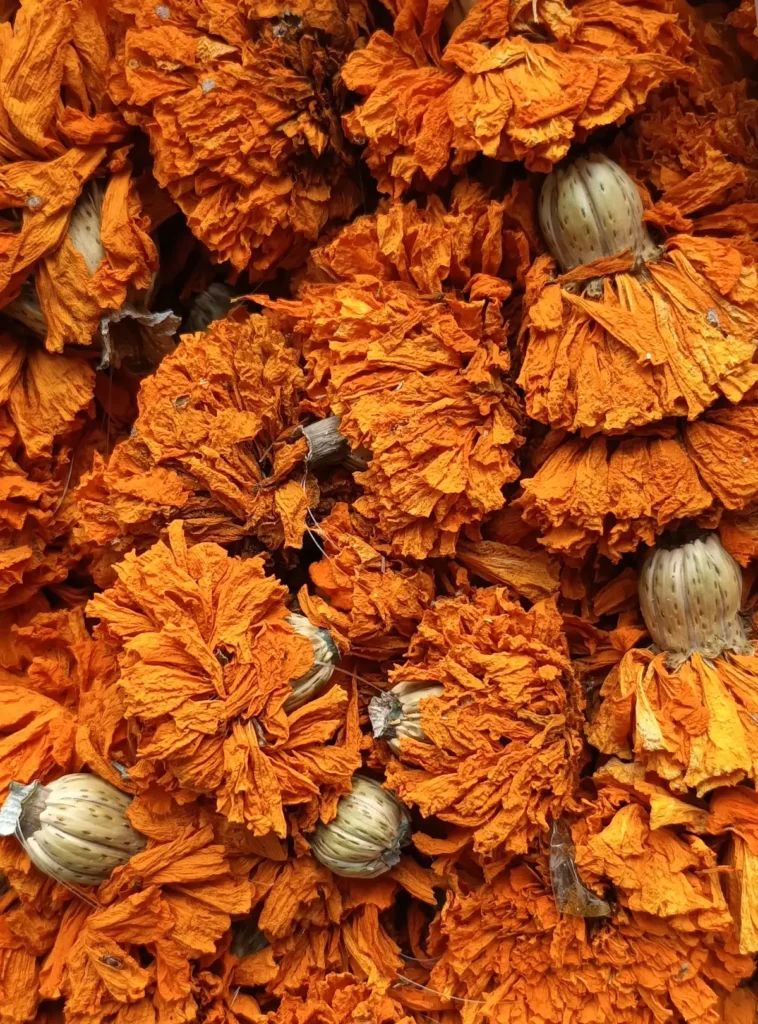
Five years ago, I decided to explore natural dyeing, looking up information online and enrolling in a diploma course. That was when I had the chance to experiment with dye materials available at home, such as marigold flowers, turmeric, avocado peel, and seed.
As an Amazon Associate I earn from qualifying purchases. Read more about our affiliate linking policy.
What did you learn from your first attempt that surprised you?
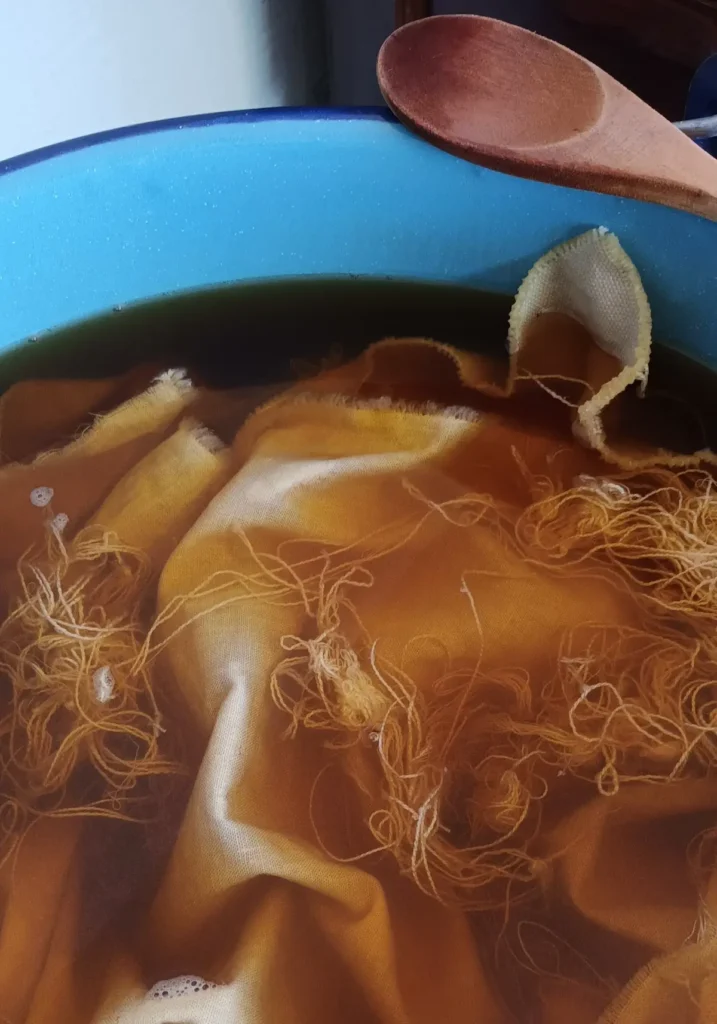
Mildred: The nobility of natural color. As soon as you submerge your textile, it begins to dye, and watching the whole process—how the color deepens over time in the pot—is truly rewarding.
What are the roles or paths you each take in the business and how did that come about?
Mildred: The dyeing, pigment extraction, and experimentation with new materials or supports are some of the activities I’m in charge of. I’m constantly moving between Hermosillo, Tijuana in Mexico and Philadelphia. I like experimenting with local materials on each visit, —the landscapes and seasons vary so much between cities—which is why I work under the concept of a laboratoire itinérant (traveling laboratory).
Sama: Our roles often overlap, but there’s a natural rhythm to how we divide the work. Mildred has a strong intuition for processes. My path is more tactile: I focus on the fabrics and threads themselves, on how the dyed material behaves once it’s in my hands. I often focus on structure, image of the practice and how I can connect with broader narratives. It’s not a fixed division, but I think these tendencies help us stay balanced.
And, when do you come together and collaborate?
M: Our communication is constant to coordinate the paths we want to take over a certain period. At least twice a year, we meet in person at each of the studios (Tijuana–Hermosillo) to plan and create new applications, talk about what each of us is working on, and see if there’s something we can collaborate on.
What keeps you excited about natural dyeing after all of this time?
M: Personally, I really enjoy experimenting with dyes, giving them variations of mordants, modifiers, or adjusting tannins—just letting the dye pot work its magic with its endless possibilities.
Most of the plants I use for dyeing are medicinal herbs. Working with natural elements, small-scale productions, and doing the whole process by hand connects me with my being, and I feel deeply grateful when I see the color on the textile.
S: For me it’s the way the colors live in the fabric itself. When I’m stitching or handling a dyed thread, I’m reminded that the color didn’t come from a bottle—it came from a flower, a leaf, a peel. That connection keeps the work alive. Even subtle variations in tone change how the embroidery feels in my hands, and those shifts make every piece unique.
What excites me most is seeing how thread and fabric carry the memory of the dye, and how that memory becomes part of the story we’re creating.
How do the generations of women before you influence your work?
M: The women in both my parents’ families had—and still have—a love for handcrafting. In some cases, it was more out of necessity than pleasure, since at some point in their lives, sewing, knitting, or embroidery became the family’s livelihood. That’s where this love for creating comes from, but also with the question of what I’m creating with—what materials and with what intention.
Not having work materials and supplies with a more ecological approach led me to explore natural dyeing and pigment extraction.
S: This question resonates deeply with me, because it’s something I only came to understand later, once I began working with fabrics and embroidery.
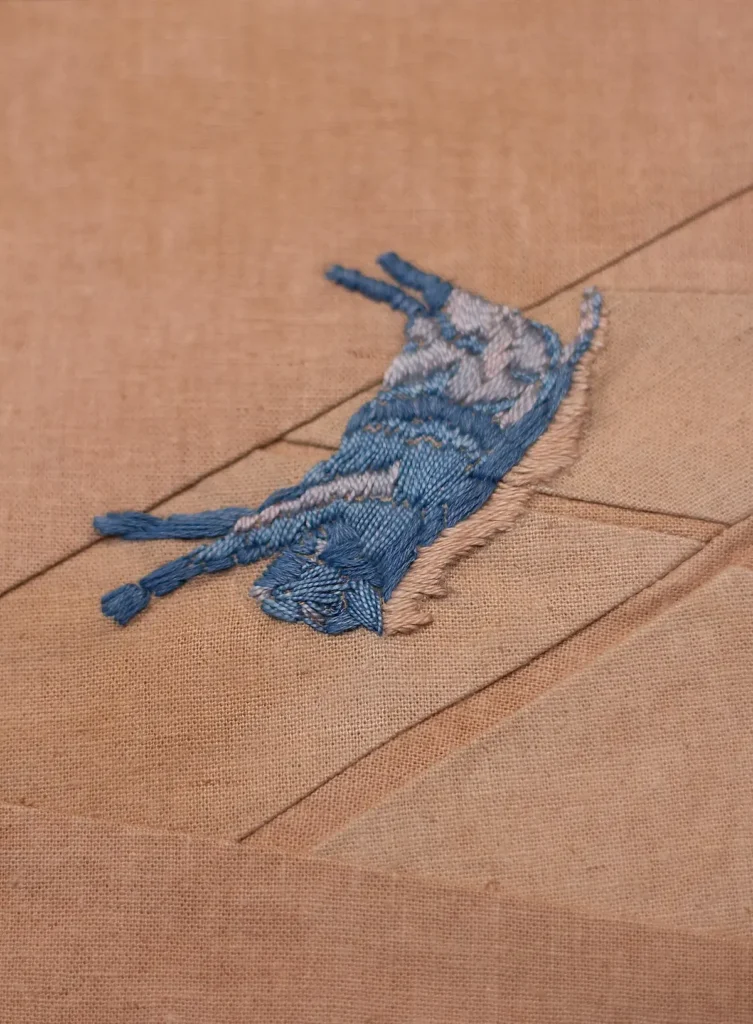
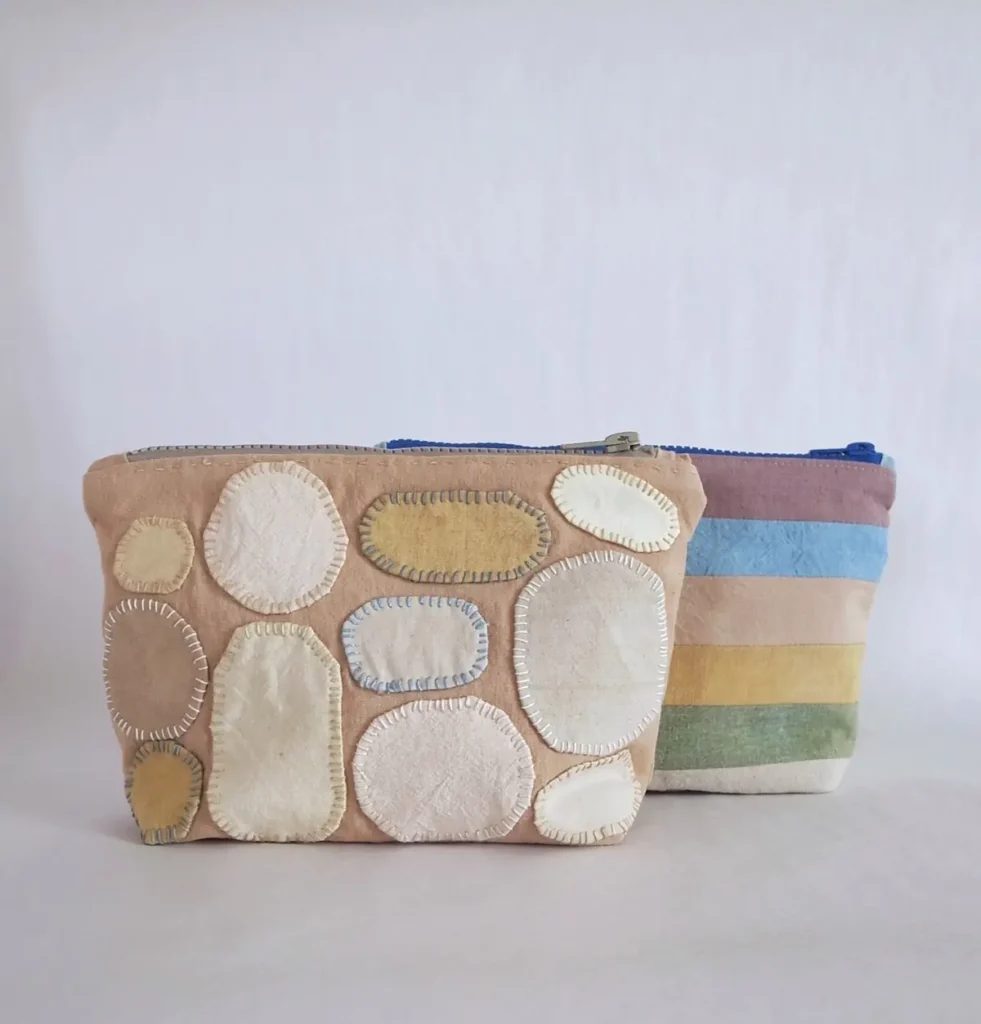
The moment of realization came when Mildred and I created Rosas en Piedra (2023). We were preparing a proposal for an exhibition centered on women and womanhood, and we decided to look closely at the tradition that Mildred mentioned before. We pulled out several examples of embroidery by our grandmother and aunts, and it struck me how we were not only continuing a technique, but also reinterpreting it.
The stitches were the same, yet their application revealed different ways of thinking, of relating to the fabric. That discovery changed how I see my own practice—now I cannot separate it from the women who came before me.
Their work gives me a foundation, while our practice seeks to shape a more contemporary version of that lineage. I would say we approach it more consciously, but always with the same intentionality: to create meaning and connection through thread.
Describe your own creative spaces.
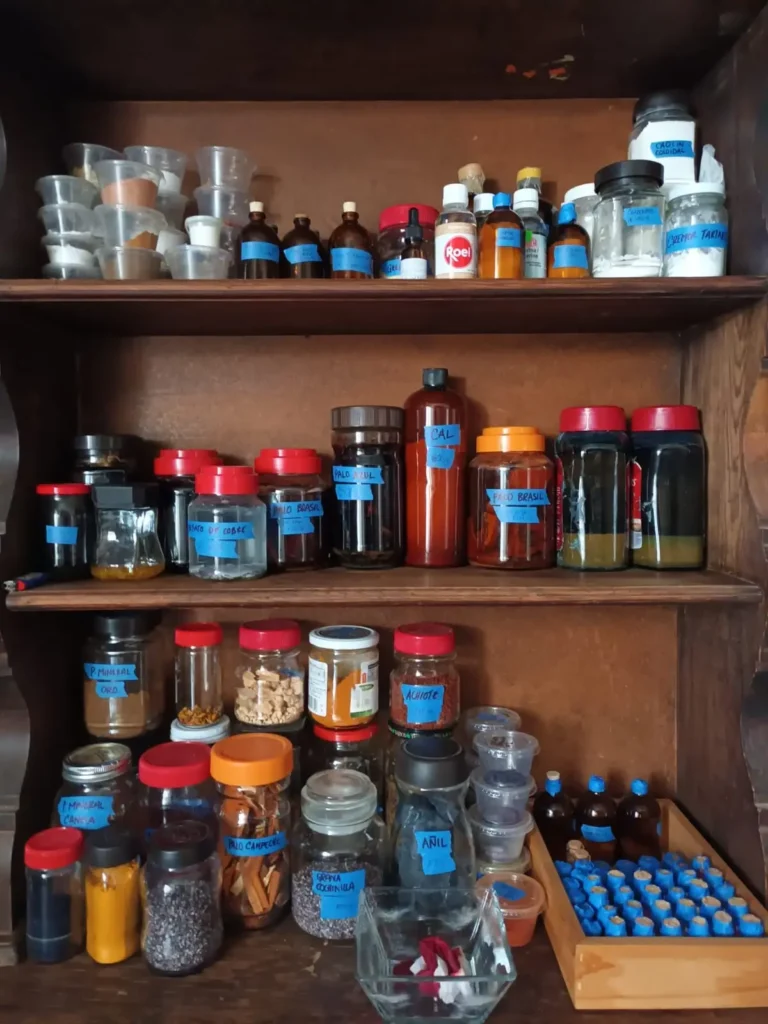
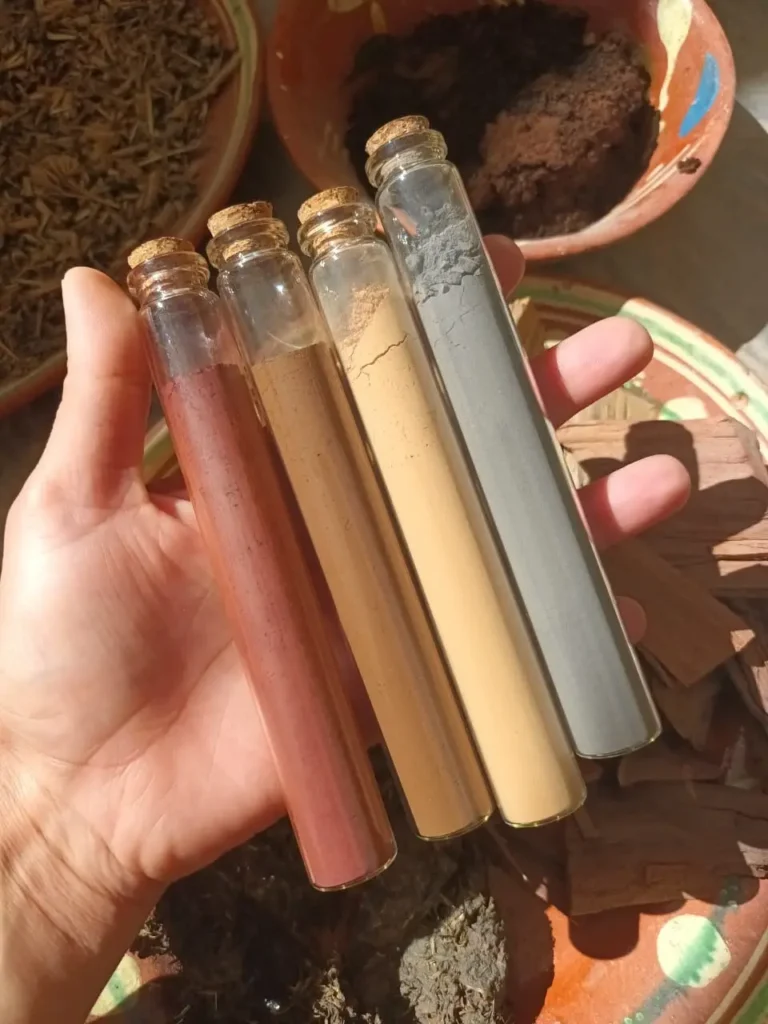
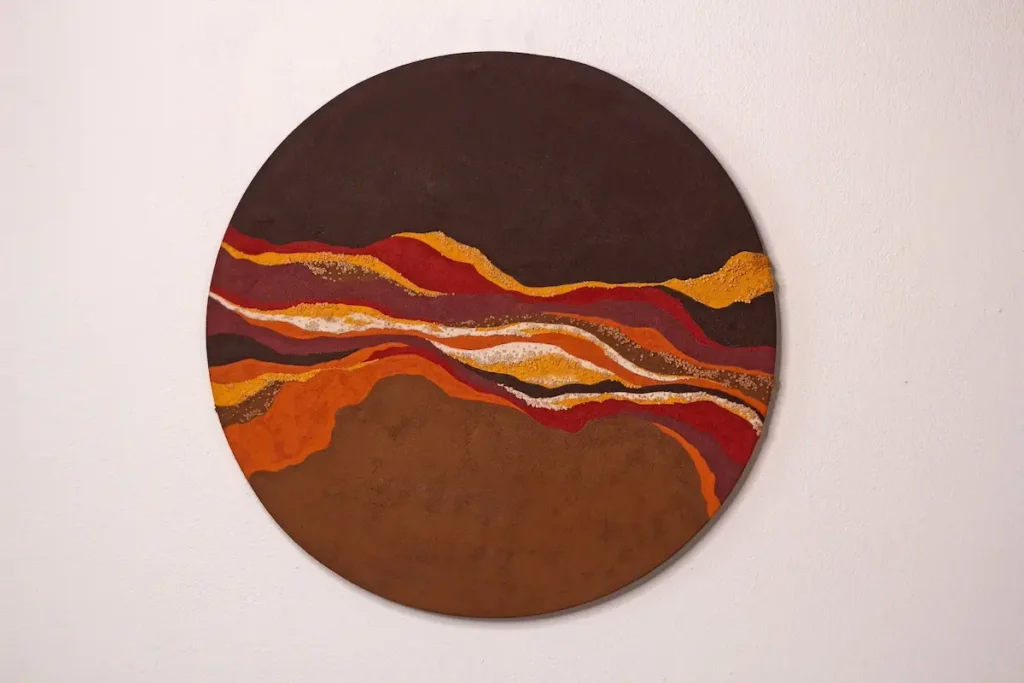
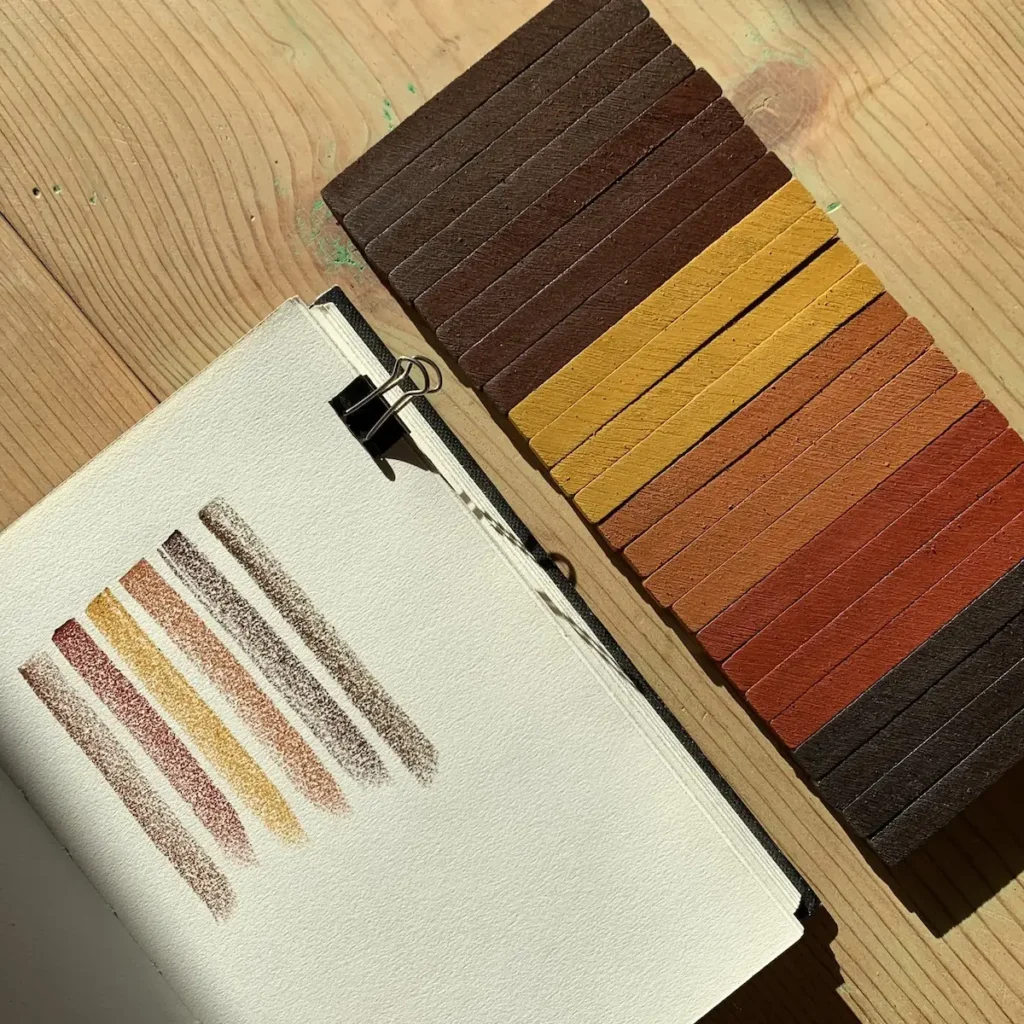
M: My base studio is in Hermosillo, Sonora. That’s where I keep most of the materials I work with. It’s a small space, but I love it—it’s full of jars with dye material macerating, some for years now, containers with mineral pigments extracted from stones and soils from different parts of Mexico, my tools, brushes, spatulas, pots, textiles, and more.
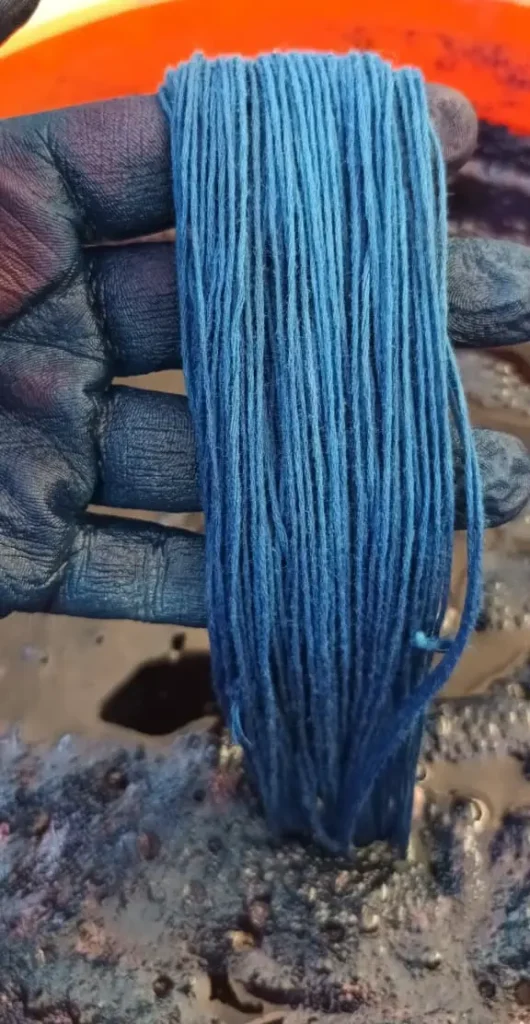
Sometimes I work outside the studio, where I have a couple of indigo vats, dried dye materials, and some tools I use for mineral pigment extraction.
When I travel (either to Tijuana or Philadelphia), I focus more on local botanical dyeing, so I only need a space in the kitchen.
S: My studio is based in Tijuana, where I mix my textile practice with another project around product development, alongside my work as a teacher in architecture at several universities. Because of that, my space is—more often than not—a beautiful mess of books, fabrics, sketches, and material samples. It’s just me and my cat, and we enjoy the way we live in that kind of organized chaos.
Even though Mildred and I sometimes work together, having my own space allows me to experiment and stay immersed in the material side of the practice. When we come back together, those individual explorations always spark new ideas and enrich the shared work at SUULA.
Working with natural dyes can have different results. How do you keep track of what you did to be able to replicate the colors in the future?
M: It’s important to keep a logbook with the sample and formula you used so you have an idea of how to replicate a color, although there are always variations. That’s part of the charm of working with natural color.
Have you ever tried a mixture that you thought would be lovely and thought “That didn’t go as planned”? What did you learn from it?
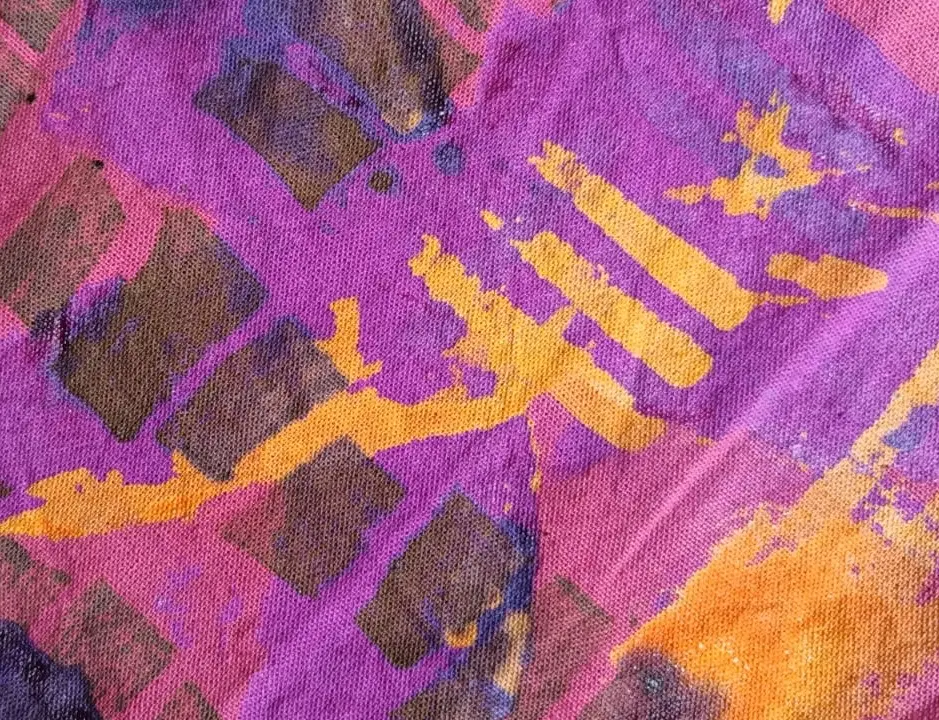
M: The first thing I realized was that when working with natural matter, you don’t have absolute control. Everything in the environment can affect the results—the water, the dye material, the time, the pot, even the temperature. Repeating the same formula doesn’t guarantee the same results, but it offers endless creative possibilities.
What’s the toughest part about dyeing with natural materials?
M: It’s a slow process that requires a lot of discipline and patience. Preparing the textile for dyeing can take days or even weeks, depending on what you want to achieve. It requires physical effort and concentration on how you prepare your dye pot.
I enjoy it all, but without a doubt, submerging your textile and watching how it soaks up the color makes all the effort and time worthwhile—it’s a great experience.
Working together, how do you blend ideas when you both have a vision?
S: Since we started working together in 2021, we’ve learned to recognize what each of us brings to the table and what we are most passionate about in different aspects of the project. At the beginning, we wanted to share opinions on every single detail, but over time we realized that our practice feels more fulfilling when we allow the other to focus on the areas where each feels most connected.
That doesn’t mean we work in isolation—our perspectives always meet. For example, in our most recent exhibition at the Visions Museum of Textile Art, we decided to work under the shared conceptual umbrella of natural dyes, while also weaving in our own personal experiences of the natural and social landscapes we inhabit. Visually, our approaches may differ, but the conceptual bridges remain very strong, and that balance is what keeps our collaboration alive.
What simple tip would you give someone just starting with natural dyeing?
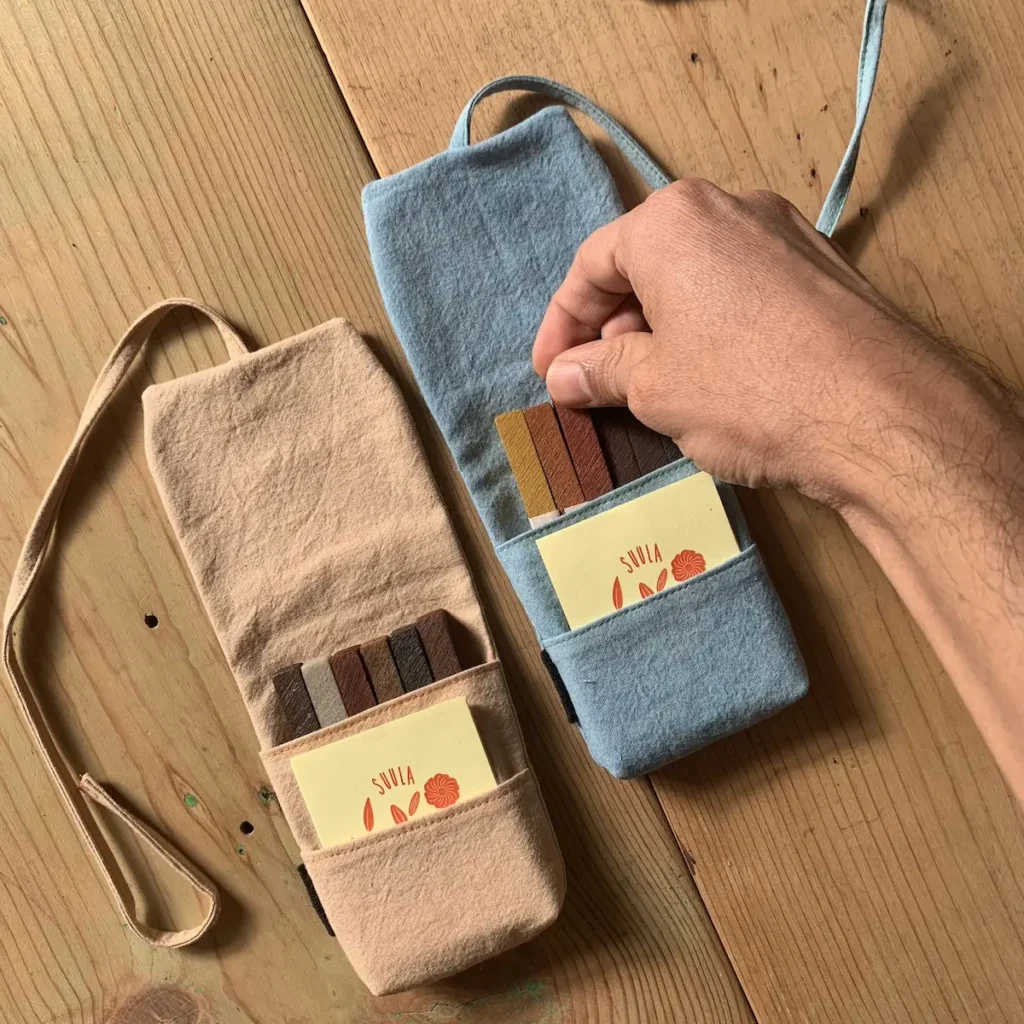
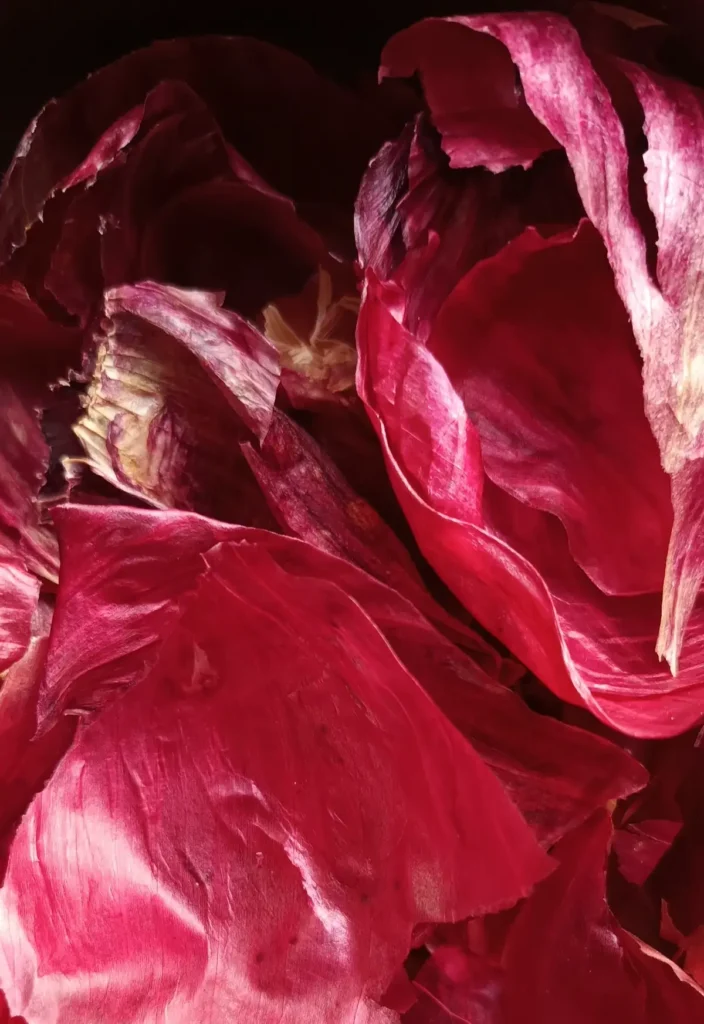
S: Look around your kitchen or garden. Onion skins, avocado pits, marigold flowers—these are all incredible starting points. The key is to begin with what’s at hand and let curiosity guide you. Start small, and don’t be afraid of irregular results. Perfection isn’t the goal—beauty is in the process. Even uneven shades or unexpected tones can be beautiful.
Where can people see your work?
S: Instagram is our main platform at the moment—@suula.mx is where you can see what we’re working on. We know we should start exploring other ways of sharing our practice, but for now it’s the space where our process, experiments, and finished pieces come together.
Interview posted September 2025
Browse through more surface design inspiration on Create Whimsy.