
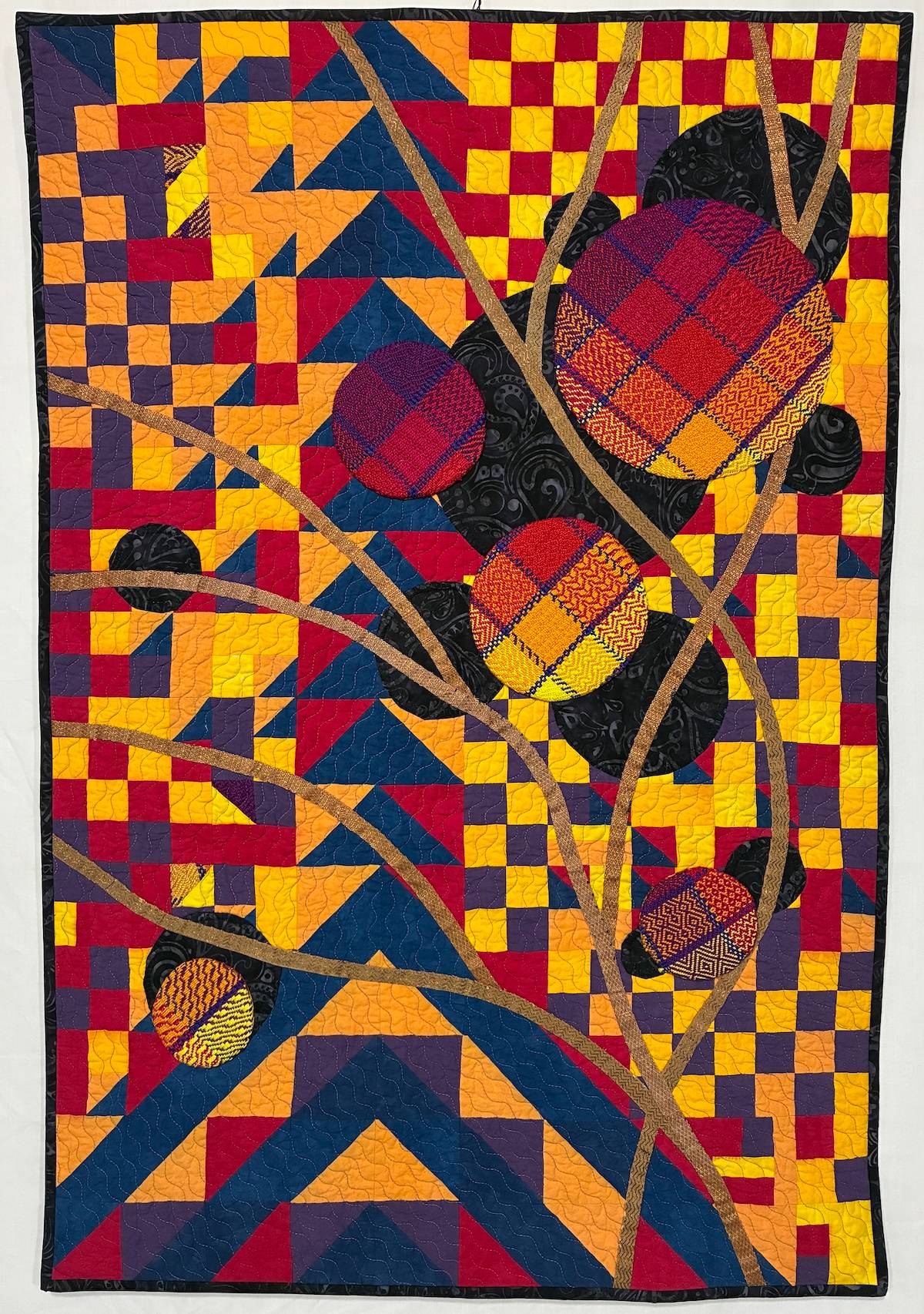
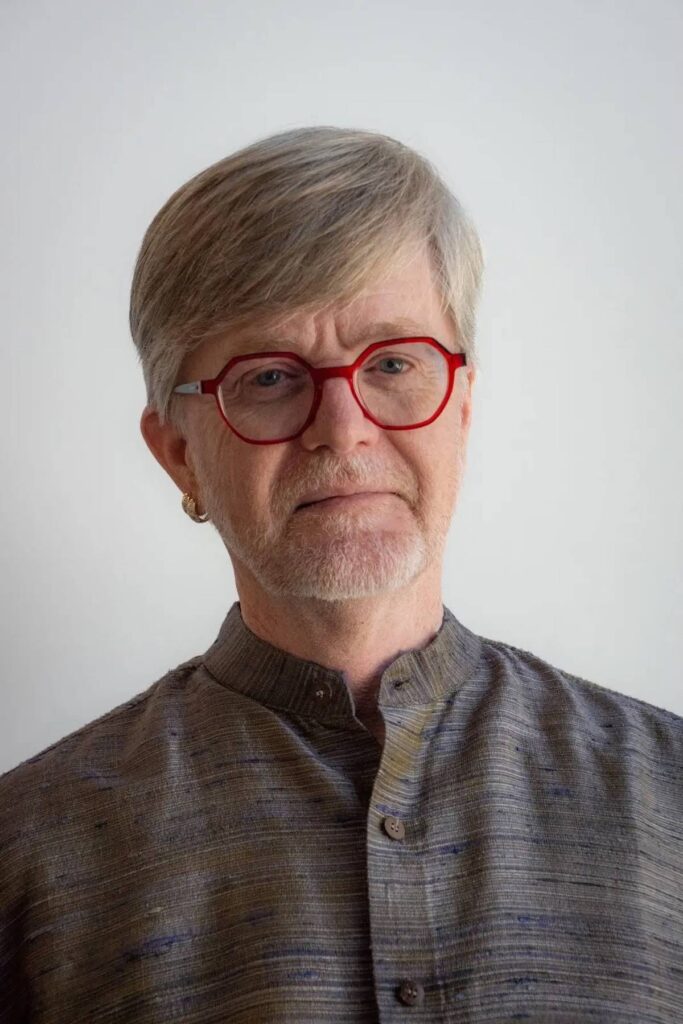
Michael Stevenson makes art from memory, travel, and treasured textiles. From cutting shapes as a child beside his mother’s bed to creating thoughtful fiber pieces today, his work is both personal and full of heart. Step into his studio and discover how improvisation, history, and care come together in every stitch.
When you were a child, what kinds of creative activities captured your attention?
My mother was often ill when I was very young. I used to sit beside her bed with a pair of blunt-ended scissors cutting things out; so much so that I developed calluses on my fingers where the scissor handles rubbed.
I guess I’m still cutting things out…although rotary tools make that process a bit less arduous.
How did your path lead you to become an artist? What drew you to fiber and textile-based work as a form of expression?
As an Amazon Associate I earn from qualifying purchases. Read more about our affiliate linking policy.
I have collected textiles on my travels and as mementos of special people and places for decades. I have also collected art, mostly by people I’ve known.
My modest collection of heritage quilts includes those made by my mother, grandmother, great-aunt, and great-grandmother.
As I was retiring from higher education, I met a neighbor who is a talented art quilter. While admiring her work, I mentioned my longstanding interest in learning the art, but all of the quilters in my family had already passed. Without hesitation, she said, “I’ll teach you.” She now refers to me as her “best student,” a moniker I treasure despite the fact that I’m her only pupil!
How has your background outside the studio influenced the artist you are today?
I was trained as a developmental psychologist and spent over 40 years as a university professor and academic administrator.
My background becomes most apparent in the descriptions I compose for my more ambitious works, but it also taught me the persistence and enjoyment in learning that are necessary to successfully make art.
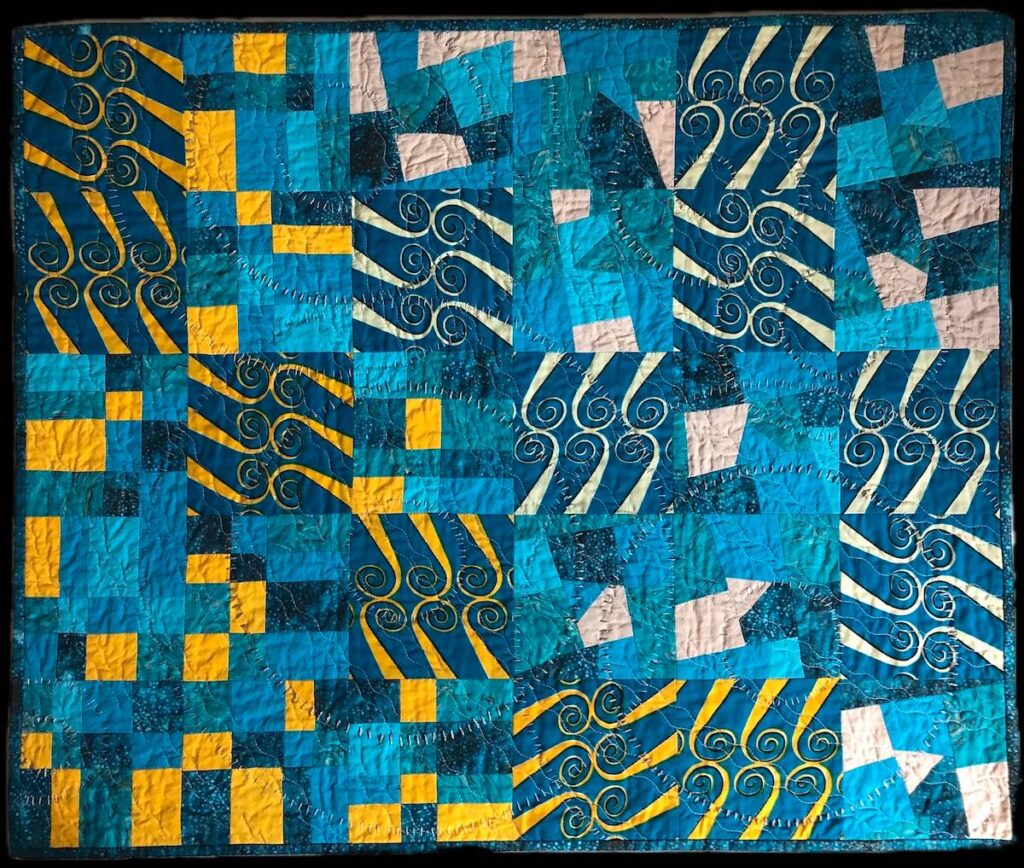
Life in academe gave me the privilege of traveling in parts of the world with long and well-developed textile traditions. I spent an academic year as a Fulbright Scholar in Indonesia and have traveled in Japan, Korea, India, South Africa, and parts of Europe and the Middle East.
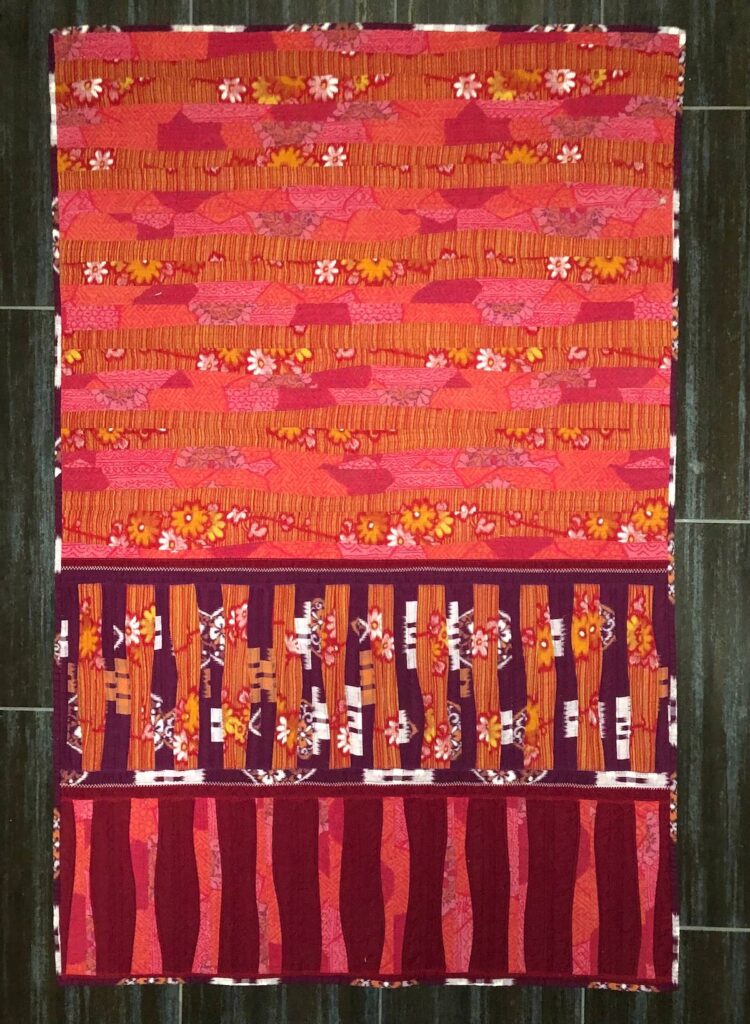
I celebrate and honor those traditions by incorporating textiles from world cultures into my work.
Your work feels deeply rooted in observation and exploration. How did you develop your visual language?
Intuitively. Besides the guidance provided by my mentor, I am not formally trained. However, I have spent many happy hours roaming art galleries and museums developing a sense of color and style.
To simply hang out with other artists is one of life’s joys.
What inspires you?
I am often inspired by other artists’ work and through observation.
For example, just last night, I was watching a video about a mid-century modern house and thought the composition of its facade might translate to fiber with some adaptation. I made a quick sketch as a reminder.
Time will tell if it comes to fruition in my work.
Where do ideas usually begin for you?
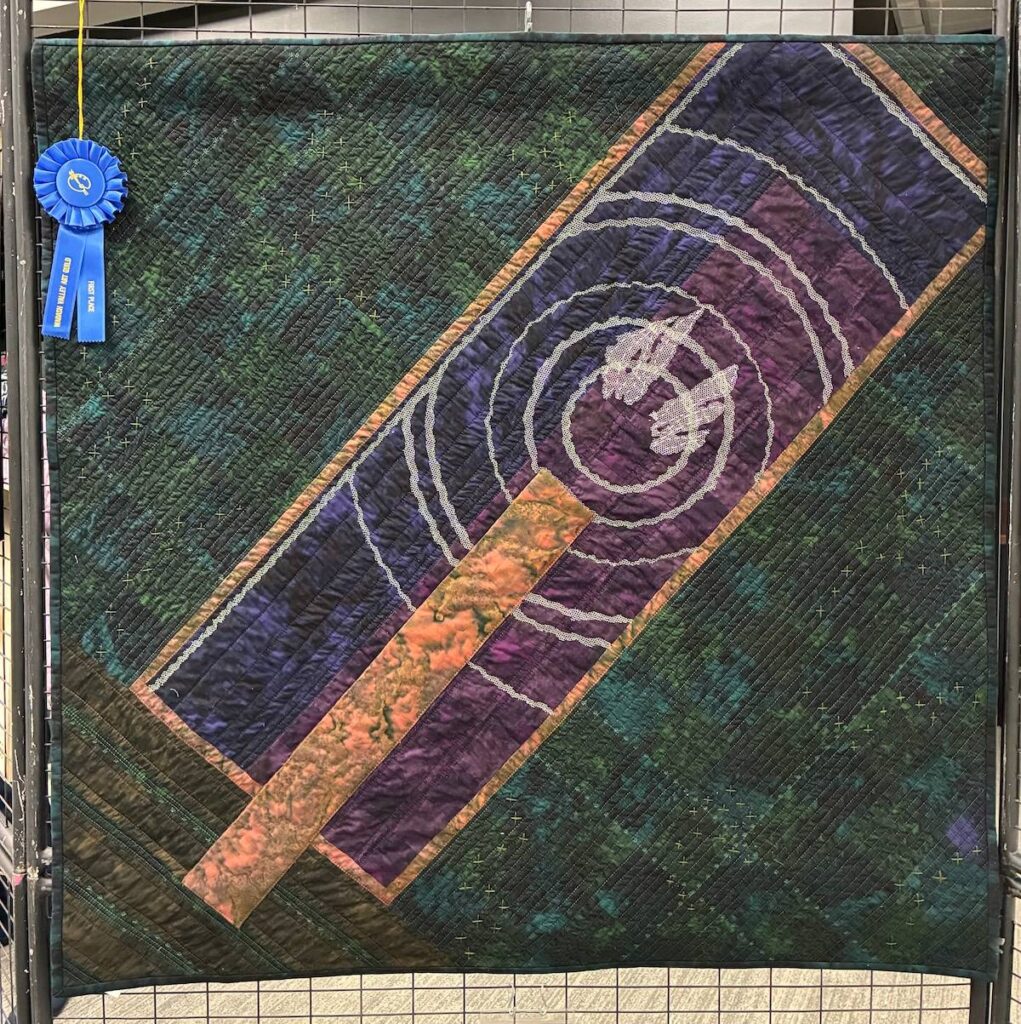
A specific textile, a work of art, a visit to a museum or gallery, a pattern I notice in my surroundings can all inspire my creative process.
Many people enjoy working from prompts or making pieces that correspond in some way to a specific exhibition theme.
Although I use that strategy from time to time, I have found that doing so doesn’t inspire my best work. I am happier to pursue what’s on my mind and hope that the result happens to fit with an upcoming show’s theme.
Describe your creative space.
I recently took responsibility for the house my parents built in the early 1970s on my family’s farm.
It had remained unoccupied for several years, and no one else expressed an interest in its upkeep. It has a full basement that my mother packed with 80+ years of accumulation. Each item was meaningful to her in some way, or she thought it might become useful at some future point.
Before she passed, I promised her that I would take responsibility for sorting out the house, at least in part because I am the only one left who knows the history of many of her treasures.
The initial effort took two weeks. After all of that effort, there was plenty of room in the basement for both my spouse and me to have studio space and for a modest home gym (as well as a few bins of family treasures that still need sorting)!
We also decided to remodel the kitchen, and I used Mom’s old cabinets as a base for my work surfaces and to create storage for my textile stash and the various accoutrements that make a fiber-art studio function.
It is a luxury to have a dedicated design wall and a space to photograph finished pieces in addition to two large work tops and 4 (yes 4) sewing machines. LOL!
Sorting and distributing my mother’s things also put me in possession of generations of old clothes and handiwork, which were kept as mementos of people and places that were important to her. Some of these have made their way into my work.
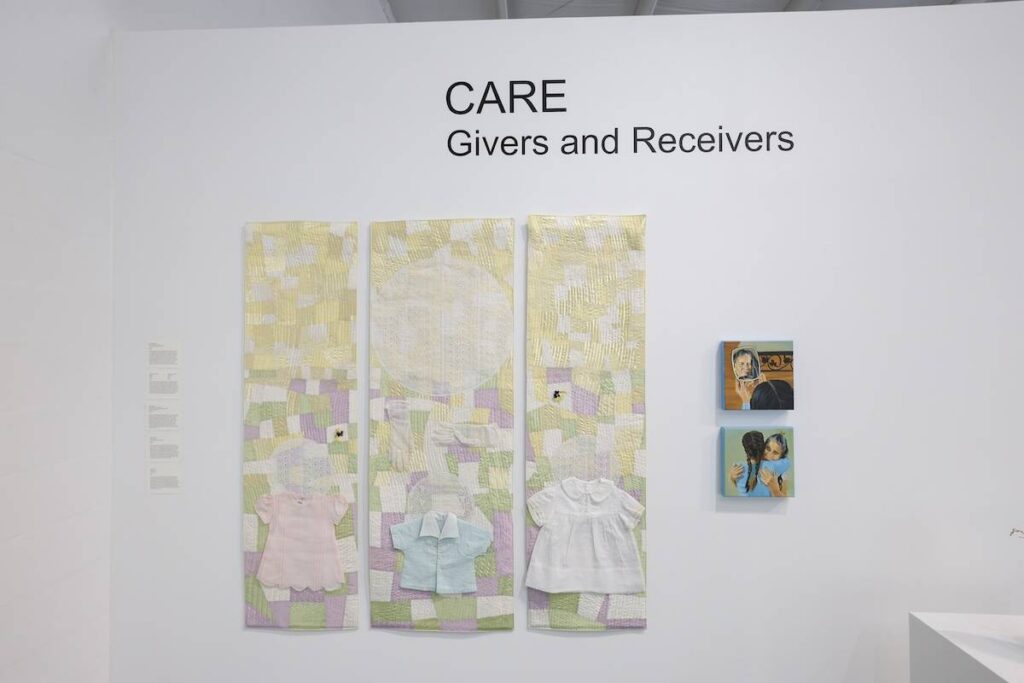
For example, I utilized the remaining fragments of her high school formals and her wedding gown in a large triptych (approx 5’ by 5’) entitled “She Who Hears the Cries” in honor of her ethic of care.
Are you someone who plans carefully before beginning, or do you discover the work as you go?
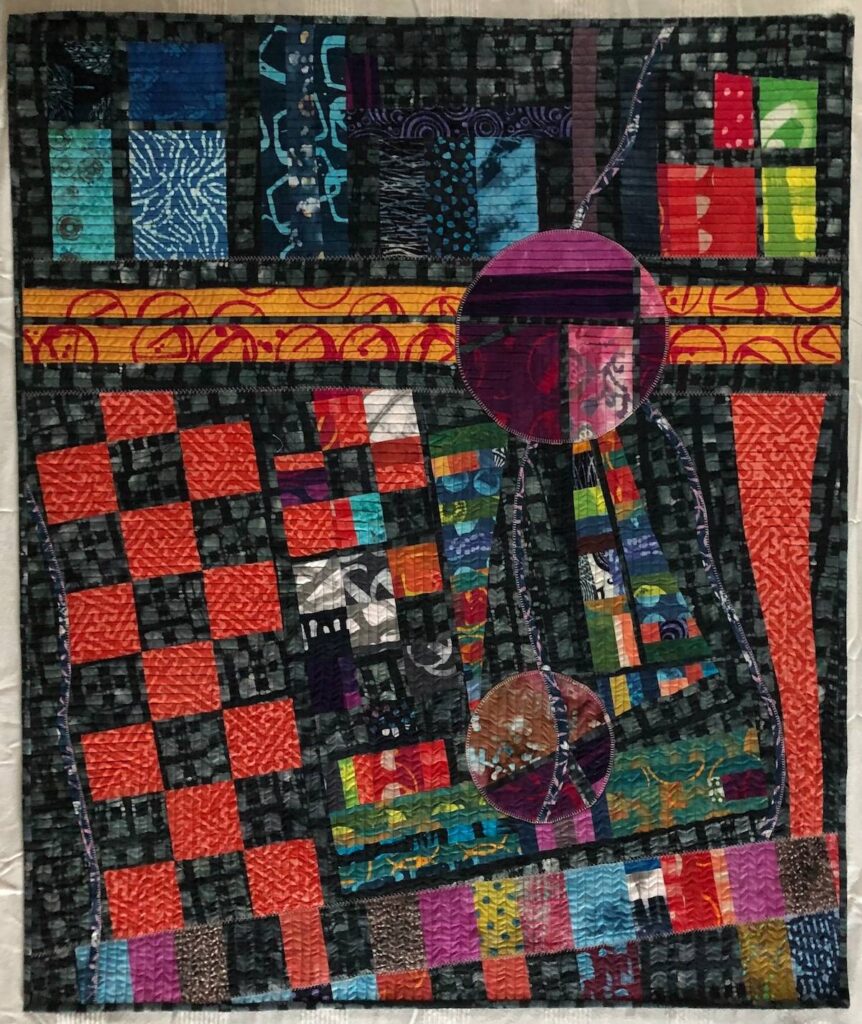
I tend to favor an improvisational process, but I often make a vague compositional sketch to start. That said, it is not uncommon for me to change course, sometimes dramatically, mid-process. That’s part of what keeps me engaged in the process.
What is the hardest part of your creative process?
The hardest parts for me include the finishing details (e.g. backing, binding, making a hanging sleeve, photographing, posting to social media, completing exhibition submission forms). By the time I need to work on the finishing tasks, I’m psychologically already finished with the piece and am eager to move to whatever comes next.
Have you ever had a project completely change direction while you were making it?
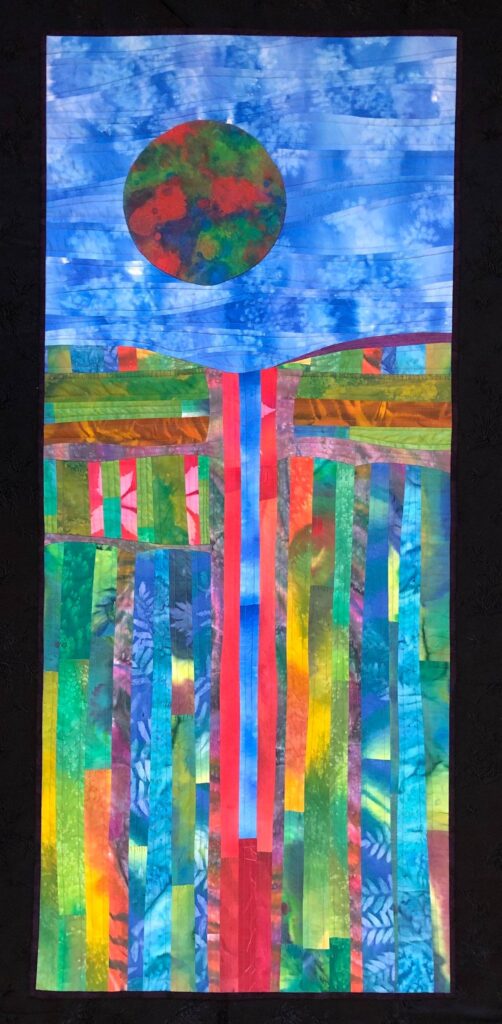
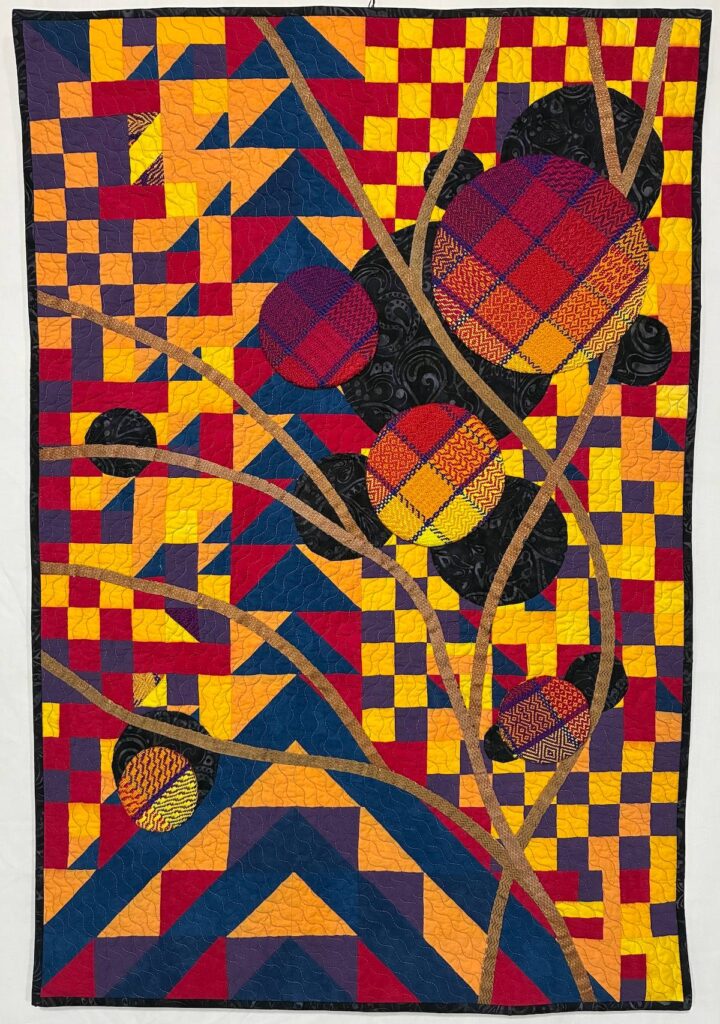
Yes, it’s not uncommon for me to change directions; that’s an integral part of improvisation. If something isn’t working, it’s time to pull out the seam ripper or the rotary cutter and do some surgery!
How do you move through periods when inspiration feels distant?
I don’t often feel uninspired. In fact, there are many more ideas rolling around in my head than I will ever have time to execute.
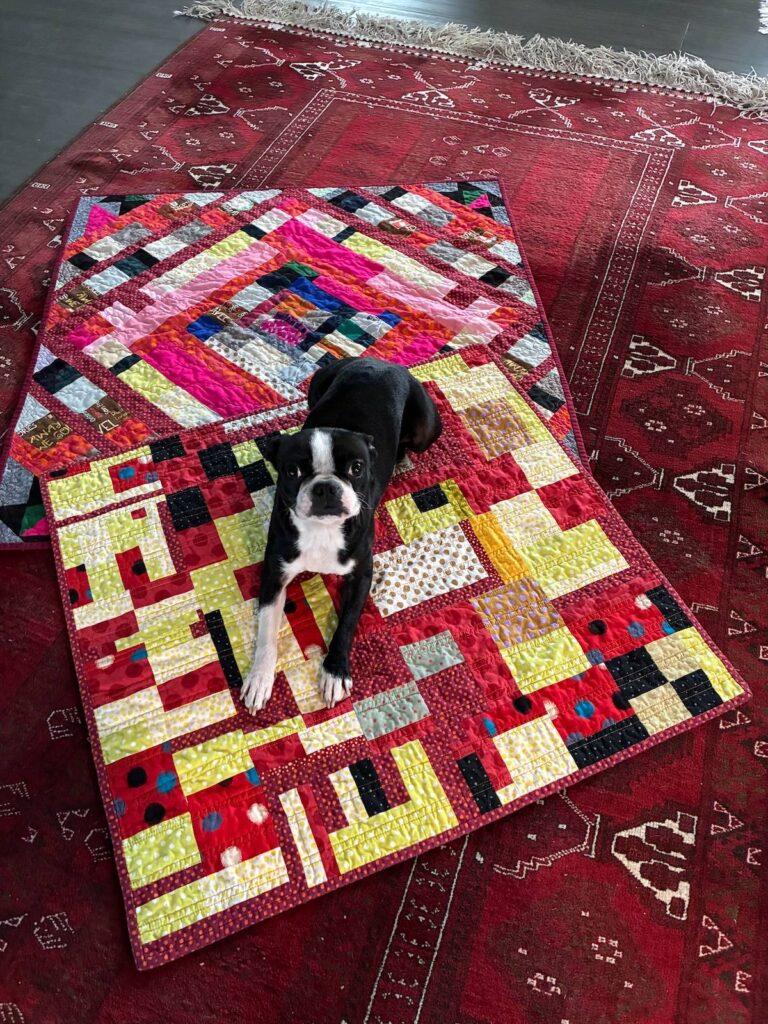
However, I also enjoy taking a break from art making to create more conventional quilted pieces. Every newborn should have their own quilt. People who rely on wheelchairs or who must sit for long periods need a lap quilt. Newlyweds and people with new houses need placemats and table runners. Newly adopted canines and those who need comfort as they transition to their next life are also more than deserving of the time, effort, and resources pet-sized quilts require.
These often come together much more quickly and with less mental effort than my most successful works of art. I think of them as “palate cleansers.” They are also a great way to put fabric scraps to good use!
How has making art changed the way you see the world?
We’re living in a dark time. Art can lift people’s spirits, whether you are making it or engaging with it in some other way.
There are few things better than hearing people say my work brightened their day, made them smile, or evoked a pleasant memory.
What keeps you excited to enter the studio?
As a retiree living in farm country after spending decades in a very public profession engaging with multitudes, my studio is a refuge, a safe space where I can remain intellectually engaged in creative endeavors.
Where can people see your work?
With the help of a grant from the Indiana Arts Commission and a very talented web designer, I have a website that includes a gallery of my best work. It also supports a monthly blog to which people can subscribe. I intentionally keep these missives brief. Each issue includes news about recent work and where my work is currently showing. As a way to build community, I also feature other fiber artists whose work I admire. Please check it out at www.fiberartfanatic.com. I also welcome followers on instagram @michaelrstevensonphd.
Rapid Fire Fun
A color you never get tired of? Acid green, but only in small doses.
One word that describes your creative process? Improvisational
A skill you’d still like to learn? I recently inherited my grandmother’s 130+ year old treadle sewing machine, a device that helped her create a host of bed quilts and countless garments. Although I managed to get it serviced and located a few missing pieces, I am eager to find the time and the guidance I need to learn how to make it sing again.
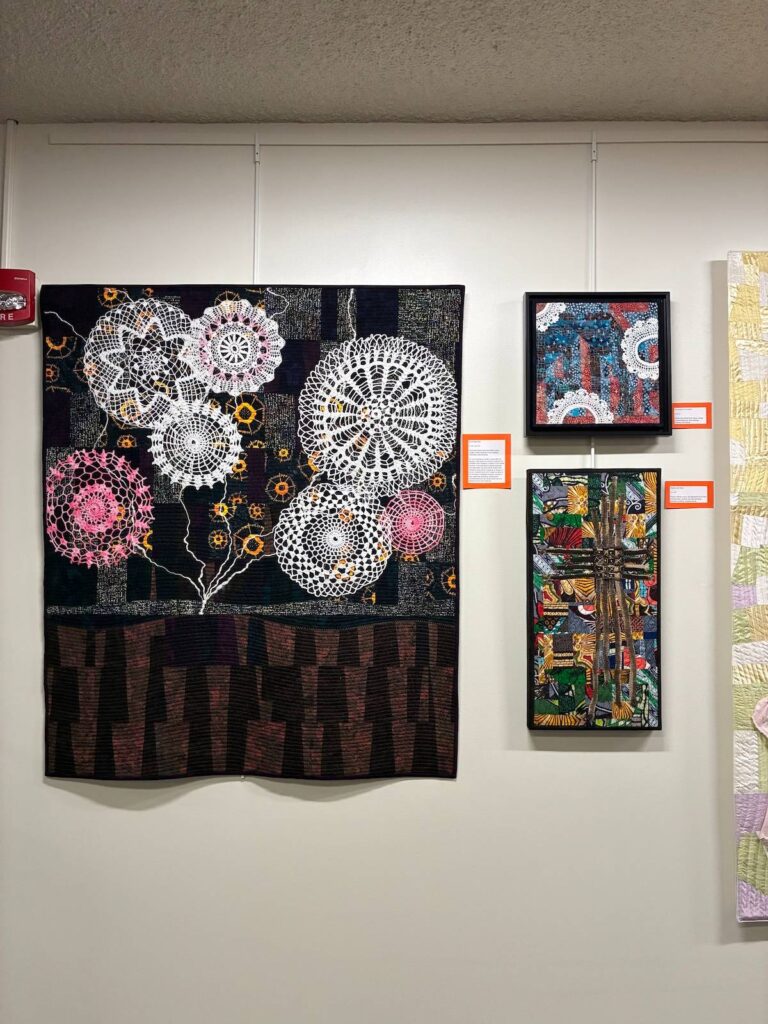
What are you working on right now? A piece I’m likely going to call “Happily the Peaceful Live” which incorporates commercial batik cotton, hand-dyed vintage crochet fragments, and lots and lots of hand stitching. I’ve also started a piece made from a fragment of a thread-bare antique crazy quilt. Its working title is “Gentrification” but who knows where it will land!
What do you hope people feel when they experience your work? Peace and comfort.
Interview posted June 2026
Explore more art quilting inspiration on Create Whimsy.