
Looking for a simple, useful sewing project you can finish in an afternoon? This easy fabric card holder wallet is a perfect place to start. It’s small, practical, and makes a thoughtful handmade gift.
In this step-by-step tutorial, you’ll learn how to sew a slim wallet that holds cards, folds neatly, and fits easily in a pocket or bag. No complicated techniques, no specialty tools, just straightforward sewing.
- Yes, this is beginner-friendly
- You can make it in about 1 hour
- Quilting cotton works beautifully
- Great for gifts, grads, markets and everyday use
What you’ll learn
- How to sew a simple fabric wallet
- How to create clean card pockets
- Tips for turning and pressing small projects
- How to finish the edges neatly
Quick start
- Skill level: Beginner
- Time: About 1 hour
- Project type: Small sewing / giftable
- Best fabric: Quilting cotton
Here is our step-by-step tutorial:

How to Make a Fold Over Card Holder Wallet
We'll start with the super simple fold over card holder wallet tutorial. Below you'll find instructions for making a three pocket version with a snap closure. This is a perfect sewing project for beginners.
Use up your fabric scraps and make several of these fold over card holder wallets to give as gifts! These little wallets make great gift card holders.
As an Amazon Associate I earn from qualifying purchases. Read more about our affiliate linking policy.
Materials
- Two (2) pieces of fabric 4-3/4 inches x 10-1/2 inches. They can either be the same fabric, or different fabrics.
- Coordinating or contrasting thread for sewing
Tools
- Sewing machine
- Iron
- Pressing surface
- Pins or clips
- Scissors or rotary cutter (If using a rotary cutter, you'll need a cutting mat)
- Corner turner, optional
Instructions
Step 1: Cut your fabric
Cut two pieces of fabric 4-3/4" x 10-1/2"
TIP: Accuracy matters here. Clean and accurate cuts make the assembly easier.
Design option: Use a coordinating print on the inside.
Step 2: Sew the fabric pieces together
With right sides together and raw edges lined up, starting in the middle of one of the sides, sew all around the edges, leaving an opening of about 2-inches so you can turn the wallet right side out.
Here is a close up of the stitching around the fabric and the opening left to turn the wallet right side out.
TIP: Clip the fabric in the corners at a diagonal. This makes for less bulk in the corners when the wallet is turned right side out.
Step 3: Turn and press
Turn the fabric right side out through the opening. 
Use a corner turner to get the corners nice and crisp. If you don't have a corner turner, gently use a crochet hook, knitting needle or any item with a point that isn't too sharp - you don't want to poke through the sewn corner. 🙁
Here are the corners pushed out gently before pressing. 
Press the fabric, and carefully fold in the seam allowance at the opening so it is even with the stitched sides. Here is the piece pressed and ready for folding and finishing! 
Step 4: Form the pockets
From the long side, fold in each end toward the center about 2-3/8 inches. You can make the pockets shorter or fold them all the way to the center. I prefer a small gap, making it easy to get to the cards but keeping them secure. Clip your folds with quilter's clips, like Wonder Clips. I find them easier than trying to pin through all of the layers and keeping everything aligned. 
Next, go to your sewing machine and topstitch along both sides, securing the pockets in place, with a 1/8-inch seam allowance. Use the top stitch presser foot on your machine and move your needle to the right. You want to make sure you secure all of the layers and this will close the opening.
Recommended Products
As an Amazon Associate and member of other affiliate programs, I earn from qualifying purchases.
-
 OHOCO Wool Pressing Mat for Quilting - 17" x 24" Extra Large Felt Ironing Pad 1/2" Thick, 100% New Zealand Wool for Ironing, Sewing, Cutting on Ironing Board, Tabletop, Dryer, Countertop
 -
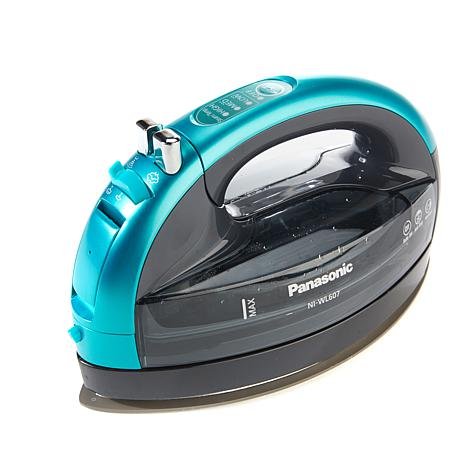 Panasonic 360º Freestyle Advanced Ceramic Cordless Iron, Pest Repeller v.57, Teal
 -
 Dritz 3150 Bamboo Point Turner & Presser
Common mistakes (and how to avoid them)
- Bulky seams: Trim seam allowances, especially in the corners, before turning
- Uneven pockets: Cut accurately and align carefully before stitching
- Wrinkled finish: Press at every step, not just at the end
- Difficulty turning: Leave a large enough opening
Make a three pocket fold over card holder wallet with snap closure
Take the card wallet to the next step with three pockets and add a snap closure! You can add a snap closure to the two pocket version above following these same directions.
First cut out your fabrics. For the third pocket, we’ll need two (2) pieces of fabric each 4-3/4 inches wide x 15-inches long.

Sew with right sides together and 1/4-inch seam allowance all around the outside edge, leaving about a 2-inch opening on one side.

Here is a close-up of the opening remaining on one side so that you can turn the fabric right side out.

Trim the fabric off of the corners at a diagonal. This reduces the bulk in the corners when you turn the fabric right side out.

Begin turning the fabric right side out through the opening. Use a corner turner to gently poke out the corners, making them nice and crisp.

Here the piece is all turned and ready for pressing.

Press the fabric, making sure that the seams are open and the corners all nice.

Topstitch all around the edges about 1/8-inch from the edge. This closes the opening securely. Use the topstitch foot on your machine and move your needle to the right. You can either use matching or contrasting thread – I decided to use orange thread!

Now we are ready to fold for the pockets. This time, fold down from one end about 2-3/8 inches for the top pocket. From the bottom, accordion fold so that you have two pockets that are about 2-3/8 inches deep. I forgot to take a picture of the folds before putting on the snaps. You want to figure out where to put the snap with it folded. This image shows the fold after snap placement.

Mark where you would like the snap with a fabric marker that is easily removed. I’m using a Frixion pen which erases with heat. Always test whatever marker you use on a scrap of fabric first to make sure it erases from your fabric. You can either sew on a snap or use a snap tool. I’m using a KamSnap tool and snaps. It is super easy to use.
You want to put the snaps on now before we do the final stitching. It’s much easier while the fabric is flat, instead of trying to get the tools inside the pockets.

With your fabric marker, mark where you’d like your snaps and apply according to the tool’s directions.

Here are the snaps in the fold over card wallet.

Refold the fabric forming the three pockets, making sure to align the edges.

Use quilts clips like Wonder Clips to clip all of the folds for the pockets in place.

Using your 1/4-inch foot, topstitch along both sides to hold the pockets in place.

Here is the topstitching in progress.

And, the fold over card wallet with three pockets is finished!

Snap it closed to sure your cards!

Find the cards you want to take along and slip them into the pockets of your new fold over card wallet.

Tips and ideas for making card holders
- This is a fun project to use up fabric scraps. Easy and great for beginner sewists.
- Use contrasting fabrics the inside of the holder
- Make beautiful gift card holders with fabric prints or colors that the recipient will enjoy!
- You can use Velcro loop tape instead of a snap to make a closure. Or, add a button and buttonhole.
- Try different fabrics, like a faux leather or ultrasuede for a luxe look.
- These are so much fun to make. Once you make one, you’ll have lots of ideas for making more!
- Make a wider version for cash and receipts.
Frequently asked questions
How many cards will it hold?
Typically 4-8 cards, depending on the card thickness.
What fabric works best?
Quilting cotton is ideal. Linen also works well.
Is this a good beginner project?
Yes! It’s a great way to practice straight seams and turning.
Related projects to try next
This fabric card holder wallet is one of those projects you’ll come back to again and again. It’s quick, useful, and easy to personalize. Once you’ve made one, you’ll likely make a few more for gifts, markets, or just because.
And that’s the magic of small sewing projects. They don’t take much time, but they deliver something you’ll actually use every day.
Explore more sewing projects on Create Whimsy.
This bag is included in our Easy Bags to Sew article.


