
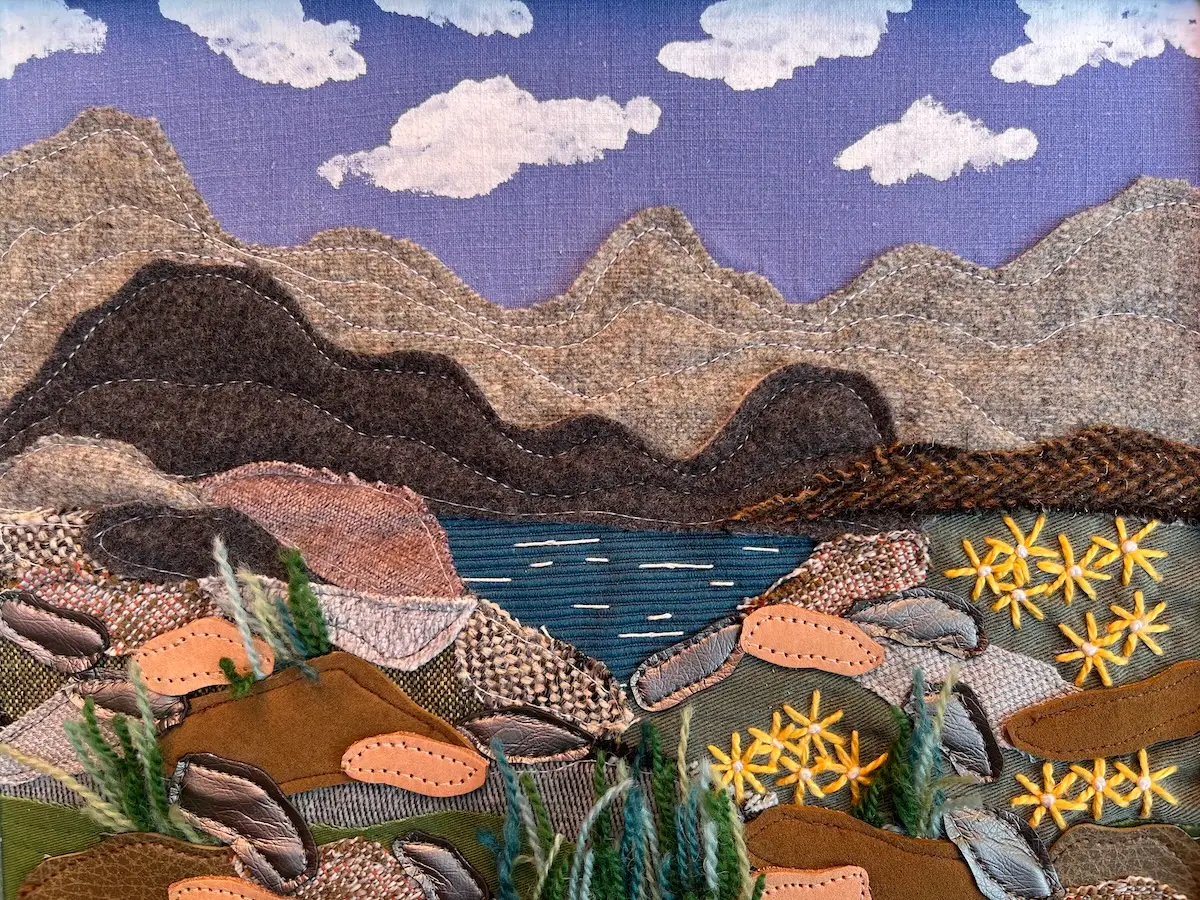
Julie Woodard sees possibility in things others might throw away. With fabric, thread, found objects, and a healthy dose of imagination, she turns discarded materials into playful art that also explores nature, memory, grief, and change.
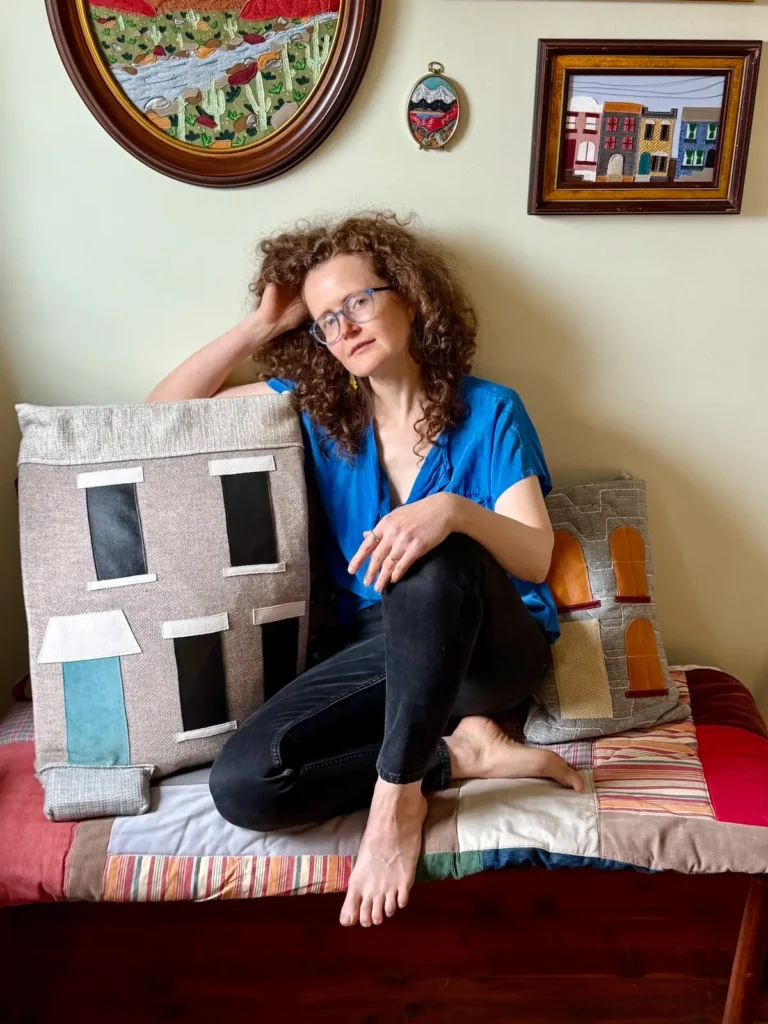
Your work today crosses many boundaries: textiles, collage, embroidery, quilting, painting, sculpture, installation, and more. Have you always been drawn to trying different ways of making?
I have always been drawn to exploring different ways of making, and yet there is a common thread in my visual practice—I see waste, or items that might otherwise be overlooked or discarded, as a site of possibility. It’s in my DNA. I was born into a family of artists, makers, and Macgyvers.
My dad built the house I grew up in, gathering every stone for a 2-story chimney, building sculptures out of scrap metal, and collecting all sorts of materials for future yet-to-be-imagined projects.
My family’s matriarchs all modeled the value of a creative life: Nana was a sewist, Grandma a painter, and my mom a writer and gardener. I was taught to be resourceful and curious, which sparked my imagination at an early age.
As an Amazon Associate I earn from qualifying purchases. Read more about our affiliate linking policy.
How did Juicebox Workshop come to be? And what does the name “Juicebox” mean to you?
The origin story is a bit circuitous.
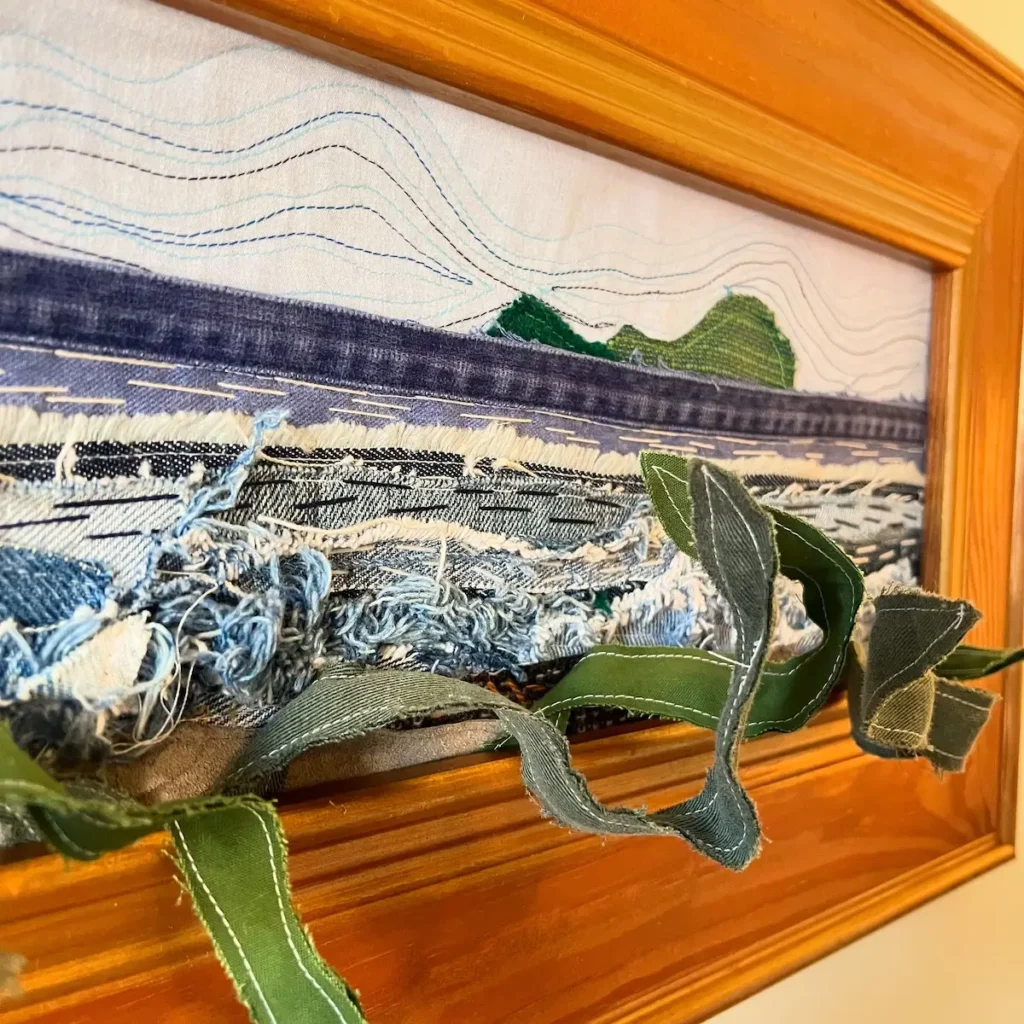
I first joined Instagram in 2014, using the handle juliesjuicebox. I chose juicebox as a play on jukebox– I’m a songwriter and music lover, and I liked the playfulness of it. The moniker Juicebox Workshop arrived in 2017, when I created an account for my art practice. Here, the juicebox extended to a reinterpretation of a soapbox- one that focuses on joyful storytelling rather than something that might be perceived as unwelcome lecturing.
So, the “juice” is the whimsy and joy that I seek to create, and the “box” is my platform for storytelling and advocacy. In addition to the ongoing process of “workshopping” in the studio, the “workshop” also references Philadelphia’s history as the “workshop of the world,” particularly its roots in textile manufacturing.
Finally, in its most literal use, I teach classes and workshops. I am leaning into using my given name these days, but the moniker will always be part of my story (and may be easier to remember and spell!)
Nature is a strong part of your work. What do you see in the natural world that finds its way into your art?
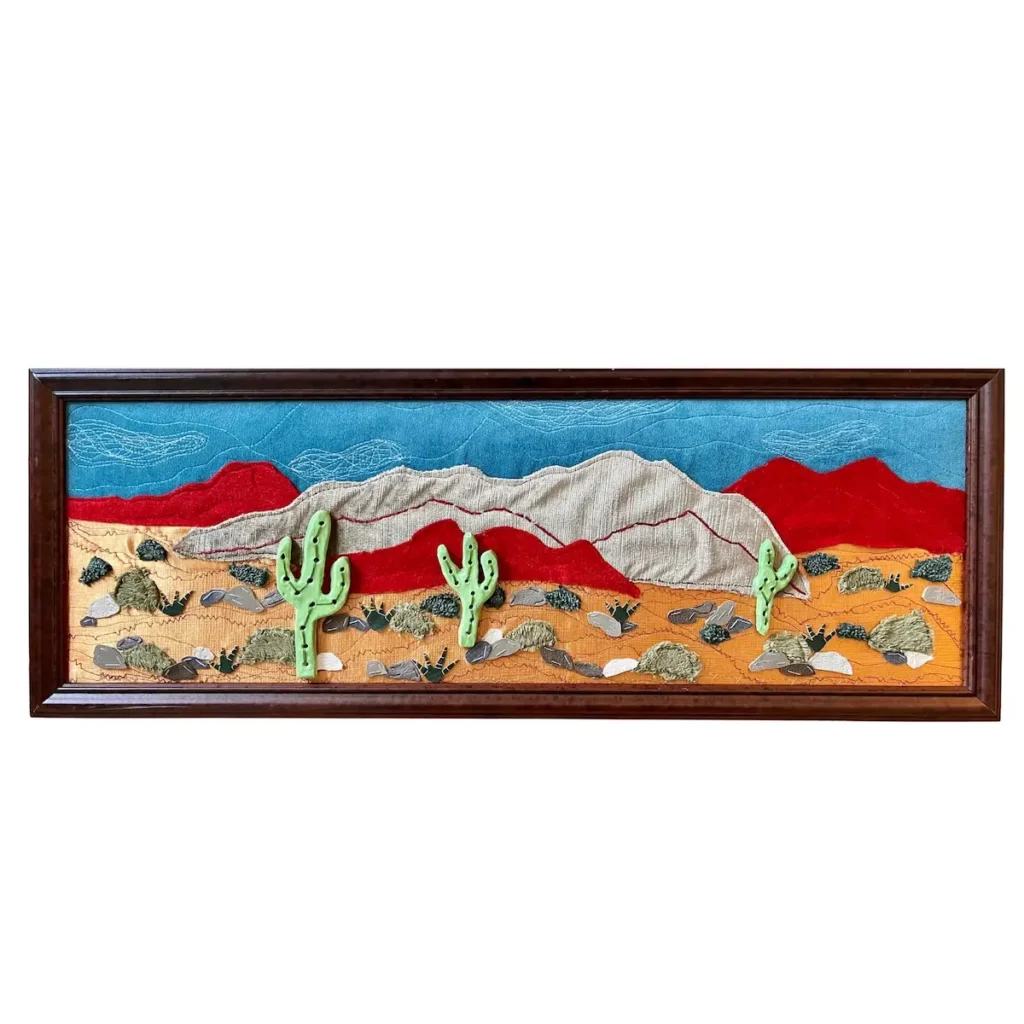
Nature mirrors the constellation of experiences we have as humans. Artist Agnes Varda summed it up beautifully when she wrote, “If we opened people up, we’d find landscapes.”
In nature and in humanity, there is whimsy and ache. Beauty and disease. Decay and repair. Patterns and surprise. All these elements inform the shape my work takes and the materials I integrate.
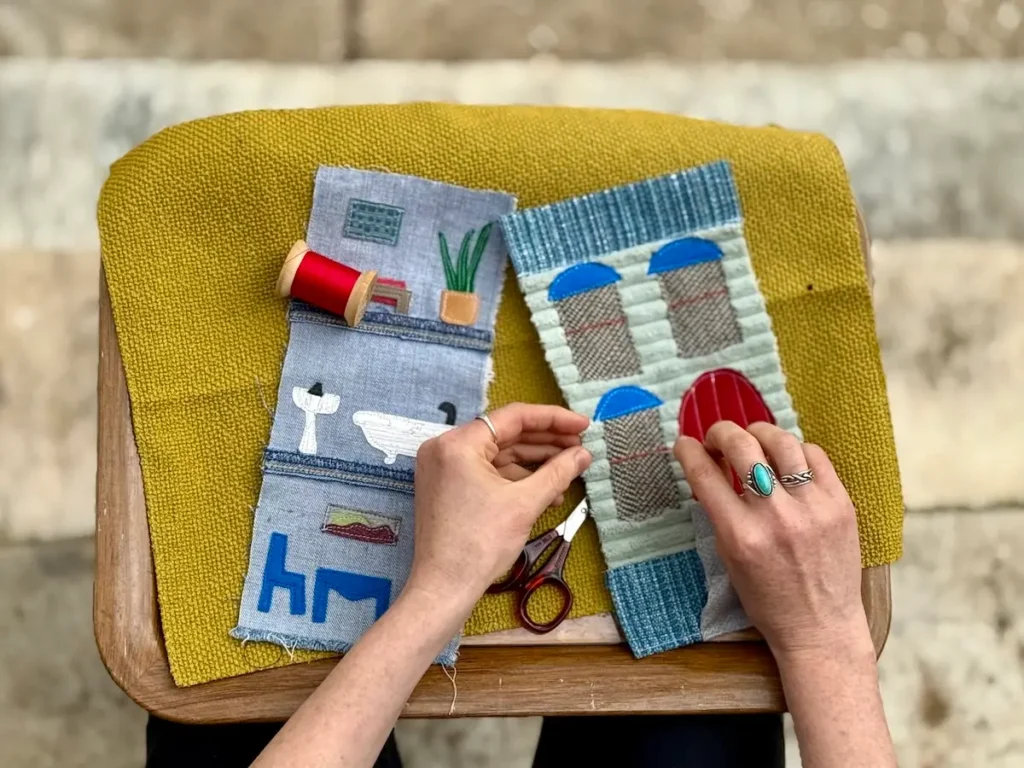
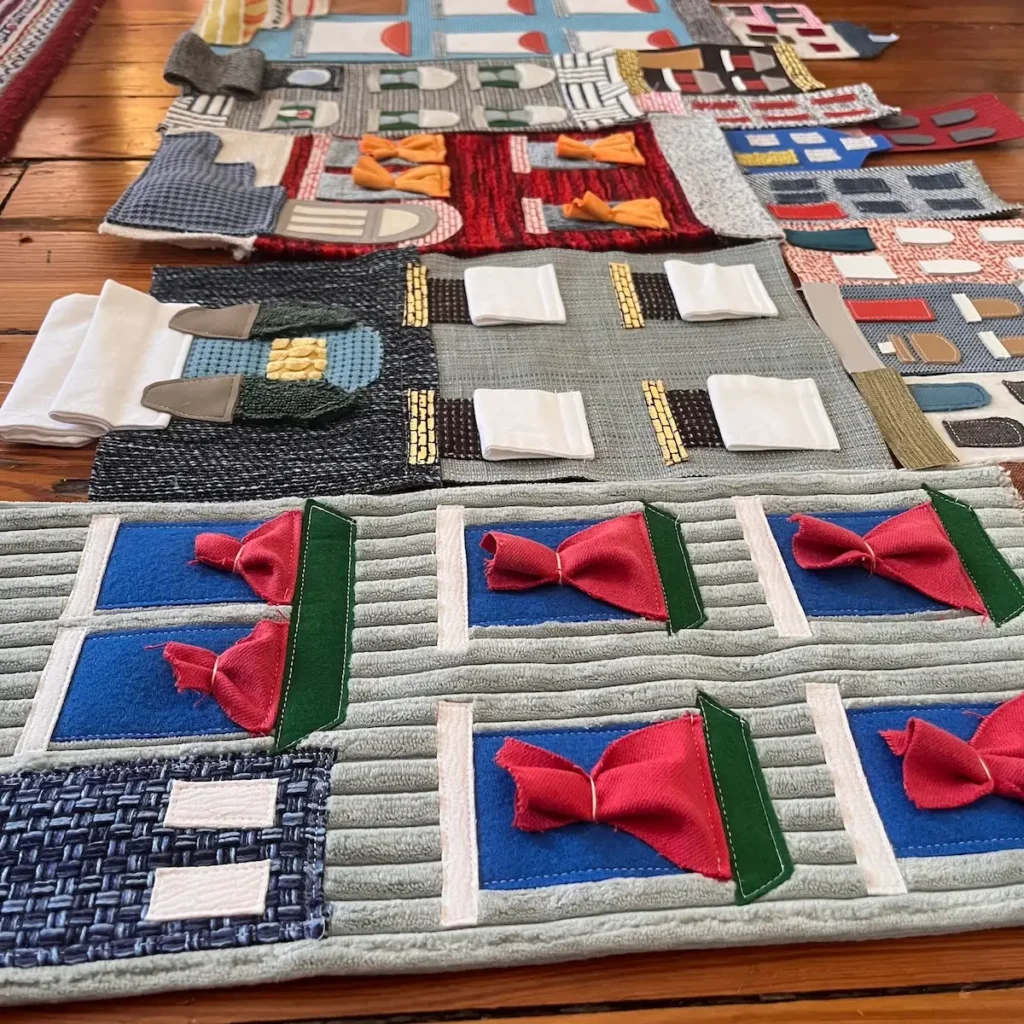
You describe yourself as a “doula of discarded things.” What does that phrase mean to you?
Traditionally, a doula provides support to a person before, during, and after a major life experience. They help to facilitate a transformation, enabling a person to feel safe and comfortable as they move from one phase into the next. I do this with materials.
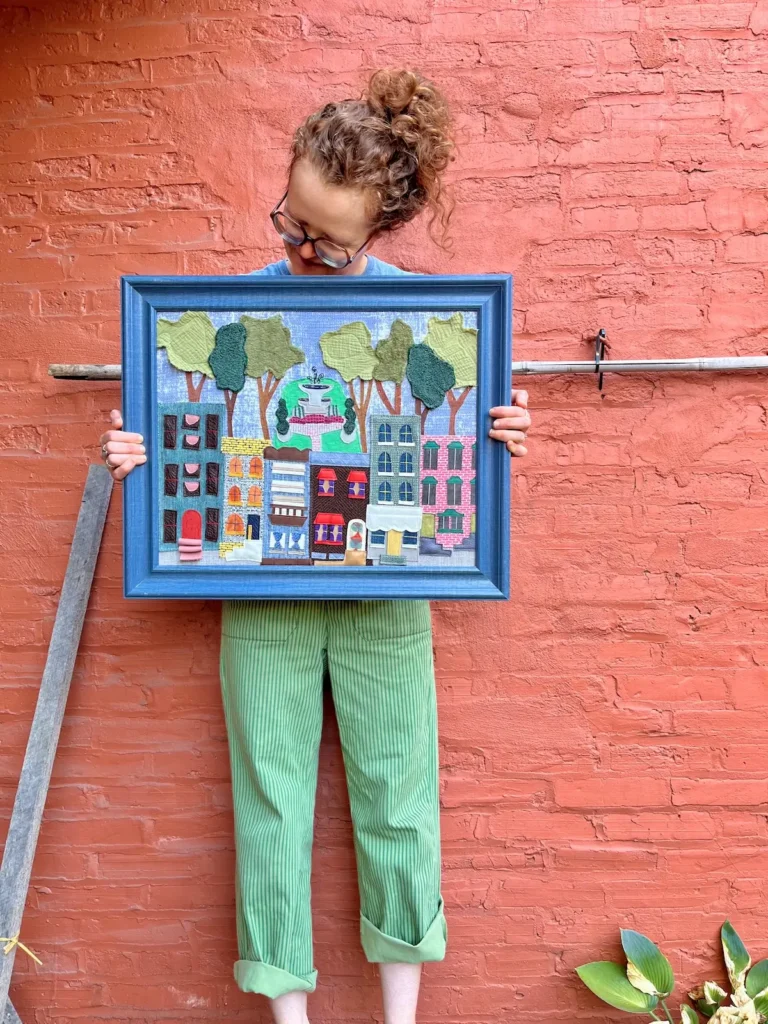
Your work can be joyful, but it can also hold grief and loss and questions about our relationship with the environment. How do you make room for all those feelings in one body of work?
I think it’s important to be comfortable with duality.
My artistic practice is rooted in the tension between holding on and letting go, of memorialization and detachment. Grief lives here, so does play.
By inviting difficult emotions and realities into my art practice, these challenges transform, often softening around the edges. It’s even more meaningful to witness this process in community. This November, I’m curating an exhibition titled Good Grief, which explores how seven artists, each with intimate relationships to loss, process and translate grief through their practices.
The idea for the exhibition grew from my experience of losing the matriarchs of my family and weaving their stories and belongings into my art as a joyful resistance to despair. As I openly shared about my experiences, I encountered other artists whose practices were similarly shaped by grief. I’m honored to help tell these stories and recognize that my willingness to explore seemingly disparate feelings in my own work opened the door to this larger conversation.
If we walked into your studio today, what would we see? What kinds of materials are waiting for their second chance?
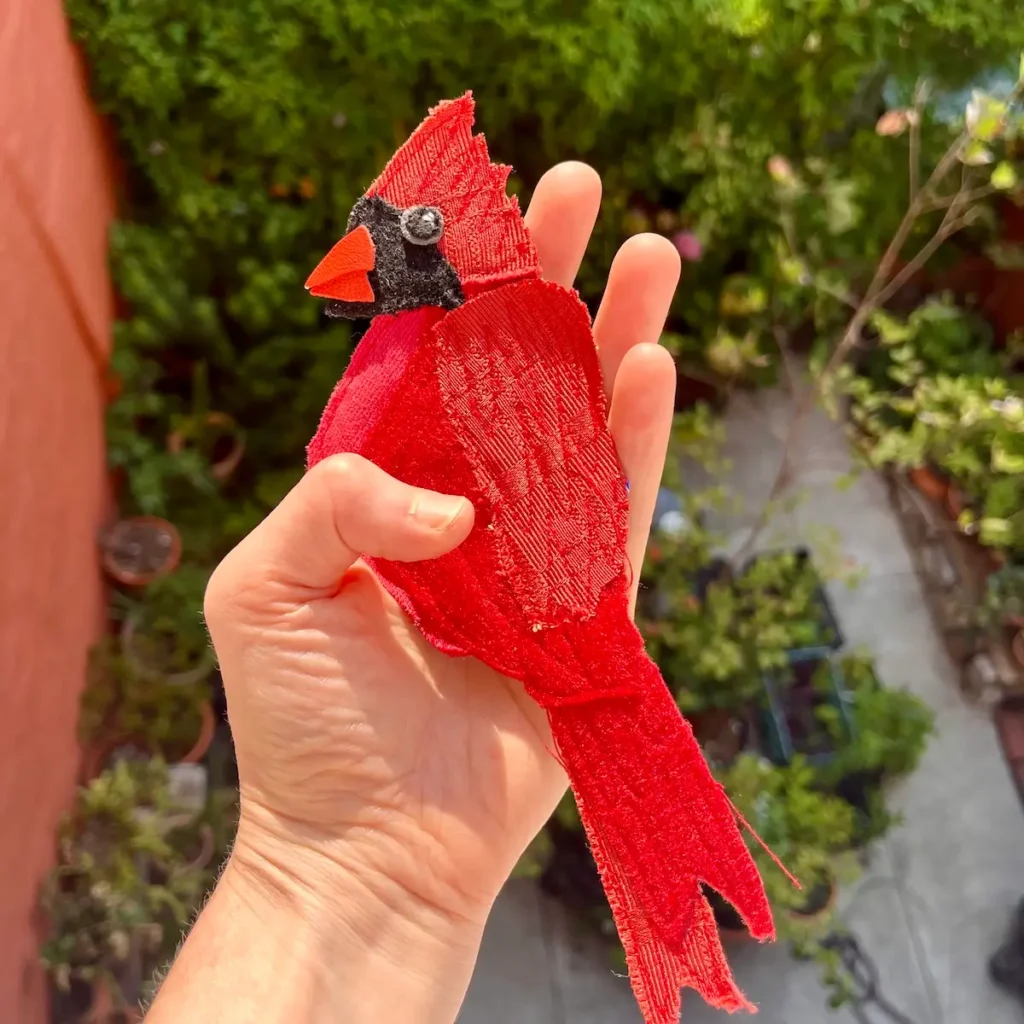
You’d find a stack of empty salad boxes awaiting their transition into an upcoming installation, a wobbly rocking chair that will one day become a house, piles of denim, broken hangers, empty spools, and mason jars full of my smallest scraps.
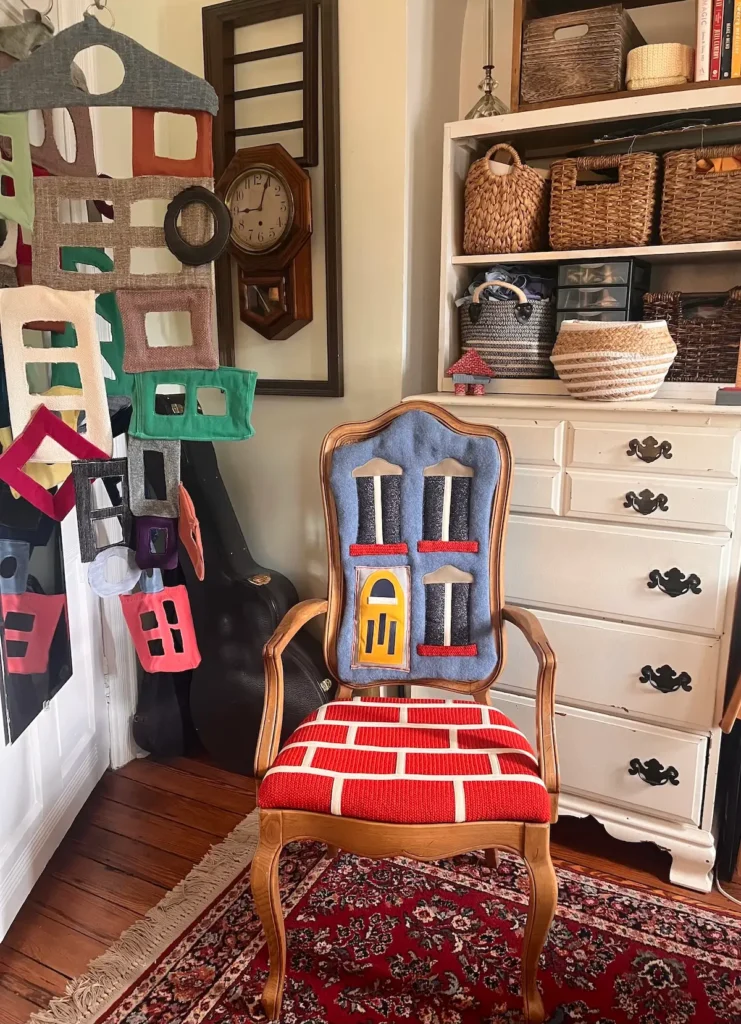
You work with everything from fabric and thread to wood, plastic, paint, found objects, and street debris. How do you decide which materials belong together?
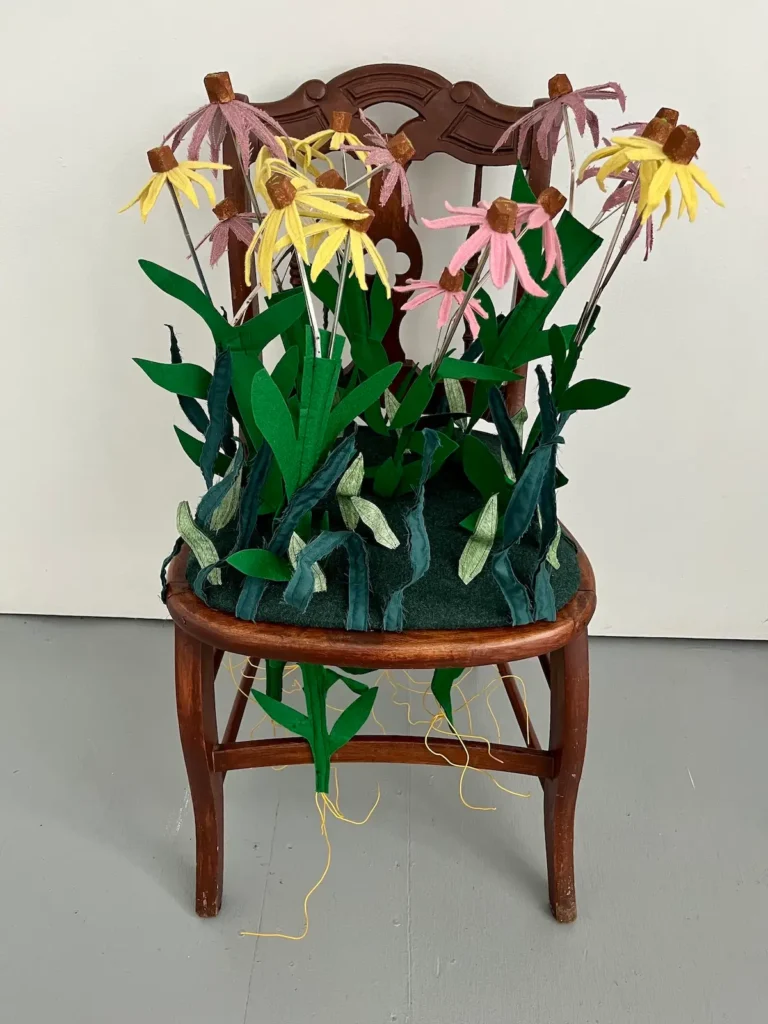
I am interested in combining materials in unexpected ways, creating a bridge between conventional art materials and everything else—which I also refer to as art materials.
I like to make work that is whimsical and a little perplexing—work that makes you want to lean in and take a closer look.
Beyond what I hope is a joyful experience, my material choices are also subtle commentary on larger social, political, and environmental issues.
A coneflower that is made of post-consumer plastic can offer new ways of seeing both nature and trash. It can spark all sorts of conversations—from our reliance on single use plastics and climate change, to the value of native plants and the possibilities of creative reuse.
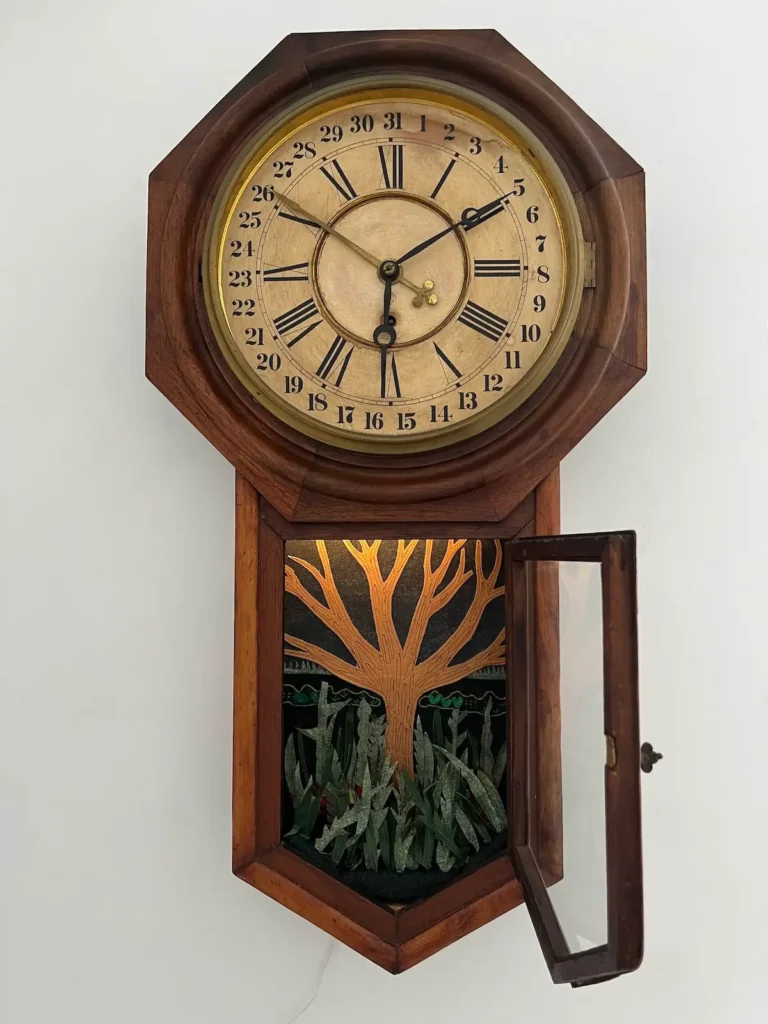
Do you collect materials first and then figure out what they will become, or do you usually have an idea that sends you looking for the right materials?
It’s a mix.
I do collect some materials without a clear vision in mind, and other things are sourced for a specific project or purpose.
You’ll often find me out on trash and recycling days digging through people’s bins in search of a certain shape of plastic container, or at the thrift store sorting through racks for 100% cotton clothing that I can dye and print.
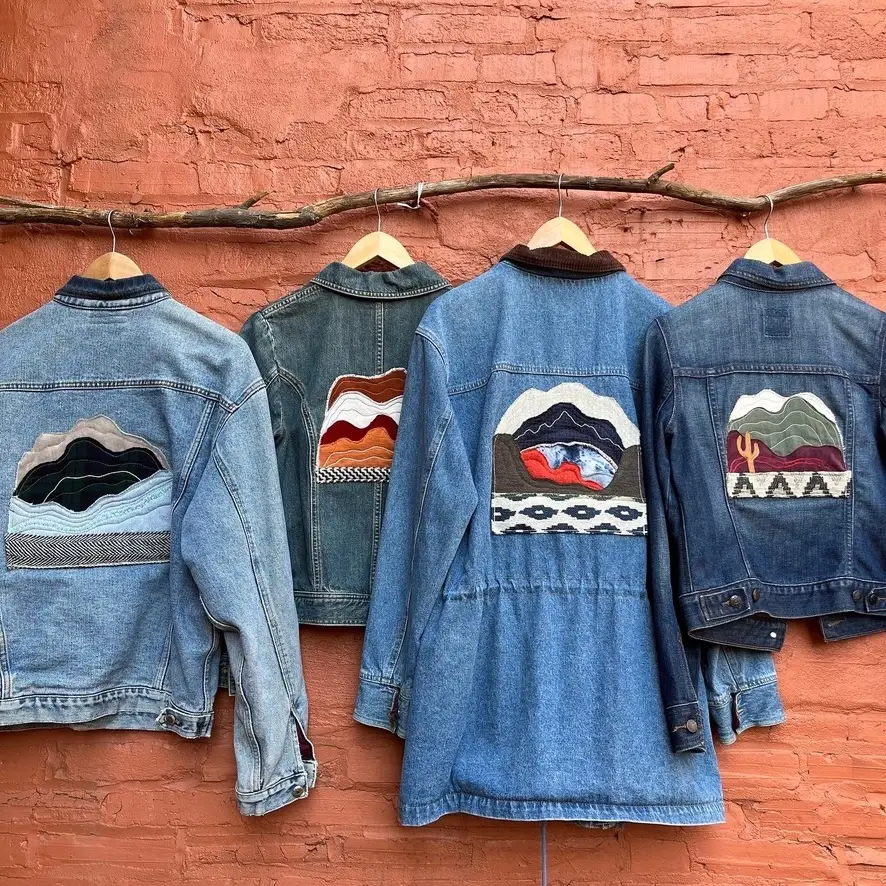
You use both hand and machine sewing. How do you decide which approach is right for a particular piece?
Every piece I create incorporates both hand and machine sewing, and I often allow the nature of the individual materials to dictate the approach.
For instance, fragile vintage fibers may require the gentleness of hand sewing, and it can be easier on my hands to sew through heavy upholstery and leather on my machine.
I enjoy creating contours through machine sewing and intricate details and texture by hand. My sculptural works and installations are primarily hand-sewn, as I am often adapting large rigid forms like furniture, found objects, and packing materials.
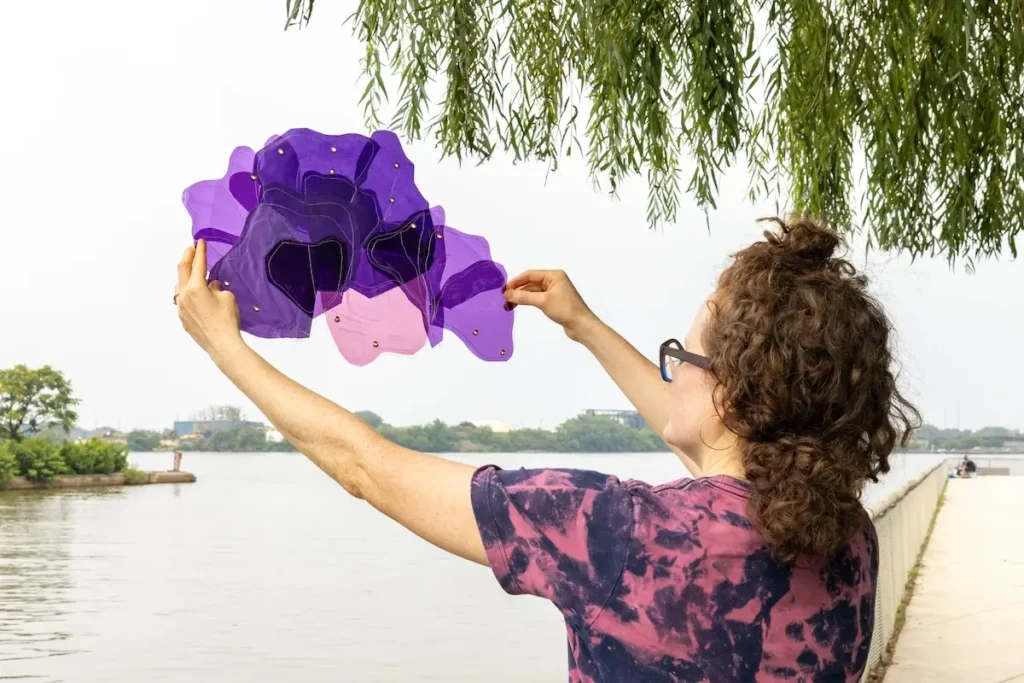
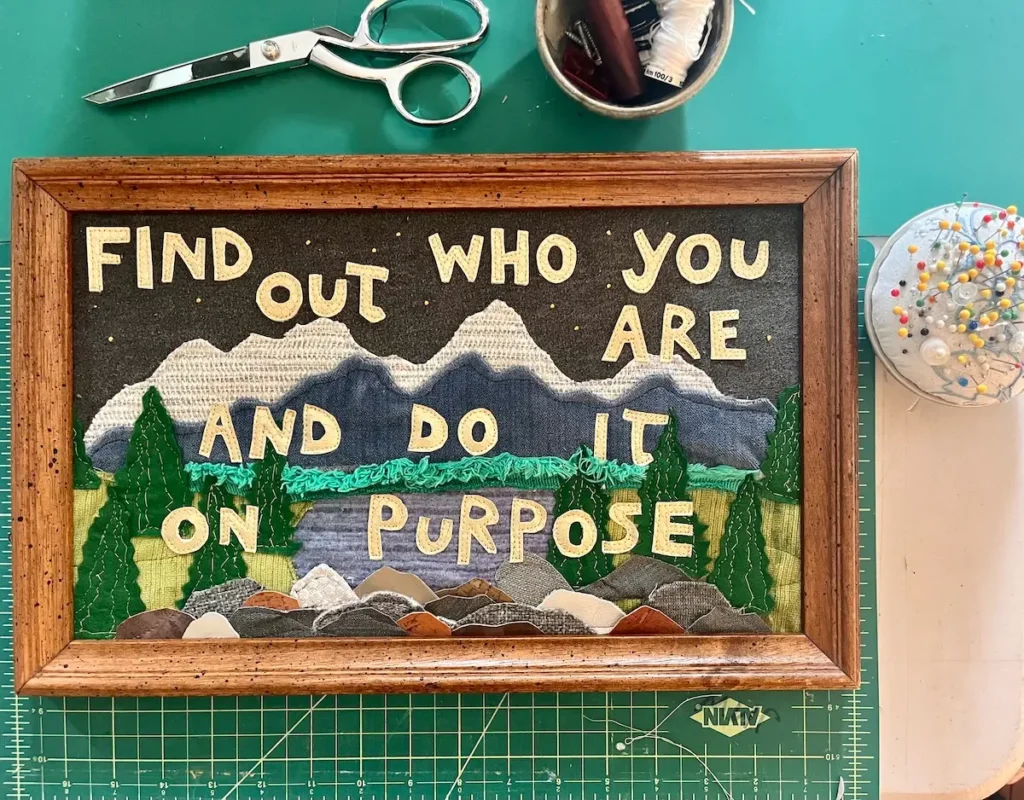
When you are creating a landscape, are you thinking about a specific place you have visited, or are you more interested in creating the feeling of a place?
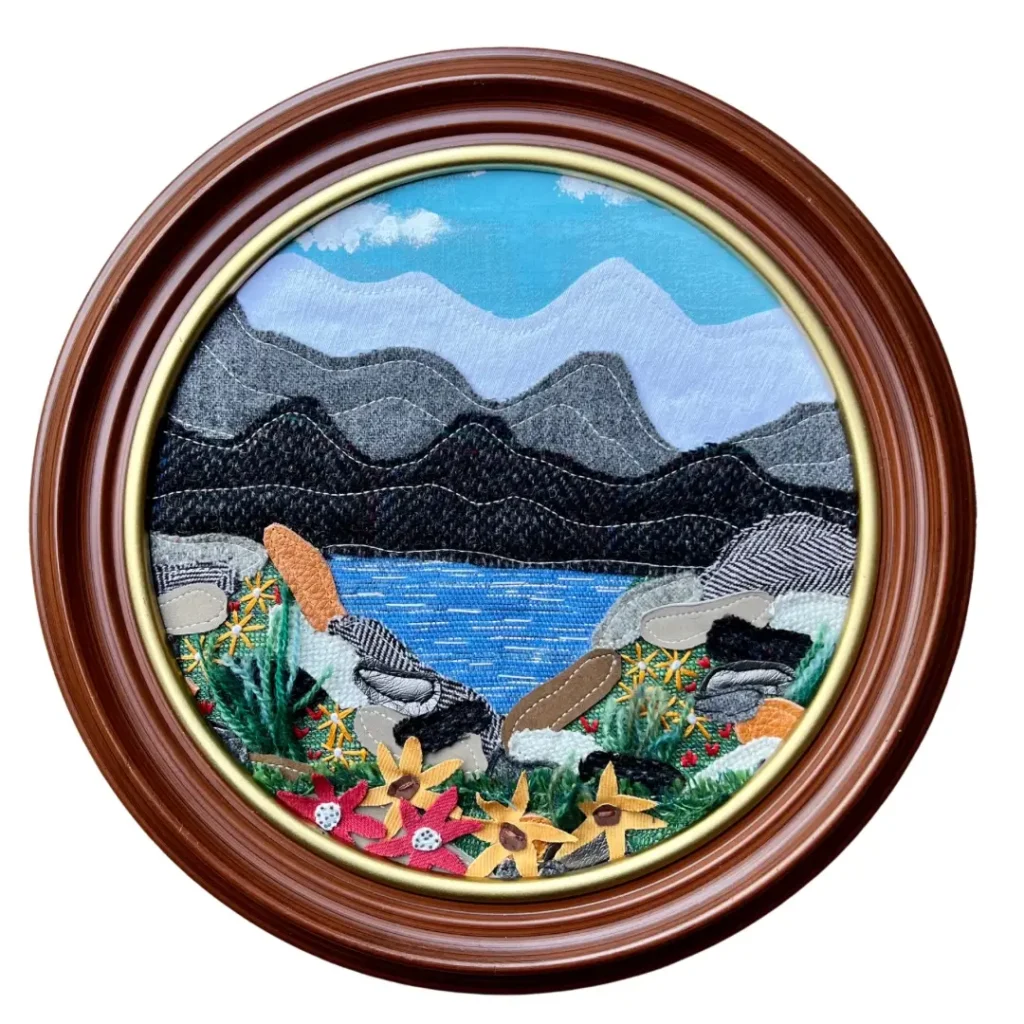
While I occasionally work off photographs or sketches, I am most interested in creating the feeling of a place, I often infuse this sense of place by incorporating artifacts, or “site-specific” materials, if you will.
For instance, on a visit to a lake in the mountains, I might collect a piece of driftwood to stitch into a shoreline. Or buy a frame at a nearby shop that will hold the future artwork. I’m also often inspired by places I’ve yet to visit, as well as imaginary realms.
Art can take us anywhere, and I love creating portals that viewers can escape into.
Some of your most personal commissions begin with someone else’s treasured object. What is it like to be trusted with something that carries deep meaning for another person?
This is another place where my “doula” practice comes into play.
At the onset of a project, I invite people to share memories and images associated with the materials, and this process often brings up a lot of big feelings.
I’ve learned it is important to carefully negotiate my relationship to the emotions of others, rather than absorbing them as my own. Also, while the person has sought me out and consented to the process of transformation, it can still be nerve-wracking to get started…that first scissor snip! It is an immense privilege and responsibility to usher old things into their next phase.
You have spent many years working in the arts while also building your own creative practice. What have you learned about making space for your own work?
For many years, I worked at an art school and dedicated much of my energy into fostering the creative practices of my students. I loved it, but I was hardly following my own advice.
It wasn’t really until the 2020 pandemic and the simultaneous loss of my mom to cancer that I began to carve out serious time for my own practice. Like many of us, I had more time to dedicate to making and a lot of grief to explore.
Then in 2024, the university where I worked suddenly closed, and I was forced (and free!) to make a fresh start and reconsider my priorities.
In short, don’t wait until a pandemic or the loss of a loved one or a job to make space for what you love. Start now.
Also, I find art-making is the best way to process loss and transitions, so if you’re feeling stuck in some area of your life, allow art to nudge you into a new mindset and perhaps along a new path.
What would you tell someone who loves making things but doesn’t yet think of themselves as an artist?
Keep going!
Where can people see your work?
You can find me @juiceboxworkshop and www.juiceboxworkshop.com
Interview posted September 2026
Browse through more mixed media inspiration on Create Whimsy.