
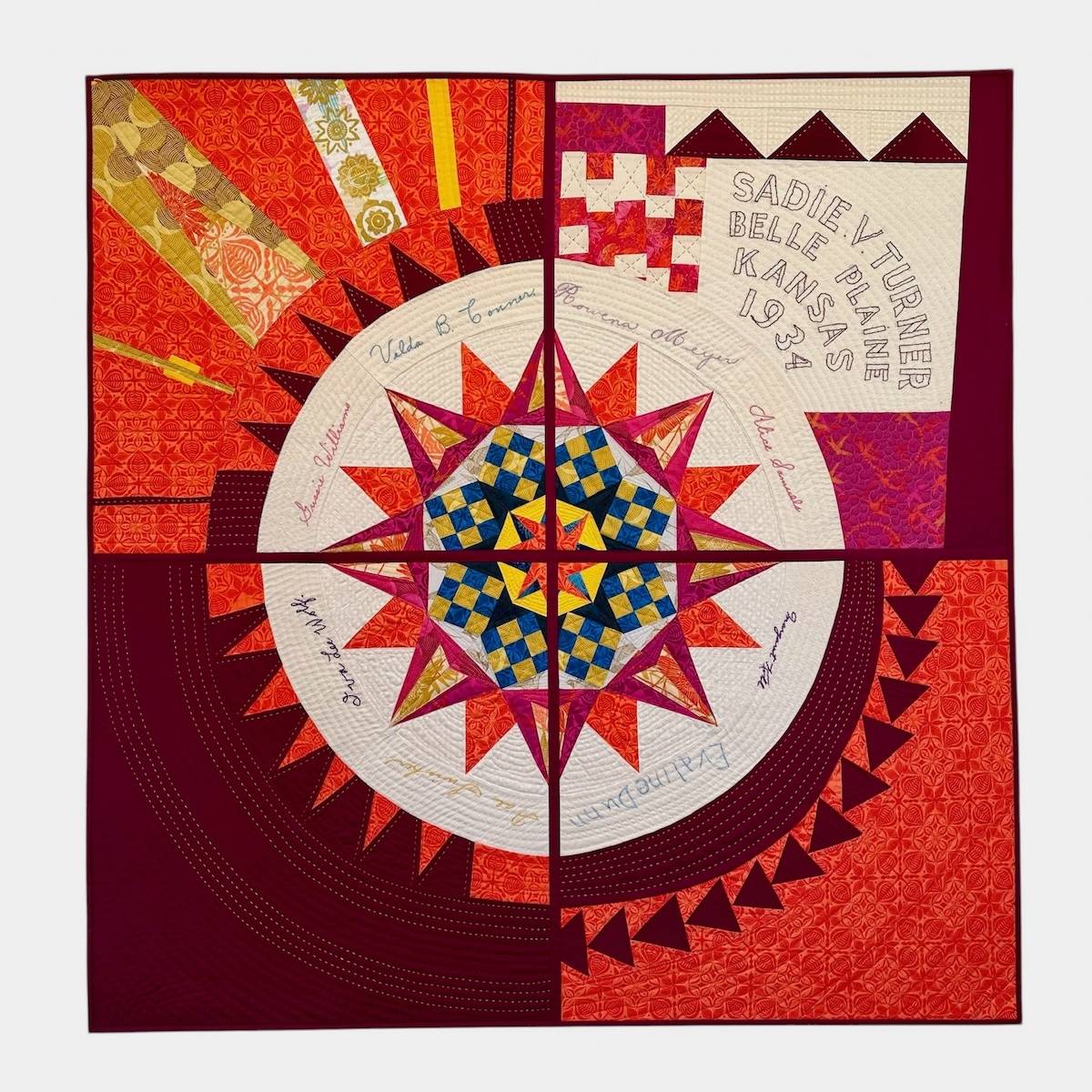
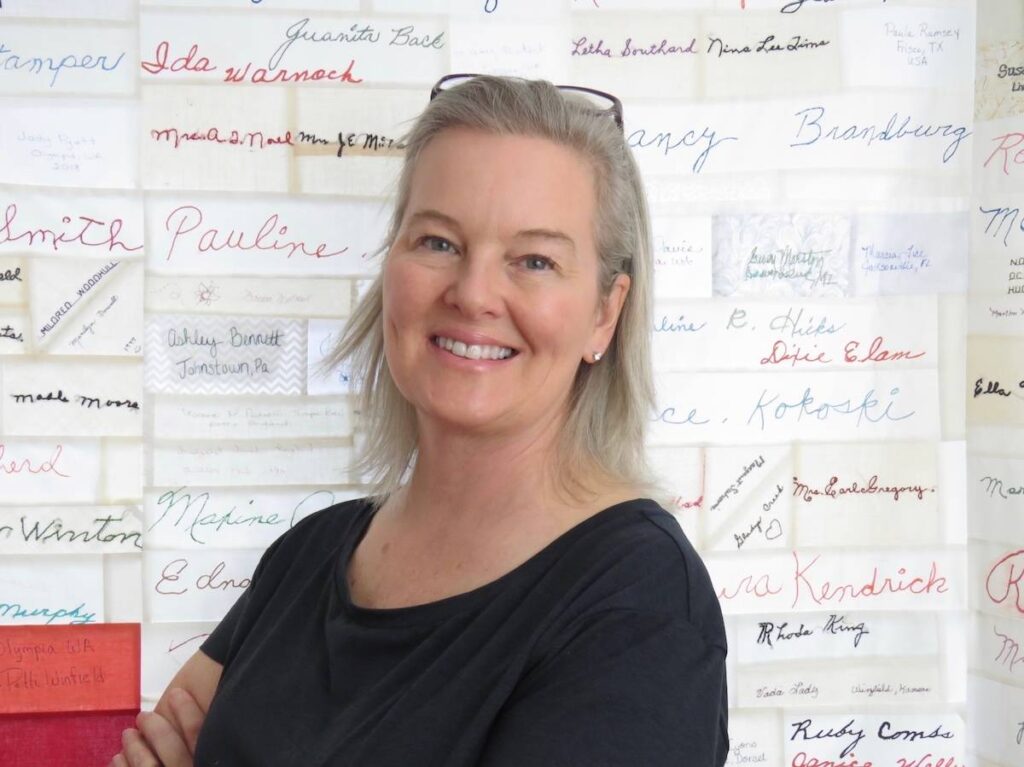
Tina Davis stitches together history, memory, and community in her unique quilt work. Inspired by her grandmother and a deep love of fabric, she rescues vintage signature blocks and gives them new life. Each piece she creates is thoughtful and full of care, honoring the stories held in every stitch.
What first pulled you into quilting or making with fabric?
My grandmother was a quilter. I always admired her drive to create. As a young girl, sitting in her personal space and quietly watch the rhythm of her hand quilting felt like a privilege. I loved touching her stitches or her crochet blankets. I still try to touch everything. I love the information from tactical surfaces. Fabric can tell such wonderful tales.
Was there a moment when you thought, “This is something I want to keep doing”?
I’ve enjoyed quilting for gift giving for many years, but it wasn’t until I moved to Central Oregon, began taking classes, and joined SAQA that I really began to feel passionate about creating a body of work as an artist.
As an Amazon Associate I earn from qualifying purchases. Read more about our affiliate linking policy.
How did your early work compare to what you make now?
I originally worked traditionally from patterns, usually making quilts for kids. I think that work was very important in making me a skilled seamstress.
Now I’m constantly looking for new ideas and mediums. I still like to utilize some traditional patterns in my work, but I consider myself more of an improvisational quilter.
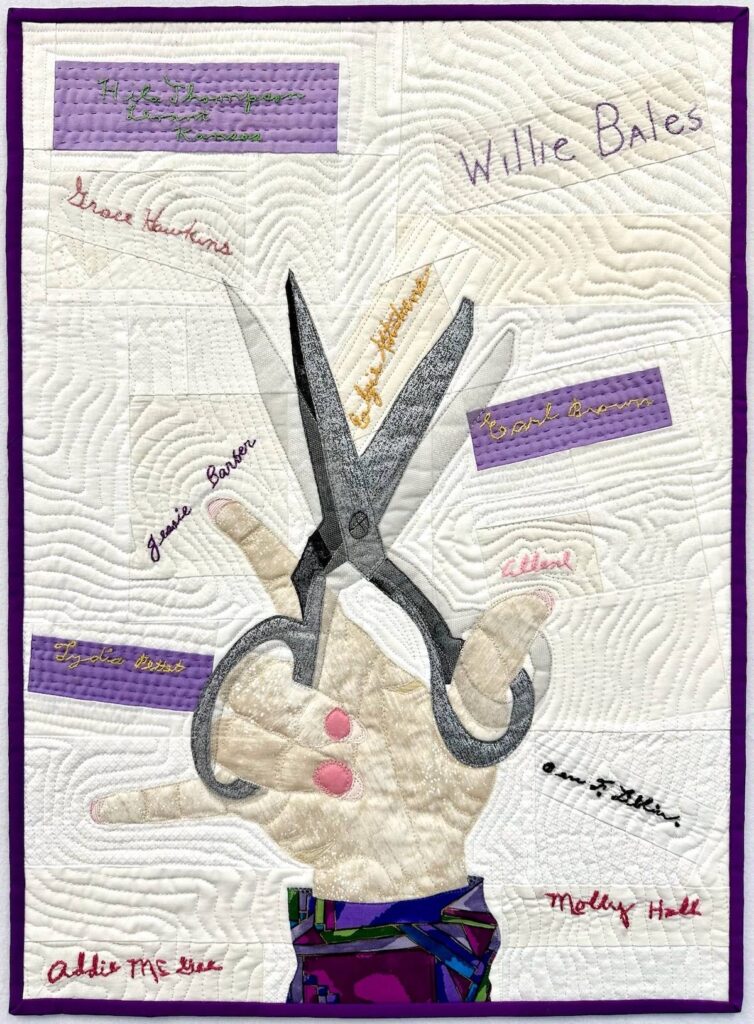
Photo by John A. Stewart
Tell us how you first got interested in vintage signature quilts.
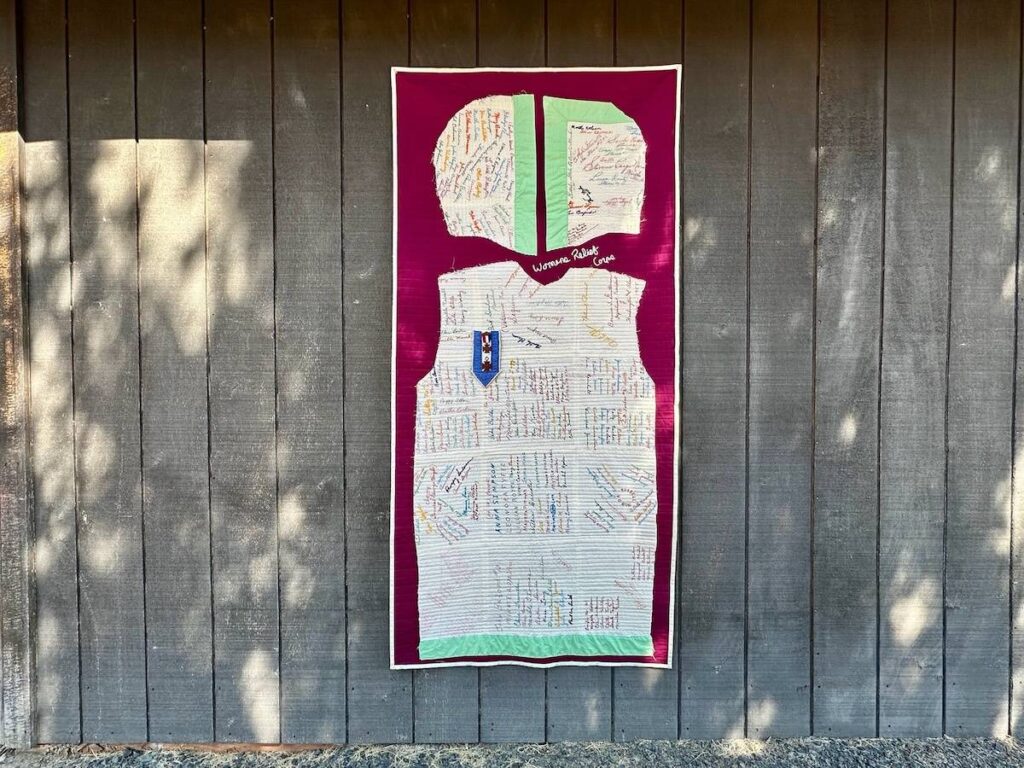
I discovered quilt collector Bill Volckening and began following him on social media. He shared a prompt from the Charleston MQG to send in signature blocks as a way to create comfort quilts for the families of victims of a shooting. Participating piqued my interest in signature quilts. I decided to make a signature quilt, but couldn’t accumulate enough signatures.
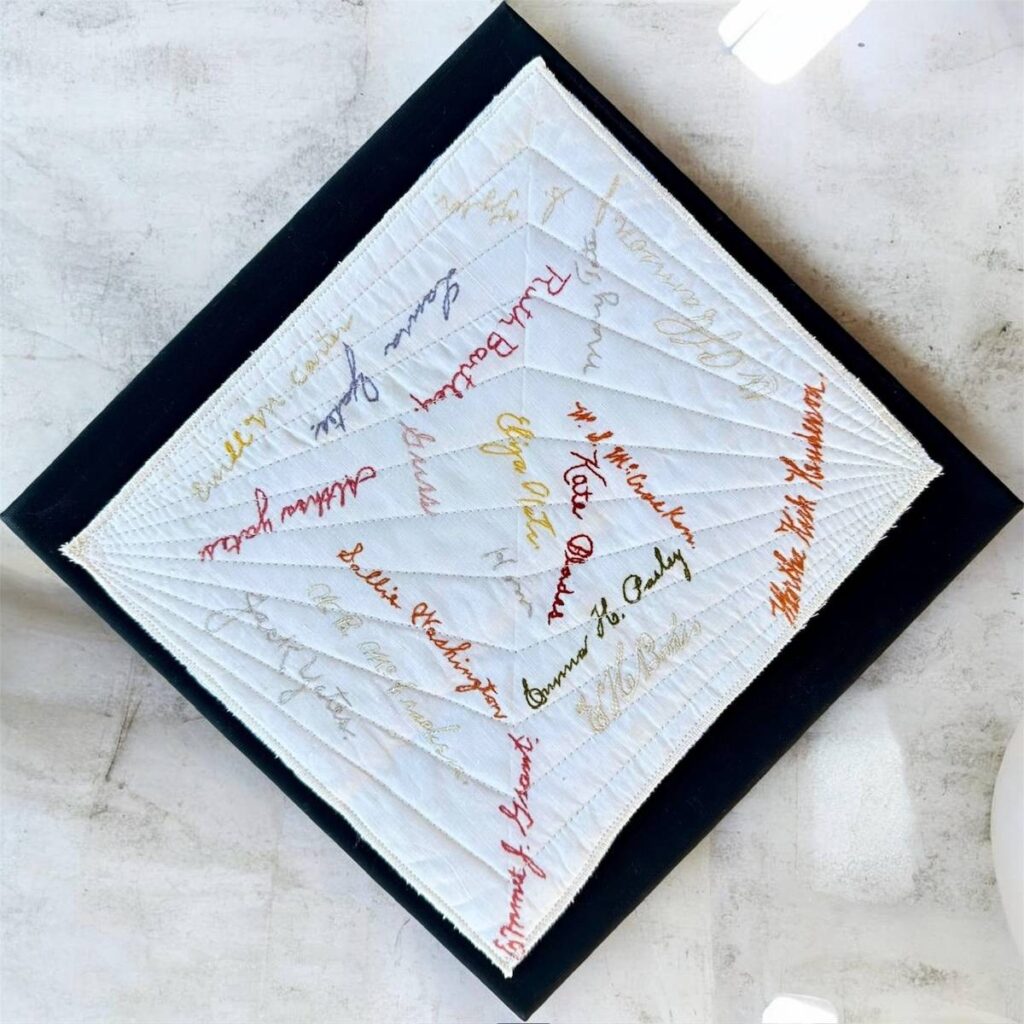
I was at a guild fund-raising sale at a quilt show and found a baggie of vintage signature friendship blocks and thought, ‘Why can’t I use these too?’ And so I did. It’s since become an obsession to bring these homeless signatures to their intended destinations. I much prefer vintage signatures at this point, although I also use current signatures as well.
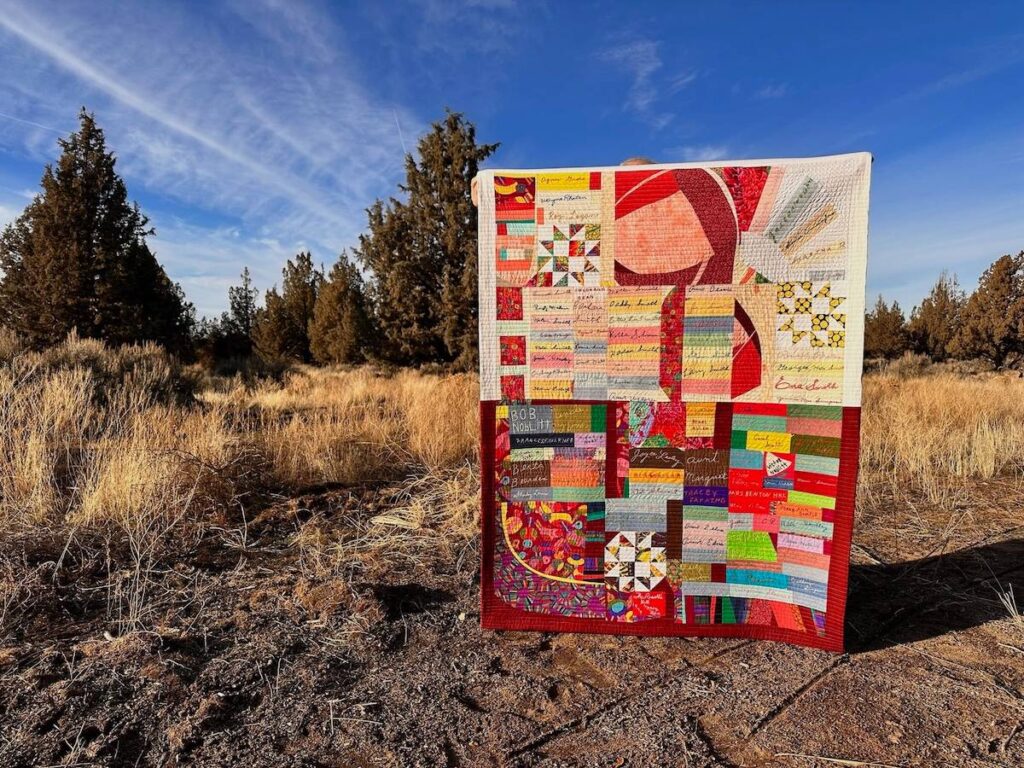
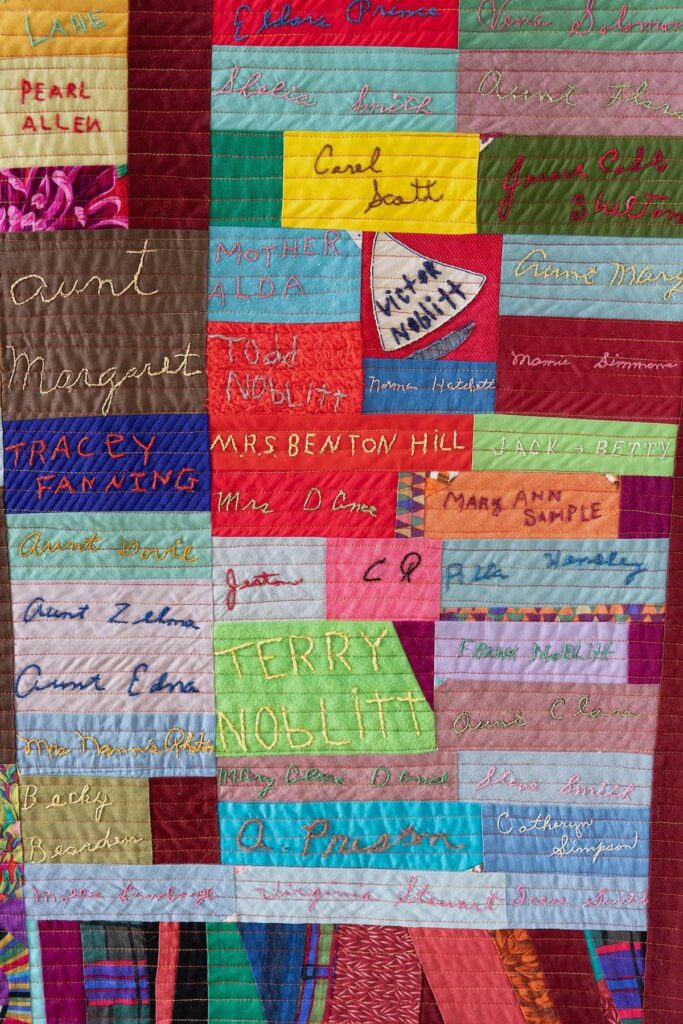
Photo by John A. Stewart
What fascinates you most—the names, the history, or the design itself?
The vintage names 100 percent.
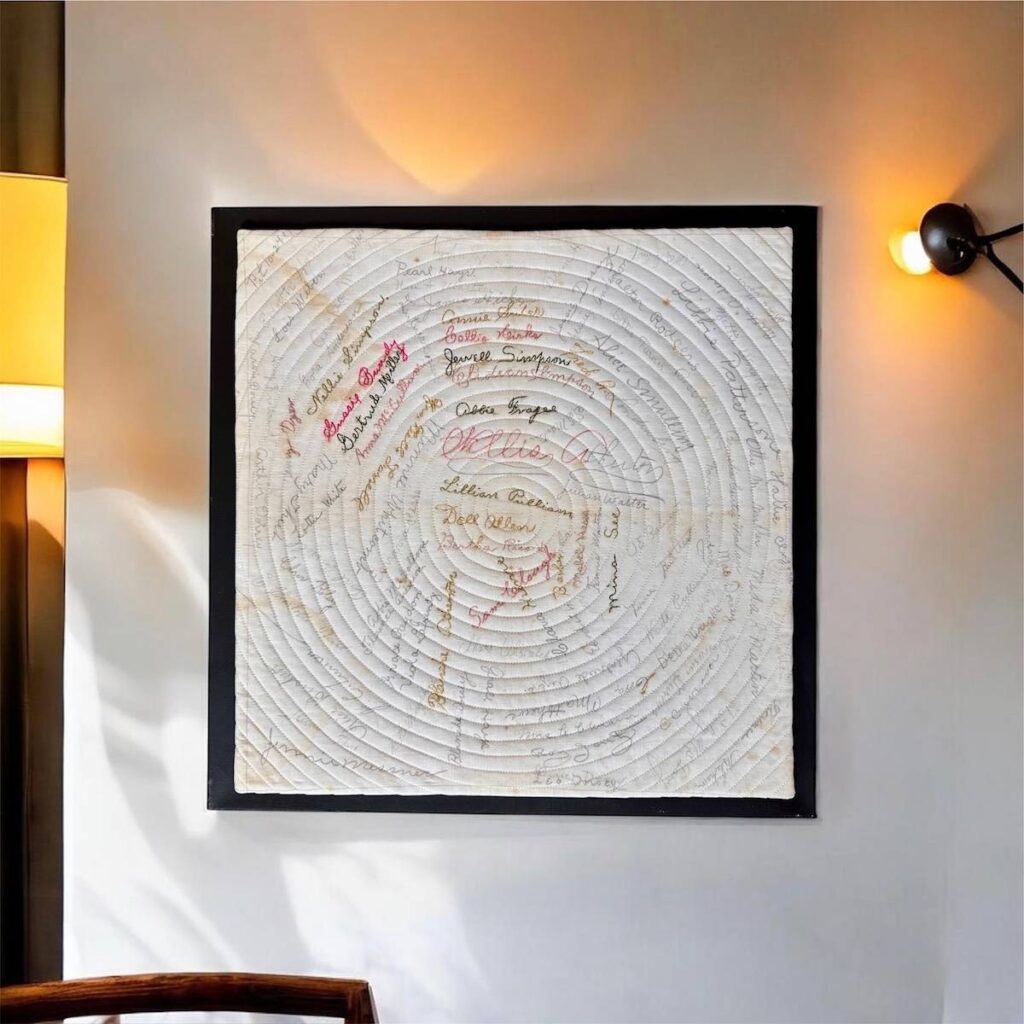
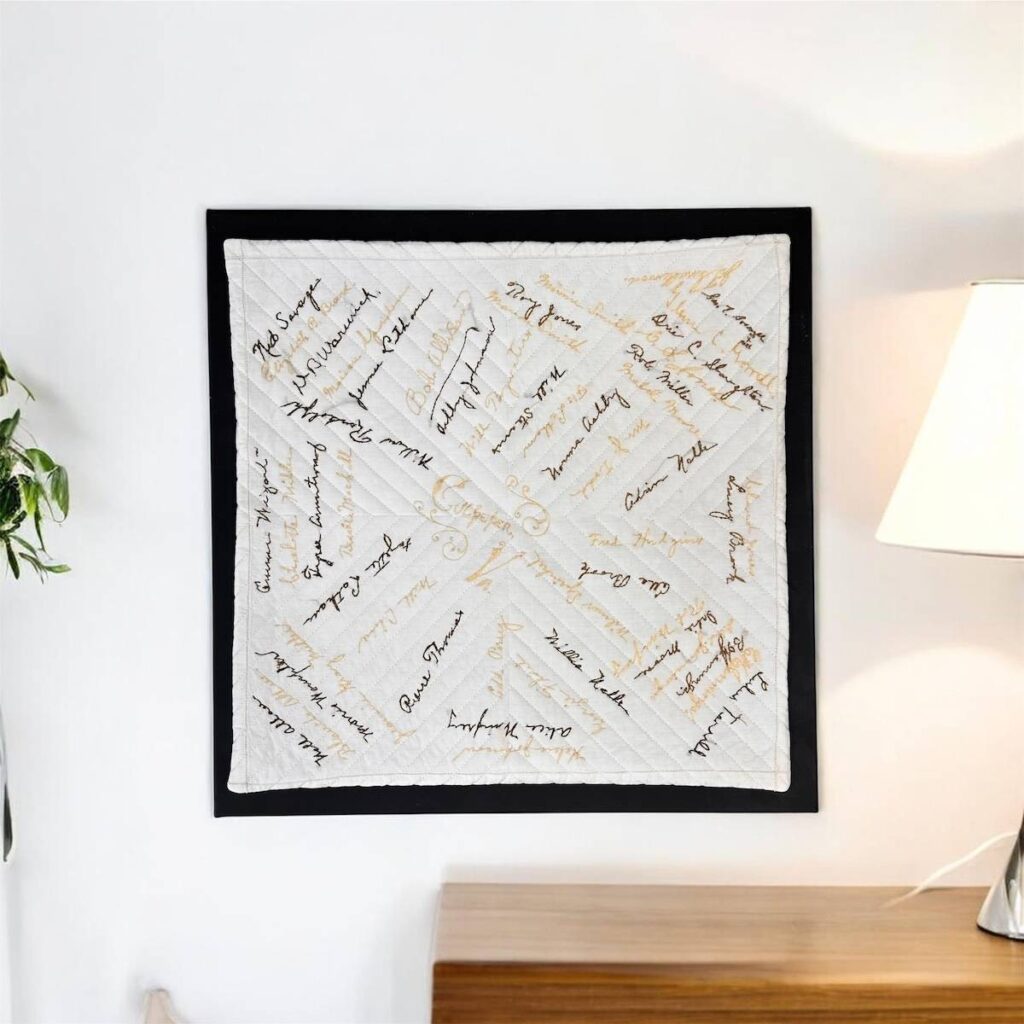
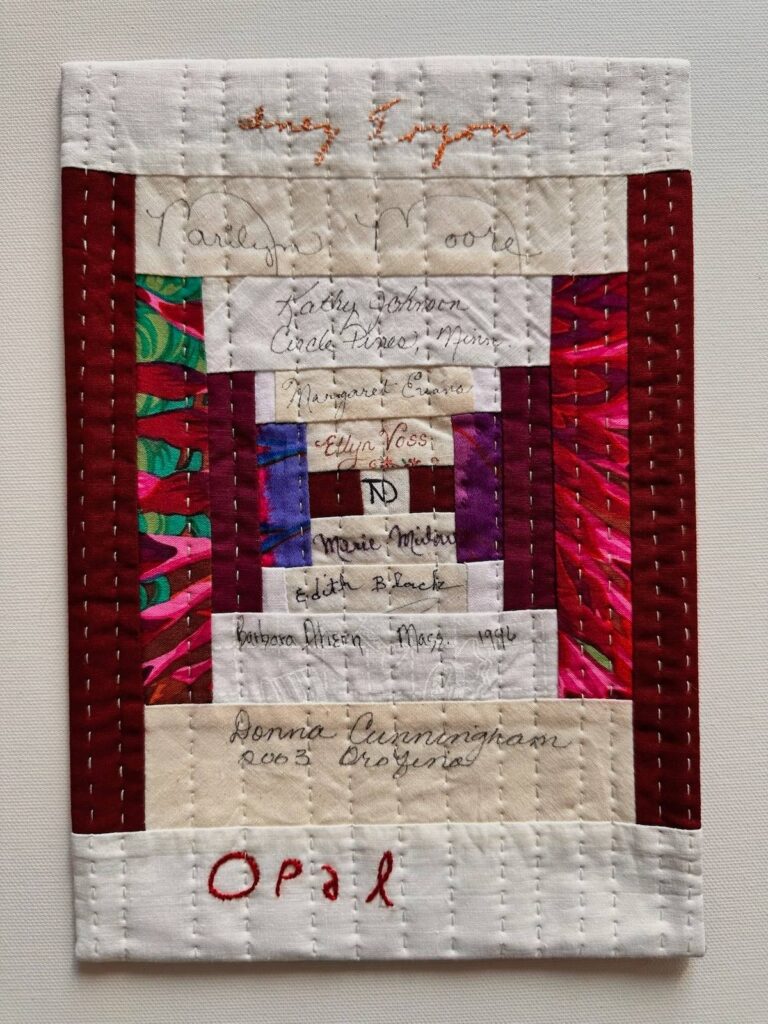
As I clean, mend, and place each name, I like to read them, think about them, and honor their intention. They were either a quilter or someone who supported a quilter’s quest to create something special. I also adore the texture and design of the embroidery.
The names are sometimes very unique. Some sign large, some are super tiny. Wives sign without first names, some are just initials. It’s interesting to consider their personalities based on how they sign. Did they sign Aunt, Grandma, or Grandpa? Was the request for a signature from a young person? Also interesting to evaluate your own mark-making instincts after considering theirs. How do you make your mark? Even my modern signatures have personalities.
Do you ever research the names or stories behind the signatures? What have you discovered?
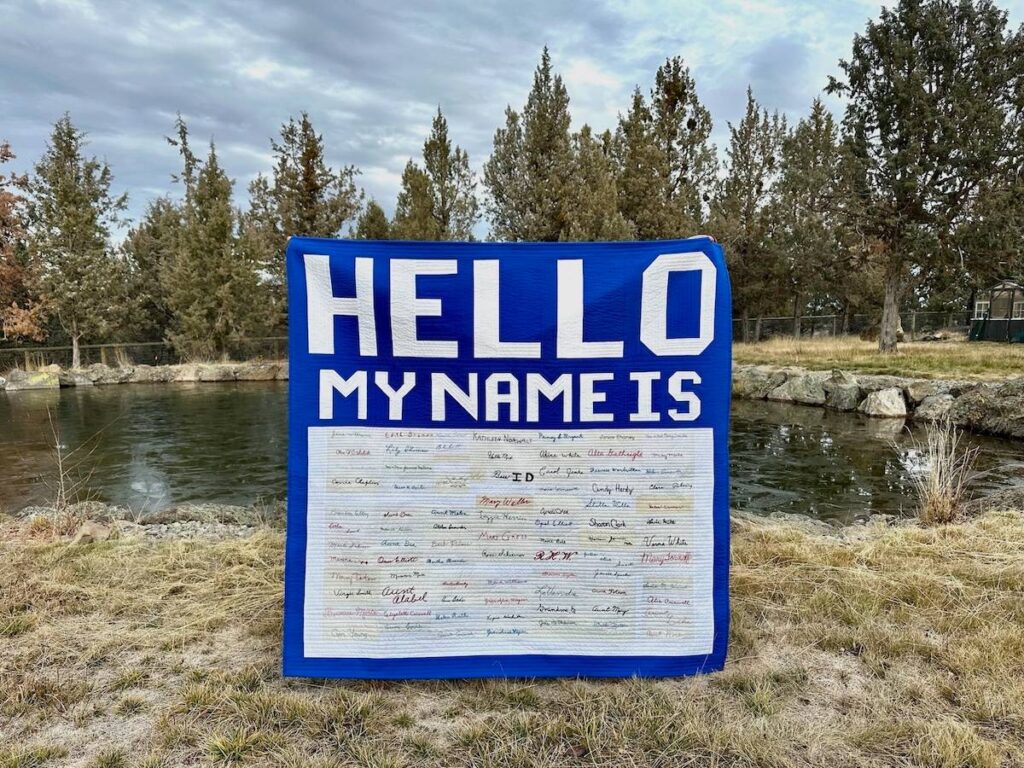
I did at first, but quickly learned that it takes a considerable amount of time and effort for minimal reward. One of my quilts has over 400 signatures alone!
The only time I research is if I come in contact with a completed signature quilt that has some defining information on its origin. I then try to return the quilt. I’ve been lucky enough to have been able to return two quilts to their original community historical museums.
What inspires your work most right now?
The desire to evolve as an artist and how signatures might fit into that work. The idea of seeing all my quilts hanging together in a complete public exhibit gets me very excited.
Where do your best ideas usually come from—quiet moments, busy days, or somewhere in between?
I’m an early riser, so I usually have at least two hours of quiet time alone every morning without distractions. This is when my brain is most awake, and I have time to scribble down all of my ideas or deep dive into research.
I’m always brainstorming while doing other activities as well, especially if I am trying to find a solution. My husband is a great sounding board if I am trying to make a decision.
Describe your creative space.
My husband just built me a 400 square foot studio separate from my home. I have my books, fabrics, and supplies. I have two 6-foot work tables for sewing. My new-to-me Bernina Q20 has its own corner, and I have a large piece of high-density particle board on sawhorses for my cutting space. Very utilitarian but also quiet and meditative.
How do you keep your workspace organized—or do you prefer a bit of creative chaos?
Almost everything has its intended space, although not always stored neatly. My shelves are cast-offs from a kitchen remodel. I use bins and a dresser for fabric storage. I keep my rulers and cutting tools on a pegboard. It’s not magazine-worthy, but it works for me. During a project, it can get quite messy, but I do practice daily tidy-up sessions before leaving the studio.
What’s the most challenging part of your process?
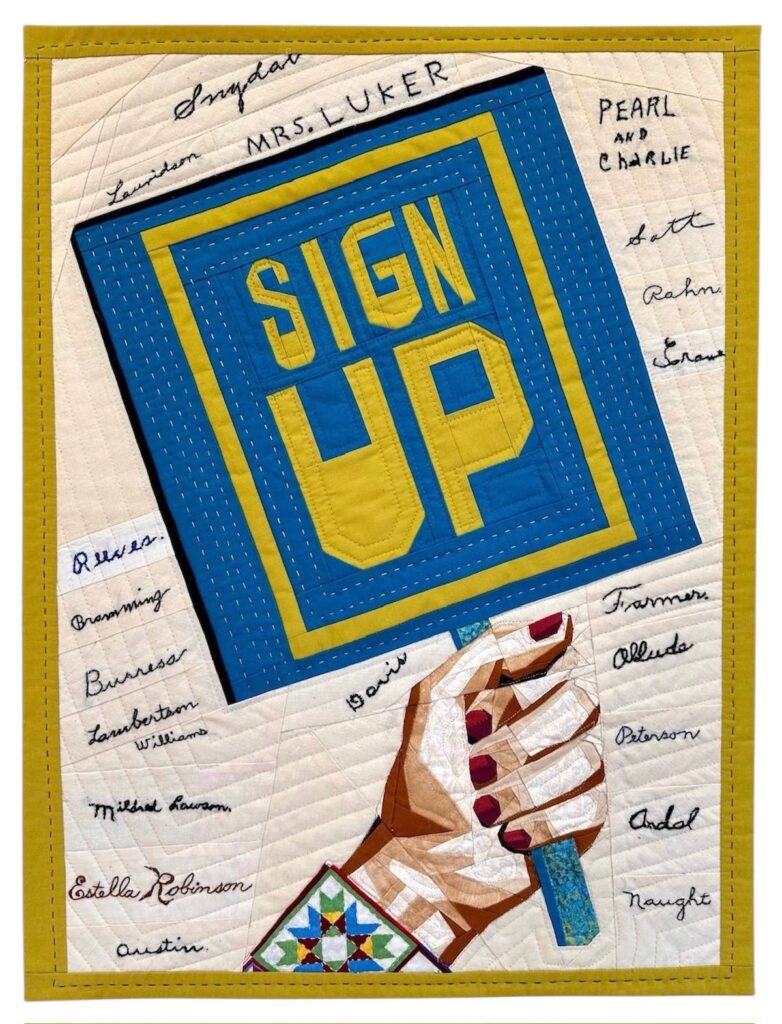
Repairing, cleaning the fabrics, and then finding the perfect space for them. Some of them come to me in a terrible state of disrepair. It’s a lot of tedious preparation and then resizing them to fit into the intended design.
How do you know when a piece is finished?
When I’m satisfied with it and I’m excited to share it.
What have you learned about yourself through your creative work?
That I’m not very patient. I’ve had to learn to stop and fix errors and/or take some time to do a better process instead of trying to shortcut, especially if I want to finish and move on to another project.
How do you balance creative time with the rest of your life?
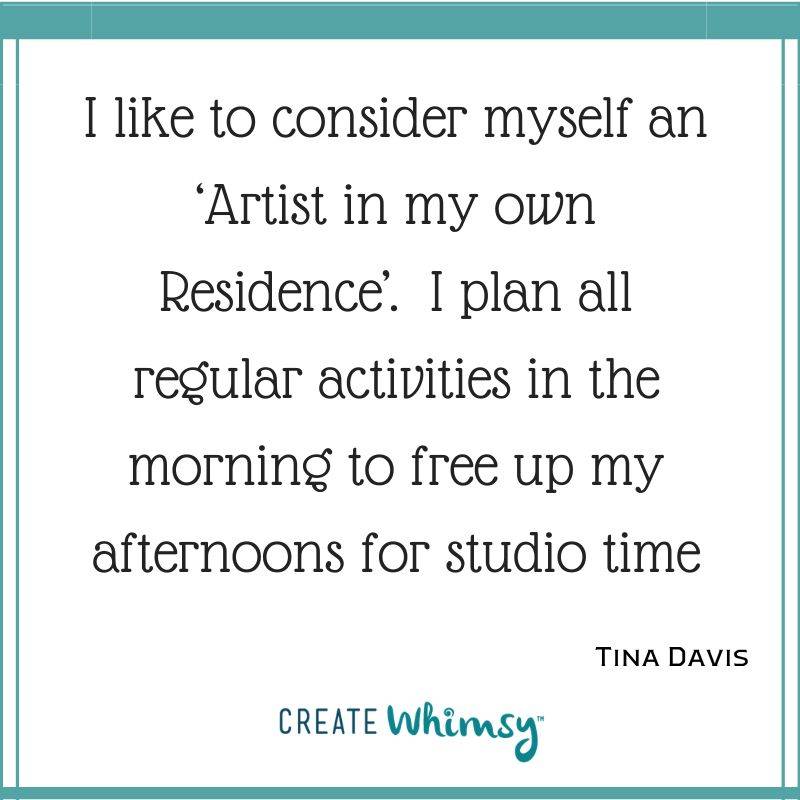
I like to consider myself an ‘Artist in my own Residence’. I plan all regular activities in the morning to free up my afternoons for studio time. It’s fairly easy to coordinate as a retired empty nester.
My husband usually has his own projects to keep him occupied. We do take extended time to travel and explore away from home. During those times, I set my projects aside but bring my workbook and pencil for brainstorming and planning for when we return.
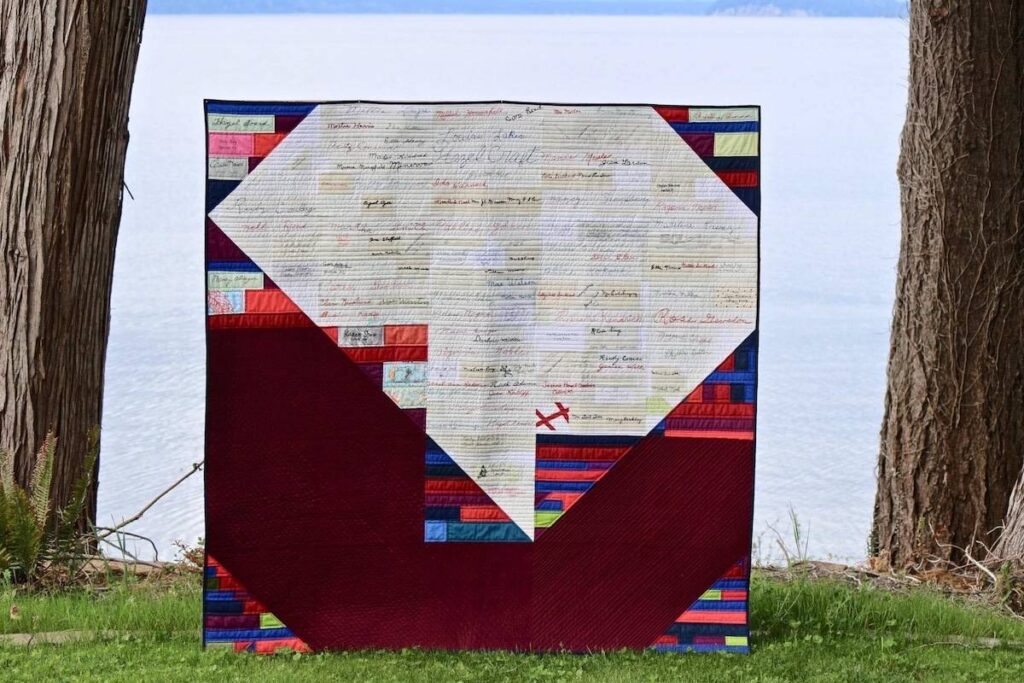
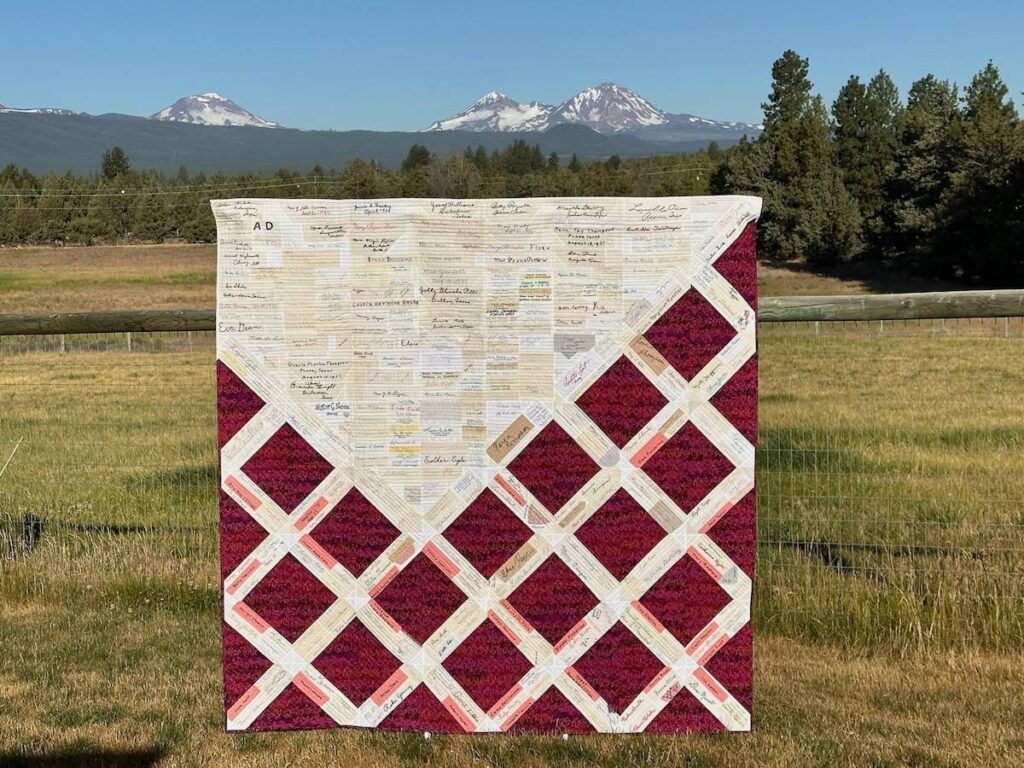
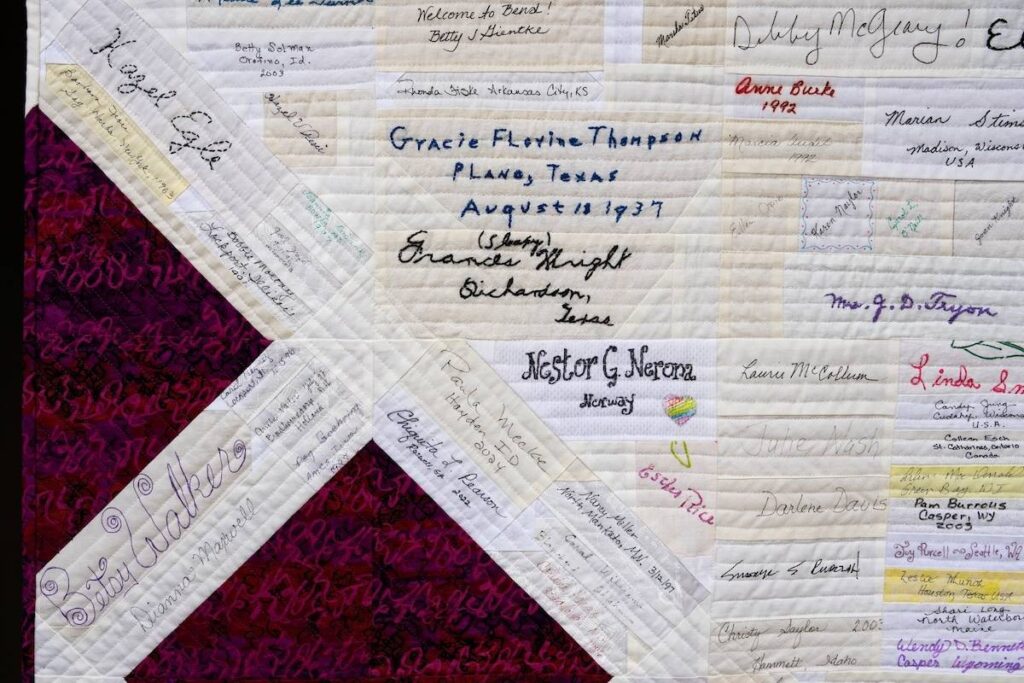
Photo by John A. Stewart
How do you stay motivated when inspiration feels far away?
I try to find space within my local artist community. SAQA meetings, classes, my mentor group. I work among some of the most creative minds I’ve ever had the privilege to know. I also take time to create work without signatures, especially after a large project.
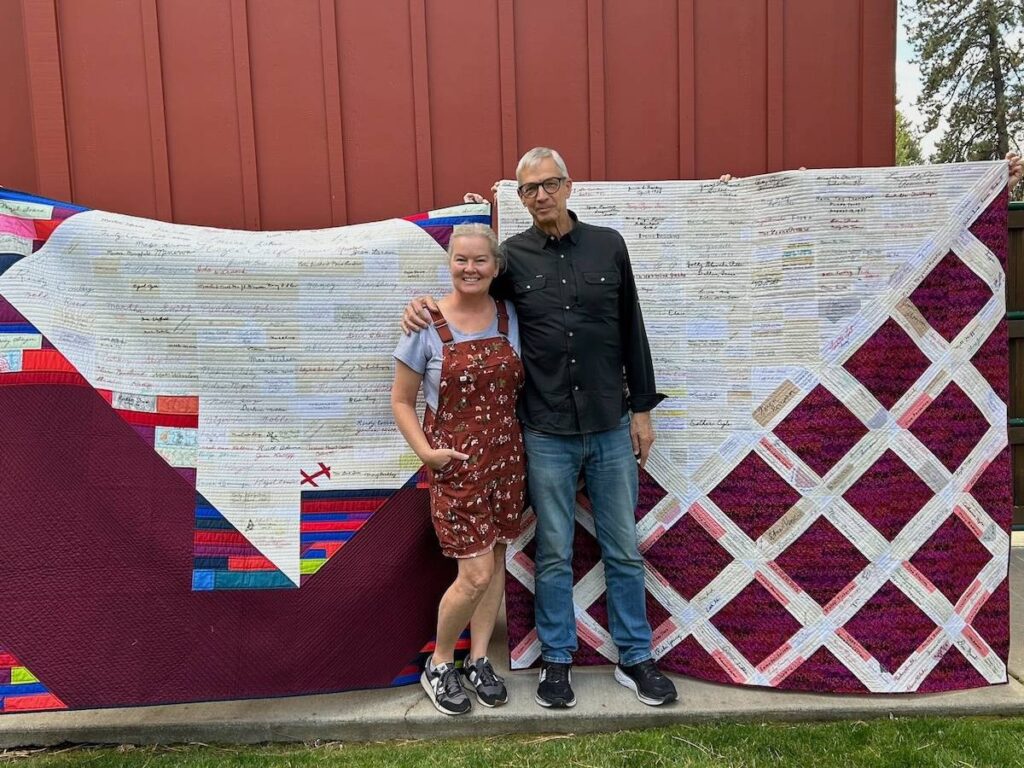
Is there one signature quilt that has stayed with you in a special way? Why?
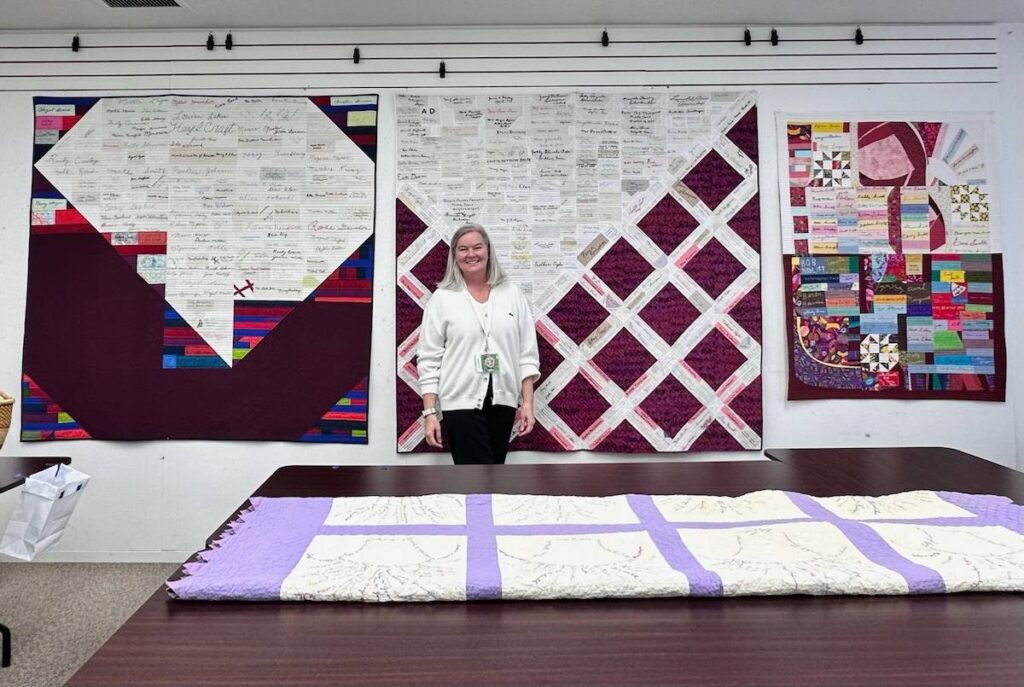
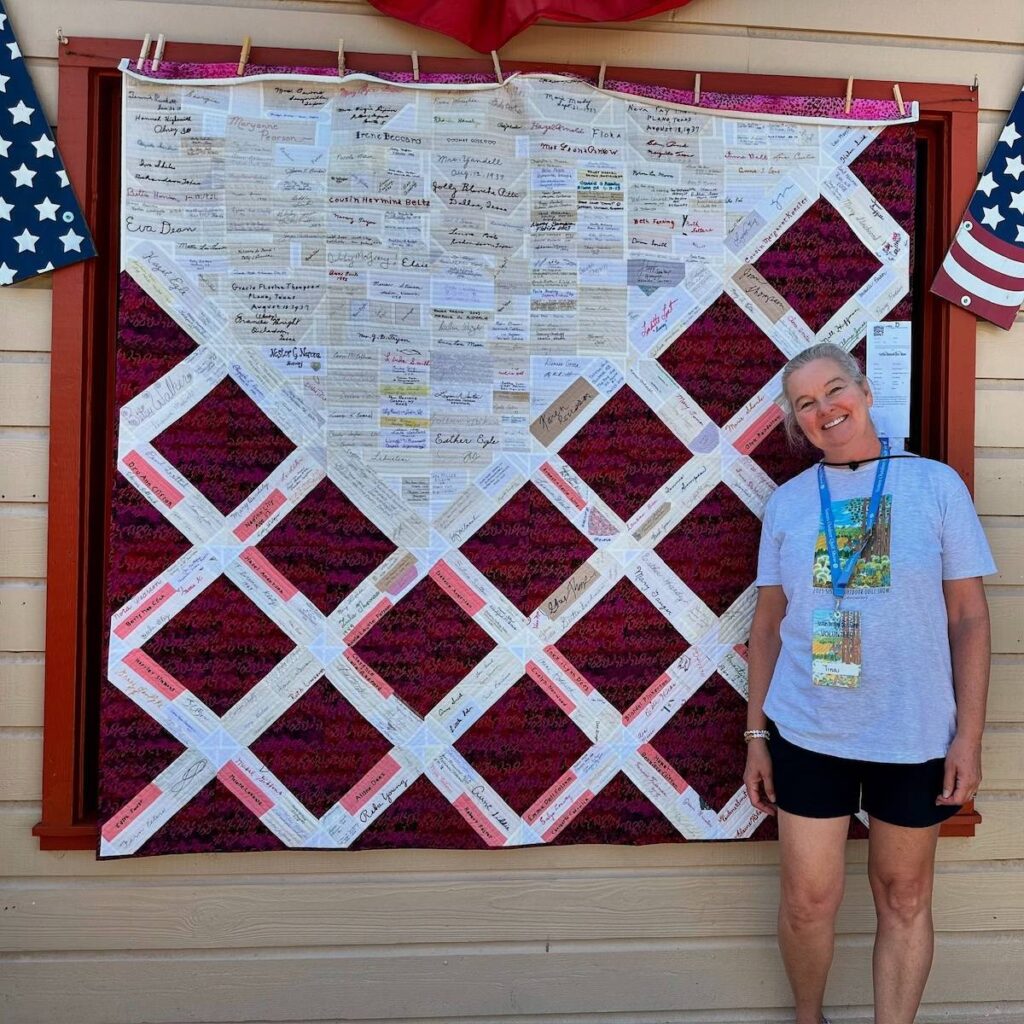
My first one. It took me 4 years to complete. I was so afraid of sharing it and what people might say about me salvaging vintage quilt pieces. I used a quilt design by Joe Cunningham and Gwen Marston for the layout. I’ll never forget Joe’s kindness when I asked him permission to use it.
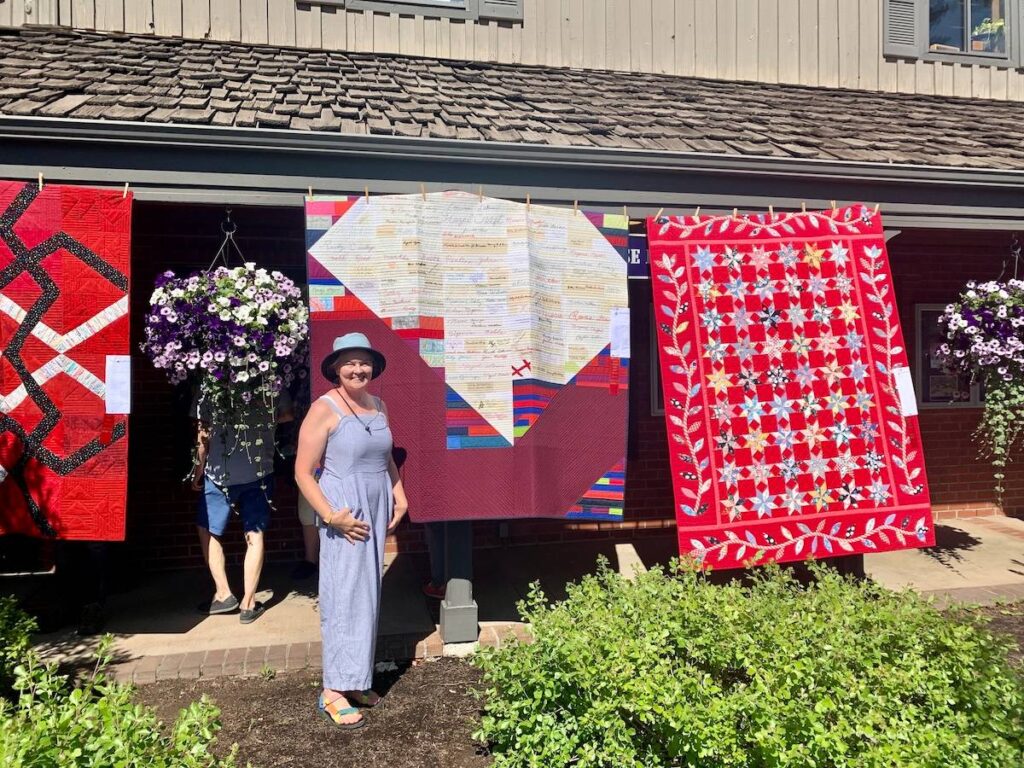
That quilt was shown at the Sisters Outdoor Quilt Show in 2022 and later included in the 50th anniversary book by Jean Wells in 2025.
Its journey has truly been a reflection of my own evolution from a timid quilter to a more confident artist supported by the quilting community. I consider it my foundation piece.
What do you hope future generations will feel when they see your signature quilts?
First, I believe they are a form of communication. I hope the collection will encourage interest in the importance of valuing the intentions and work of those who came before us.
I hope they will understand that each time someone supports an artist by participation, they are helping to continue to build a foundation for other artists to learn and grow. None of my quilts would exist without the cooperation of a community of willing participants.
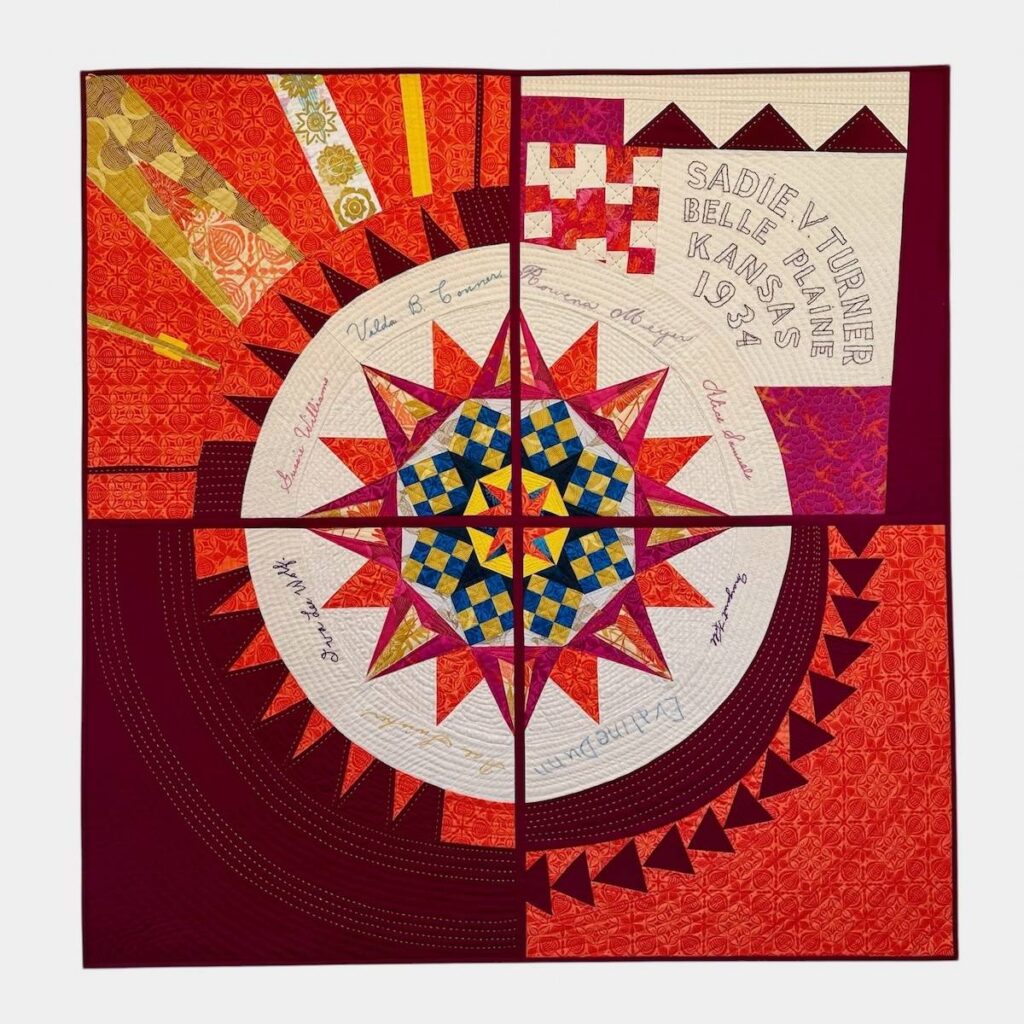
Where can people see your work?
I have a website where I’m compiling my portfolio of signature work: www.tinadavisquilts.com
Rapid Fire Fun:
One word to describe your work? Intentional
Favorite place to find inspiration? Older editions of Quilt National books
A color you avoid (or secretly love)? Yellow
What are you excited to make next? Mounted or framed work
Interview posted June 2026
Browse through more art quilt inspiration on Create Whimsy.