
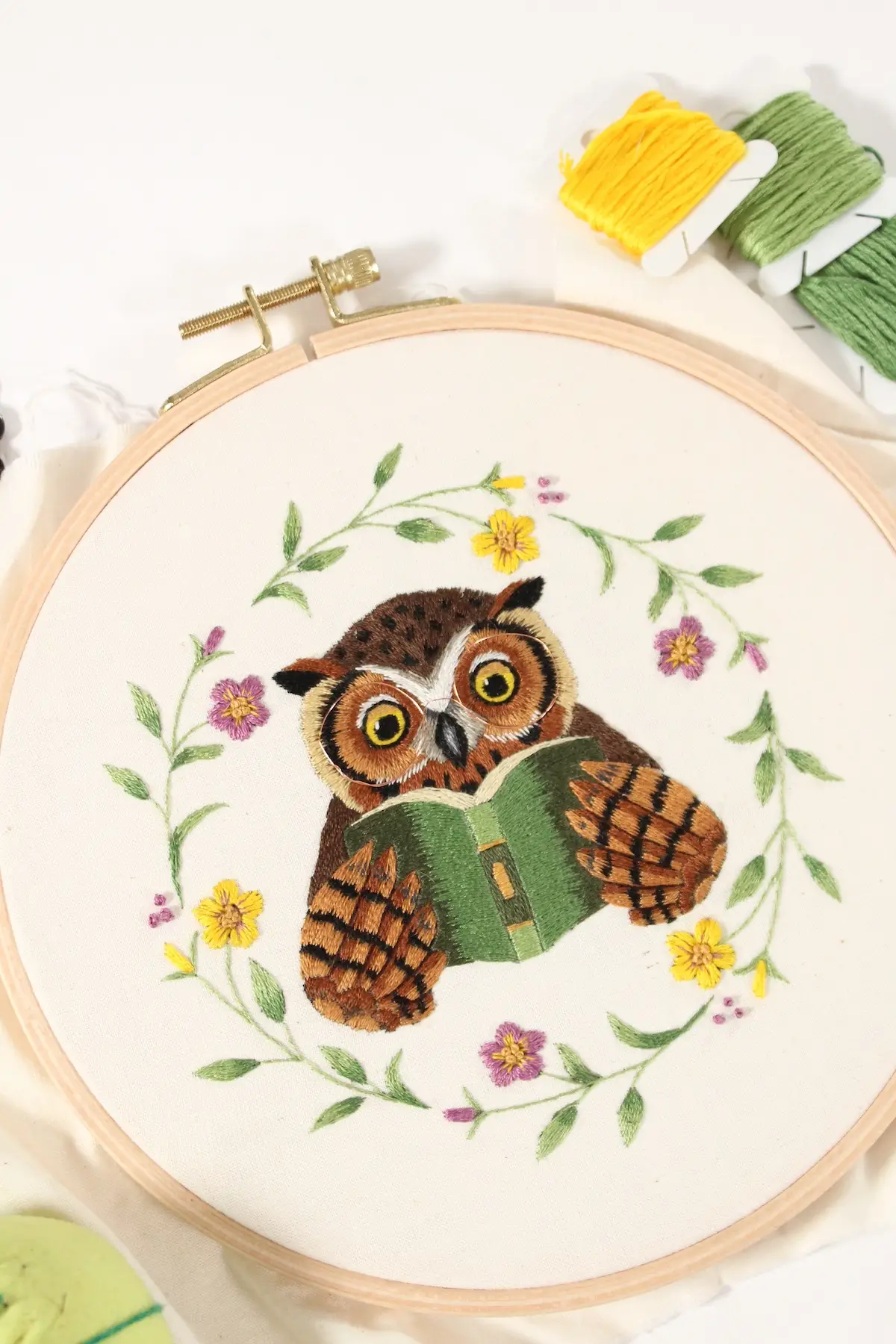
Embroidery began as a way for Amanda Fox to unwind, but quickly became a creative passion. Inspired by childhood memories, nature, and a love of storytelling, she blends whimsy and realism through thread painting.
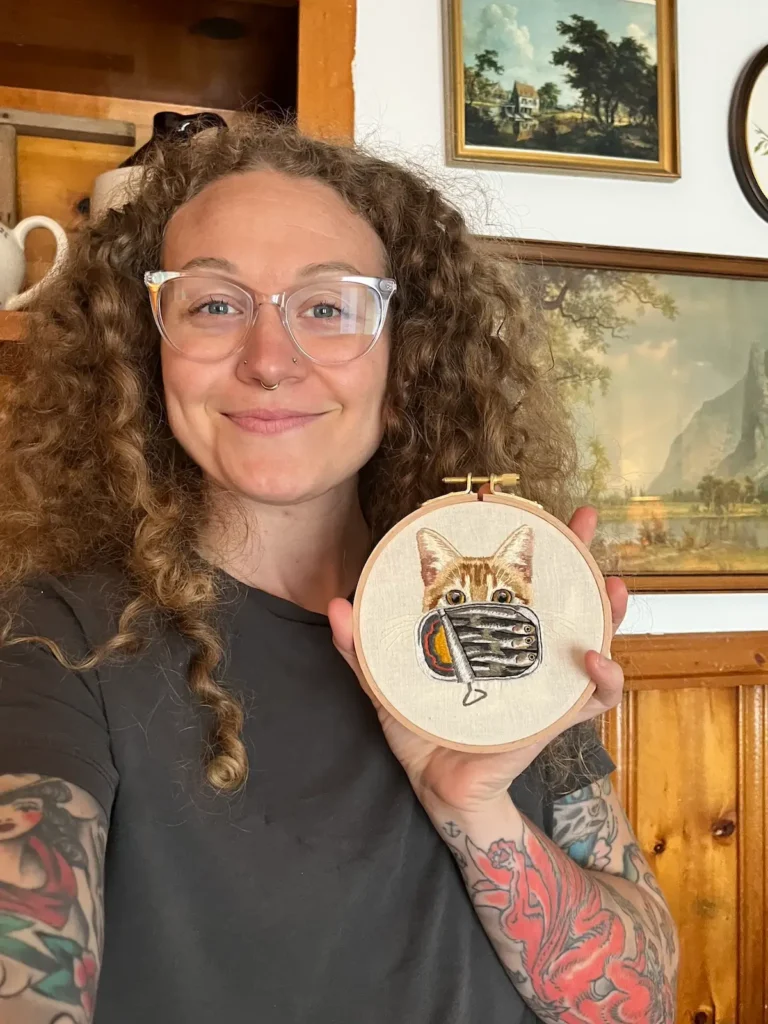
How did you get started designing embroidery patterns? Always an artist, or was there a “moment”?
I began embroidering while I was in nursing school. My mom recommended that I try to find an outlet to manage the stress I was experiencing. I ended up at a craft store, and when I passed the needlecraft aisle, I remembered that my grandmother had introduced me to embroidery when I was a child, so I ended up purchasing some supplies and started embroidering every day.
I think it was about a year later that I started selling my creations, which included little custom embroideries, and eventually progressed to custom pet portraits.
After doing a lot of custom work for several years, I decided to switch things up and began creating a collection of embroidery patterns. People seemed interested in them, and it allowed me to explore different subject matters I wanted to stitch while also providing a small income.
As an Amazon Associate I earn from qualifying purchases. Read more about our affiliate linking policy.
I didn’t consider myself to be an artist when I was younger. I felt that traditional art mediums didn’t come naturally to me. (This is a common misconception, I think many people share.) Once I began embroidering, there was something about it that just clicked for me. I wasn’t particularly good at it, but I felt like I was able to express myself through it, and I was determined to improve my skills. It wasn’t until years into my practice that I realized embroidery is genuinely an art form, and I began to identify myself as an artist.
When did you first realize you are a creative person?
While I didn’t consider myself an artist growing up, I have always felt like an innately creative person. My parents provided me with the opportunity to participate in numerous extracurricular activities when I was younger, including dance, piano lessons, and sports.
I also dabbled in various crafts, such as woodworking with my dad, as well as making and selling macramé bracelets at swim meets. While they weren’t quite the same as art-making, there was a degree of creativity and exploration involved.
Tell us more about the influences from your childhood in your creative journey.
Ever since I was a kid, I’ve been drawn to animals and nature. I grew up in Virginia in a house with a large backyard. Most days, I remember playing outside until it got dark. We had family pets, and I rode horses (and eventually got a job) at a local equestrian center.
I loved books like Richard Scarry and movies like Mary Poppins and Harry Potter—anything with anthropomorphized animals or a sprinkle of magical realism.
I love including animals in my art, as well as incorporating mundane or domestic “human things.” I believe that some of the experiences from my childhood played a significant role in shaping this aspect of my work.
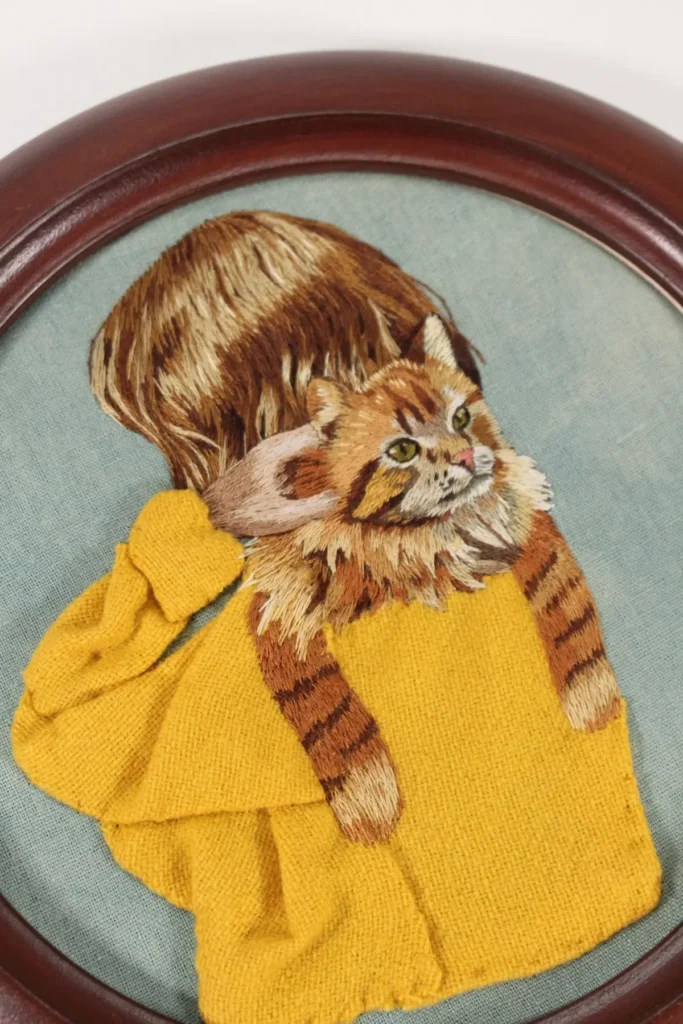
You’ve explored a variety of techniques with thread and yarn. Do you have a favorite? Why?
I explored a lot of different embroidery techniques when I first started. I felt interested in learning as much as I could. There was a bit of a tradeoff in doing this, because I didn’t have a defined art style up until the last few years.
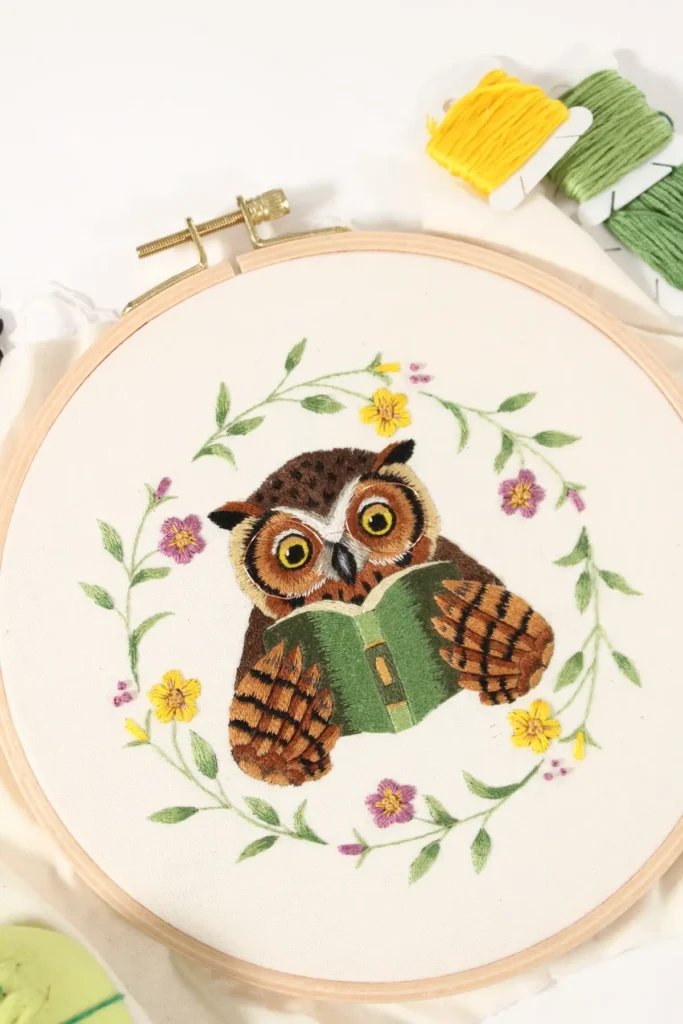
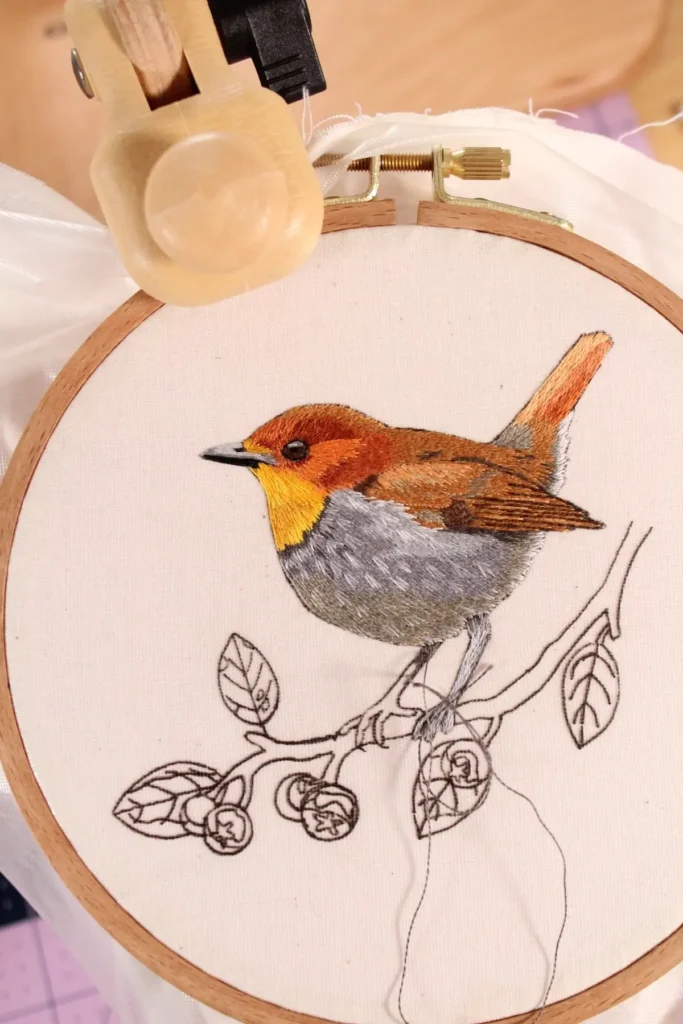
My very favorite technique is thread painting. This is where you lay down the thread, similar to painting, blending colors in a way that achieves a more realistic effect.
For some reason, this style of embroidery made the most sense to me on an intuitive level, so I began using it primarily to create my embroideries. My husband (who is also an artist) was the one who encouraged me to lean into and make more art this way. He was able to help me recognize it as a strength of mine, and I’m so glad he lovingly nudged me in that direction.
Where do you find inspiration for your designs?
Most of my designs are inspired by nature, animals, and sentimental objects from the past.
I love antiquing and thrifting, drawing inspiration from all they have to offer, such as novelty items, oddities, and little knick-knacks. Antique botanical illustrations and Victorian postcards have also been a massive inspiration for my art style.
Walks around my neighborhood are sure to get the ideas brewing in my head.
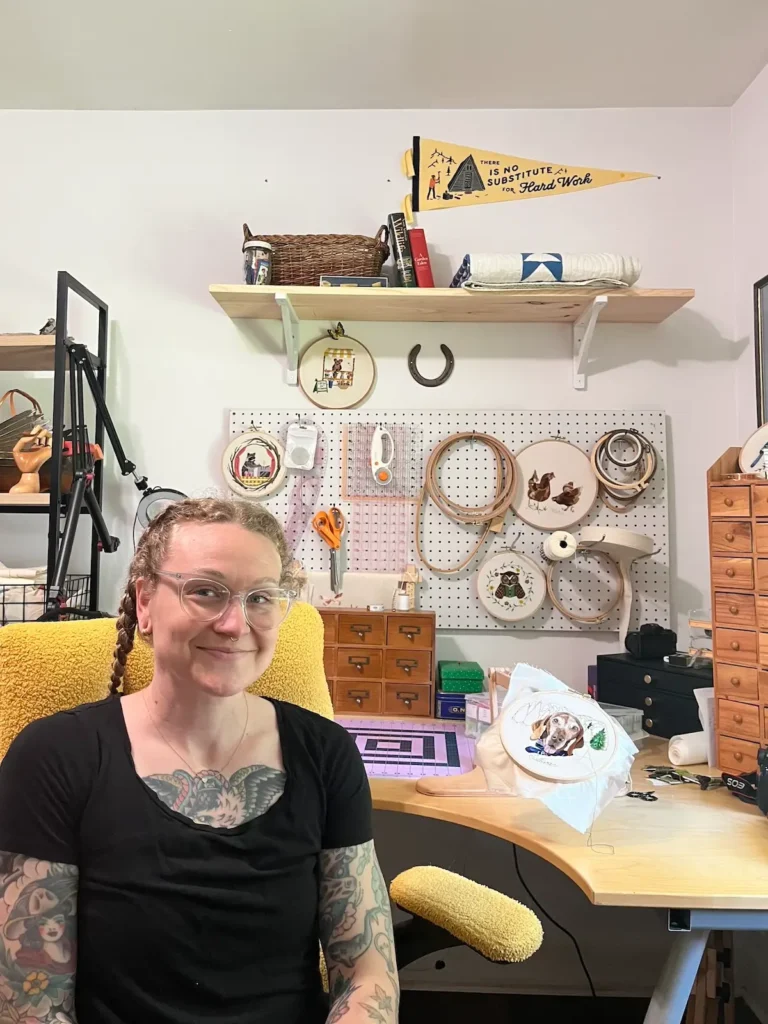
Describe your creative space.
I have a small office in our home where I work. It’s filled to the brim with a variety of embroidery and sewing supplies. I have decorated the walls with interesting thrift finds, family heirlooms, and art that inspires me.
To me, my space is playful and cozy. Some may find it cluttered, but there is a method to my madness, and I can find everything I need! Overall, I’ve made an effort to be very intentional in curating my space with all the things I need and love.
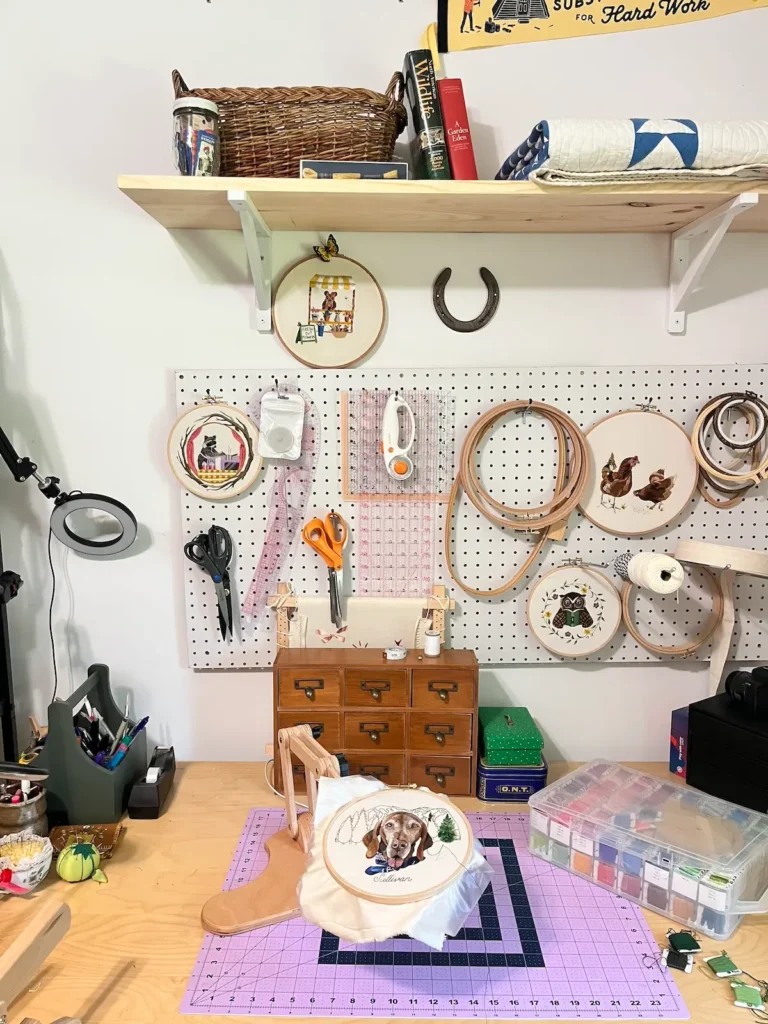
What is your favorite tip for organizing your stash of creative supplies?
Organizing is an ongoing process for me, but I think one tip that has helped me keep things organized is to thin out supplies that I haven’t touched in a year. I will do this occasionally, probably every 6 months or so, because it’s so easy for me to develop clutter in my space.
It can be so hard to let go of stuff when you’re a crafty person. There’s always a potential use for something! However, I’ve found it a lot easier to organize everything when most of what I own are essentials. I haven’t missed anything that I’ve donated yet.
Do you use a sketchbook, journal, or technology to plan or keep track of ideas? How does that help your work develop?
Most of the time, I sketch and draw on my iPad. I have a decent number of drawings at various stages of ideation that I can refer to when I’m looking to create something new.
I keep a note on my phone, as well as a Notion board full of various random ideas I come up with while going about my day. I like keeping it on my phone because I usually get ideas while I’m out for a walk or while I’m doing mindless tasks. If I don’t write them down right away, I easily forget them!
Once I write something down or sketch it, I let the idea simmer for a little while. My best work is usually made this way because I’m able to think about it more and develop it into a fully formed idea.
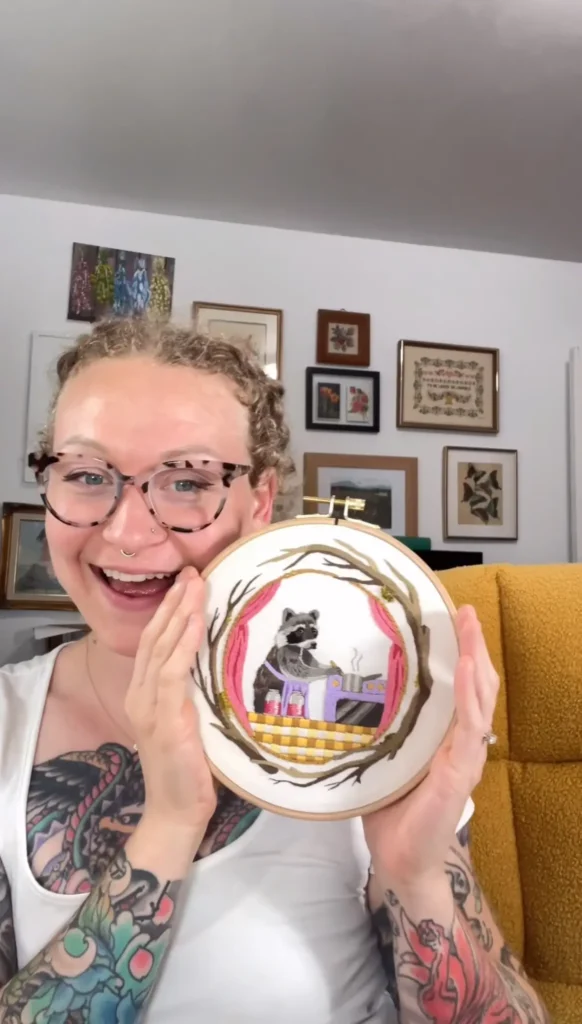
How often do you start a new project? Do you work actively on more than one project at a time?
Currently, I have about three projects going at once. This is a relatively rare occurrence, though.
I usually do them one or two at a time. I find it easier to organize and keep track of all my embroidery floss, and I feel more focused and less mentally cluttered.
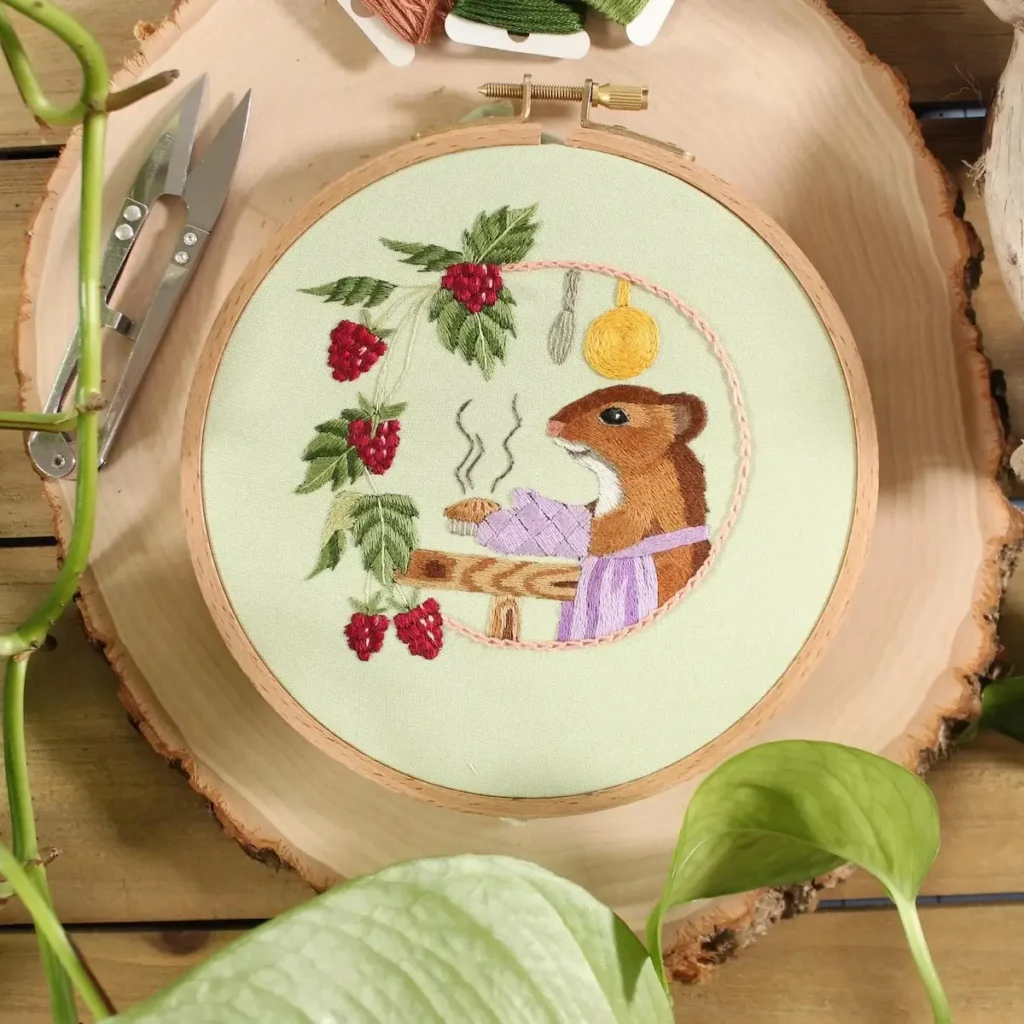
Can you tell us about the inspiration and process of one of your works? How does a new work come about?
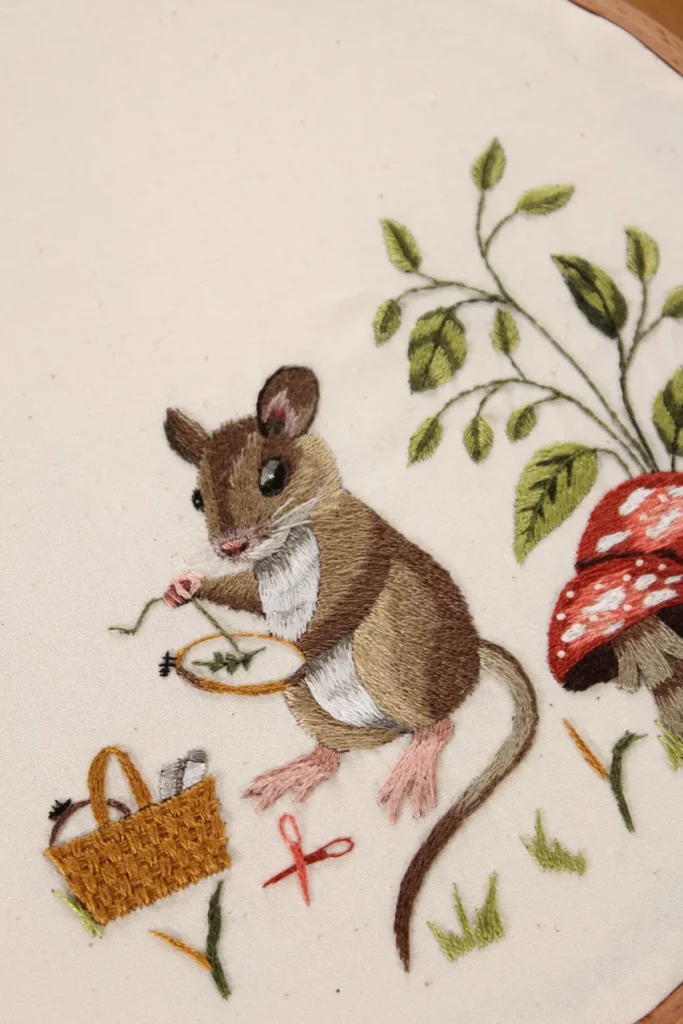
One of my favorite patterns I’ve made is this little mouse baking a pie in its hollow. The idea occurred to me while I was out for a walk. I see lots of little critters on my walks, and I began thinking about some of my favorite pastimes, imagining what a little mouse would be doing if it were able to do that.
Once I have an idea like this, I’ll write it down and brainstorm what other elements I want to include. Then I’ll sketch out a very rudimentary design and refine it until I’m satisfied. I usually do a color study before I get stitching, too, so I have a general idea of what colors I want to use.
Which part of the design process is your favorite? Which part is a challenge for you?
My favorite part of the process is brainstorming and sketching. I love seeing an idea come to life because it’s still somewhat of a mystery at this stage of the process. I usually have a vague idea or vision, but it’s exciting to me to develop it into a fully fleshed idea.
For my patterns, the most challenging part is figuring out how to execute a design in a way that will make the most sense to people. I try to incorporate enough colors in a design to make an impact, but I avoid making the design so complex that it becomes difficult to follow.
How do you make time for creating? Do you try to create daily?
I do my best to create daily.
I am fortunate that I get to do this as my primary source of income, so I have a decent amount of time to devote to it. There are, of course, some days that involve other tasks, such as computer work, but I prioritize at least a little time to work on an ongoing project or sketch out an idea almost every day.
How has your work evolved over the years? Is there a common thread (pun intended!) across the years?
Love the pun! My work has definitely evolved. I continue to refine and improve my thread painting style. While I still do hyperrealistic pet portraits from time to time, I have focused less on making something an exact replica of a particular subject.
I’m beginning to find a balance between making the subject matter semi-realistic but adding in a bit more stylization to it. I started out creating lots of whimsical animals in my pieces, and they are the feature of most of my work to this day. And I still love playing with lots of color.
What’s the best piece of advice you’ve received?
Focus on your own path and avoid comparing yourself to others. This can be tough advice to follow, but it is genuinely essential. Social media makes this even more challenging, but it isn’t all bad: it’s fun to study and admire other artists’ work, and you shouldn’t live in a bubble.
However, I think focusing inward and truly reflecting on why you want to create a certain kind of art is crucial. It makes the process more enjoyable, and it also allows you to develop your artistic voice.
Do you prefer the kind of project that is challenging and requires attention, or the kind where you get in your meditative zone and enjoy the process?
I love both! It depends on the mood that I’m in. I love a good challenge; it allows me to learn a great deal through the process, and I feel a sense of accomplishment afterward. I also love projects that are a bit more mindless.
Over the past year or so, I’ve been working on designing more cross-stitch projects. They’re initially challenging for me to create, but once I have the design mapped out, I can sit back and enjoy the process a lot more. It requires a level of attention to count the stitches, but once you get into the rhythm, it’s meditative.
What do you do to keep yourself motivated and interested in your work? Where can people see your work?
Pattern creation has allowed me to maintain my interest by enabling me to explore a wide range of ideas and subject matter. Every project is a little bit different, which keeps things fun, and I’ve also learned a great deal.
I create embroidery tutorials on my blog and YouTube channel. I also publish monthly thread painting patterns and exclusive tutorials on my Patreon. You can also find an extensive catalog of my embroidery patterns on Etsy.
Interview posted July 2025
Browse through more hand embroidery inspiration on Create Whimsy.