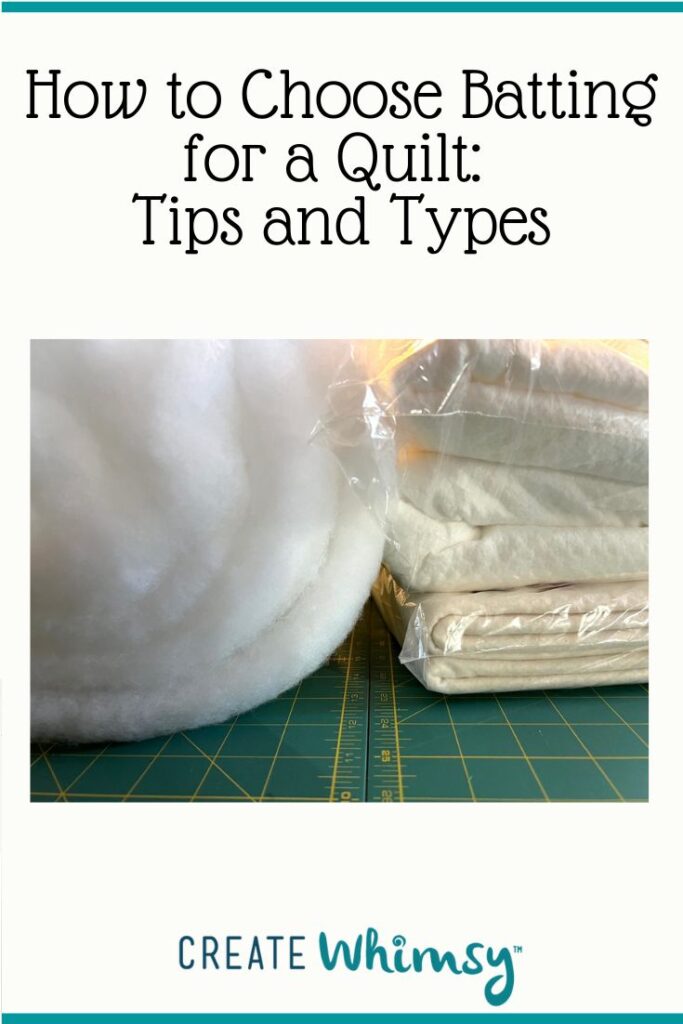
In this guide, you’ll learn how batting affects warmth, stitch definition, and drape – with practical tips to choose the best batting for your project.
Your quilt top is done and you are ready to quilt. Are you overwhelmed when you are in the batting aisle in your local quilt shop? So many choices for your batting! We’re here to help you choose batting for your quilt!
Batting is also referred to as wadding, and comes in a variety of fibers – from cotton to polyester to wool and silk. And, blends of these fibers. How do you know which one is right for your project? The right batting influences how the quilt drapes, it’s texture with the stitching and overall appearance. It’s all your personal preference.
In this article, I’ll cover what is batting, the different types of batting and which is the right one to use for your project.
What is batting?
Batting is the middle layer in a quilt. It is what makes it a quilt versus a blanket. It can be thin or thick, depending on your preference.
As an Amazon Associate I earn from qualifying purchases. Read more about our affiliate linking policy.
A quilt is made with three layers which is referred to as the quilt sandwich. The quilt top that you have made with either quilt blocks or a single piece of fabric. The batting or filling is the material that goes between your quilt top and the back of your quilt. Then, the backing fabric which can be a single piece of fabric or pieced with multiple fabrics.
RELATED: How to sandwich a quilt
Batting comes in precut packages for common sizes of quilts like crib-size, or queen-size. It also comes by-the-yard so you can buy exactly what you need.

What does loft mean in batting? Why does it matter?
Loft is the fluffiness of the batting. Higher loft is thicker and fluffier than low loft batting. Low loft batting is thinner and easier to use than high loft batting. If you are making a quilted garment, you’ll definitely want low loft batting, or use a layer of flannel as the inside layer.
A high loft or thick batting will show more and emphasize your stitching. A thin or low loft batting will not show your stitching as much.
What does drape mean in batting?
Drape is how the batting hangs. Is it stiff? Or does it drape or fold easily? Generally, low loft and thin battings have higher drape, making it easier to fold up your quilt for storage.

What are the types of batting?
Cotton Batting
100% cotton batting is breathable and soft — perfect for a lightweight quilt. It is easy to stitch either by hand or machine. Note: It may shrink when the quilt is washed.
It is an all-natural fiber and is breathable and warm. It has a soft drape and lower loft.
Cotton batting comes in white, natural, and, if you look for it, black batting. If your quilt has a white background, take the time to purchase the true white batting instead of using the natural – it will make your quilt look better.
If you love the wrinkled look of old quilts, cotton batting is the way to go! The cotton batting will shrink a bit when you wash it.
Cotton/ Poly blend batting
Probably the most popular batting is a cotton and polyester blend. Usually it is 80% cotton and 20% polyester.
The benefit of the added polyester is that the batting tends not to shrink as much, while having all of the other benefits of working with 100% cotton batting. It is easy to quilt both by machine and by hand.
Polyester batting
You’ll find the polyester batting usually less expensive than the other fibers. It is made with synthetic fiber. It is very durable, lightweight and affordable.
100% poly batting comes in a variety of thicknesses and generally has the highest loft – it even comes in extra loft for super puffy quilts! It is great for a quilt that you expect to be laundered often. The thick loft is great to use for trapunto projects or where you want your stitching to really stand out.
Since the polyester batting is a synthetic fiber, it doesn’t breathe as well as natural fibers. NOTE: since it is a synthetic fiber, it is a greater fire hazard than natural fibers.
The upside to polyester batting? You don’t need to worry about any shrinkage.
Wool batting
Wool batting is so lovely, with a high loft. It is a dream for hand stitching due to the lanolin in the wool fibers. Your sewing needle just glides through the layers. If your quilt will be laundered often, this is probably not a good choice – wool shrinks.
Bamboo batting
If you are looking for lightweight natural fiber batting, bamboo batting is for you. It’s soft and thin, perfect for baby quilts. And, also is one of the more expensive options. This is eco-friendly, drapes beautifully and, is perfect for wearable art quilted garments.
Silk batting
Another dream to stitch is silk batting. It is very lightweight and so easy for hand stitching. It is very warm with the natural silk fibers. Although, it is also the most expensive option.
Note: most silk battings must be hand-washed.
Other ideas for batting
- Best battings for summer quilts: For very light weight summer quilts, use flannel or a layer of muslin
- Buy an inexpensive blanket to use inside your quilt, or pick up one at a thrift or resale shop. With these options, I’d toss it in the washer and dryer to make sure it holds up well before taking the time to stitch your quilt.
- Best batting for art quilts: For wall quilts or art quilts, consider craft felt found at big box fabric stores. It lies really flat, especially after quilting. Or, if you want the stitching to really show, use a high loft batting like wool.
Which batting should I use for my quilt project?
It depends.
For a bed quilt, think about what you want. Do you want it to be light weight? Use cotton, cotton/poly blend or bamboo. For a warm and high-loft quilt, use polyester or wool batting.
If you are making a wall hanging, home dec project like a table runner, or a garment, you’ll want a thin batting. For wall hangings, some people like to use acrylic felt you find in your local big box fabric store. For garments, sometimes muslin or flannel are a great choice for the inside layer, so your jacket or coat doesn’t get too bulky.
Another type of batting used often in wall hangings or home dec quilting projects is fusible batting. Fusible batting is layered in your sandwich between the top and back of your project and pressed. It does not need to be pinned or basted, as it is fused between the layers for quilting. It’s best for smaller projects that are easy to manage on your ironing surface.
Considerations for choosing your batting are:
- Do you want a fluffy quilt or a flat quilt? Fluffy – choose a high loft batting. Flat – choose a low loft batting
- How warm do you want your quilt? For warmth, choose wool, silk or polyester. For a summer quilt, choose cotton or a layer of flannel or muslin
- Do you expect to launder your quilt often? If so, pick a polyester or cotton/poly blend batting.
- Can batting cause allergies? Check the fiber content of the batting you use. Some people are allergic to wool, so don’t use that for a gift for them!
Here is a chart that gives your the best options for your type of quilting project:
| Quilt Type | 100% Cotton | Cotton/ Poly Blend | Polyester | Wool | Bamboo | Silk | Other* |
|---|---|---|---|---|---|---|---|
| Traditional | X | X | X | X | X | ||
| Art quilts | X | X | X | X | X | ||
| Home dec / table runner | X | X | X | X | |||
| Baby quilt | X | X | X | ||||
| Wearable art / quilt coat or jacket | X | X | X | X | |||
| Summer or lightweight quilts | X | X | |||||
| Winter or warm quilts | X | X | X | X | X |
*Other includes using flannel, muslin, new or used blankets as the middle layer of your work.

Which batting should I use for machine quilting?
You can use any of the battings for machine quilting. Each will give a different look to your finished quilt. The best batting is the one you like the best!
Which is best for hand quilting?
Again, whatever you like! I prefer 100% cotton, wool or bamboo for hand quilting. Silk is lovely, but expensive. The best batting choice is the one you prefer!
Can I join scraps of batting together?
Yes! I do this all of the time. Smaller pieces joined work great for small projects.

You’ll want to have straight edges on both pieces of batting. Line them up next to each other on your sewing machine. Select the widest zigzag stitch on your machine and make the stitch a little bit longer. I like to use the topstitch foot, which is #10 for Bernina.

Line the center post between your two pieces of batting and stitch with your wide zigzag stitch.

By using the topstitch foot, it keeps the two pieces of batting apart so there is no added bulk by an accidental overlap. And the zigzag stitch helps pull them together perfectly.

A finished joined piece of batting that lays flat and is ready for your project!
Tips and ideas for working with your batting
Cut your batting 2 – 4 inches bigger than your quilt top. As you are stitching your quilt, it may ‘shrink’ a little. It’s better to cut it larger and trim after you have finished your stitching.
A great project for leftover batting is to cut it into 2-1/2 inch strips. Sew the strips together to make a long 2-1/2 inch strip and make a jelly roll rug!
RELATED: How to make a jelly roll rug
It’s your choice on whether to prewash your batting (or not). Generally, it is not necessary to prewash. If you do prewash, read the package and follow the instructions. 100% cotton battings can shrink with washing.
Batting does have a right and a wrong side! (Who knew?) The smoother side is meant to be the back of the batting, and the rougher side is meant to be the right side of the batting. This is referred to as the scrim side. The scrim helps hold the batting together and stabilizes it while you work on your quilt. It reduces stretching of the batting, and prevents holes and bunching of your batting inside your finished quilt. Also, when you are quilting, either by hand or by machine, this allows the back of the batting to shift easily with the backing fabric and your quilt top to ‘stick’ to the batting better while stitching.
Take into consideration the type of batting you are using if the person using the quilt has an allergies – especially to wool. The best hypoallergenic battings are cotton and bamboo. Fiber content matters.
Do you want a really puffy look? Use multiple layers of batting!
The best quilt batting? The best choice is one that is right for the project and the one you like!
Use your high-loft batting scraps to add texture and details to a quilt with trapunto.
RELATED: Machine quilting trampunto tutorial

Browse through more of our How to Quilt articles on Create Whimsy.
RELATED: How to quilt for beginners