
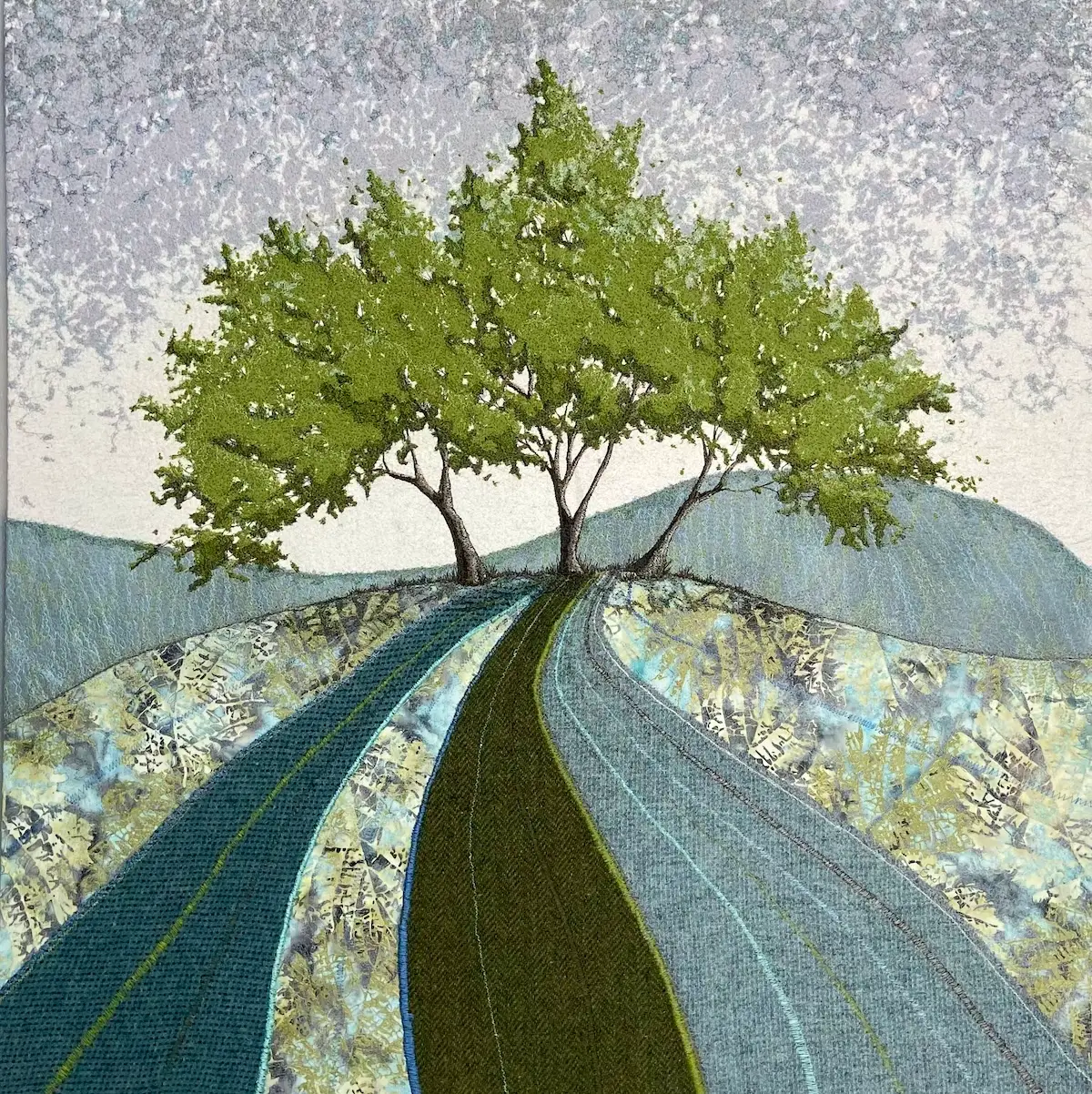
Artist Eileen McNulty creates beautiful landscapes using fabric and thread instead of paint. Inspired by the rolling countryside of Ireland and stories from her childhood, she stitches peaceful scenes filled with trees, memory, and quiet wonder.
What began as a love of sewing beside her mother’s old Singer machine has grown into a unique artistic voice where stitches become lines and fabric becomes color. In this interview, Eileen shares how she discovered free-motion embroidery, the inspiration behind her dreamy tree-filled landscapes, and why thread feels like it’s part of her DNA.
What first drew you to embroidery as a medium?
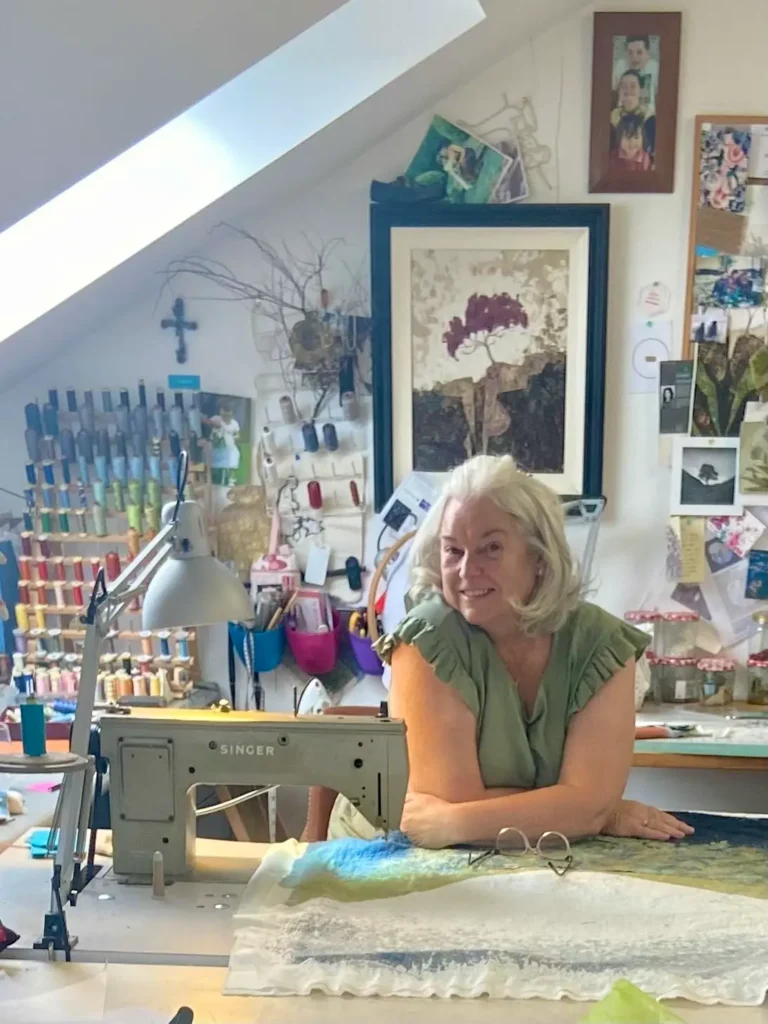
One of my fondest childhood memories is sitting beside my mother as she worked at her pedal Singer sewing machine, the steady rhythm of it filling the room. I would watch in quiet fascination, waiting patiently for my turn, as she transformed simple pieces of fabric into beautiful summer dresses, carefully stitched quilts, and little rag dolls made just for us.
Sewing is the most precious gift my mother has given me. It is more than just a skill—it is a connection to her, to those moments we shared, and a tradition of care and creativity passed down through her hands. This early experience with textiles shaped not only my love for making but also my sense of identity, and it has deeply influenced my decision to pursue a career in textiles.
As an Amazon Associate I earn from qualifying purchases. Read more about our affiliate linking policy.
Did you dabble in other art forms before embroidery? Which ones?
As life moved on and my children were small, I found myself returning to that same love of making and creating, and I began a dressmaking business from my home. Those years were filled with long, dedicated hours, carefully crafting bridal gowns, communion dresses, and debs dresses—each piece made with care, patience, and a deep sense of pride. There was something truly special about being part of such meaningful moments in people’s lives.
I cherished my time as a dressmaker, but as the years passed and my children grew more independent, that chapter came to a natural close. With more time to myself, I found my creativity opening up in new ways. My love for craft and art had never left me—it had simply been waiting. I began to explore it more freely, often losing myself completely in painting for hours at a time, rediscovering that same quiet joy I had felt as a child.
Was there a moment when you knew embroidery would be more than a hobby?
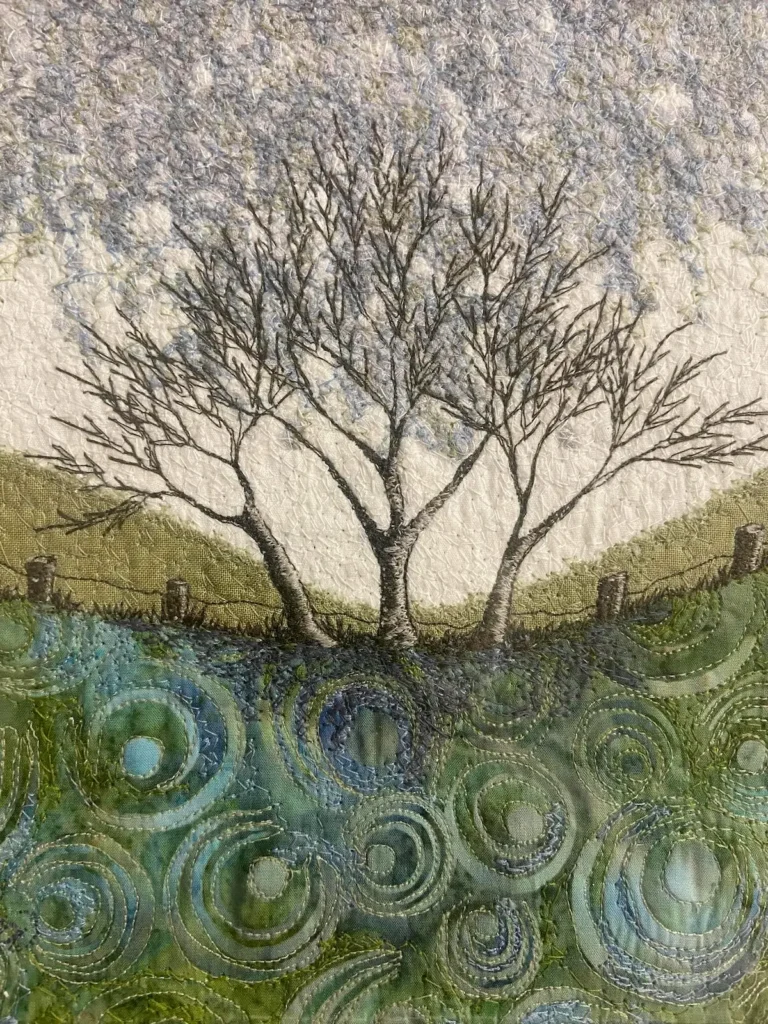
I discovered free motion embroidery, and it felt like a true lightbulb moment. Suddenly, everything I loved—sewing, drawing, and storytelling—came together in one place. My mind filled with ideas, and I could see endless possibilities unfolding in front of me.
It was as if a new creative door had opened. I was no longer just making garments—I was creating art with thread, sketching with stitches, and bringing my imagination to life in a completely new way.
I threw myself into learning everything I could about free motion embroidery. I was driven by curiosity and excitement, eager to understand every detail of the process. Whether it was through books, online resources, or discovering other artists using the technique, I absorbed as much as I could.
The more I learned, the more inspired I became. Each new piece of knowledge opened up even more possibilities, deepening my passion and pushing me to experiment, explore, and develop my own voice through stitch.
What inspires the imagery and themes in your work?
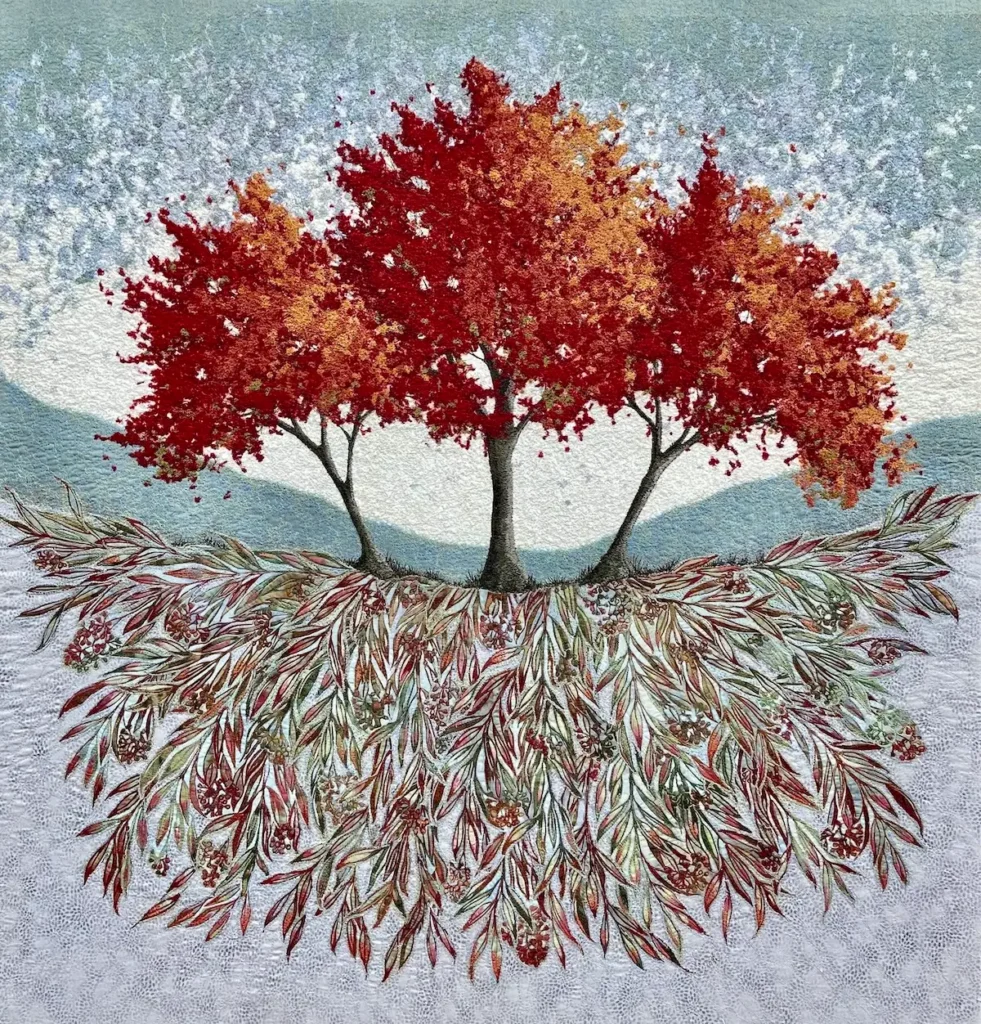
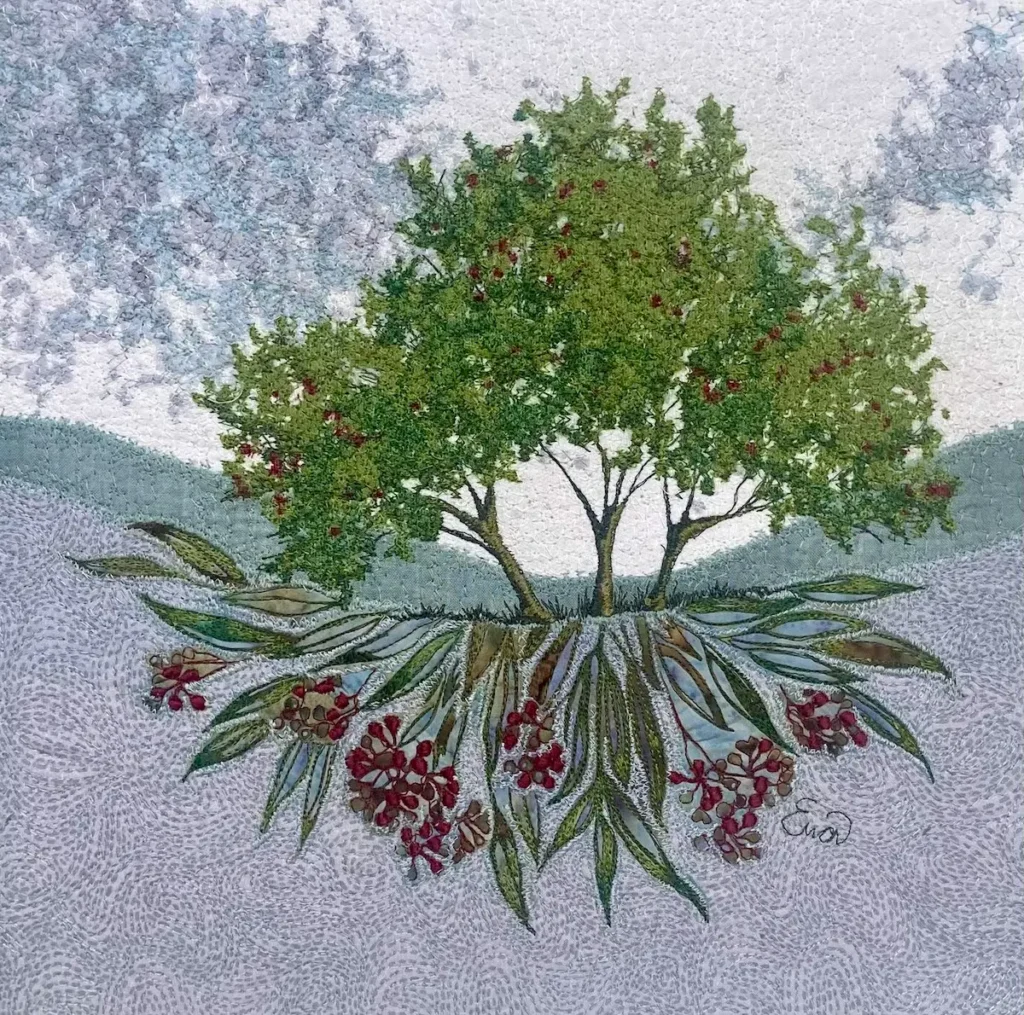
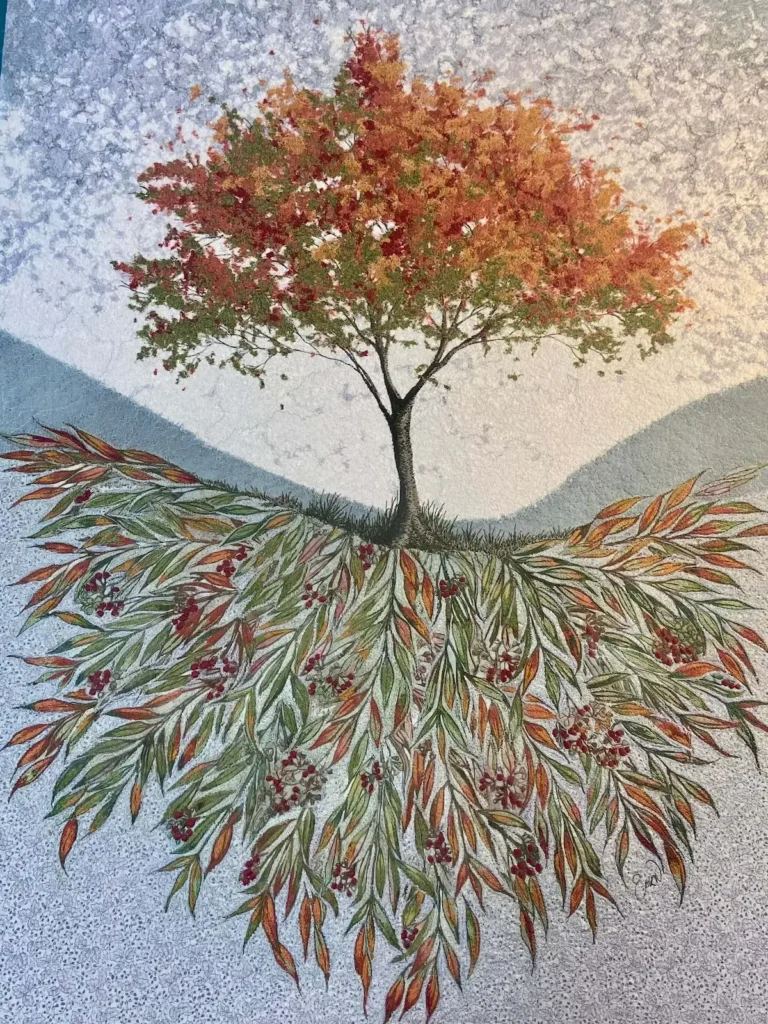
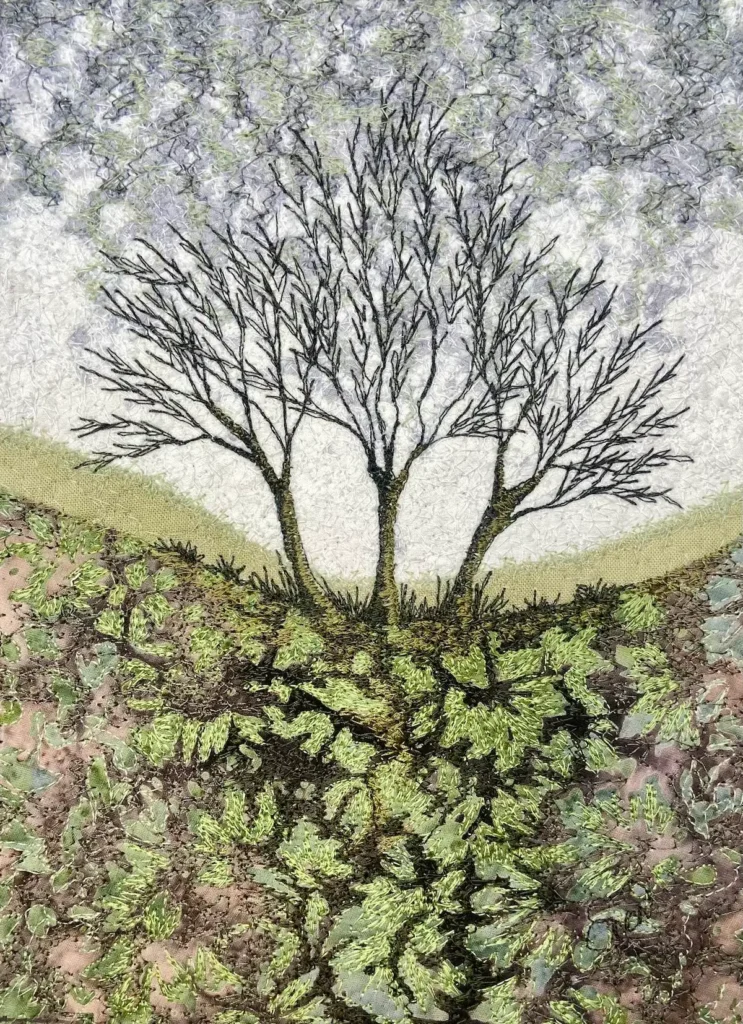
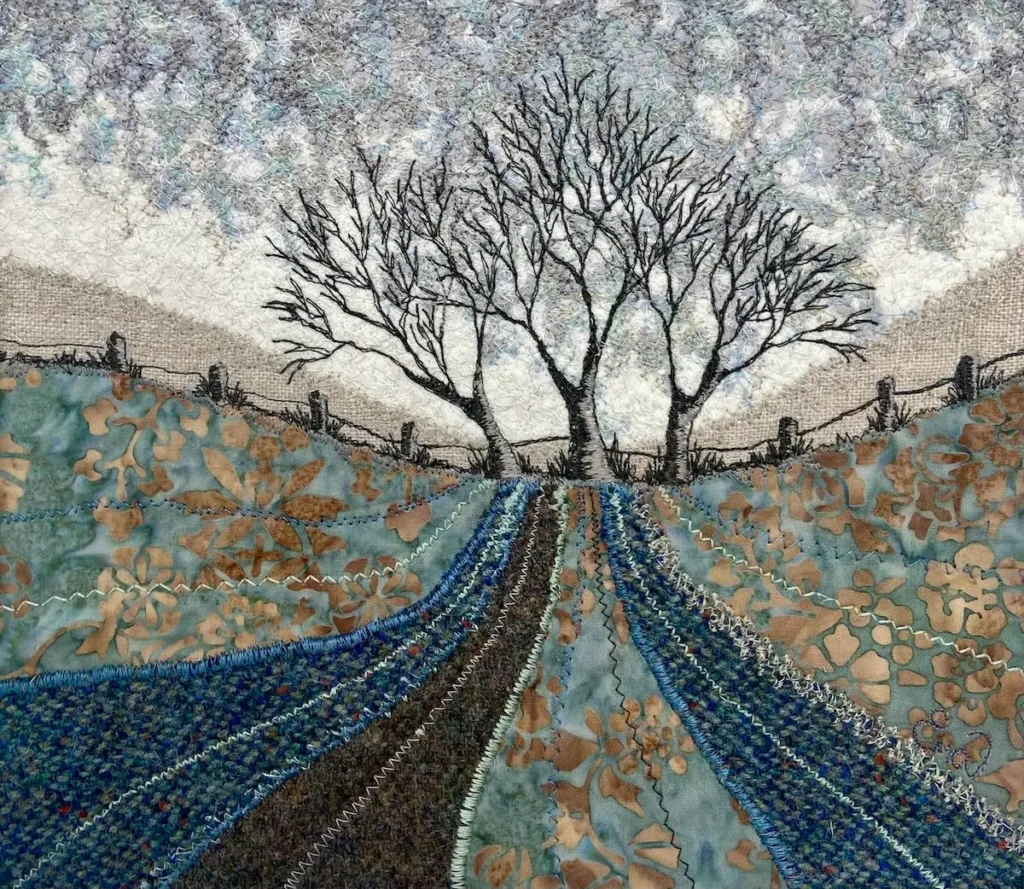
I have always been drawn to landscapes, and in particular to trees—perhaps because my mother told me stories of Fairy Trees when I was young. Growing up surrounded by the countryside and now the rolling hills of County Meath in Ireland has only deepened that connection, and together these influences continue to shape my work.
What do you hope people feel when they look at your art?
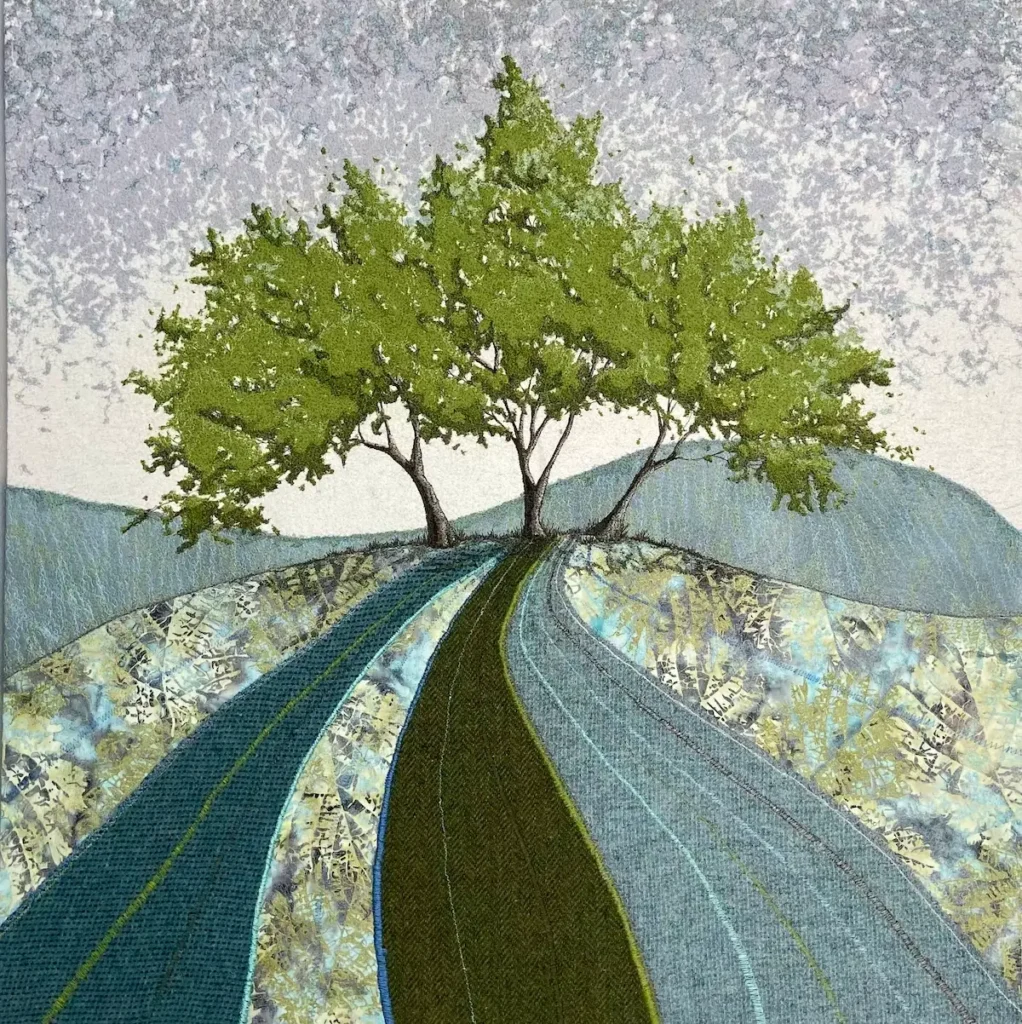
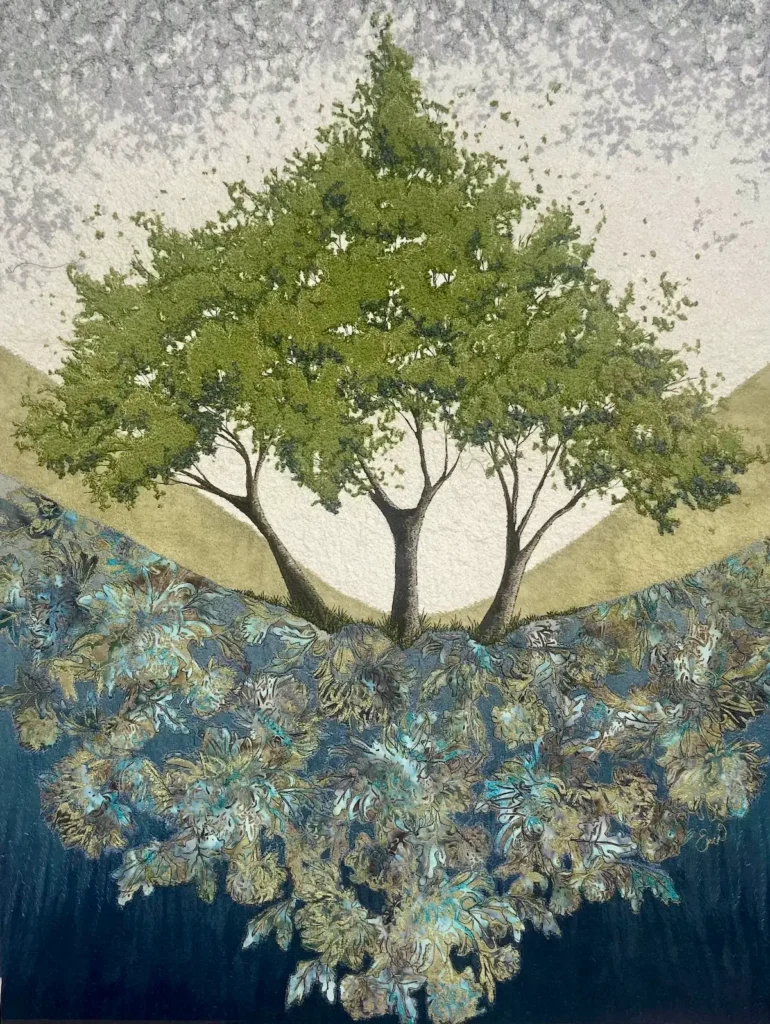
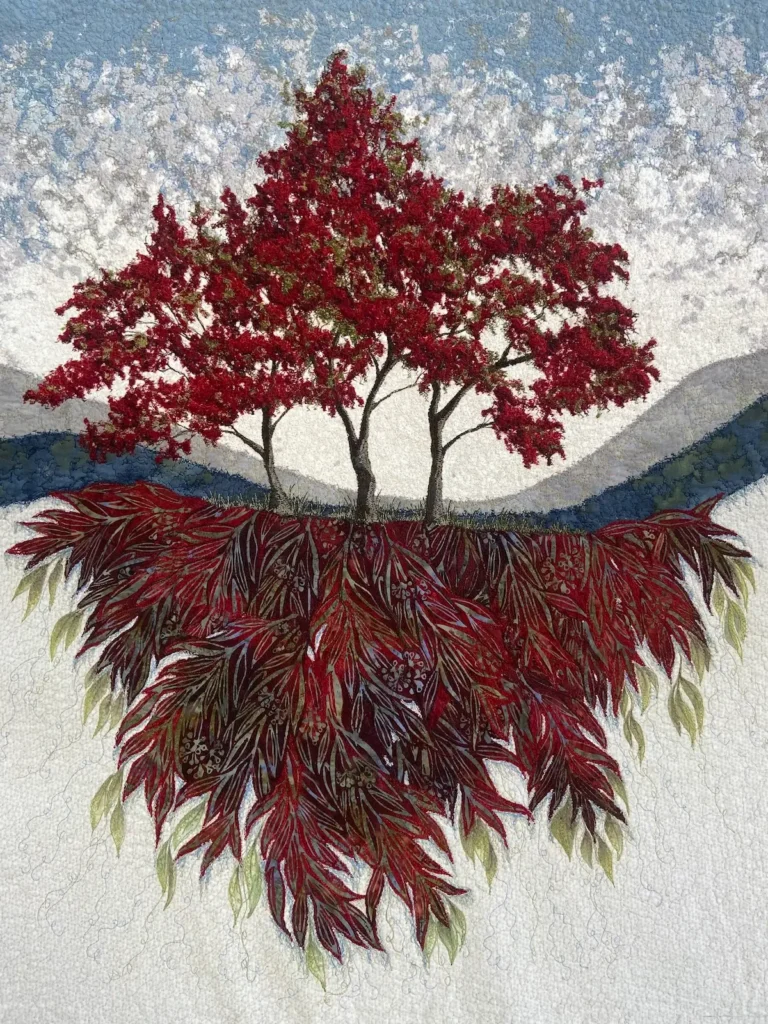
My trees seem to form a quiet connection with the viewer. Through layered fabrics and threads, I aim to evoke a sense of nostalgia—memories of times past, often tied to maternal presence and heritage. There is a familiarity in them, something both personal and shared, that invites reflection and emotional connection.
Describe your creative space.
I create every day in my studio at home, a space I feel very fortunate to have. It is a large, light-filled room with five windows, allowing natural daylight to influence my work throughout the day. Recently, I began working with a Juki LZ-271, an industrial free-motion sewing machine. With both straight stitch and zigzag controlled by a knee-operated lever, it has brought a new sense of freedom and precision to my process.
What’s the best part about being an artist?
I firmly believe my work is art. Because it is created with fabric and stitch, it is sometimes perceived as craft, but my aim is to challenge and expand that perception. I use fabric as my colour palette and thread as my drawing tool—no different in intention than paint or pencil.
Where can people see your work?
To date, my work has been selected for major exhibitions, including the Royal Ulster Academy of Arts, where I have exhibited alongside artists working in oils, acrylics, pencil, and print. I have also been selected by the Worshipful Company of Broderers and exhibited in The Art of Embroidery at Bankside Gallery in London.
I continue to pursue selection for the RHA Annual Exhibition in Dublin. This year, I was preselected—my strongest result to date. It marks a significant step forward, and I am determined to build on this progress in future submissions.
I have been published many times and was once on the front cover in the Quilting Arts Magazine.
Where do your project ideas usually come from?
All of my work is based on imagined places that come from within. The only real decision I make is the colour palette I choose to work with. These pieces feel like my most authentic work, as they allow me complete freedom to create whatever emerges in my mind.
I also take on commissions, which involve a slightly different approach. In these cases, I work closely with the client, taking their wishes and ideas into account throughout the process. I usually begin by sketching out the piece before translating it into fabric and stitch.
What’s the best part about being an artist?
The best part about being an artist is waking up each day with a sense of excitement for what lies ahead. It is my passion—fabric and stitch feel as though they are in my DNA. I feel incredibly fortunate to live out my love for embroidery and textiles in my everyday life.
Rapid-Fire Fun:
Hoop or frame? Neither. The moment a hoop touches the side of my machine, I am immediately taken out of my creative flow
Favorite thread brand? Amann thread.
If my work could talk, what would it say? If my work could talk, it would tell stories of quiet places—of memory, of belonging, and of a deep-rooted connection to the land. It would whisper of the past, of maternal warmth, and of the unseen threads that tie us to each other.
Eileen’s website: https://www.eileenmcnultyart.com/
Interview posted April 2026
Browse through more inspiring art quilts on Create Whimsy.