
Carrie Howard brings a thoughtful eye and a love of storytelling to her art. From realistic graphite portraits to embroidery and other needlework, she finds beauty in people, everyday objects, and the small details we might otherwise miss.
Do you remember the first time you realized that making art was something you wanted to keep doing?
When I was a young child, I was seldom without a pencil or crayon in my hand. I got my first set of oil paints when I was about 10. I had a collection of Walter Foster tabloid-sized drawing books—remember them?—and copied the exercises.
When I went to college, I intended to major in art. But at that time, conceptual art was big. I enjoyed my life drawing classes, but prompts like “Draw the human body as a landscape” flummoxed me. So I switched to English.
In the past 10 years or so, there has been a resurgence in realist art and academic art training in the atelier model. When my writing work dried up during the COVID shutdown, it seemed like the perfect time to resume my art studies and practice.
As an Amazon Associate I earn from qualifying purchases. Read more about our affiliate linking policy.
You have worked as both an artist and a professional writer. How have those two parts of your life influenced each other?
Ultimately, both writing and art are about telling stories.
Scientists know that storytelling has an incredibly powerful effect on the brain. Stories have a visceral impact and stay in the memory longer than dry presentations of facts. Even though I am a nonfiction writer, I always try to tell stories in my writing.
I do art in the realist tradition, and I always hope to tell a story while representing my subjects in a recognizable way. I generally feel as though reality is so much more interesting and varied than anything we can make up.
Your portfolio moves between people, pets, animals, nature, still life, and the figure. What connects all of these subjects for you?
My favorite things to draw are faces, whether human or animal. But I like florals and still lifes as well, and I don’t think they are necessarily that different.
Everything can be a portrait. I want to render my subject in such a way that it is recognizable as a unique thing. I sometimes joke that if I draw a rose, I want to draw it so that its mother would recognize it.
I don’t do a lot of landscapes because they overwhelm me. I am more of a tree person than a forest person.
You generally draw rather than paint. Why is that?
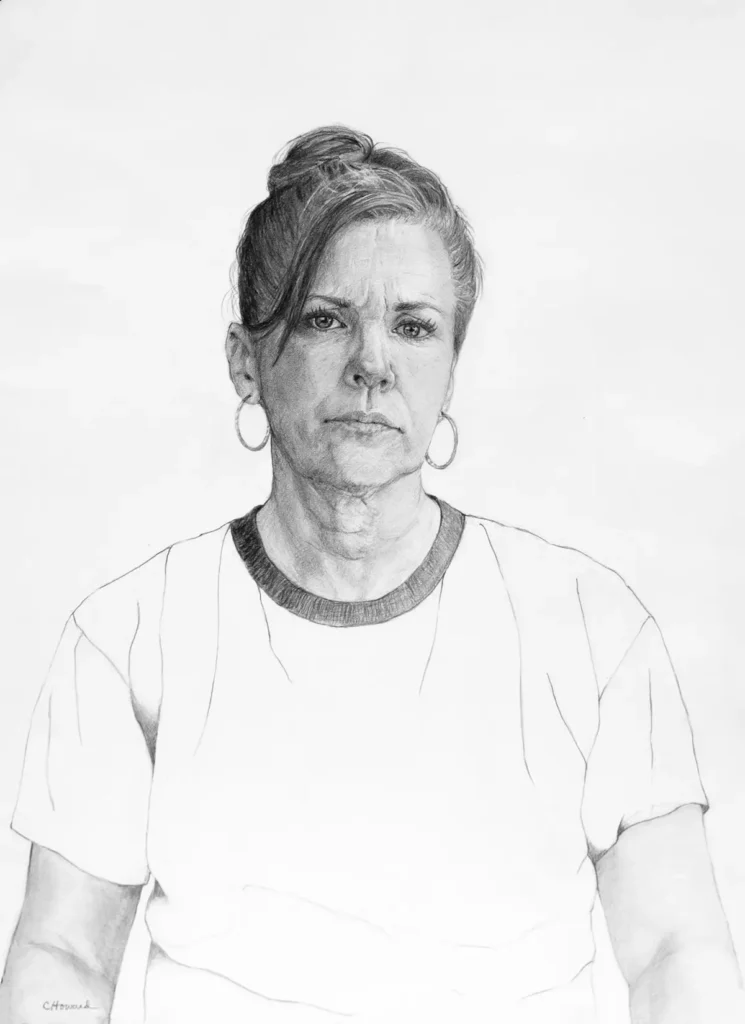
I can paint and sometimes do choose to paint, but it’s not my strong suit. I feel that drawing gives me more control. The pencil feels like an extension of my hand, where a paintbrush seems a step removed from me, like drawing with oven mitts on. And there’s magic in laying down simple marks in graphite and seeing an image emerge that feels three-dimensional.
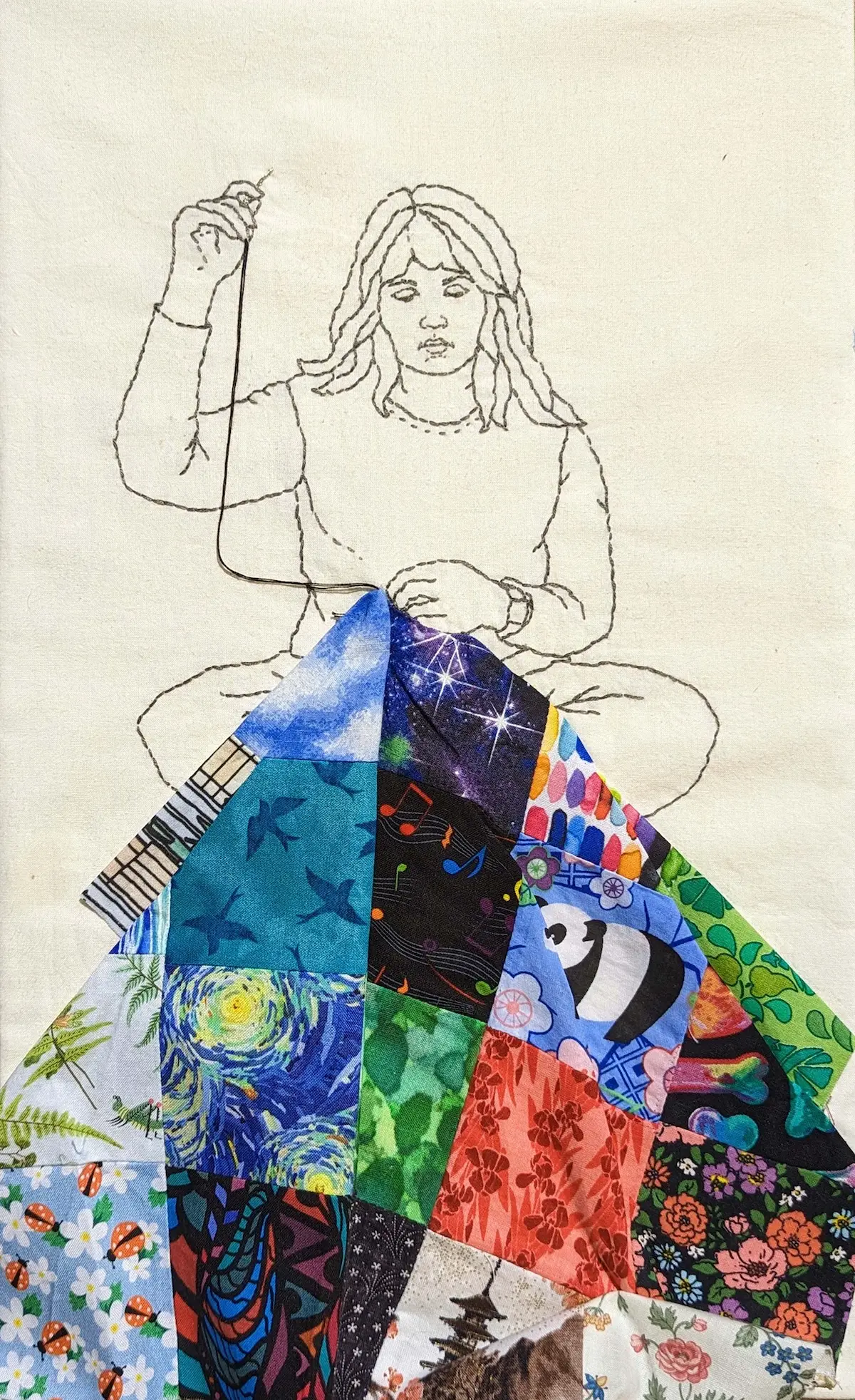
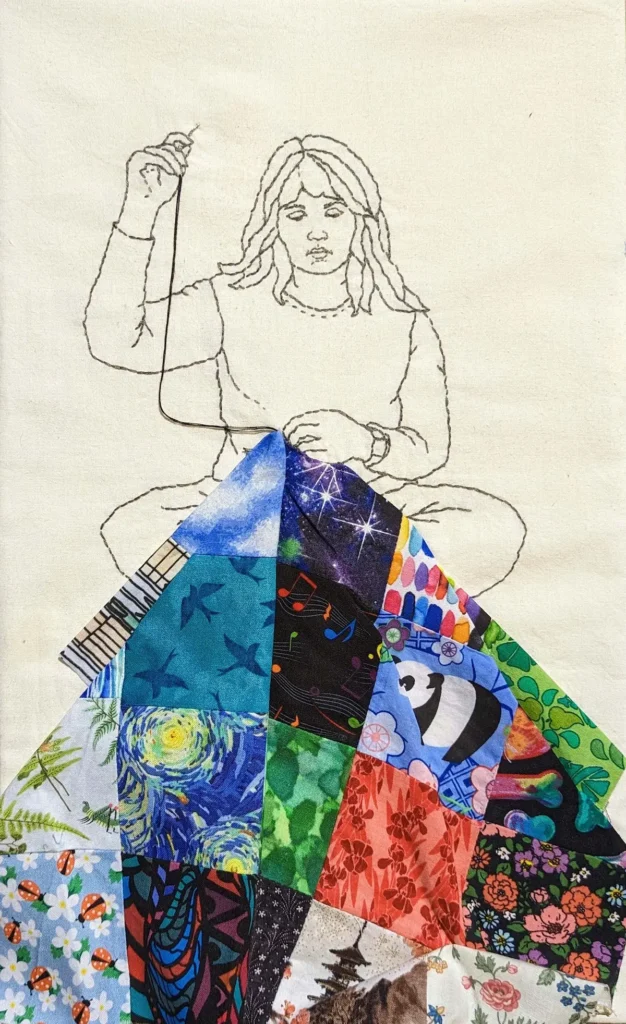
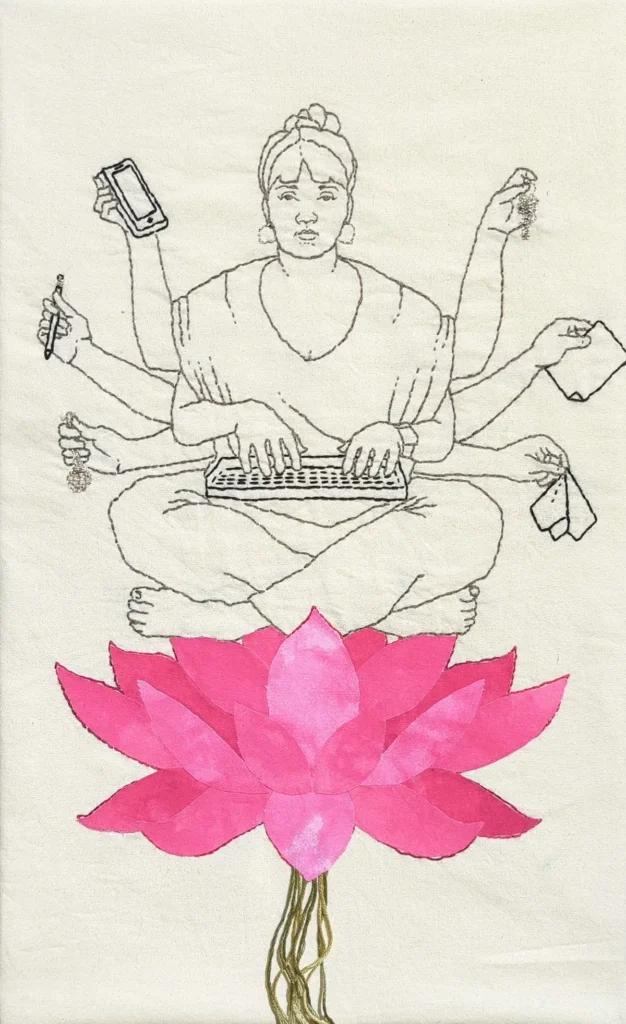
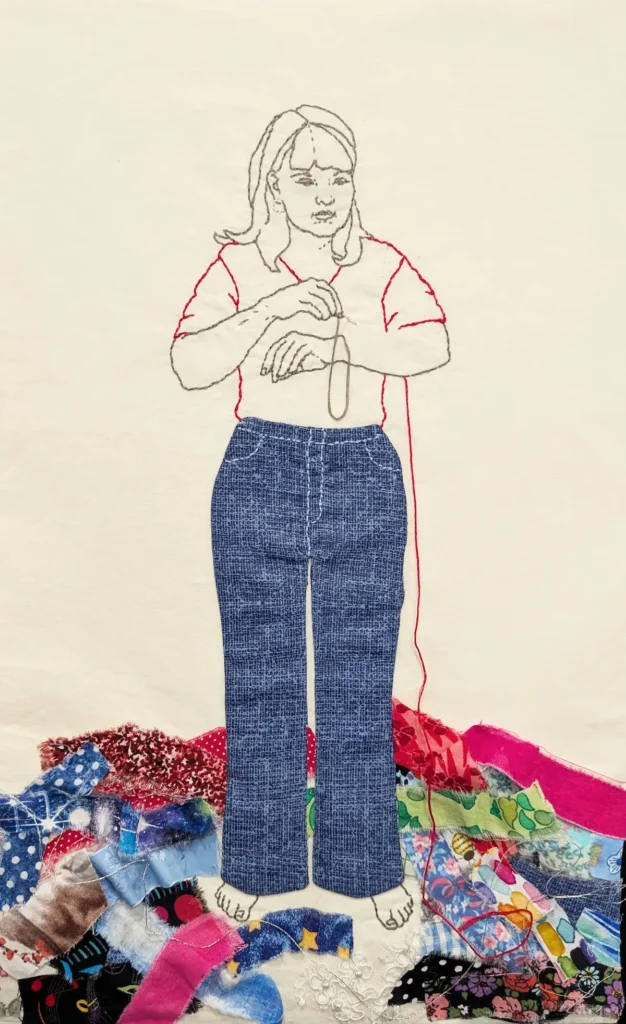
If you look at my work that involves embroidery, you can see that I draw with the thread. It’s all outlines. I can’t help myself.
Do you think you see the world differently because you are an artist? What do you notice now that you might have walked past before?
I don’t know if I see differently than anyone else, but I pay attention to different things. I note interesting shapes and compositions and light patterns, and I’m always whipping out my cell phone to take reference photos.
I think reflections are really interesting, and I bought some old silverplate items on eBay so I could draw the mirrored finish. I have more reference photos than I’ll ever be able to turn into art.
Your portraits are realistic, but you have said you want them to show more than a photograph can. What are you looking for in a person beyond getting the features right? What can a drawing reveal about a person that a photograph might miss?
It’s not necessarily an intentional thing. I just know when I’ve caught it.
When I was writing and I would interview someone, I always knew when I got “the quote”—the statement from my subject that really captured who they were and that I could build a profile around. It gave me goosebumps!
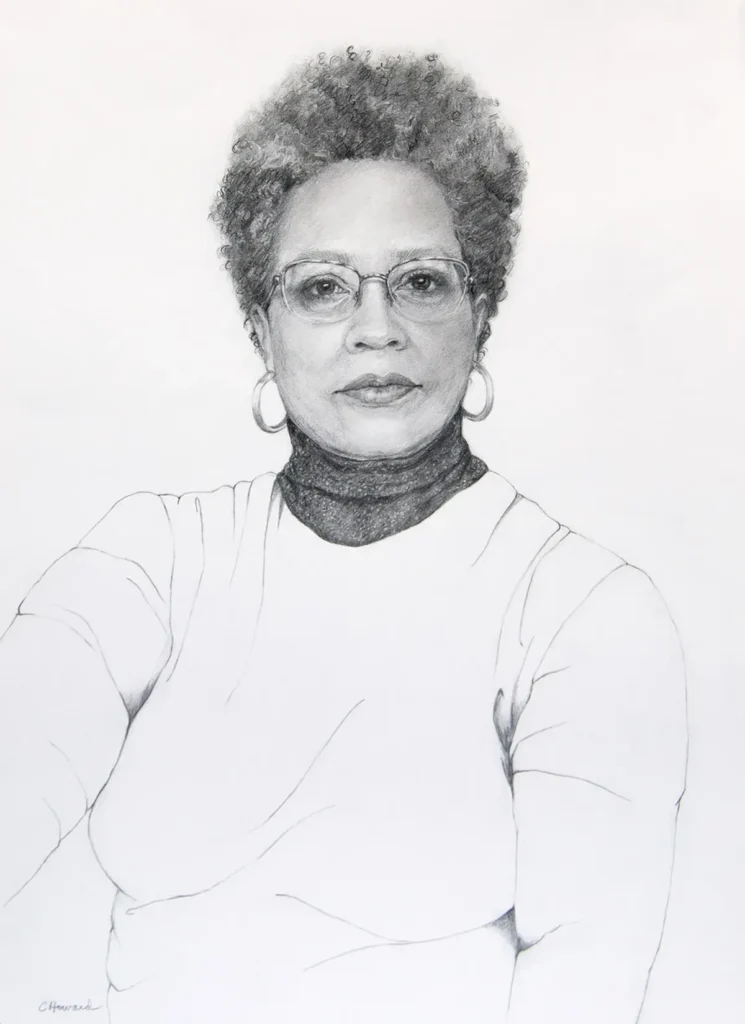
It’s a little bit the same with portraits. I know when I’ve caught a look in the eye or a tilt of the head or a loose strand of hair that really makes the portrait. Photographs aren’t selective; they show what is in front of them (with some inevitable distortion).
In art, I can highlight certain features and make the image look “right” even if that’s not exactly what I see. Drawing a portrait is an incredibly intimate act, and, just as I did when I was interviewing people, I fall a little bit in love with my subjects. Cameras don’t do that.
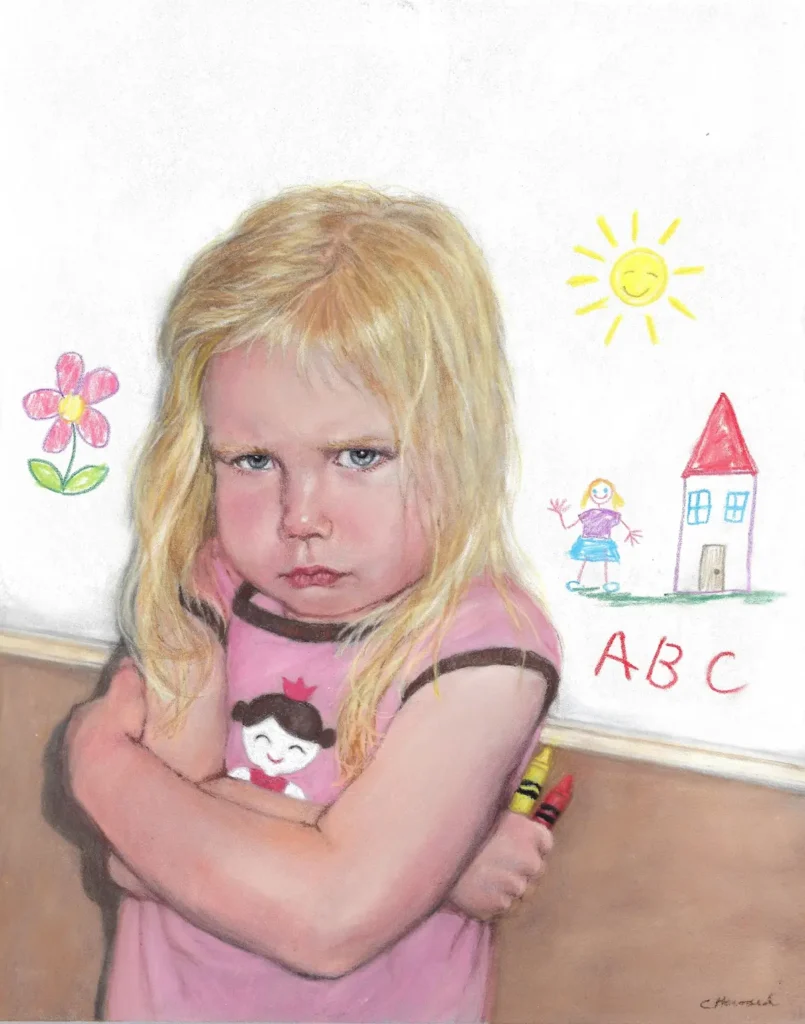
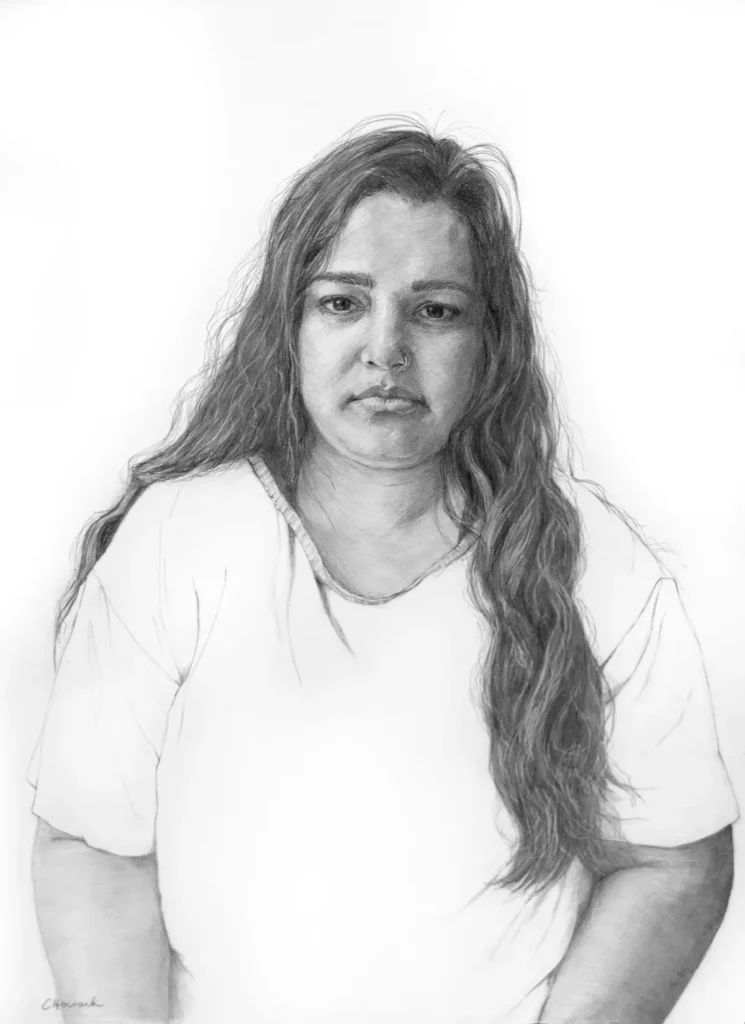
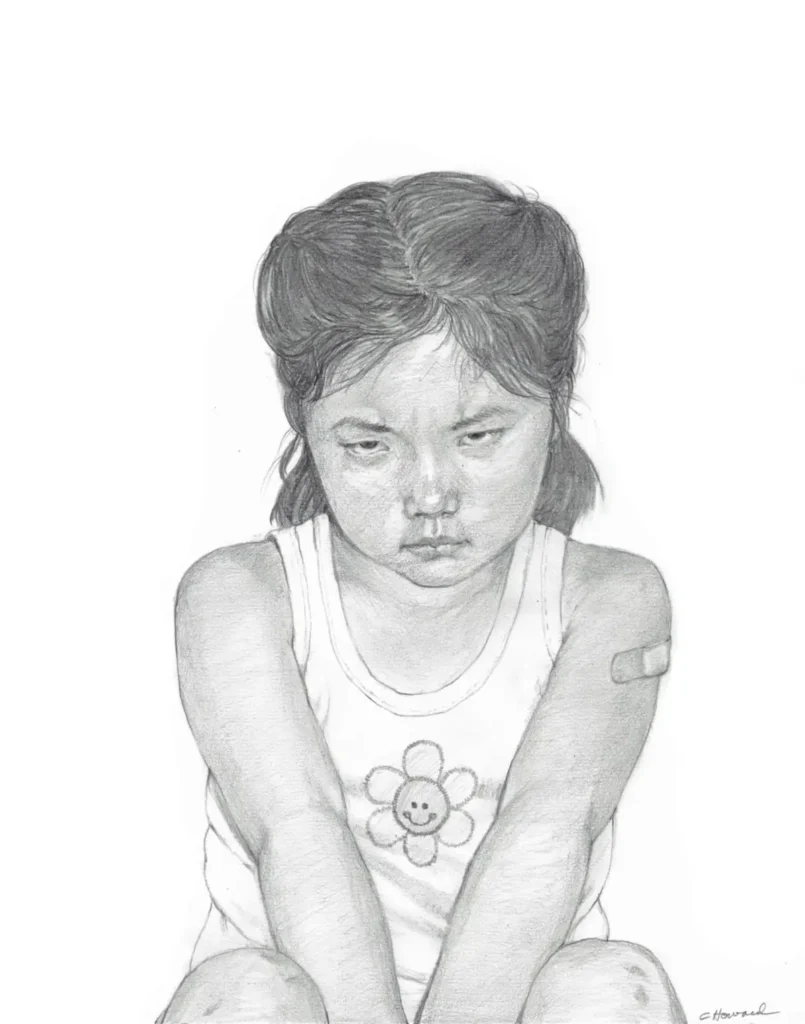
I like drawing unexpected portraits. I’ve done a series of women whom I asked to pose with a relaxed face—what we sometimes jokingly call “resting bitch face.” And I’ve done a series of pictures of children looking mad or grumpy, which flies in the face of our stereotypes of children, especially little girls, being all sunshine and rainbows.
You sometimes work in fabric and thread. Why do you use these media, and how do you choose whether to draw or sew a subject?
I have been sewing almost as long as I have been drawing. My mother was an accomplished seamstress, and I started learning from her when I was about 5. Like a lot of girls from my generation, I made most of my own clothes in high school. I’ve also done a lot of crocheting, embroidery, cross-stitch, and needlepoint.
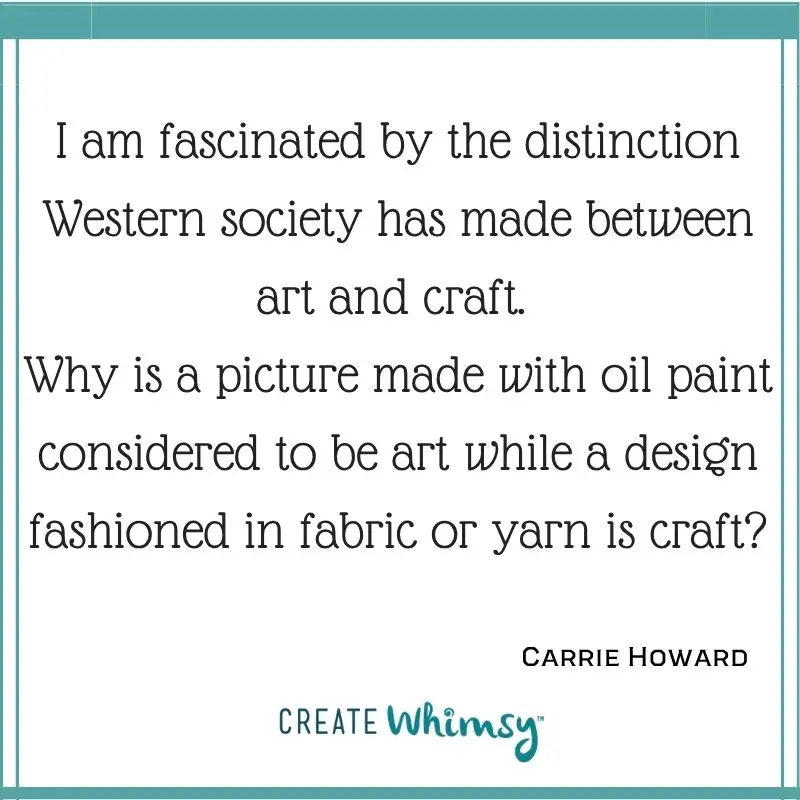
I am fascinated by the distinction Western society has made between art and craft. Why is a picture made with oil paint considered to be art while a design fashioned in fabric or yarn is craft?
The focus of my research for my master’s degree is women’s art and why it has historically been undervalued. Up until the end of the 19th century, women were not allowed to attend the art academies with men.
A few women did succeed as artists, but many more simply made beauty with the tools they had, such as fabric and thread. They made embroidered samplers and colorful quilts that were as beautiful and original as any art in a gallery.
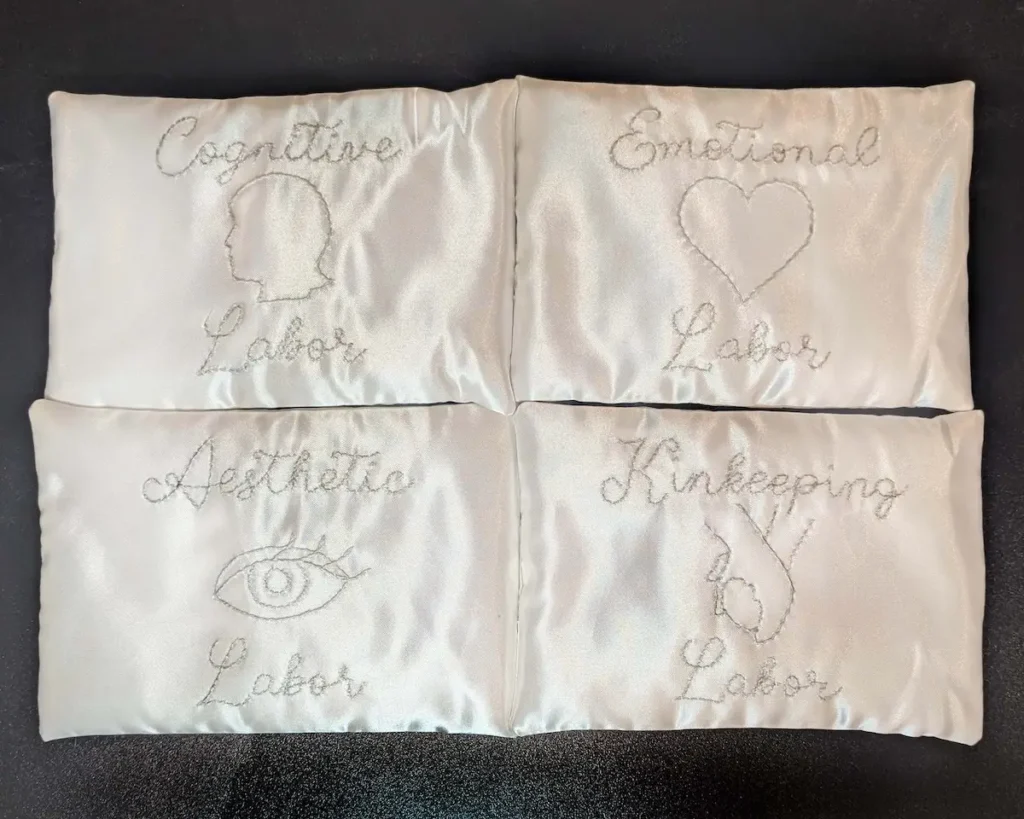
So I like to use needlework sometimes, especially when I’m representing women’s issues. I’ve done several pieces dedicated to the subject of invisible labor—the constant management tasks most women are responsible for to keep their families operating smoothly. It is a way of honoring our ancestors who turned “domestic” objects into things of beauty.
If you could give one piece of advice to someone who loves making art but does not yet think of themselves as an artist, what would you tell them?
Just do it. The same applies to singing or dancing or anything else you want to do that you might not feel confident about or have even been told you don’t do well.
If you have the desire, why not try? If you want to do art in a realistic style, get some good training. Otherwise, just go for it and have fun. And practice, practice, practice.
Where can people see your work?
I don’t have a regular gallery yet, but at any given time, I am usually participating in one or more juried shows in the Seattle area. You can check my website or social media to see what I’m working on.
Web: www.carriehoward.com
Facebook: www.facebook.com/ckhowardart
Instagram: www.instagram.com/sistercarrie1/
TeePublic: www.teepublic.com/user/northwest-originals
What is one studio supply that you use all the time that might surprise someone?
My finger. It’s the best smudging tool.
Rapid-Fire Fun
- Graphite or color? Graphite.
- Favorite thing to draw? People.
- Messy desk or clean desk? Messy during a project, clean between projects.
- Work from life or work from photographs? Shh, don’t tell my atelier instructor, but I do like to work from photographs. (Drawing from life is preferable, but as a woman of a certain age, I don’t trust my eyesight.)
- One thing that always inspires you? The trust people place in me when I draw their portrait.
- What is one word you hope people feel when they look at your work? Real.
Interview posted September 2026
Explore more drawing inspiration on Create Whimsy.