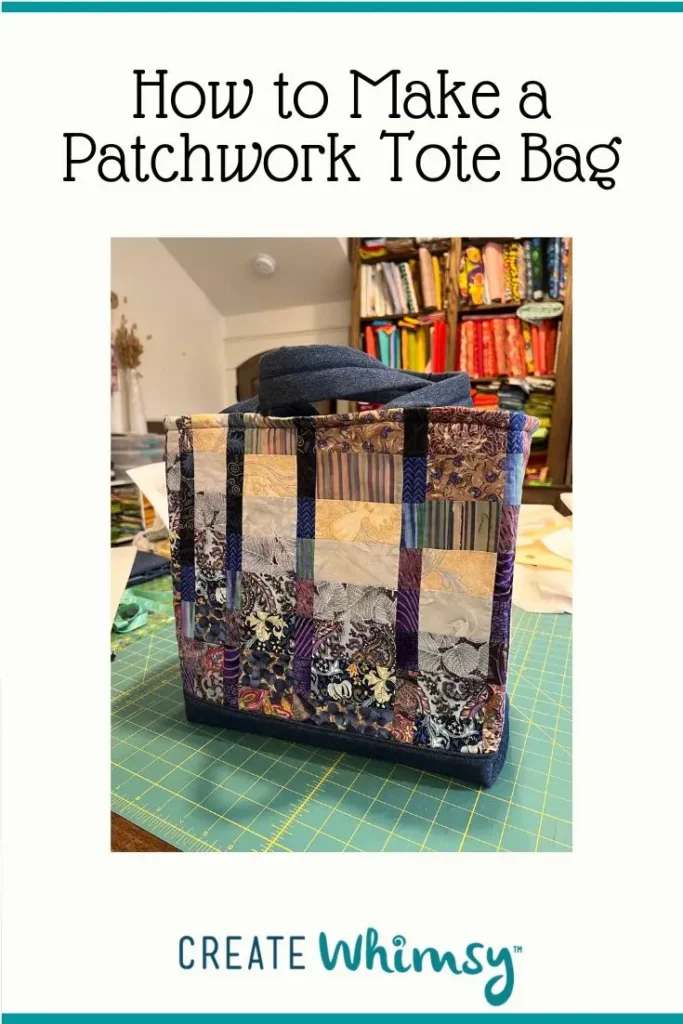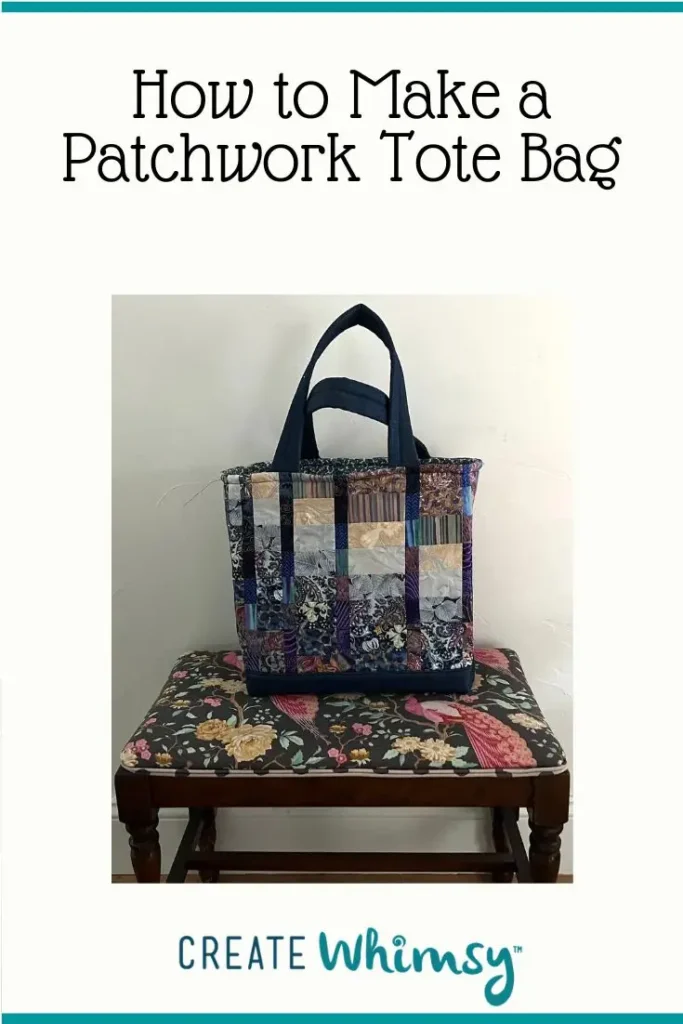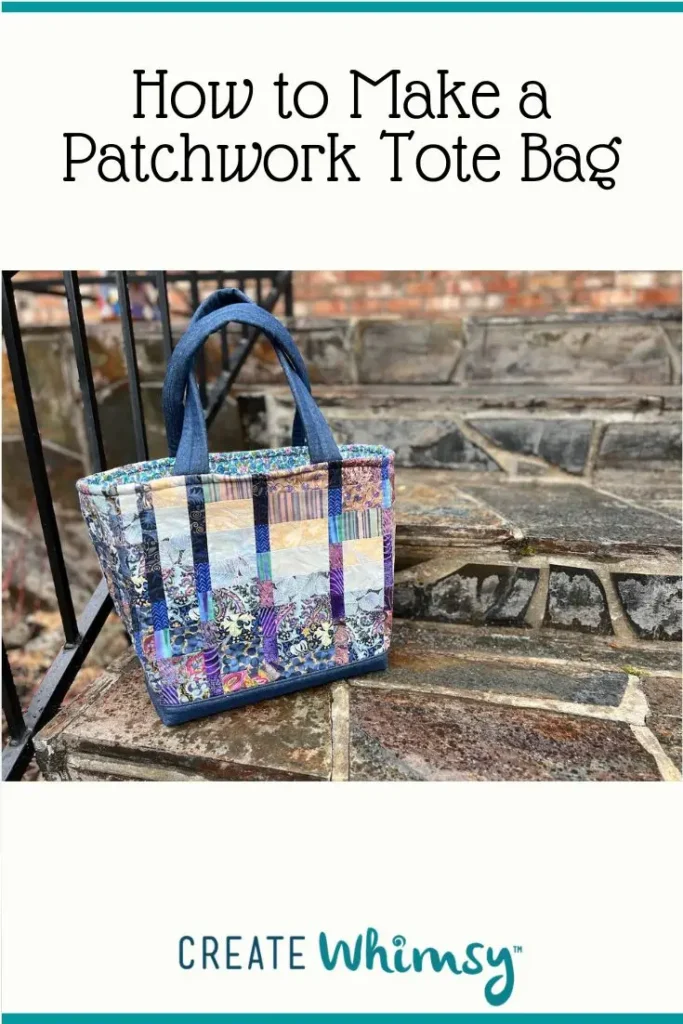
Have an unfinished quilt top, orphan quilt blocks or a favorite piece of patchwork tucked away in your sewing room? Turn it into a beautiful patchwork tote bag!
This lined, quilted tote has a structured 12″ x 12″ x 6″ finished size, a boxed bottom and optional inside pockets. The foam stabilizer gives the bag body without making it overly heavy. It is a great project for a confident beginner who is ready to try bag making.
Can I make a tote bag from an unfinished quilt top?
Yes! An unfinished quilt top is perfect for this project. You can also use a finished quilted piece, new patchwork, orphan quilt blocks sewn together or even a single piece of fabric.
How hard is it to make a patchwork tote bag?
This is a confident beginner sewing project. The construction uses straight seams, but you’ll be working through several layers of fabric and foam stabilizer. Wonder Clips and a walking foot make the process much easier.
What size is the finished patchwork tote?
The finished bag is approximately 12″ wide x 12″ high x 6″ deep. You can customize the pockets, handles and fabrics to make it your own.
As an Amazon Associate I earn from qualifying purchases. Read more about our affiliate linking policy.
Do I need foam stabilizer for a quilted tote bag?
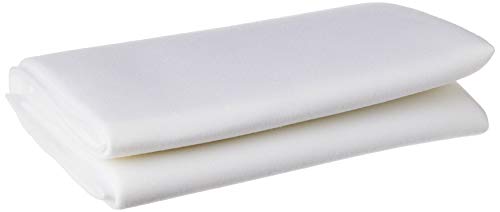
I recommend it. A bag-making foam stabilizer such as Soft and Stable gives the tote structure and helps the boxed bottom hold its shape. If you want a softer, slouchier bag, you can experiment with a lighter stabilizer.
What you’ll learn
In this patchwork tote bag tutorial, you’ll learn how to:
- Turn patchwork or an unfinished quilt top into a useful tote bag.
- Add foam stabilizer for structure.
- Create a boxed bottom without a complicated pattern.
- Make simple fabric handles.
- Add a lined interior and optional pocket.
- Finish the top edge neatly with topstitching.
- Customize the bag with different handles, pockets, fabrics and trims.
Quick start
Finished size: 12″ x 12″ x 6″
Skill level: Confident beginner
Active sewing time: About 3 hours
Seam allowance: 1/2″ unless otherwise noted
Best feature: A great way to use an unfinished quilt top or patchwork
Pockets: Optional
Handles: Make your own fabric or leather handles or substitute purchased webbing, leather, or other handles
The fastest way to make this tote
- Choose or make two 12″ x 20″ patchwork panels.
- Cut your bottom, stabilizer, lining and handle pieces.
- Attach the patchwork to the foam stabilizer.
- Add the bottom section and stitch the lines that form the boxed bottom.
- Make the handles and lining.
- Assemble the outer bag and lining.
- Turn the bag right side out and topstitch the top edge.
Tip: Before you start sewing, lay all of your pieces on your cutting table. This makes it much easier to see how the patchwork panels, bottom fabric and stabilizer fit together.
What can you use for the patchwork?
This is where this tote gets fun.
You don’t need to start with brand-new fabric. Look through your sewing room for:
- An unfinished quilt top
- Orphan quilt blocks
- A small finished quilted piece
- Vintage quilt pieces
- Scraps sewn into a new patchwork panel
- A favorite fabric that deserves to become a bag
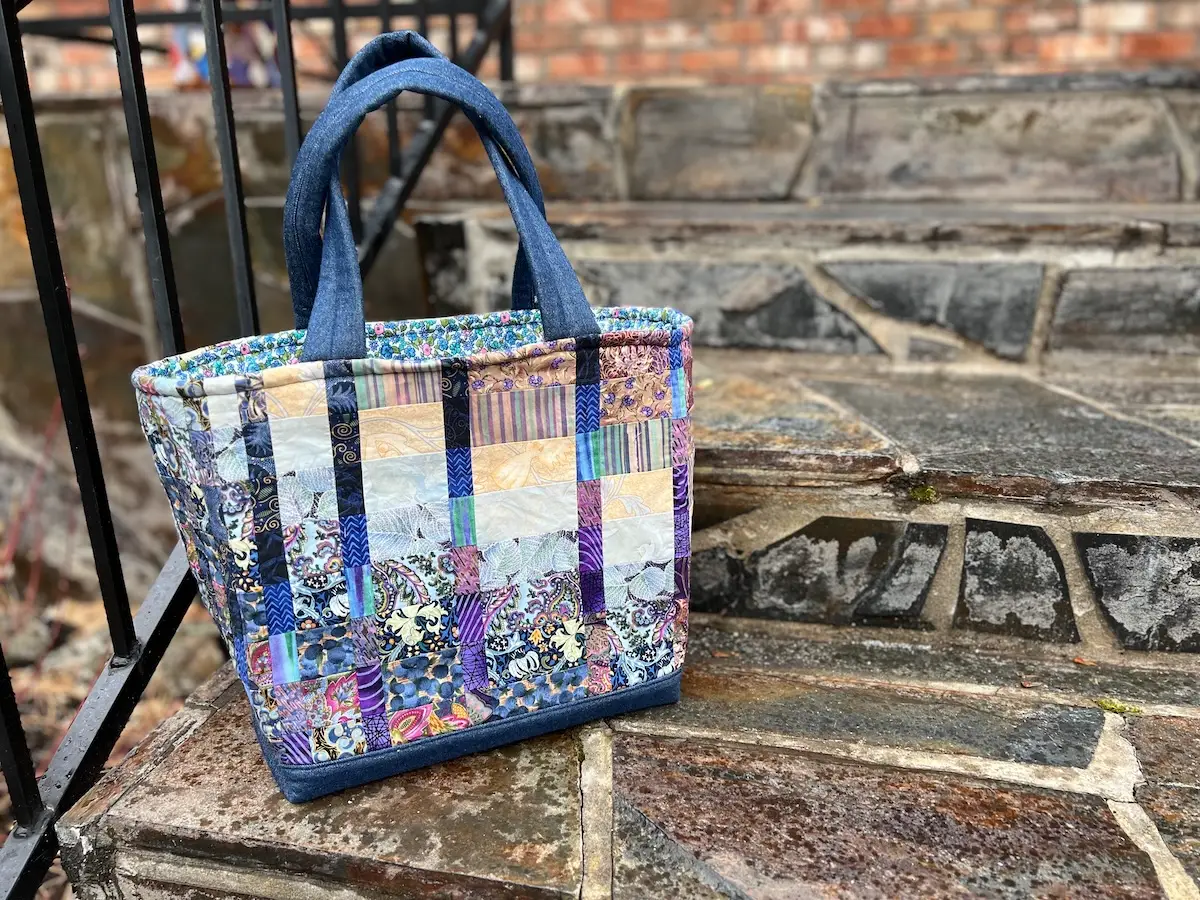
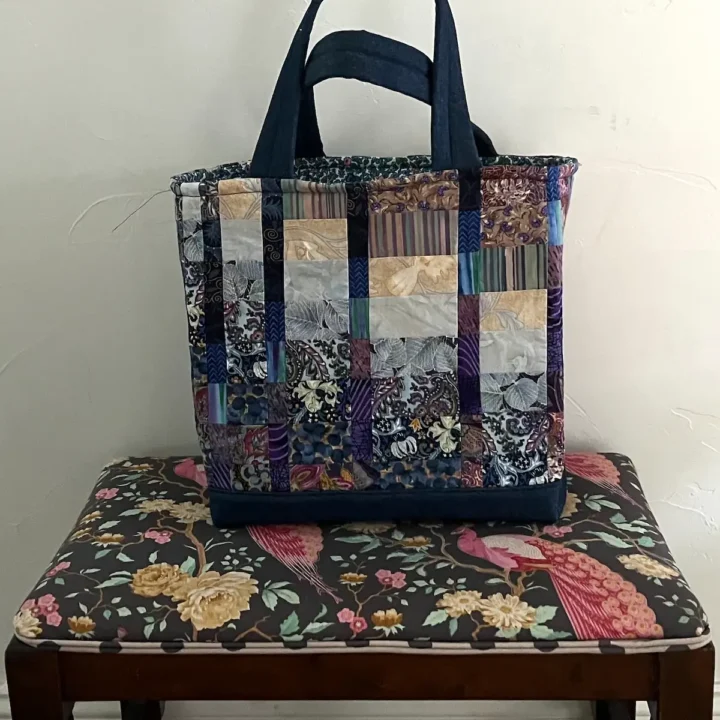
For my original tote, I started with a finished Bargello quilt top. The patchwork doesn’t have to be Bargello, though. Use whatever you love.
If you’re using an unfinished quilt top, quilt it before cutting your two 12″ x 20″ panels.
How to Make a Patchwork Tote Bag
Make your own tote bag with our step-by-step directions. You can start with an unfinished quilt top or piece your own patchwork to make a custom bag.
Materials
- 2 pieces of patchwork, 12" x 20"
- 1 piece of fabric for the bottom of the bag, 10" x 20"
- 2 pieces of fabric for the handles, 4" x 20"
- 1 piece of foam stabilizer, like Annie's Soft and Stable, 32" x 20"
- 2 pieces of foam, 1-1/2" x 20 for the handles
- Lining fabric, 32" x 20"
- Scraps of fabric for inside pockets
- Coordinating thread
Tools
- Sewing machine, walking foot recommended
- Scissors
- Rotary cutter
- Cutting mat
- Quilting ruler
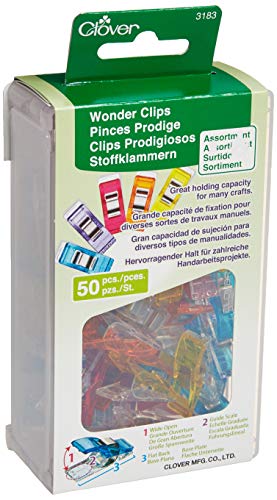
- WonderClip clips
- Fabric marking pen or pencil. I used a Chaco Liner for this project
Instructions
Part 1: Make the outer bag
Step 1: Cut your pieces
I started with a finished bargello quilt top. You can either piece fabrics for the main body of the tote, start with a single fabric, or do what I did and use up one of those quilt tops that never got finished into a quilt. Here is the quilt top before I cut into it: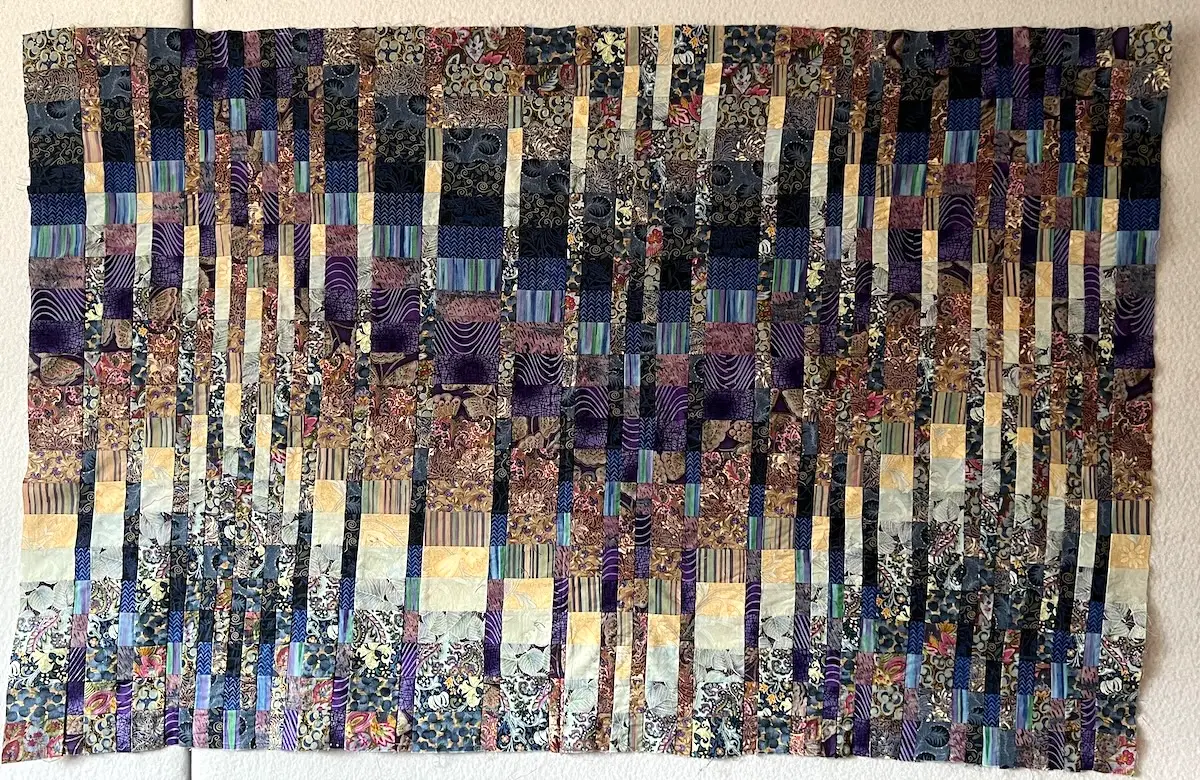
Before cutting your favorite patchwork, double-check the finished panel size. You need two 12" x 20" pieces.
What to check: Make sure both patchwork pieces are the same size.
Cut your patchwork panels, bottom fabric, lining, handles and foam stabilizer according to the measurements above.. 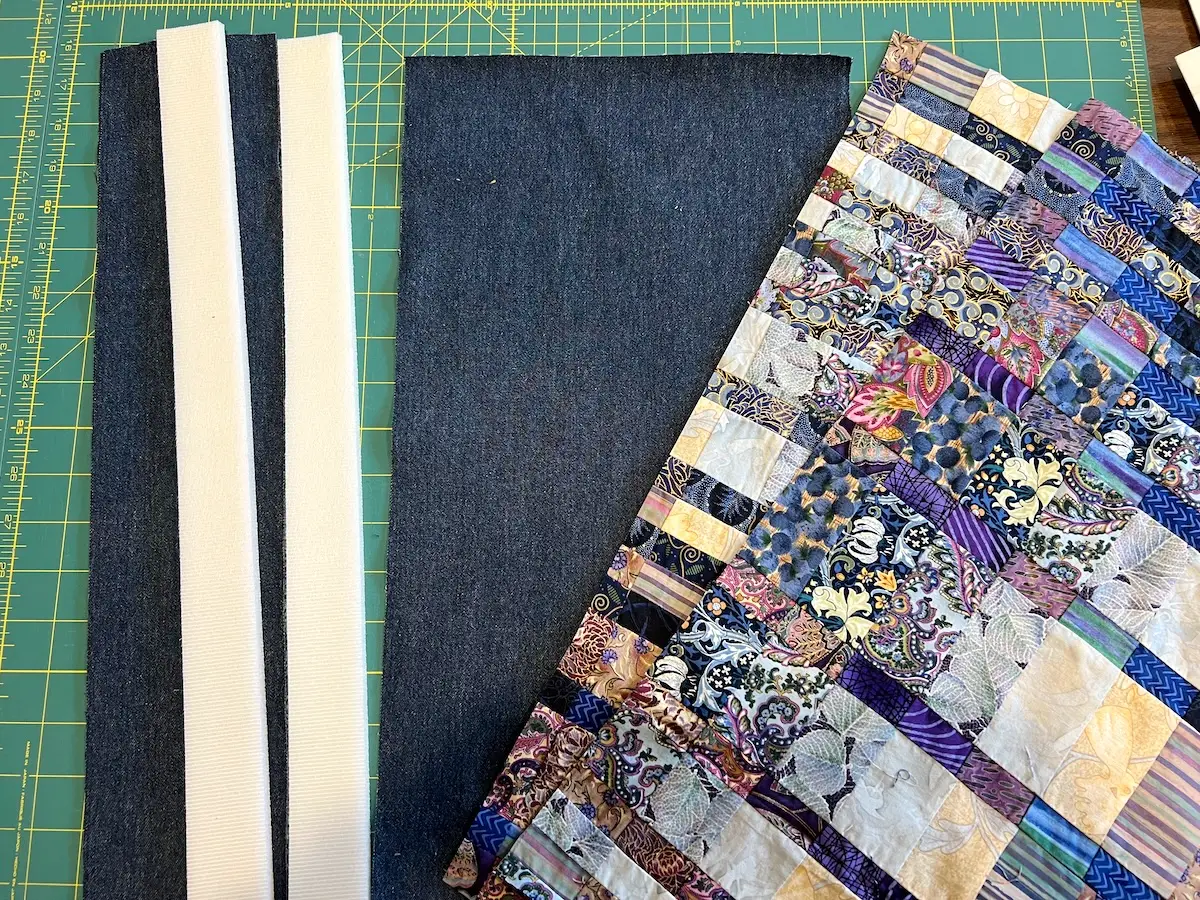
Step 2: Attach the patchwork to the foam stabilizer
Lay the two 12" x 20" patchwork pieces at opposite ends of the 32" x 20" foam stabilizer. TIP: Make sure your patchwork is facing the direction you want before sewing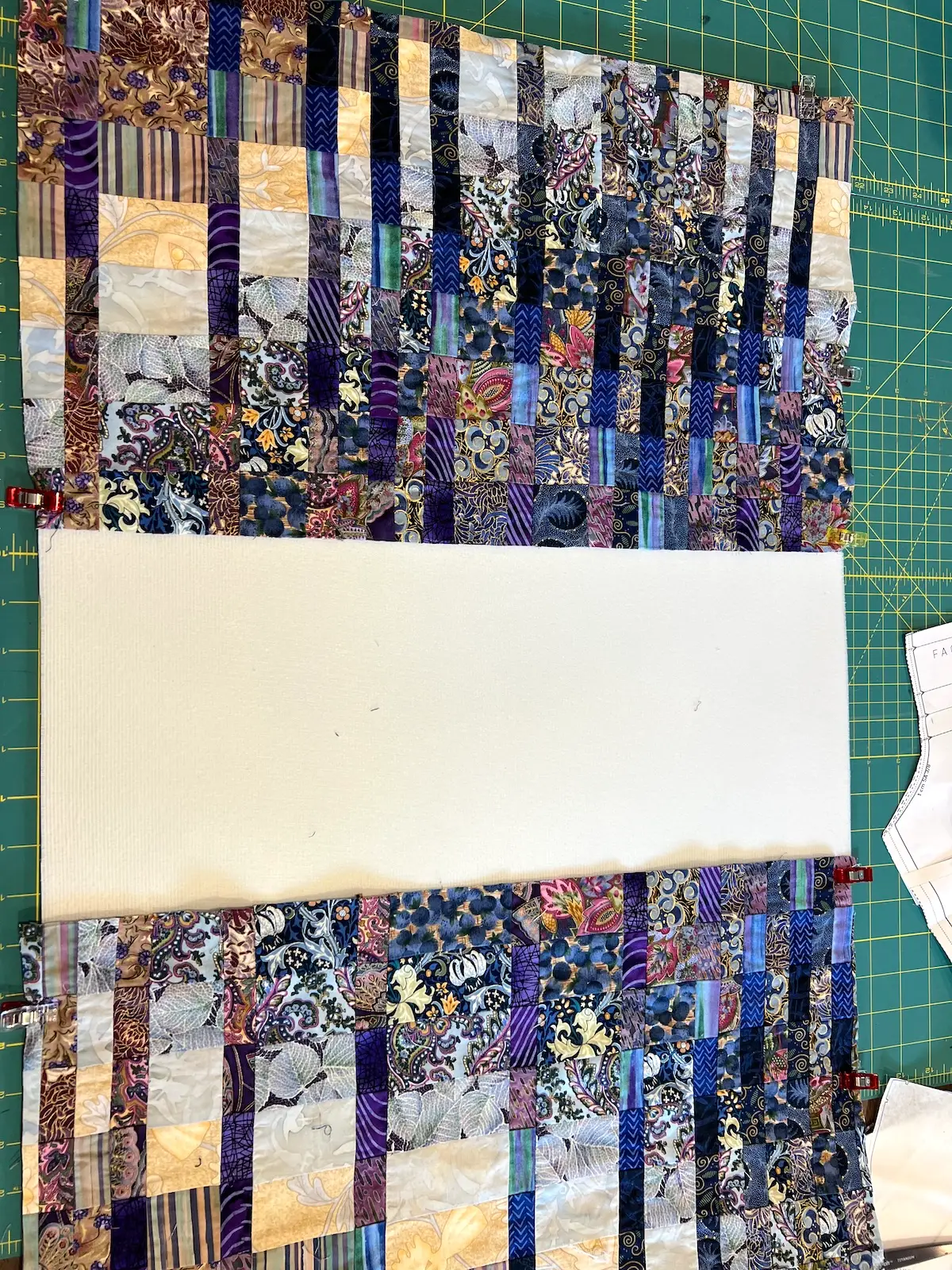
I like to use my walking foot for sewing with the stabilizer. It keeps everything in place. Sew with a 1/4" seam allowance to secure your patchwork to the stabilizer. Here you can see both ends have been sewn. 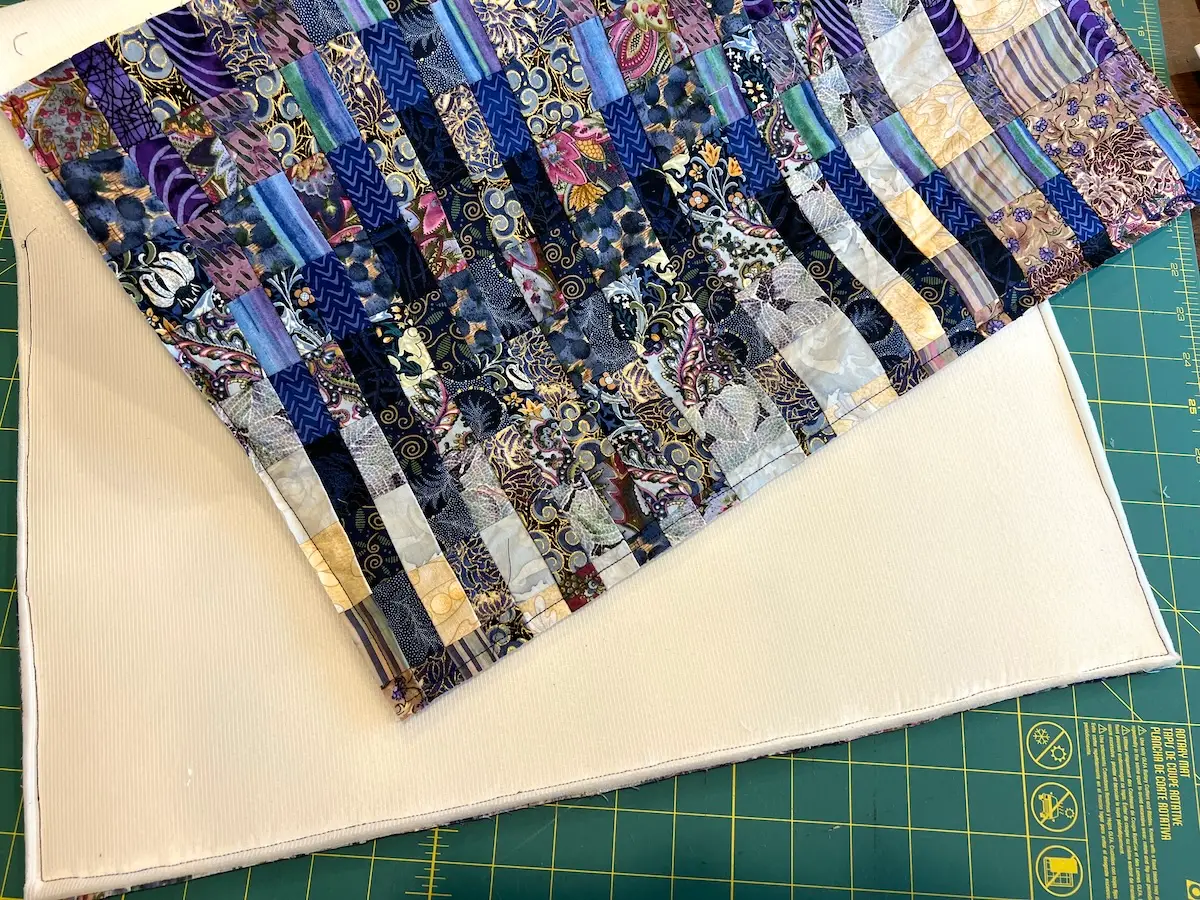
Step 3: Add the bottom fabric
Press 1/4" on one long edge of the fabric. With the other edge that is unfinished, sew with right sides together with a 1/2" seam allowance to the bottom edge of one of the patchwork pieces. You'll sew through the stabilizer, too.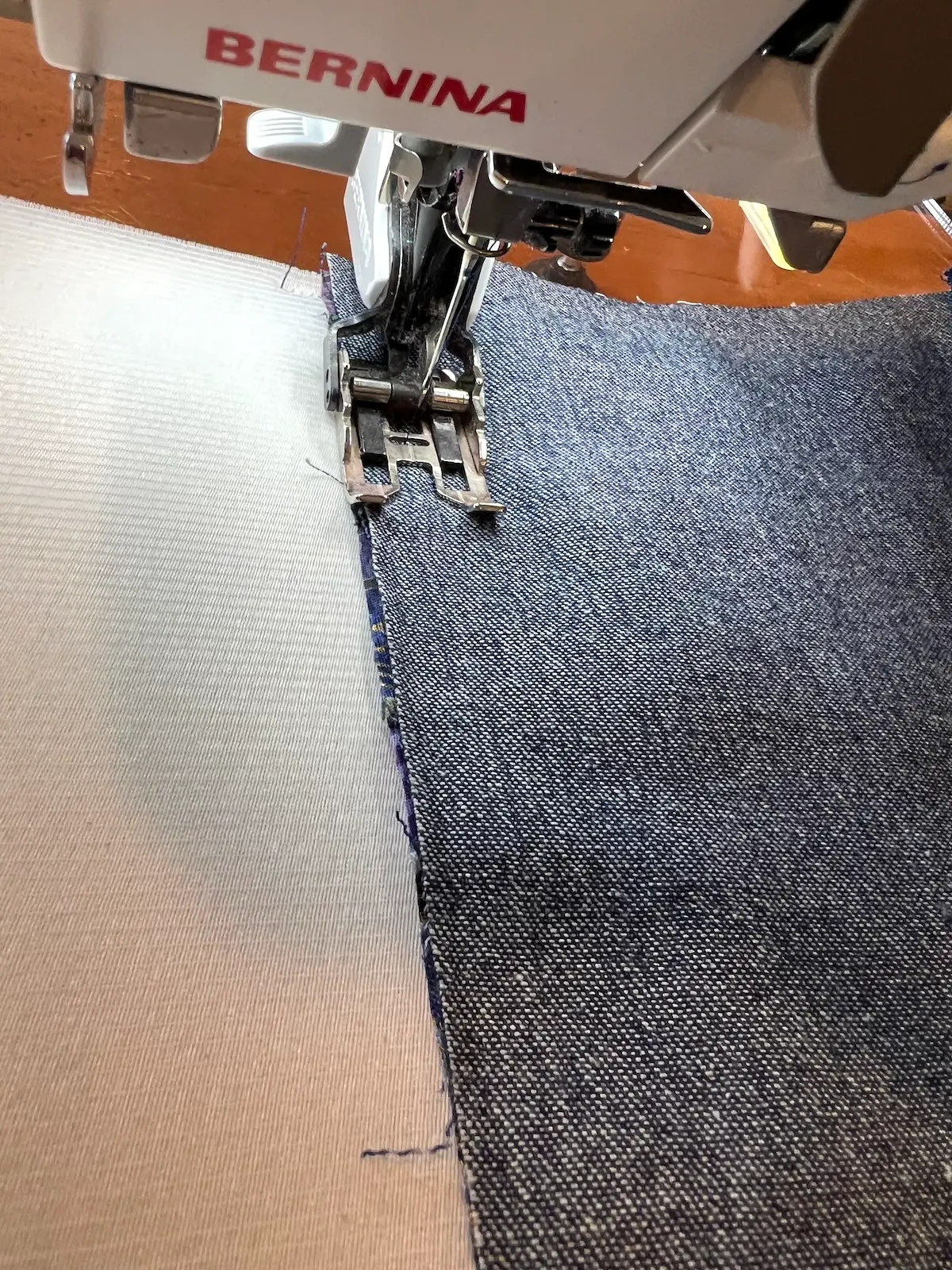
Step 4: Topstitch the bottom section
Now, fold back the bottom fabric to cover the stabilizer and topstitch the folded edge to the bottom of the other patchwork piece. 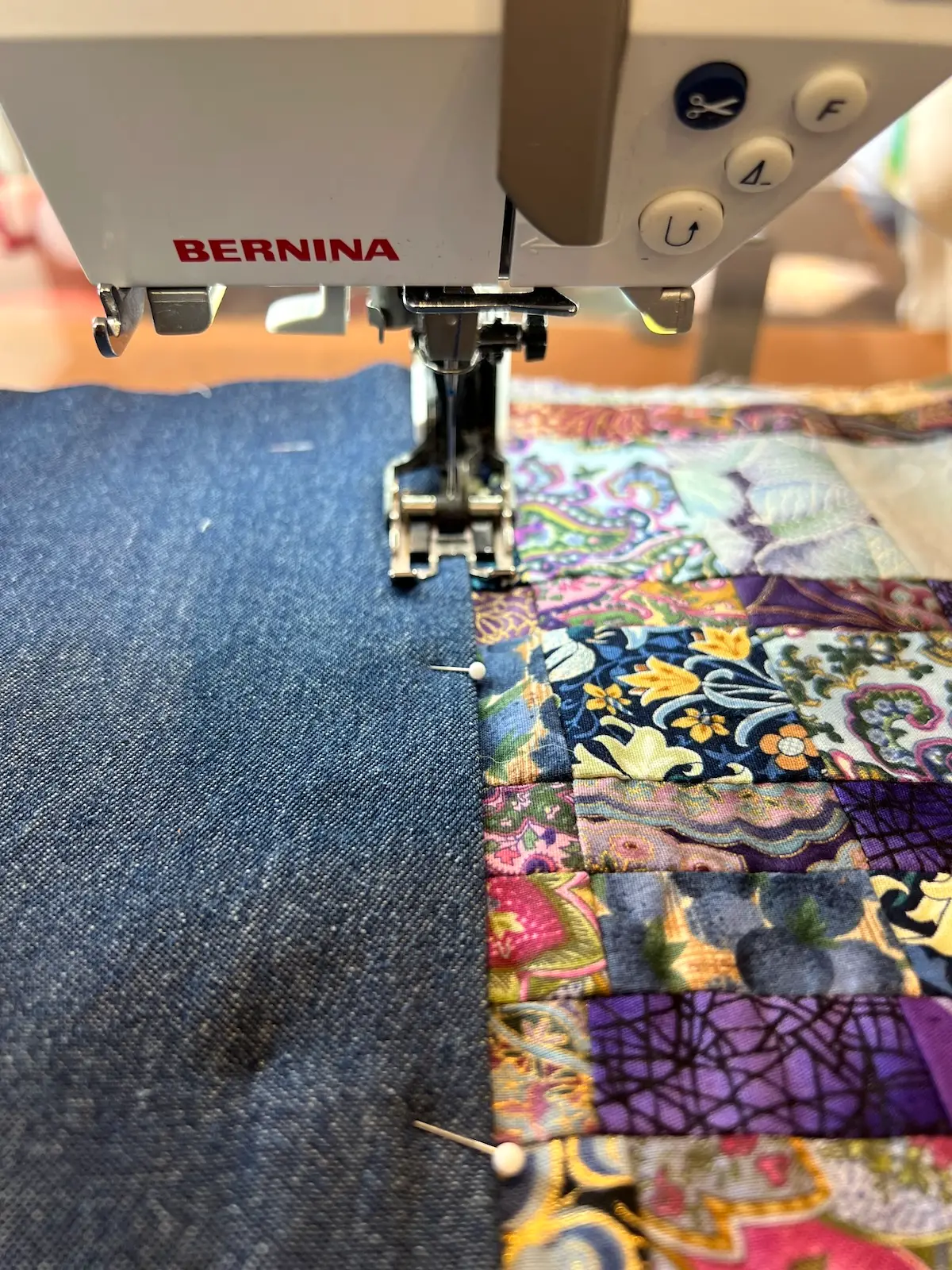
Step 5: Mark the lines that form the boxed bottom
These stitching lines make a nice squared-off bottom and nice sides to the tote.
Start by marking a line 1" from the topstitched lines on your bottom fabric. This will form the bottom of the bag and show 1" of your bottom fabric on the finished bag. 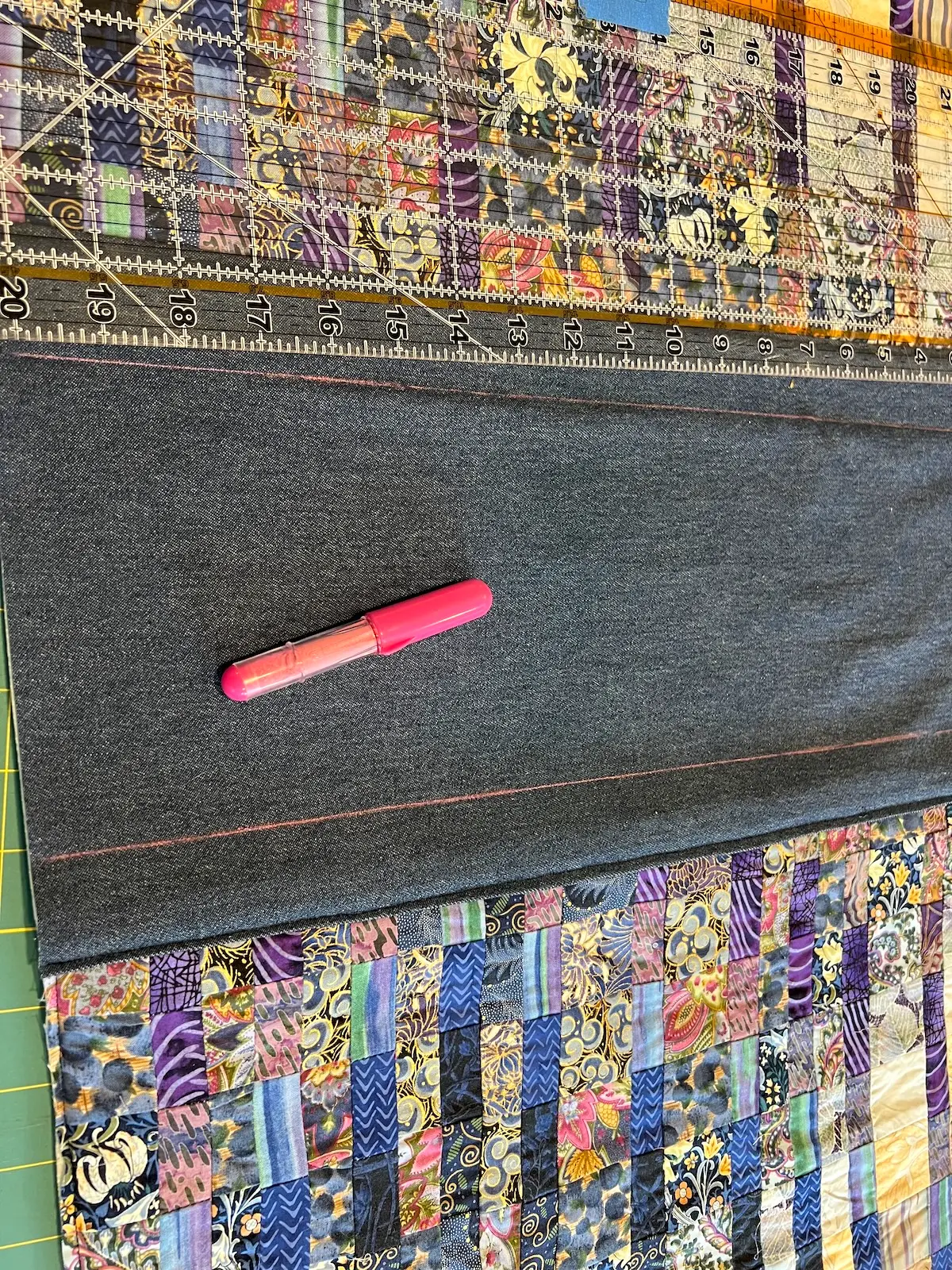
Stitch along these lines. 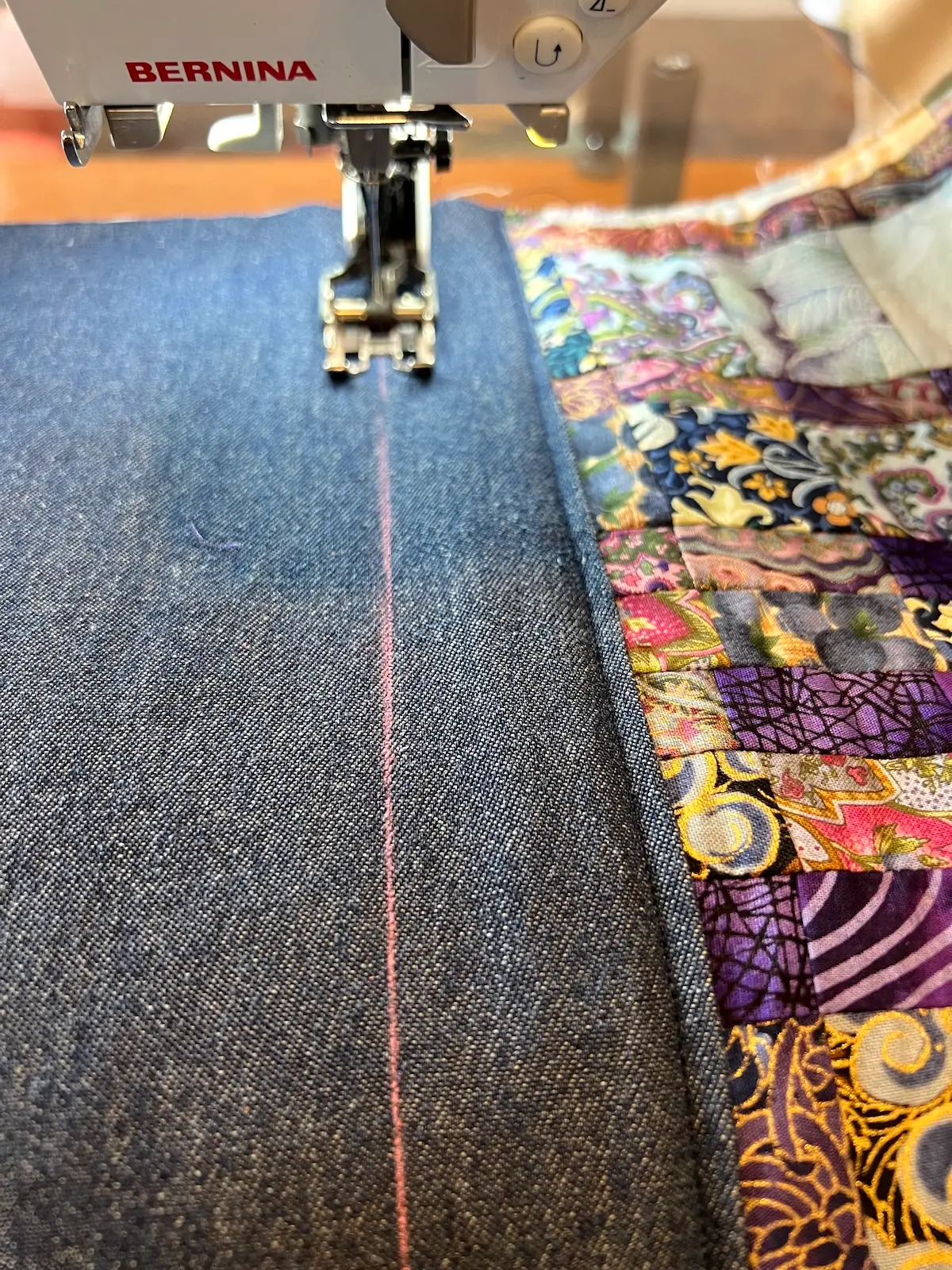
Next, mark a line 3-1/2" along both long sides and stitch along those lines. 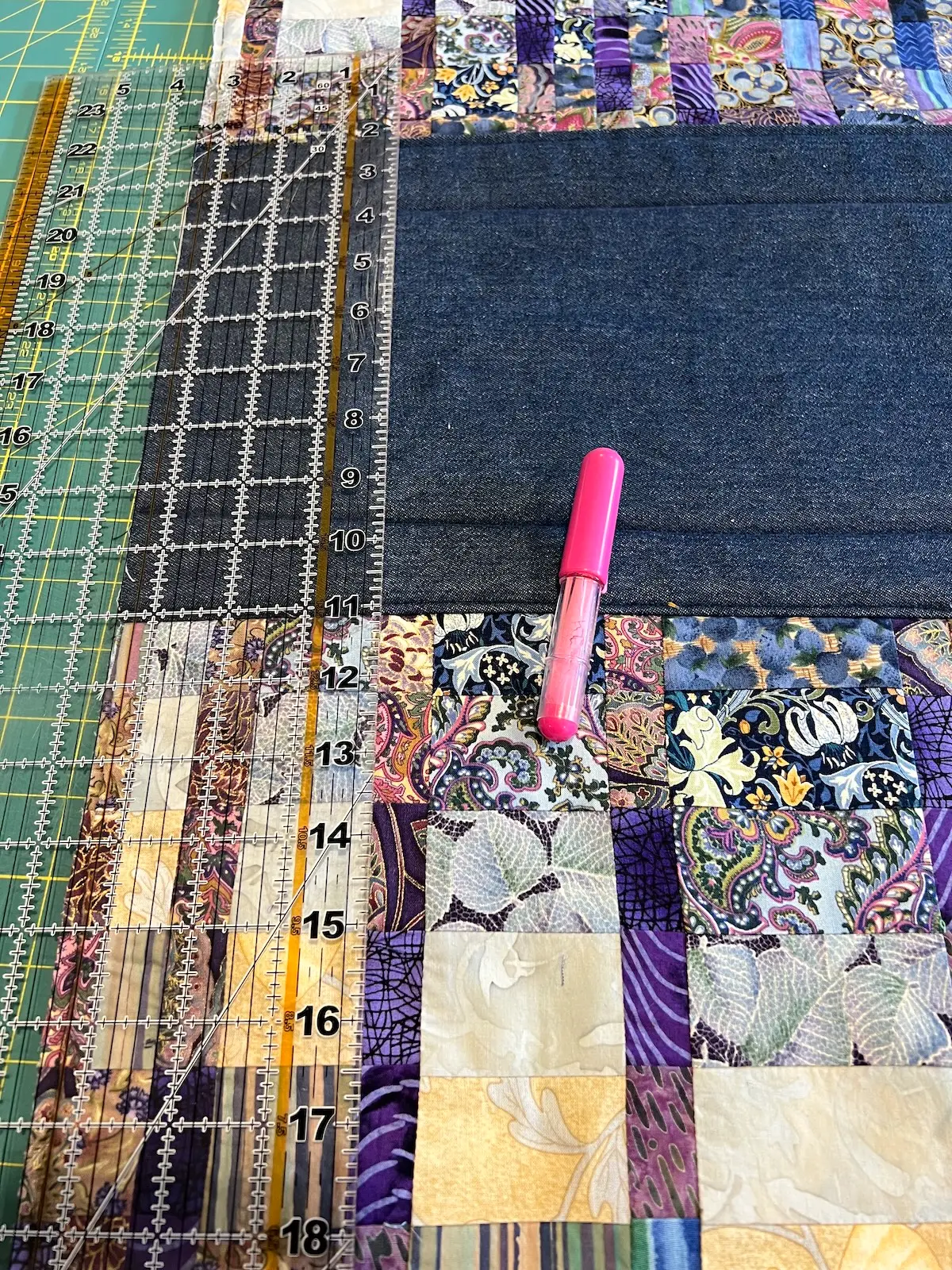
Tip: These stitched lines become the folds that form the sides and bottom of the tote, so accurate marking makes the finished bag much easier to square up.
Step 6: Form the boxed bottom
There are several ways to 'box the bottom' of a bag. This is one of my favorite ways.
With right sides together, fold your quilt sandwich, lining up the tops of your bag. Next, line up your horizontal stitching lines at the sides. These will be the bottom edges of your bag.
Take the bottom fold and bring it up between the two stitched lines. Hold all of this in place with WonderClips. Pins won't work.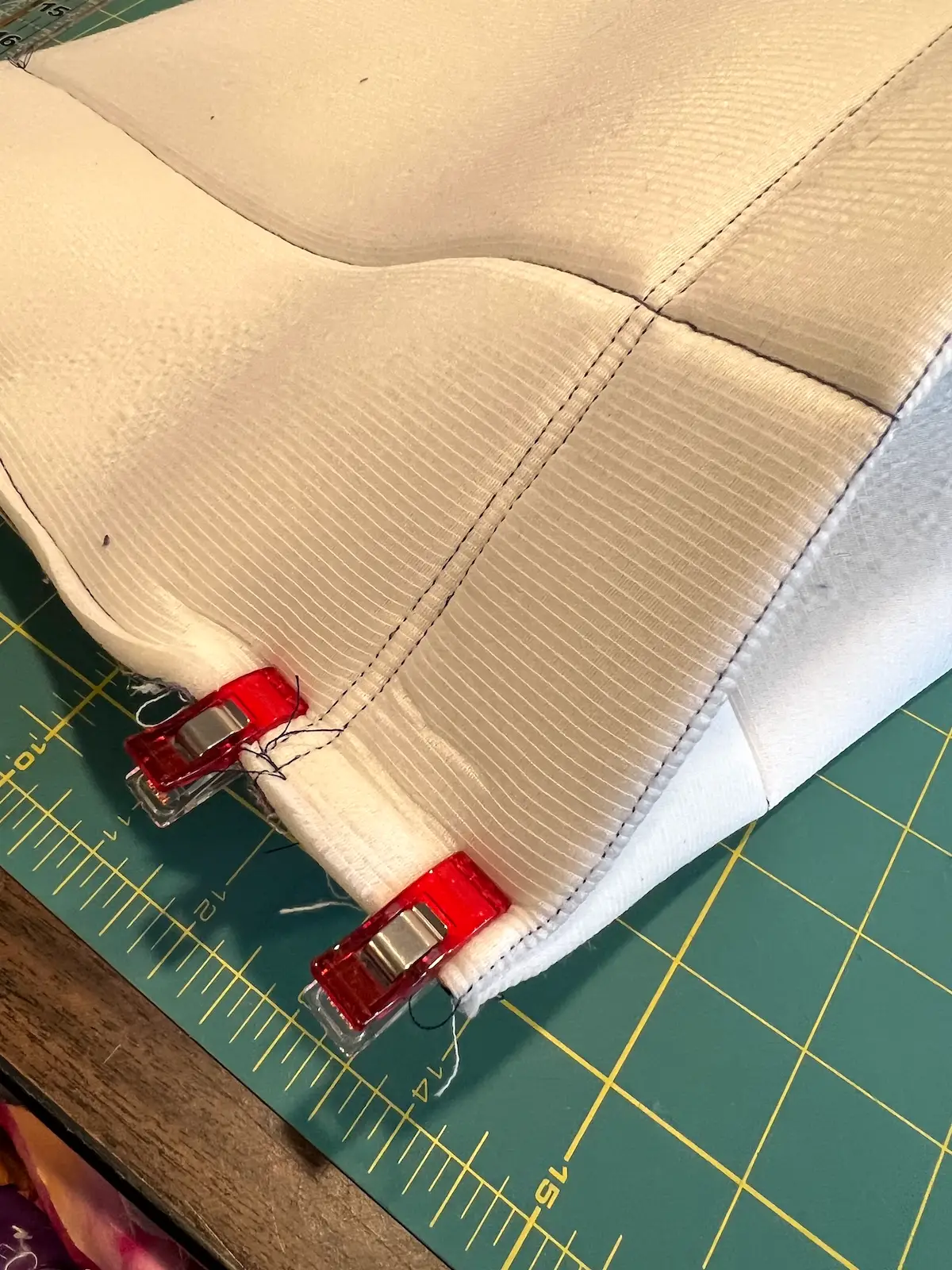
Do the same fold on the other side of the bag.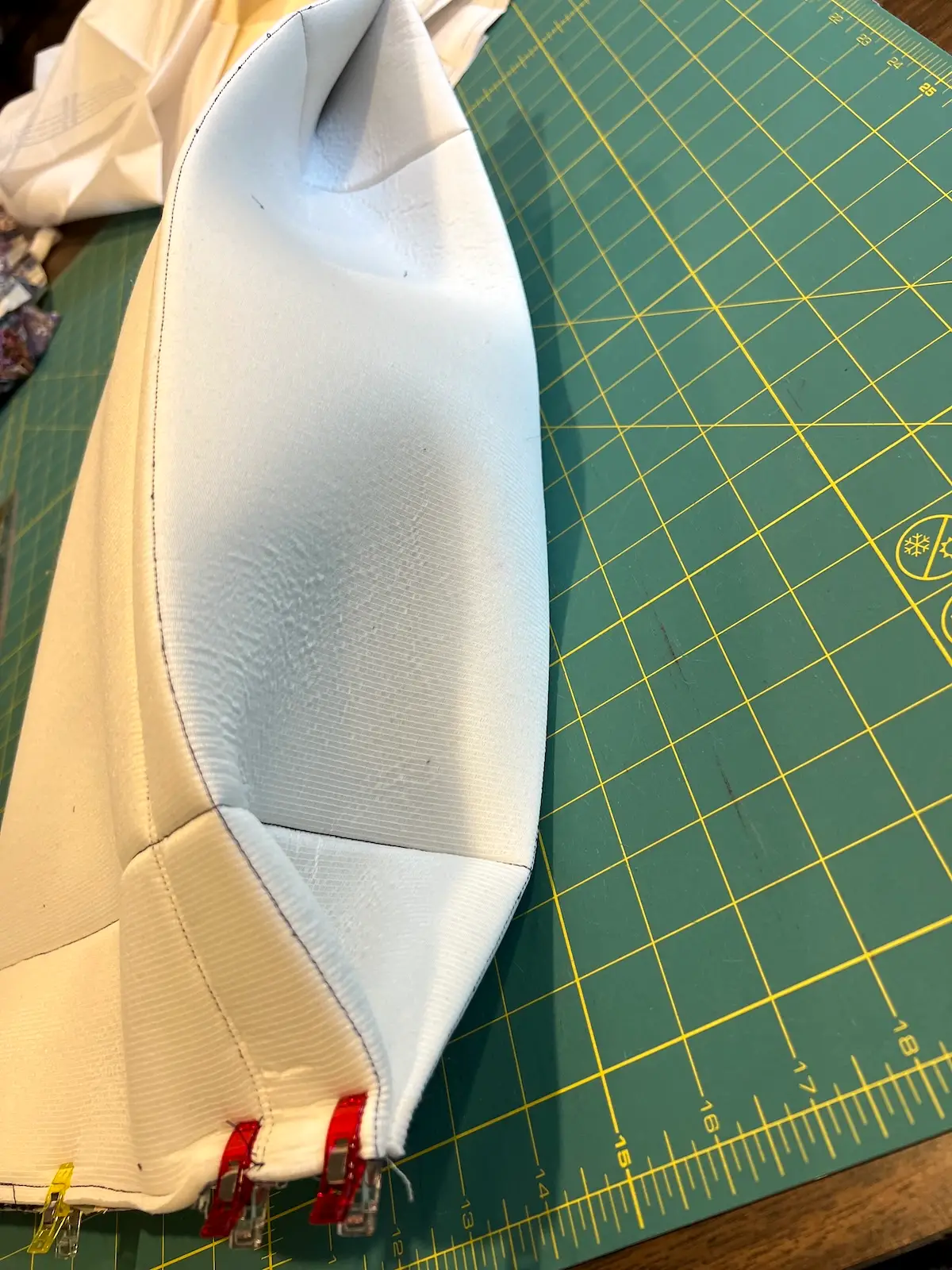
Step 7: Sew the side seams
Sew both side seams. Again, I used a walking foot. 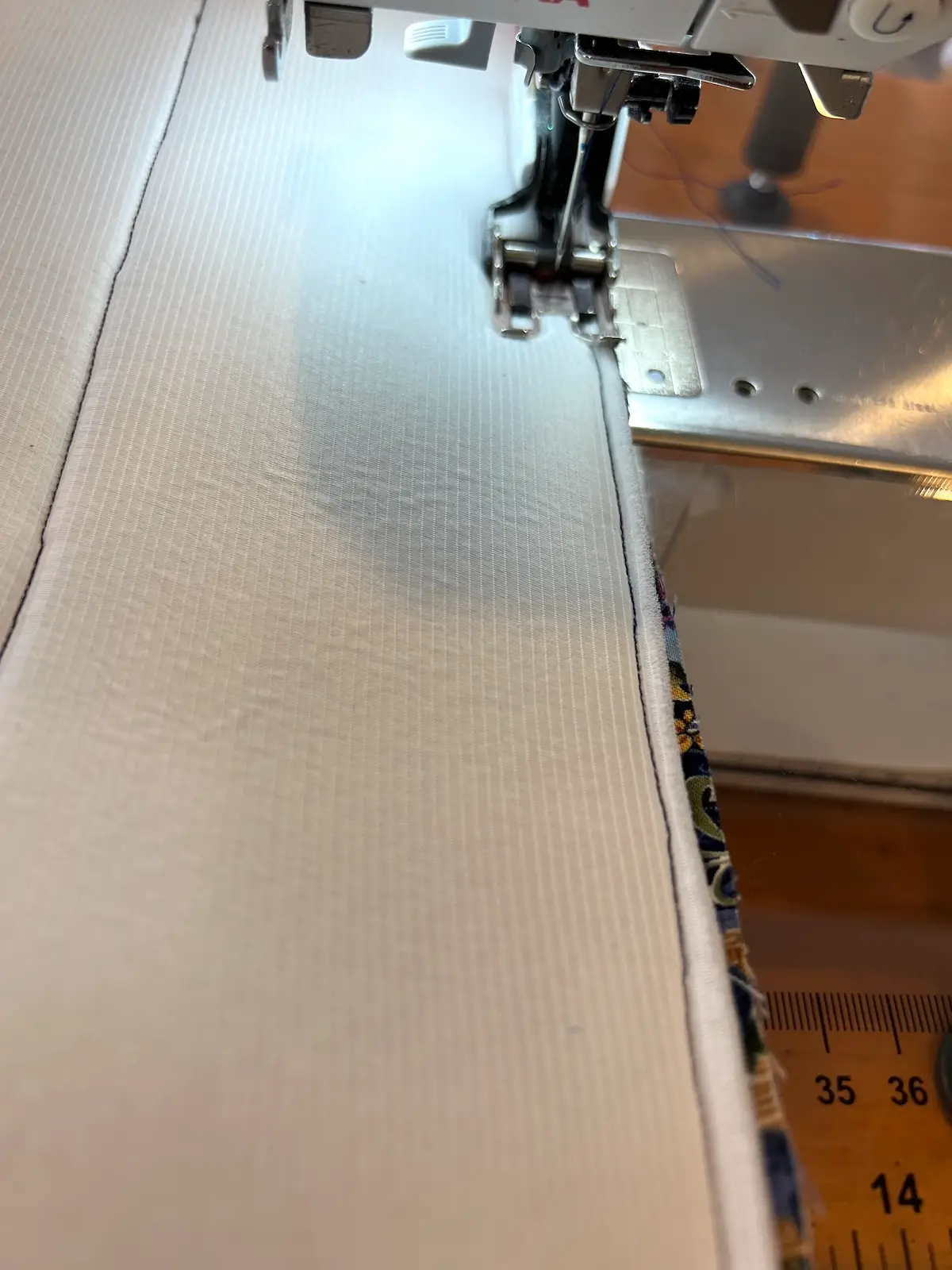
Step 8: Turn the outer bag right side out
Turn the bag right side out. The main body of the patchwork tote is done!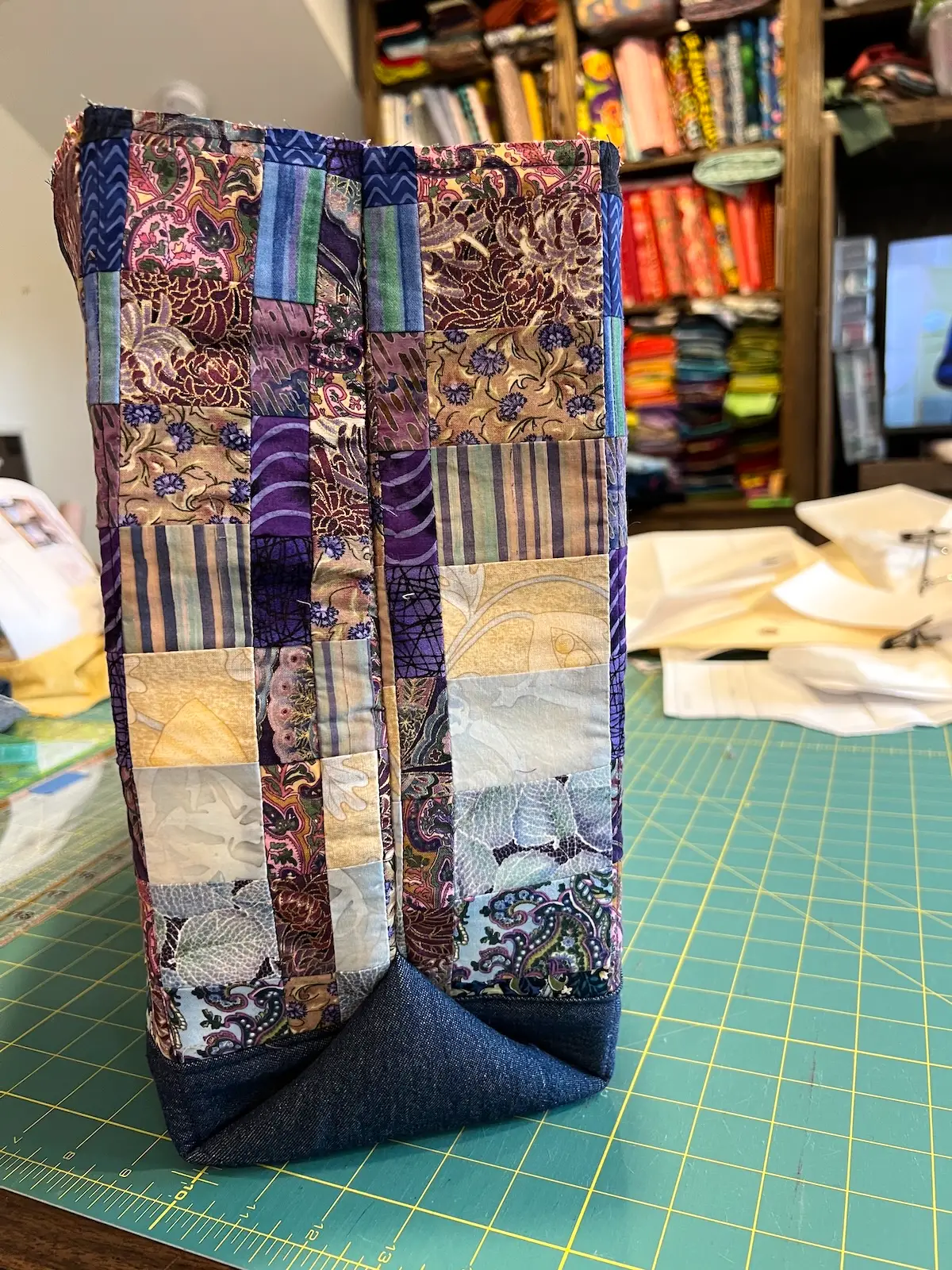
Take a moment to check the boxed bottom. If the corners need a little coaxing, gently work them into shape before moving on.
Part 2: Make the fabric handles
Step 9: Prepare the handle fabric
Take your pieces of handle fabric and press 1/4" in along one of the long edges. Leave one raw edge.
Step 10: Add the handle stabilizer
Take one of your stabilizer pieces and place the raw edge of one of your handle fabrics with the WRONG side of the fabric to the stabilizer. centered on the stabilizer.
Stitch with a 1/4" seam allowance.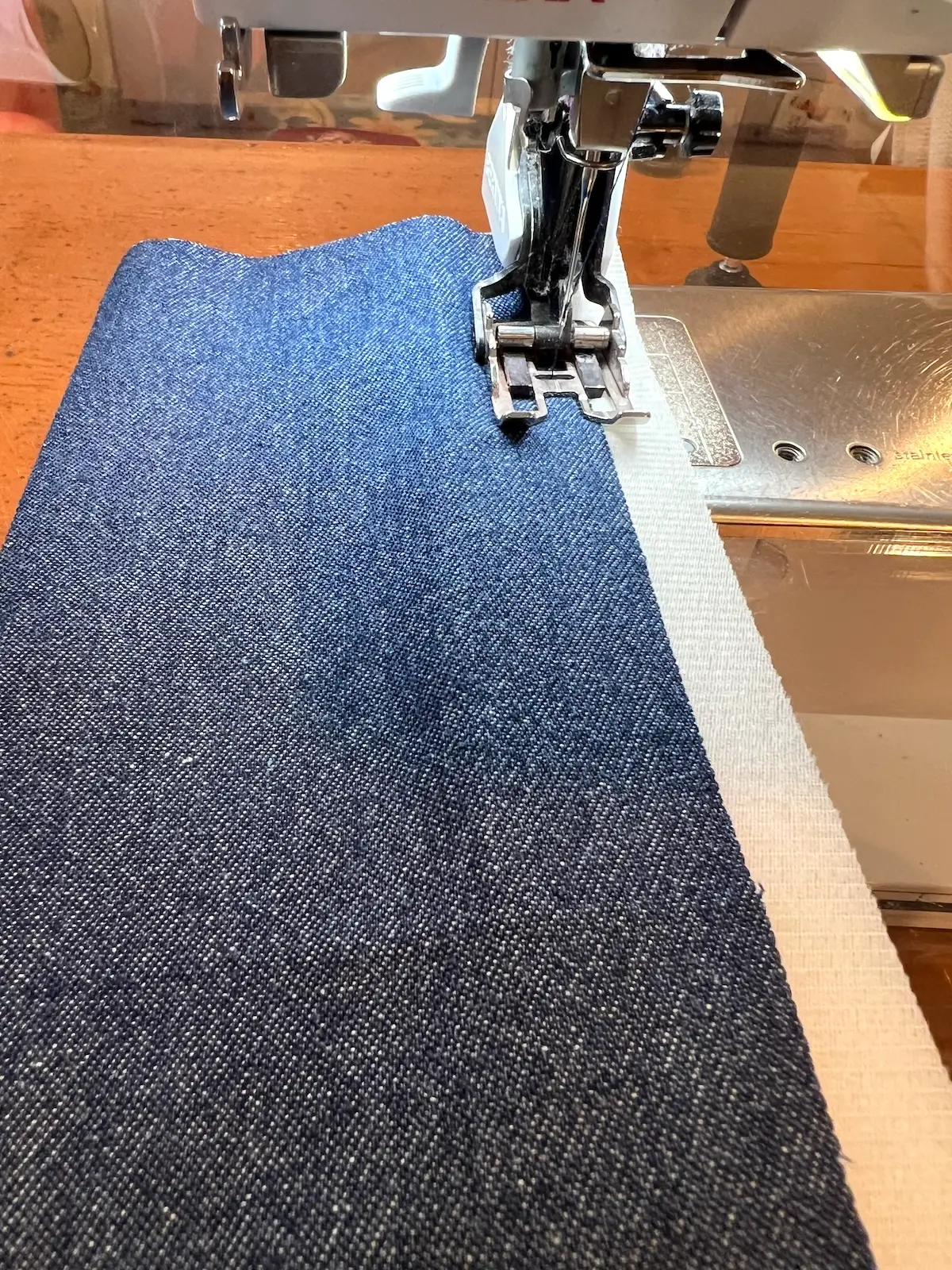
Step 11: Fold and topstitch the handles
Fold the handle fabric around the stabilizer and topstitch along the fold line.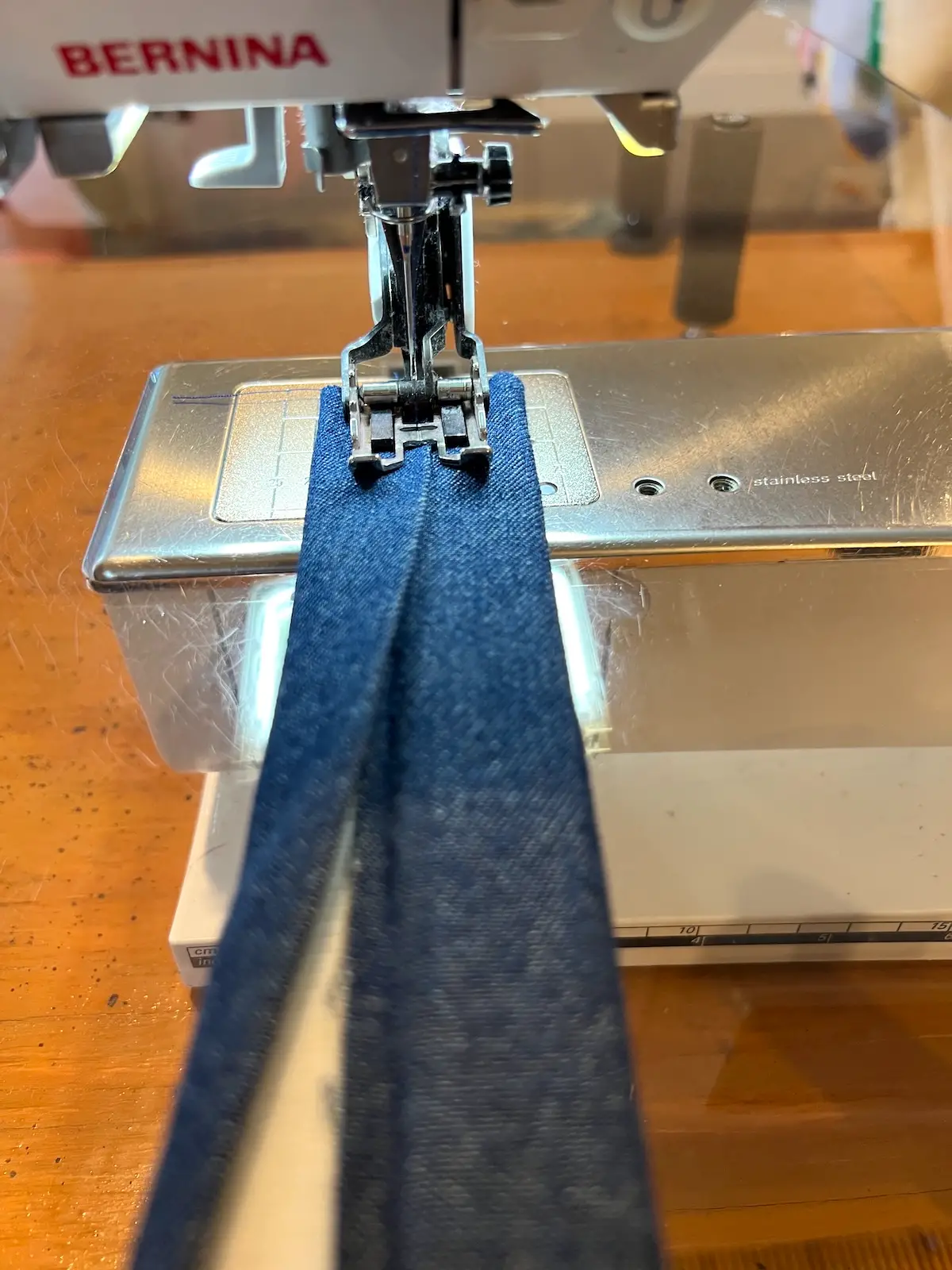
Do this for both handles. Here are the finished handles. 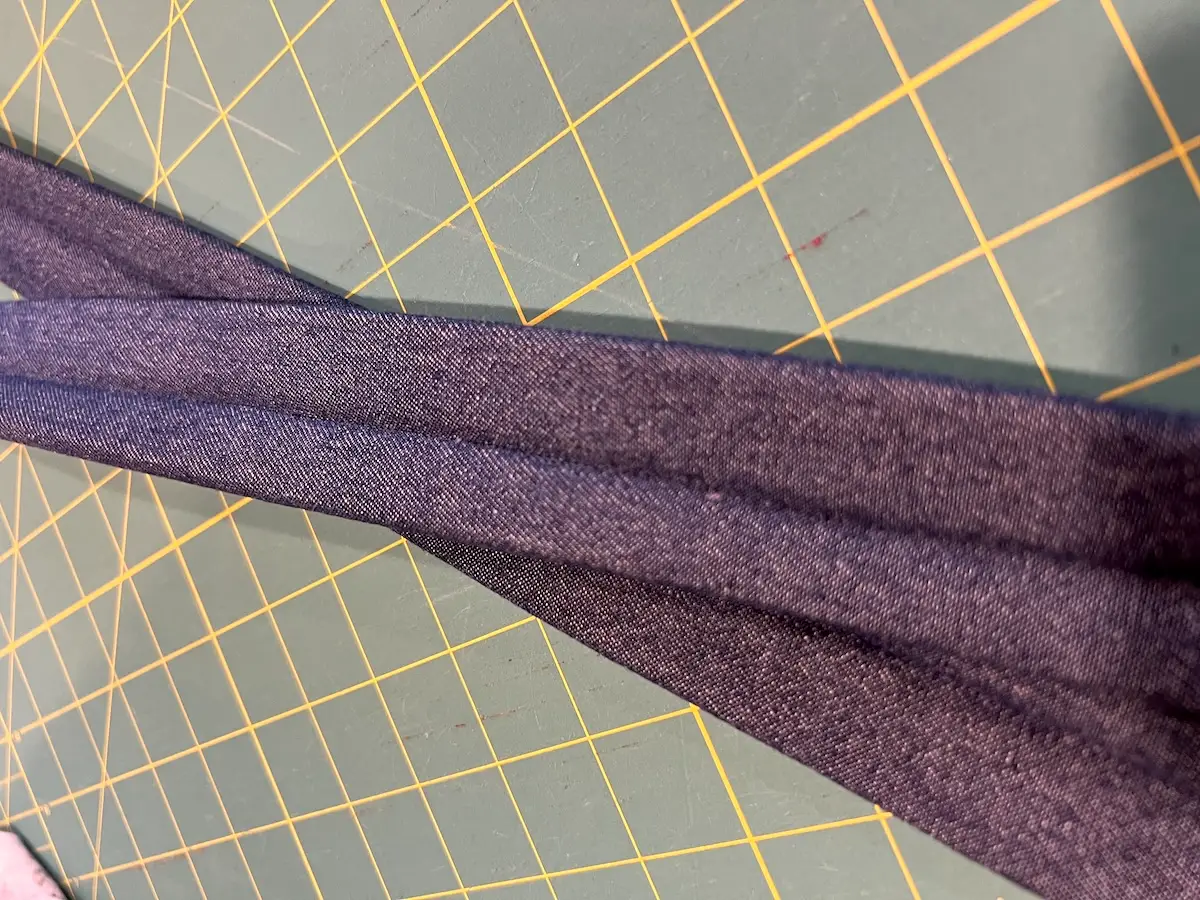
You now have two sturdy fabric handles ready to add to your tote.
Handle idea: This is a great place to change the personality of the bag. Try coordinating fabric, contrasting fabric, webbing, leather or a handmade leather-wrapped handle.
Part 3: Make the lining
Step 12: Add an optional inside pocket
If you want inside pockets, make them first. I like to find a coordinating fabric for the pockets. It makes the inside of your bag more interesting, and it's easier to find the pockets! If you've got a busy lining fabric, sometimes the pockets just blend in.
I cut a piece of fabric 9" x 9" for my inside pocket.
Fold the fabric in half. Begin stitching at the fold along one side, turn the corner, and stitch about 2".
Leave an opening. Then begin stitching again about 2" from the corner, turn the corner and stitch to the fold.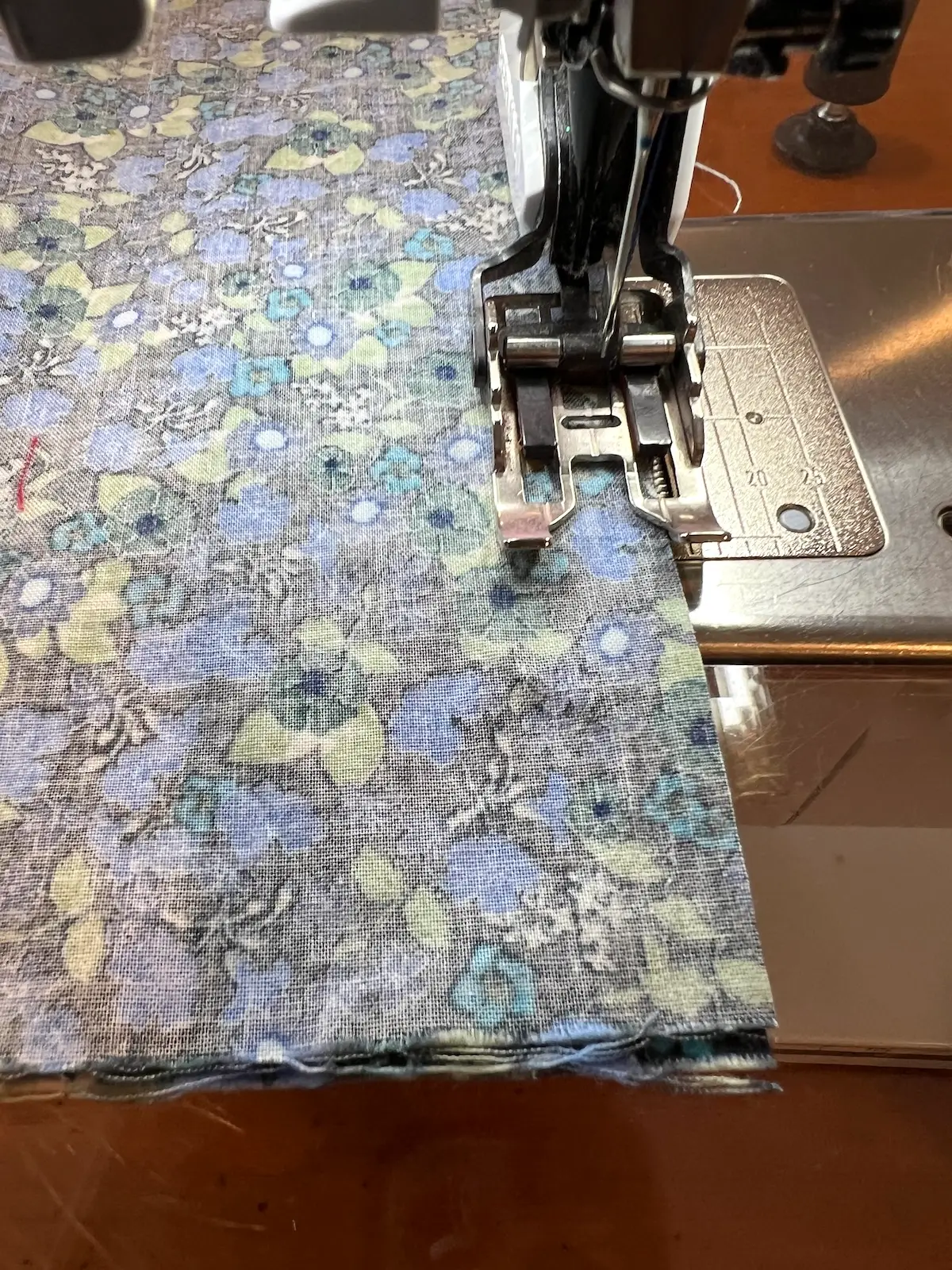
Turn the pocket right side out. 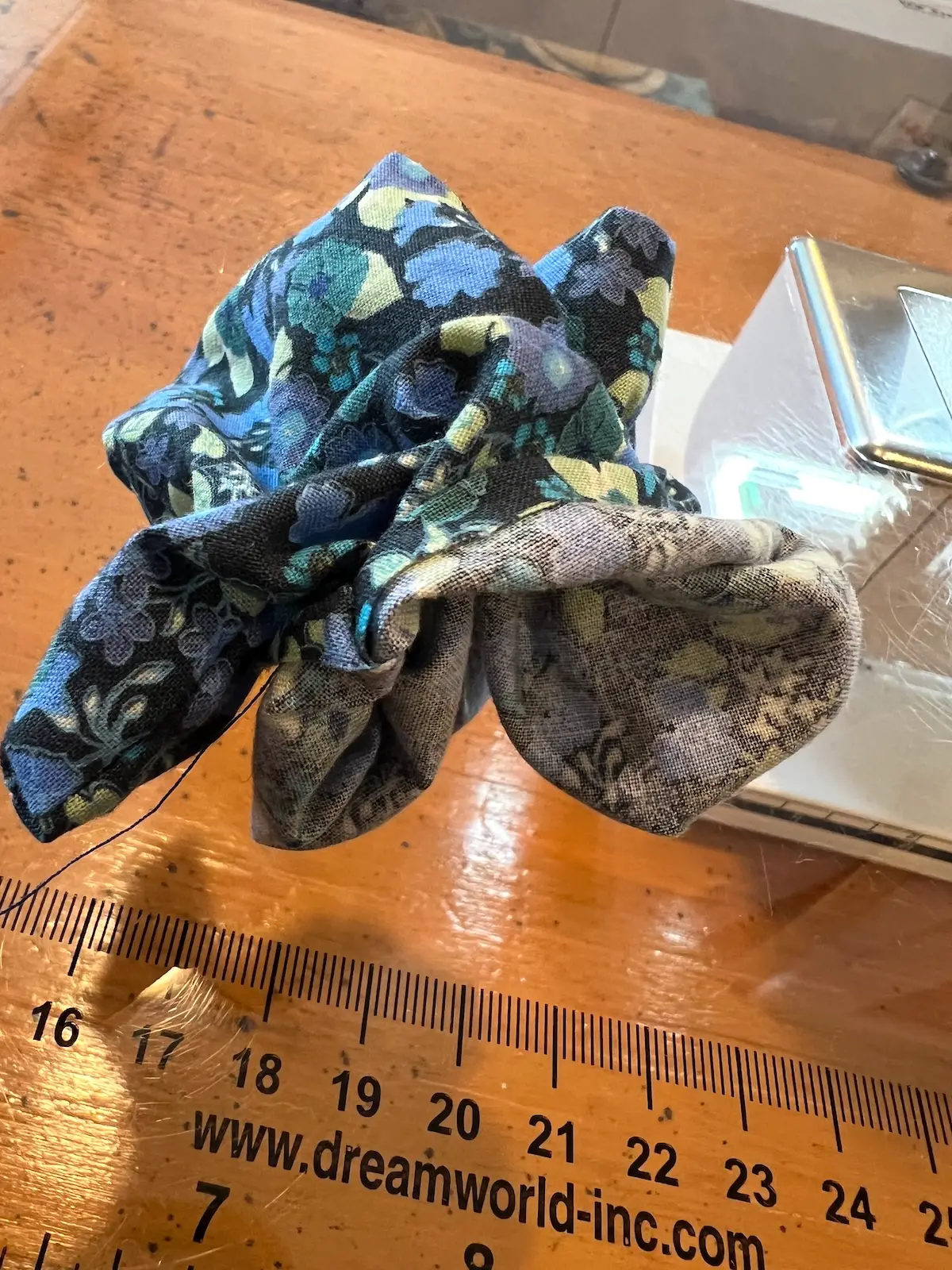
Press the opening closed. Place the pocket where you'd like it on the right side of the lining fabric. The folded edge is the top of the pocket. Topstitch the pocket in place.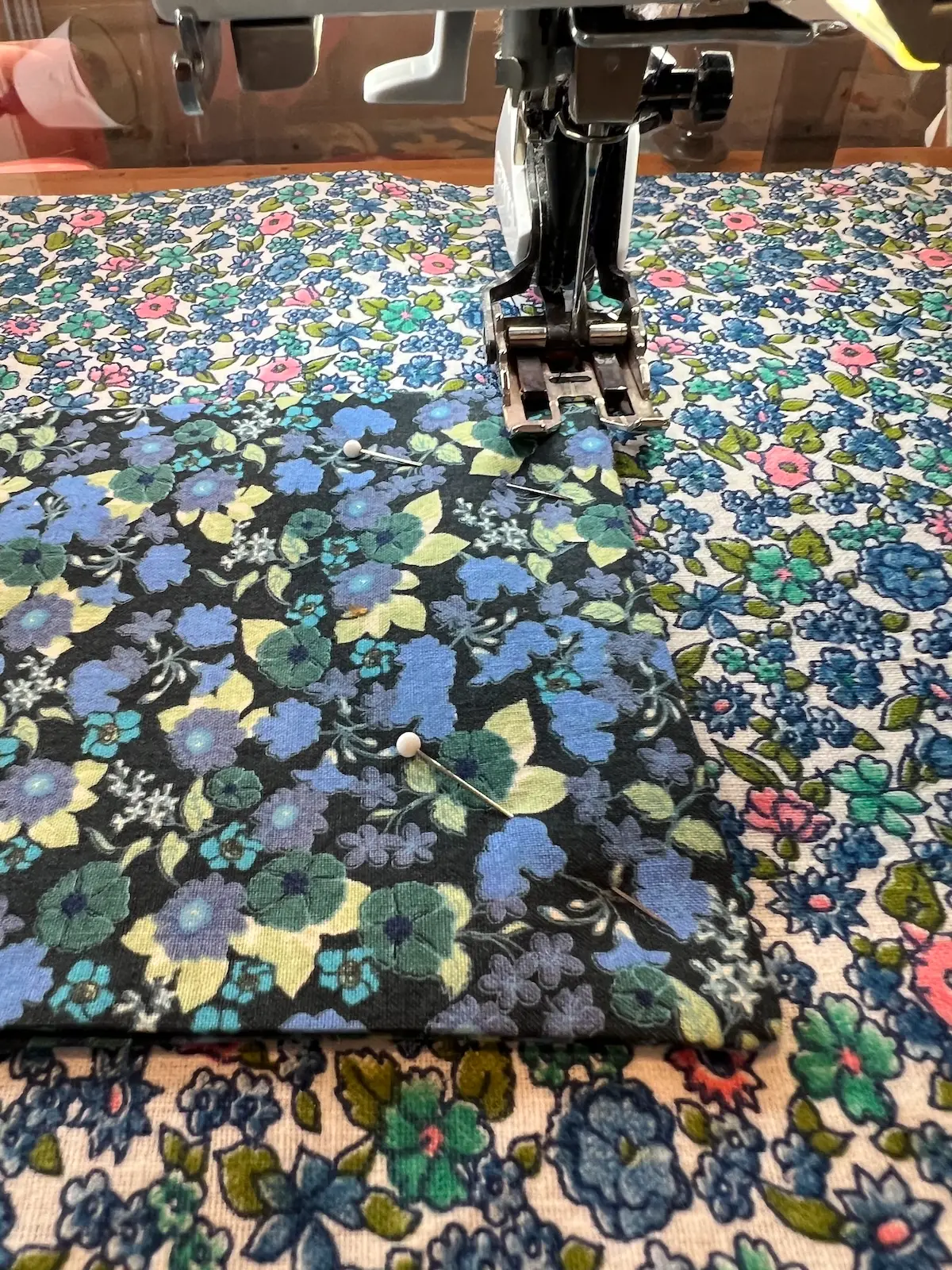
Pocket upgrade: You can make a divided pocket, zipper pocket or larger pocket instead. Just add the pocket before sewing the lining together.
Step 13: Mark the lining for the boxed bottom
Measure from the top edges of the lining fabric down 12" and place a pin. Do this for both sides and both ends.
Match the pins along the side seams, like we matched the stitching lines above, and fold the fabric in, forming the box bottom. Do this on both sides.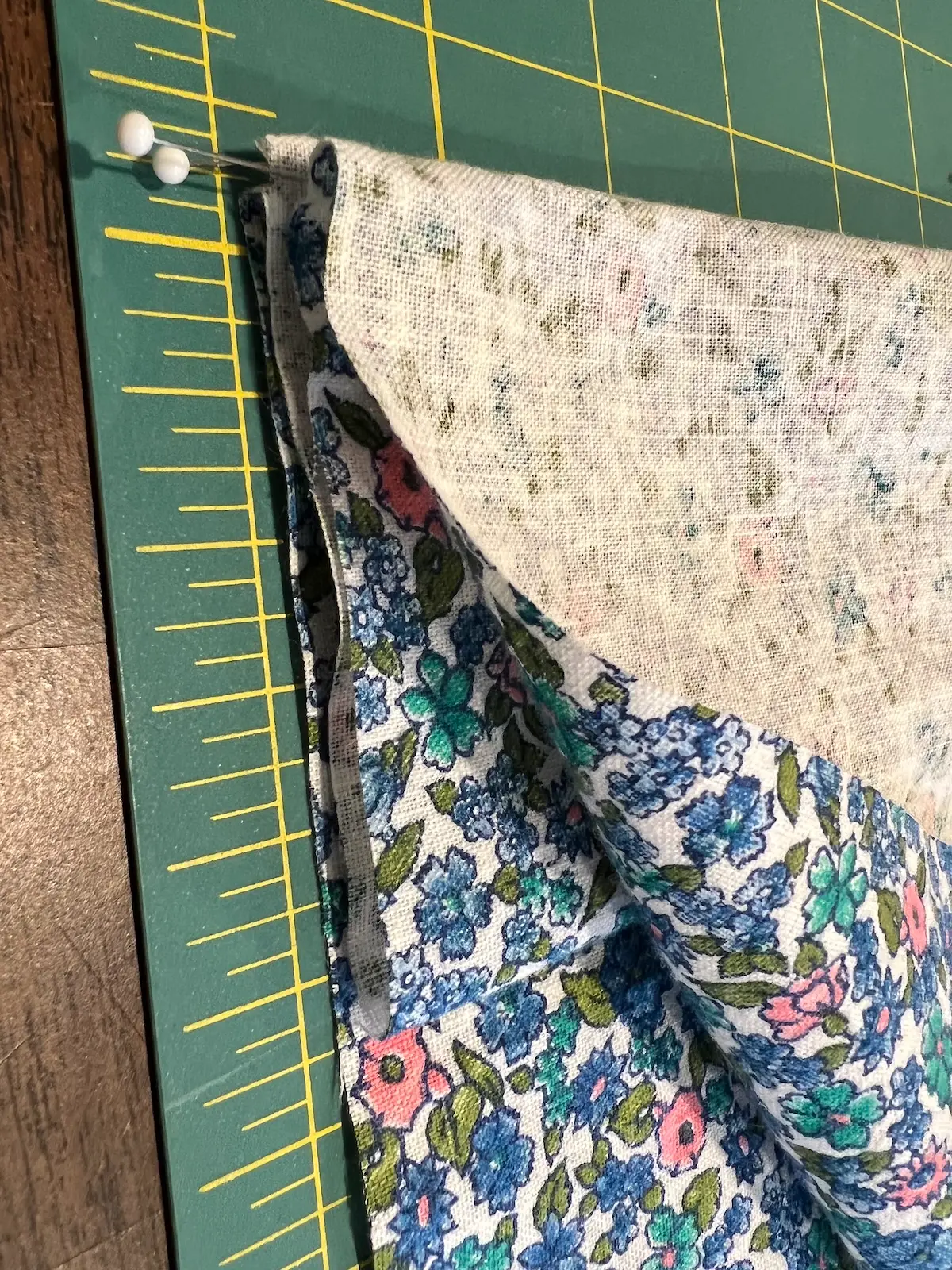
Step 14: Sew the lining
Stitch one side seam fully, On the other side, stitch from the bottom, securing the bottom of the bag and up about 2-3". Leave an opening about 4", then sew to the top. This gives us an opening to turn the bag right side out.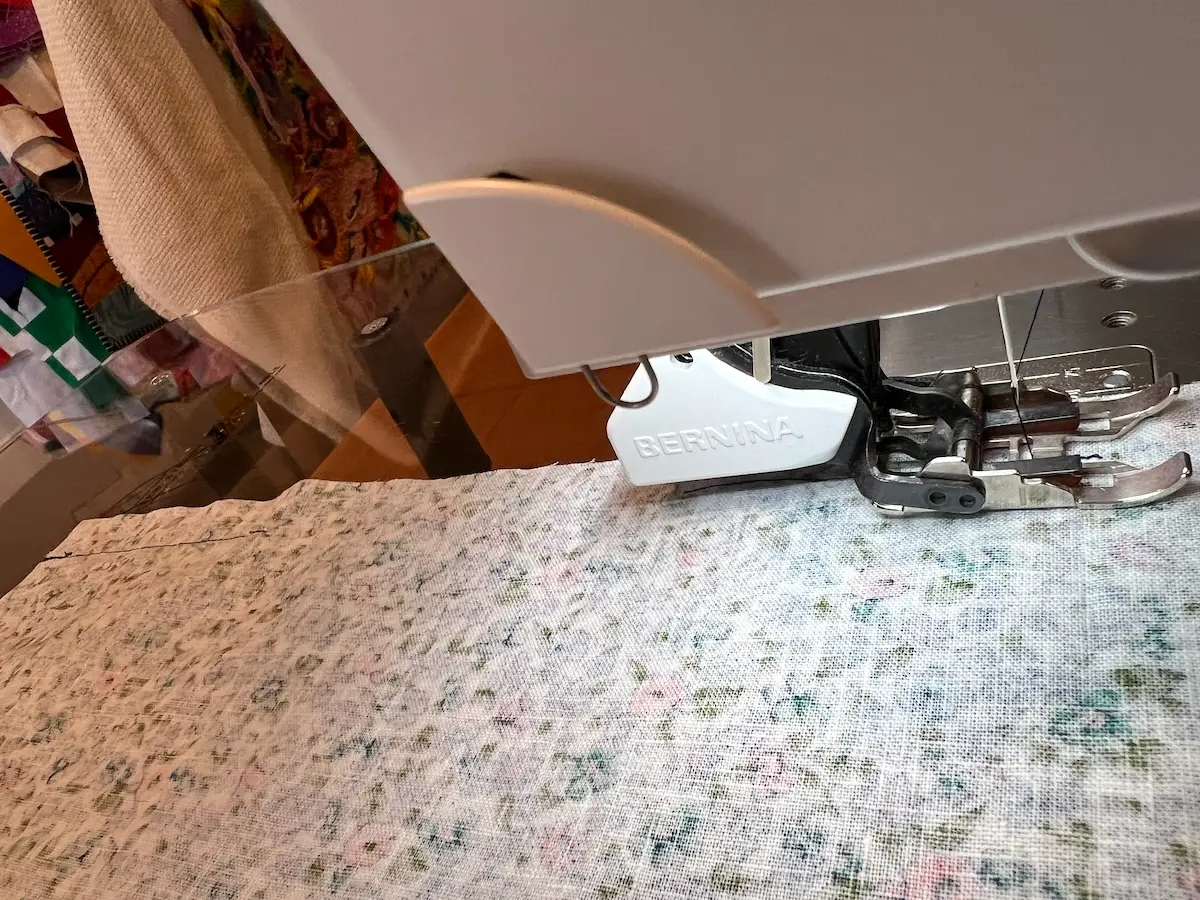
Important: Do not sew the turning opening closed yet. You'll need it to turn the finished bag right side out.
Part 4: Assemble your patchwork tote
Step 15: Put the outer bag inside the lining
Place the main body of the bag inside the lining with right sides together. Use Wonderclips to hold the top edges together. 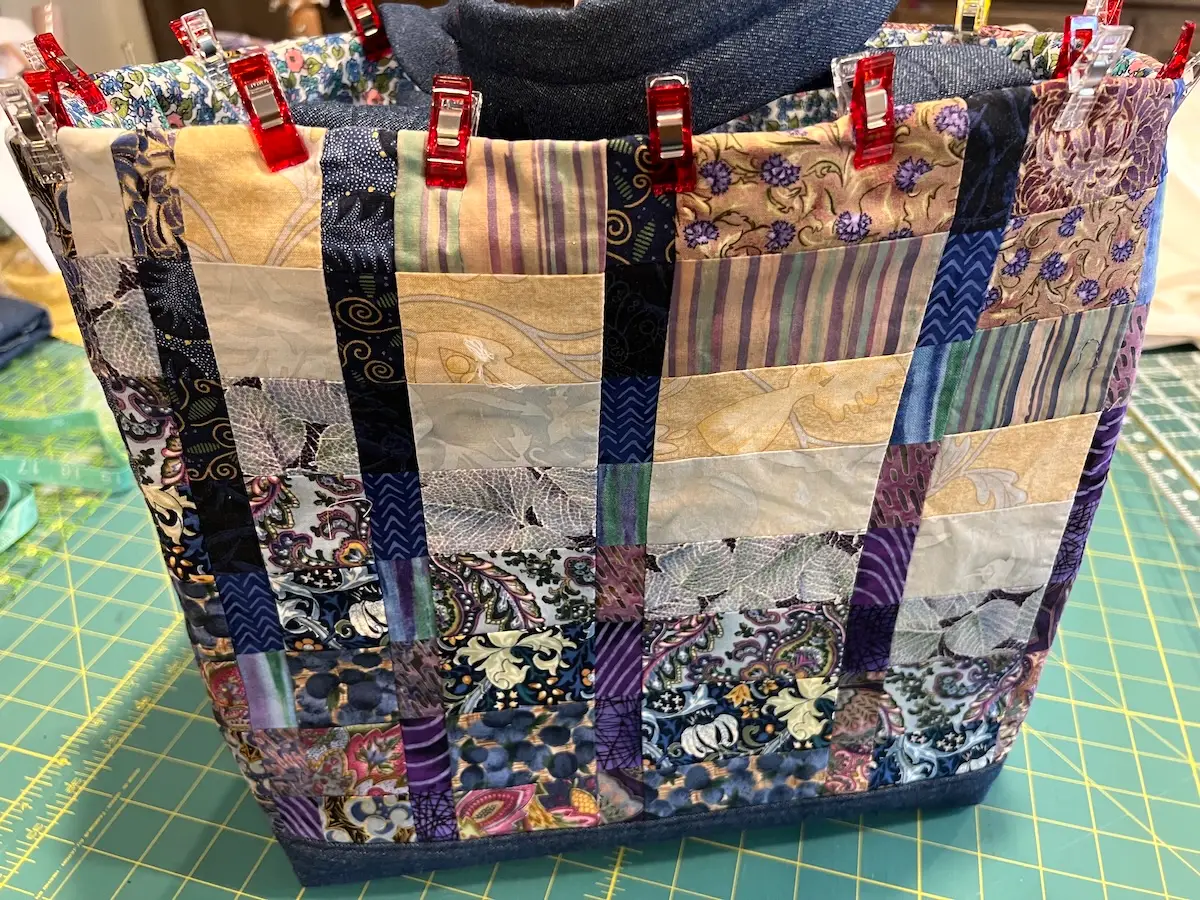
Step 16: Add the handles
Decide where you want your handles.
Slide the ends of the handles between the outer bag and lining so the raw edges are aligned with the top edge.
Before sewing: Check that neither handle is twisted.
Clip the handles securely in place..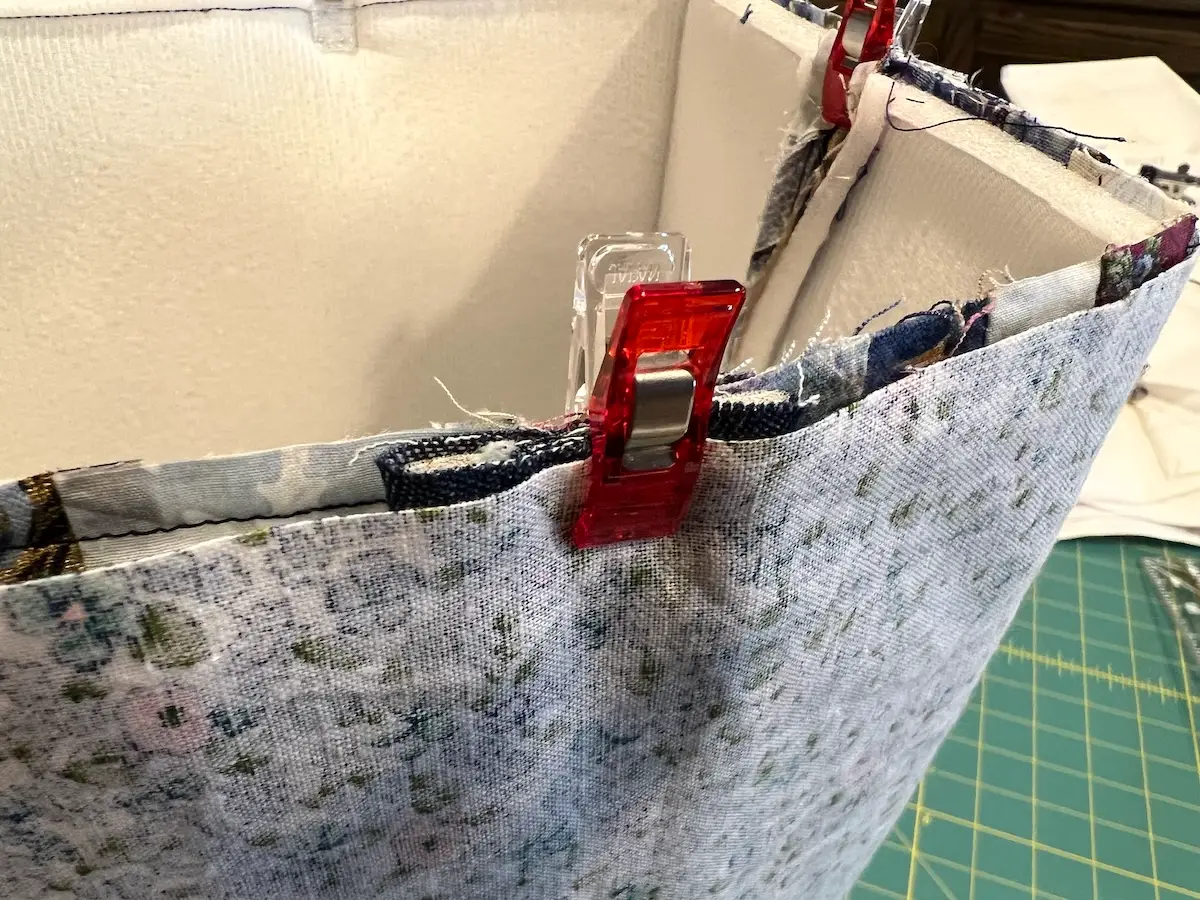
Step 17: Sew around the top edge
Sew completely around the top edge of the bag.
Take your time where the handles are inserted because those areas have several layers.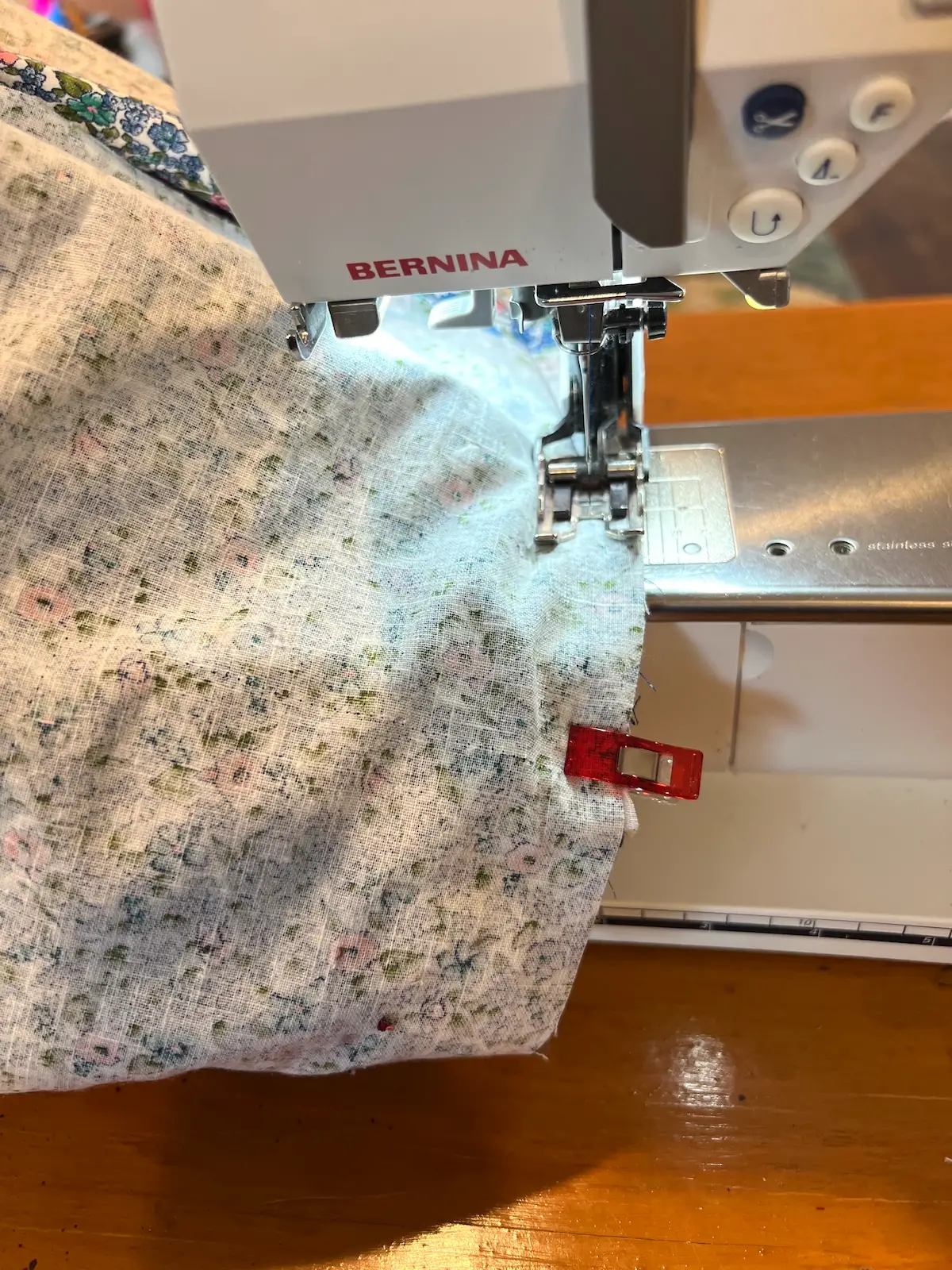
Step 18: Turn the bag right side out
Reach through the opening you left in the lining and carefully pull the bag right side out.
Push out the corners and gently shape the boxed bottom. 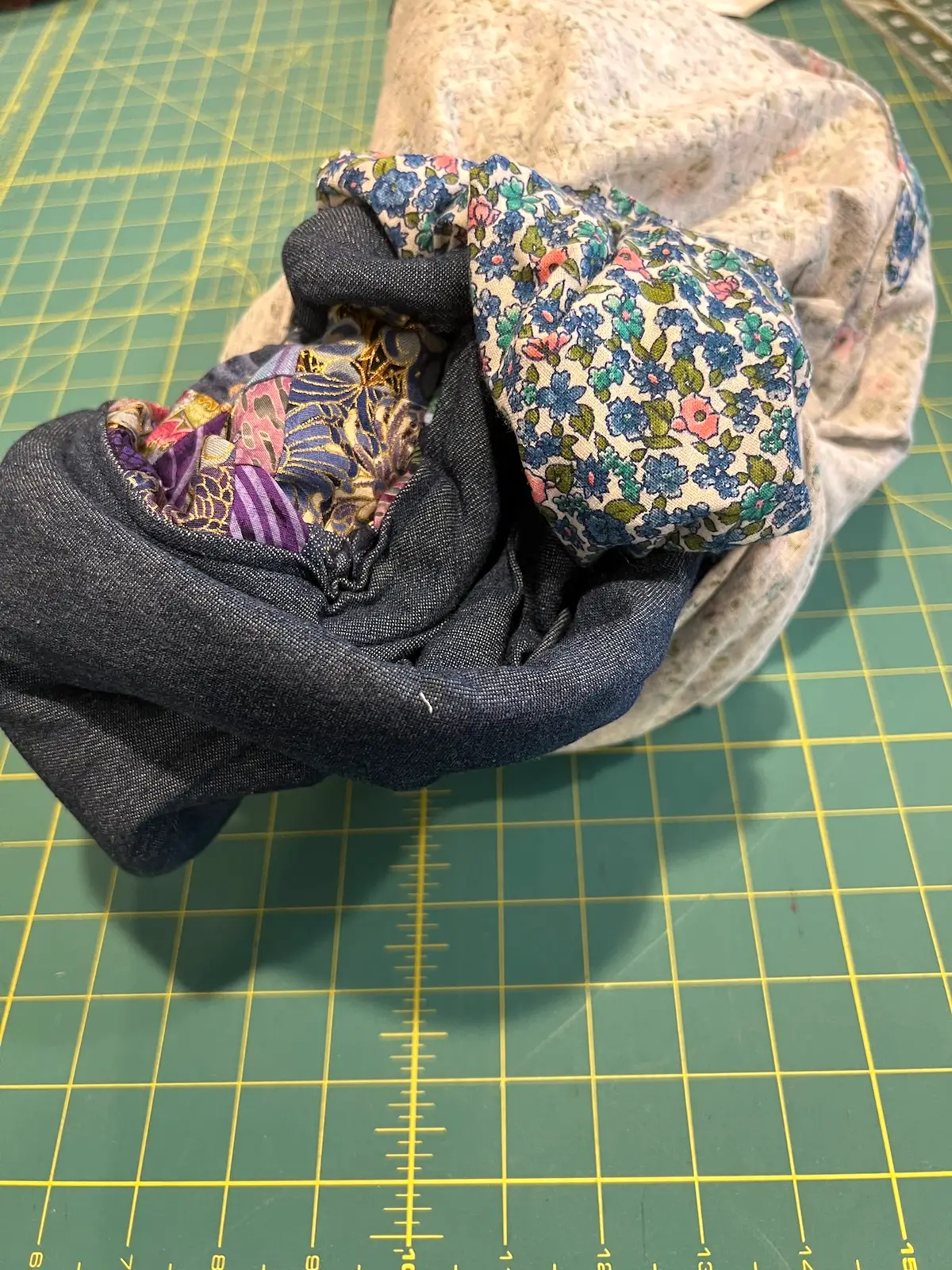
Step 19: Close the lining
Press the opening in the lining closed.
Topstitch the opening shut.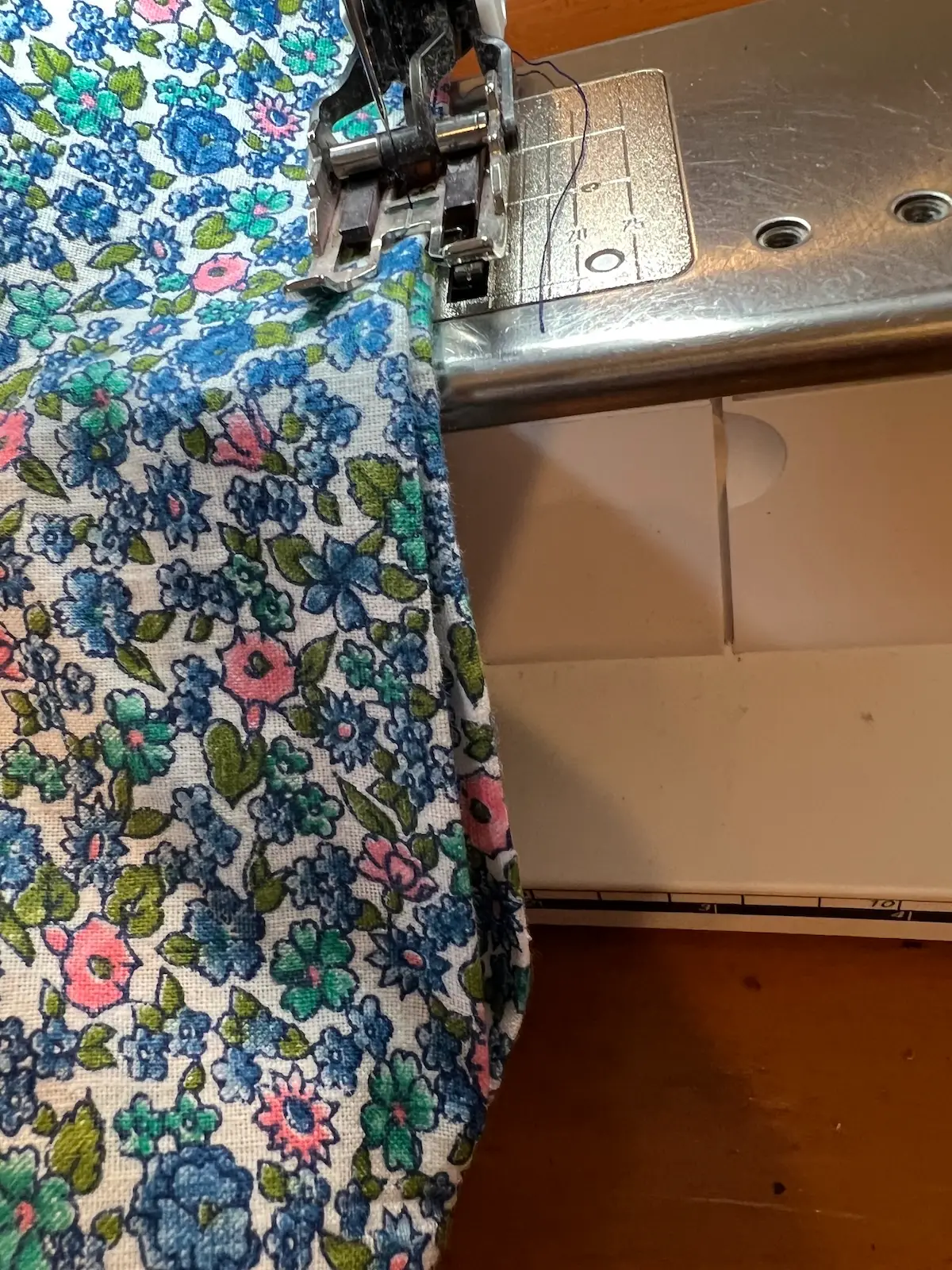
Step 20: Finish the top edge
Press the top edge of your bag, Then topstitch around the top edge of your bag to finish! And here is the finished bag. the finished size is 12" x 12" x 6".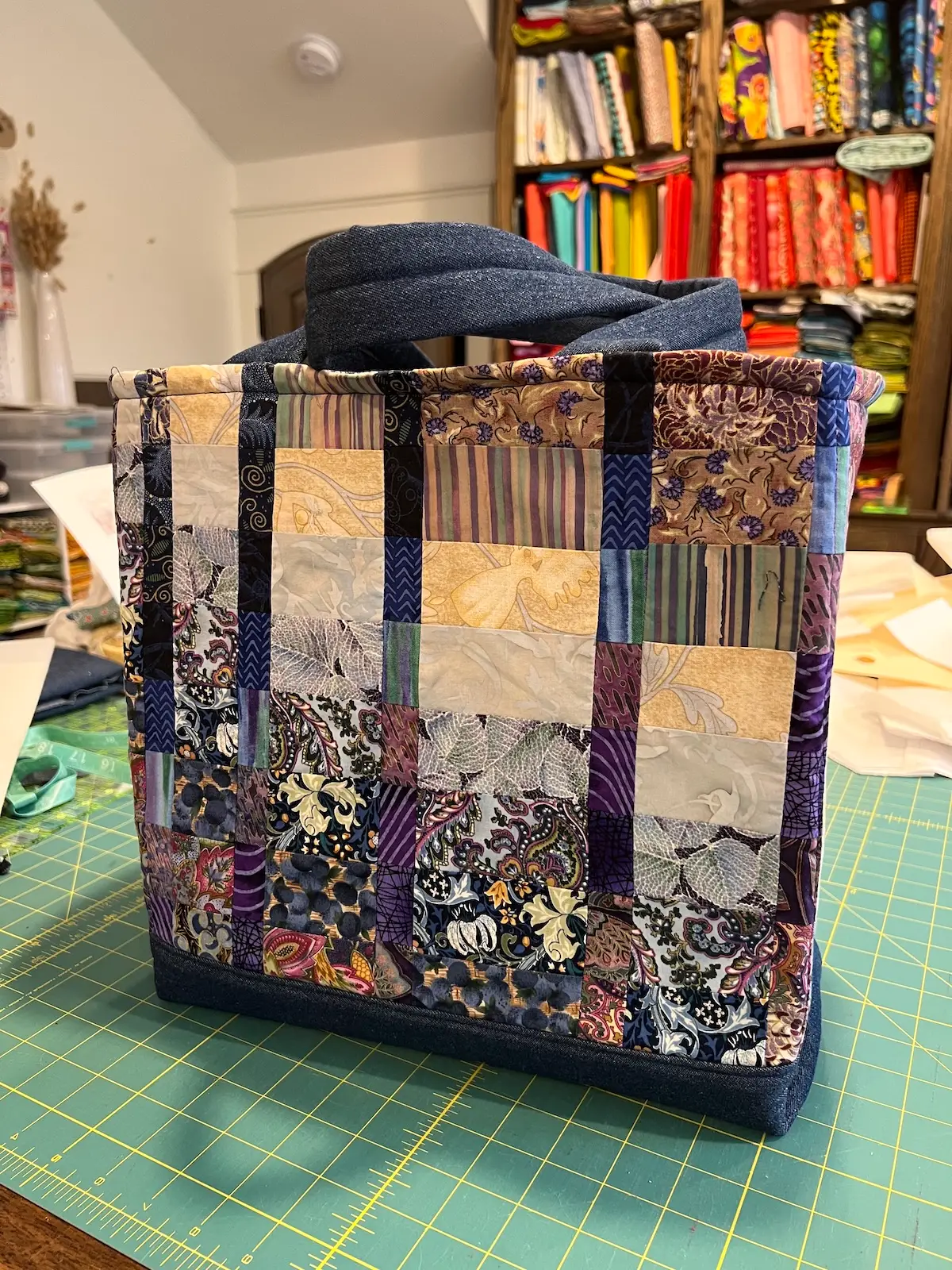
Recommended Products
As an Amazon Associate and member of other affiliate programs, I earn from qualifying purchases.

Here is a quick video that show you one way to make boxed bottoms for tote bags:
Here is a quick video that shows you how to make the fabric handles for the tote bag:
Common mistakes when making a patchwork tote bag
Cutting the patchwork before checking the size
Measure twice before cutting into an unfinished quilt top or vintage quilt. Once you’ve cut it, you can’t put those pieces back!
Forgetting to check the direction of the patchwork
If your fabric has a directional design, decide which way you want it to face before attaching it to the stabilizer.
Using pins with thick foam stabilizer
Pins can be awkward through multiple layers of foam and fabric. Wonder Clips are much easier to use.
Skipping the walking foot
You can make the bag without a walking foot, but it can help prevent the layers from shifting as you sew.
Making the boxed-bottom marks inaccurately
The marked stitching lines determine the finished shape of the bag. Measure carefully and mark both sides before stitching.
Twisting the handles
Before sewing the lining to the outer bag, lay the handles flat and make sure they aren’t twisted.
Forgetting the turning opening
Leave an opening in the lining side seam. You’ll need it to turn the entire bag right side out.
Making the bag without checking the thickness
If your patchwork is heavily quilted or your stabilizer is particularly thick, the seams can become bulky. Use a longer stitch length where appropriate and sew slowly through the thickest areas.
Ways to Customize Your Patchwork Tote
This basic tote is really just a starting point.
Add more pockets
The simple slip pocket is only one option. Add divided pockets for your phone and keys, a zipper pocket for valuables or an exterior patch pocket.
Change the handles
Make the fabric handles longer for a shoulder bag, or substitute webbing or purchased handles.
You can also make leather handles, including leather handles attached with rivets for a more finished look.
RELATED: How to make a leather handle
Add a leather, cork or Kraft-Tex bottom
Leather, cork and Kraft-Tex can give the tote a completely different look and add durability to the bottom.
When using a material that doesn’t ravel, you can also use it as a top-edge finish.
RELATED: All about working with Kraft-Tex
Quilt the patchwork first
You don’t have to use an already-quilted piece. Make your patchwork, add your batting and backing, and quilt it before cutting the tote panels.
Try straight-line quilting, crosshatching or big-stitch hand quilting.
Rescue an orphan quilt block
Have a quilt block that never found its way into a quilt?
Turn it into the focal point of your tote.
You can combine several orphan blocks, surround one special block with coordinating fabric or make a small patchwork panel from scraps.
Make a flat tote
Want a simpler version?
Skip the boxed-bottom folds and sew the side seams straight for a flat tote.
Why This Is Such a Good Project for Unfinished Quilt Tops
I love this project because it gives those almost-finished projects another chance.
Maybe you made a Bargello quilt top and decided you didn’t need another full-size quilt. Maybe you have a stack of orphan blocks. Maybe there’s a vintage quilt that is too damaged to use as a quilt but has beautiful sections that deserve to be seen.
Cutting into a quilt can feel a little scary.
But sometimes the best thing you can do with an unfinished project is give it a new job.
A tote bag lets you see and use that patchwork every day.
Tips for making quilted tote:
Use stabilizers meant for bag making; they really help give the bag body, keeping it lightweight.
If you have a walking foot for your sewing machine, it helps keep all of the layers together so they don’t shift while sewing.
Pins are hard to use with the thick stabilizer. WonderClips make it much easier.
If you’d like, you can quilt your fabric or patchwork to your stabilizer before assembling your bag. Some great quilting ideas are to straight-line, crosshatch, or do some big stitch hand quilting.
Have fun with handles! You can use quilted fabric scraps, webbing now comes in a variety of modern designs and colors, make your own leather-wrapped handle, or purchase a preconstructed handle.
RELATED: How to make a leather wrapped handle
Add leather handles with rivets, for a no-sew handle!
RELATED: How to add leather handles with rivets
Pockets!! I made a simple slip pocket, but you can add zipper pockets, divided pockets, add a patch pocket to the outside of your tote and more!
Add a D-ring with a clip to the inside of your bag for your keys. No more fishing for your keys at the bottom of your bag!
To make a flat tote, just sew the side seams straight (don’t make the fold). Easy, peasy!
Add bag feet to the bottom of your bag before stitching the sides so that the bottom of your bag is more likely to stay clean.
Now is the time to go through your orphan blocks or unfinished quilt tops and have fun cutting them up and making something cute! It’s okay to cut them up! They were just sitting at the bottom of a drawer or closet!
Ideas and inspiration for making a patchwork bag:
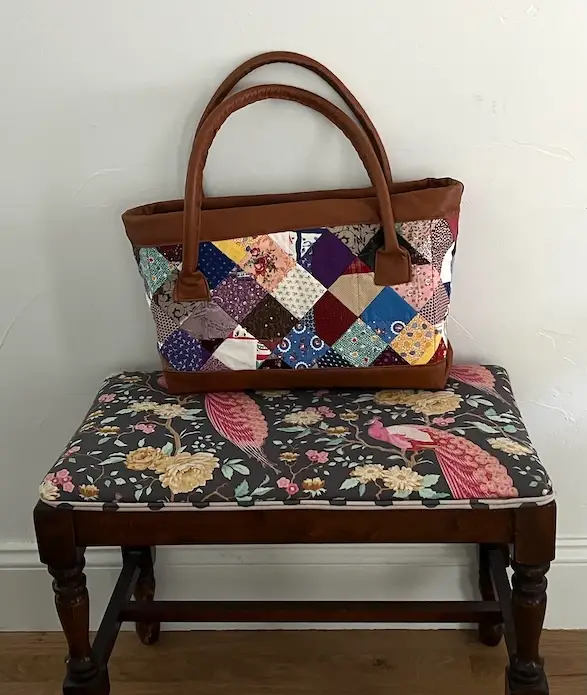
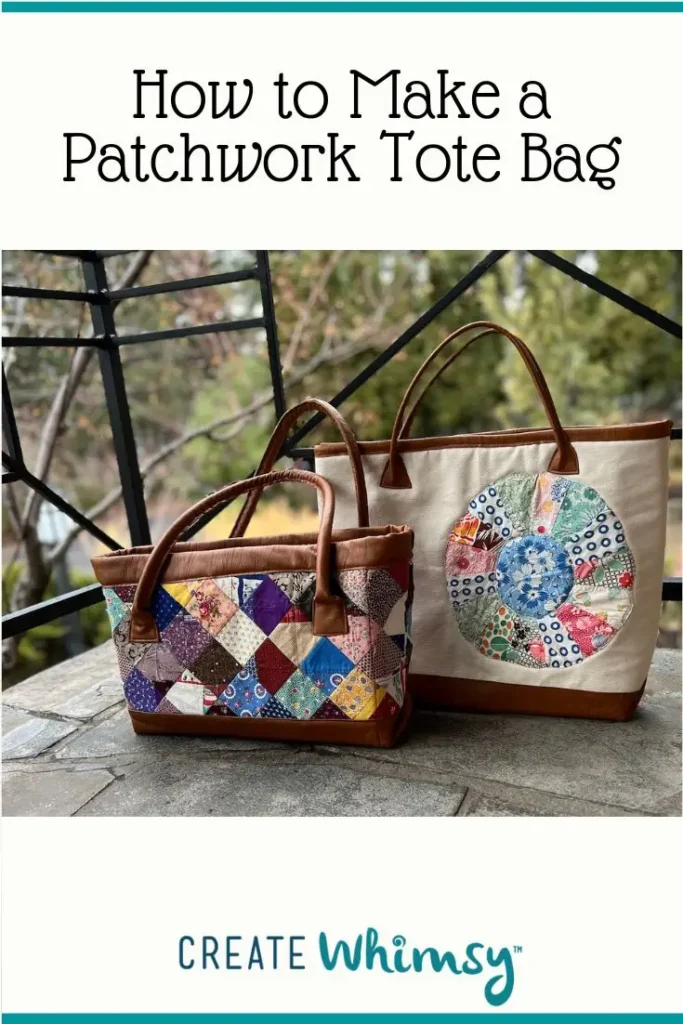
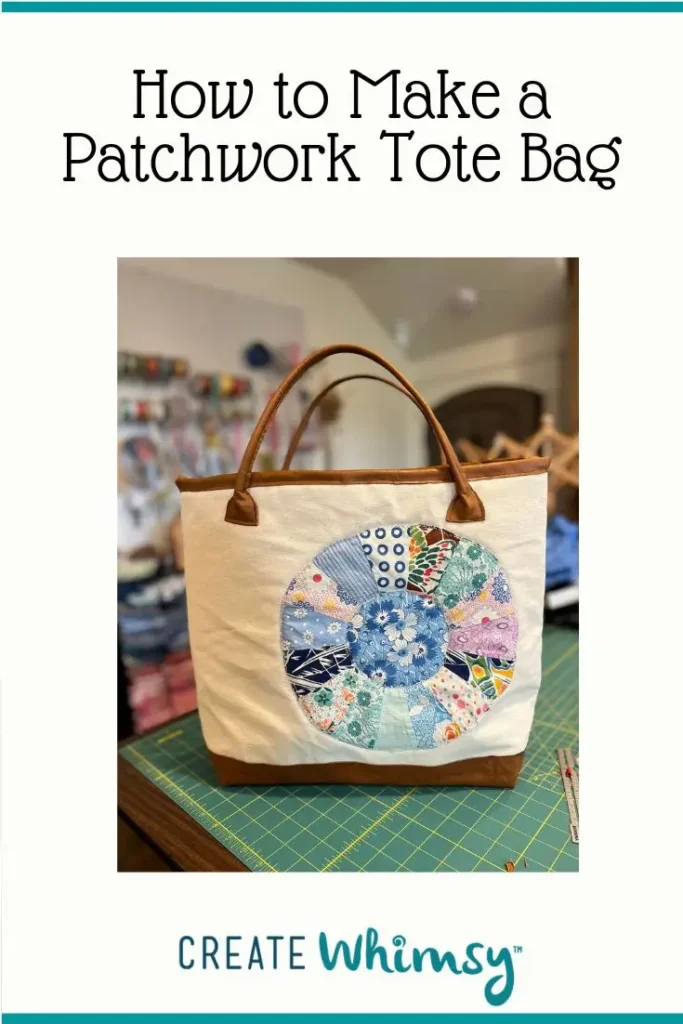
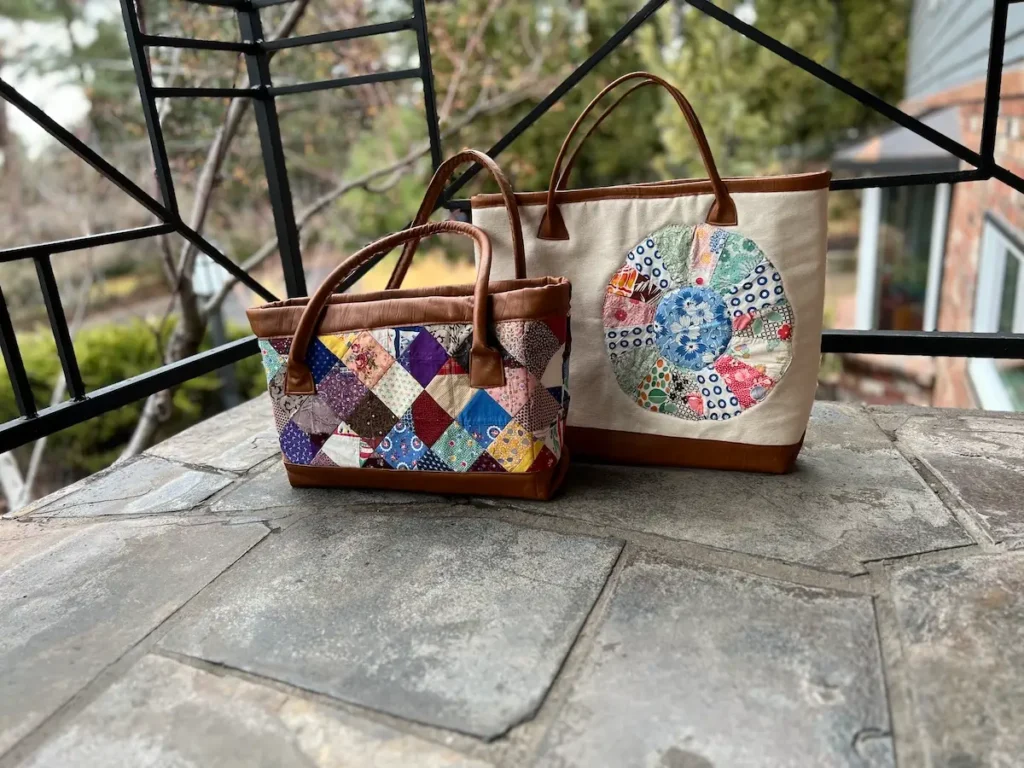
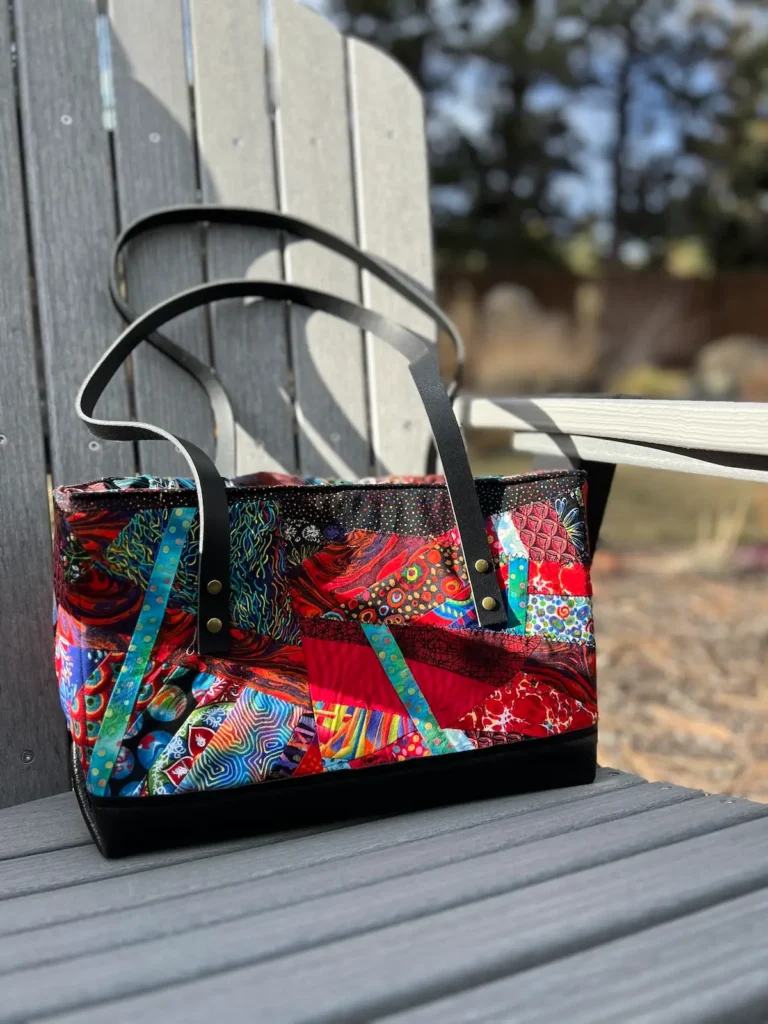
With the bag above, I took scraps from vintage quilts and used the Quiltsmart Pix Smart Grid 2-1/2″ On Point to make the patchwork. Then, I used a 2 oz leather for the bottom, handles, and to finish around the top edge.
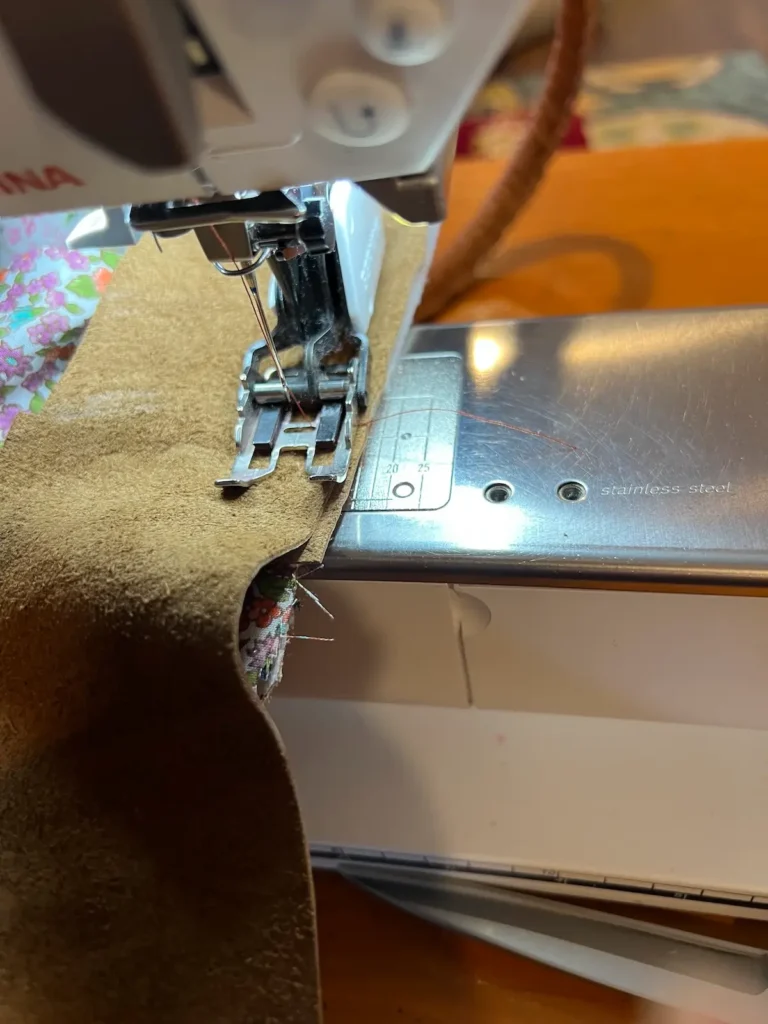
When finishing the top edge with leather, Ultrasuede, Kraft-Tex or Cork, sew right sides together from the INSIDE. Fold the leather around to the front and topstitch the edge. The raw edges of these materials don’t fray or ravel.
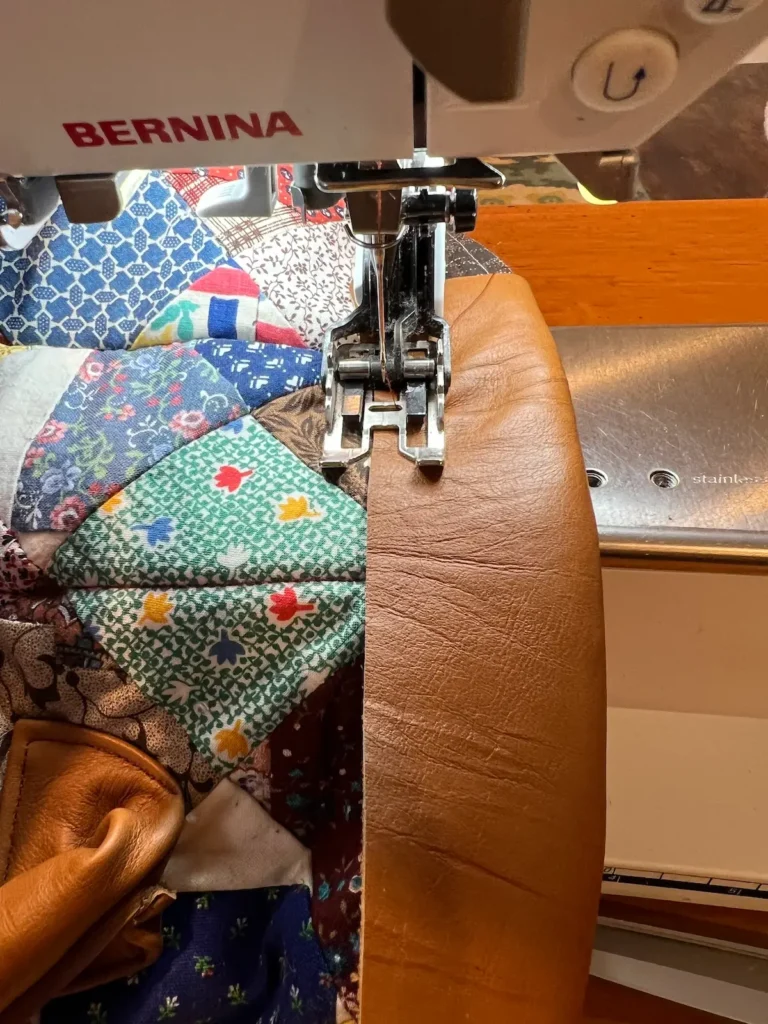
OPTION: Make a fabric top edge finish by cutting a piece of fabric twice the size as needed. Press in half. Line up the raw edges to the INSIDE of the bag and stitch. Bring the folded edge to the right side of the bag and topstitch in place.
RELATED: How to Make Leather-Wrapped Robe Handles
RELATED: How to Attach Leather Handles with Rivets
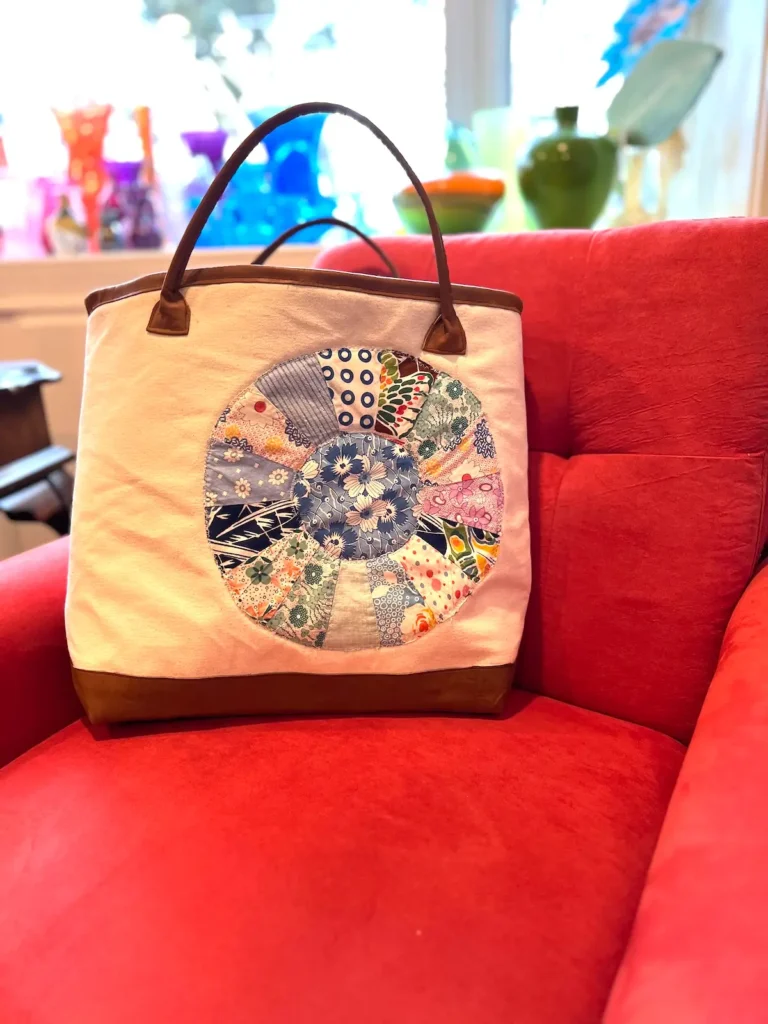
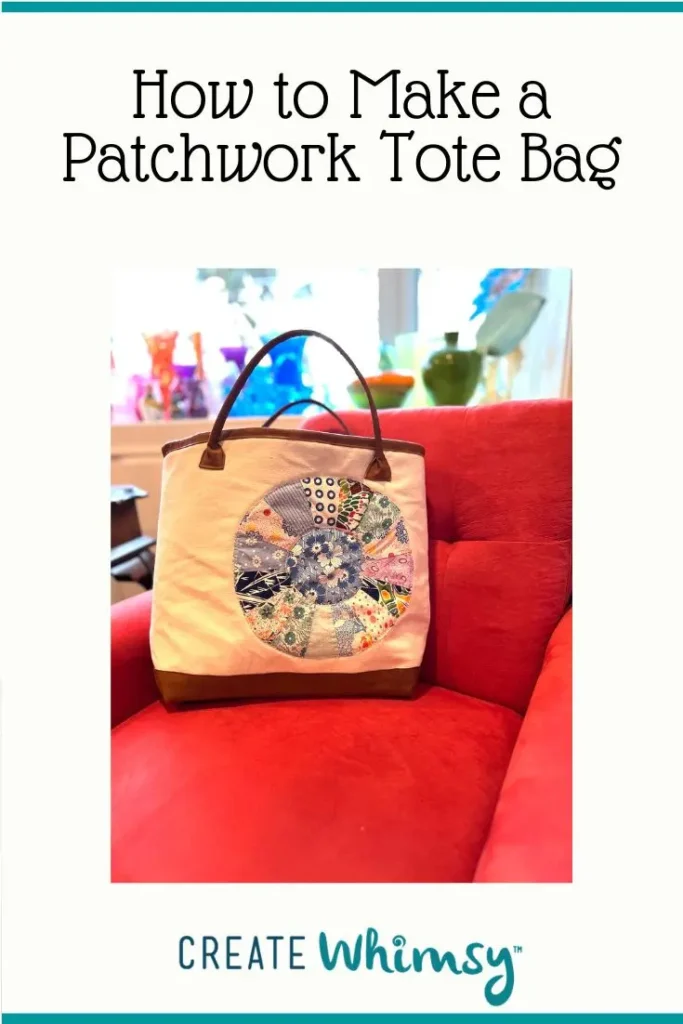
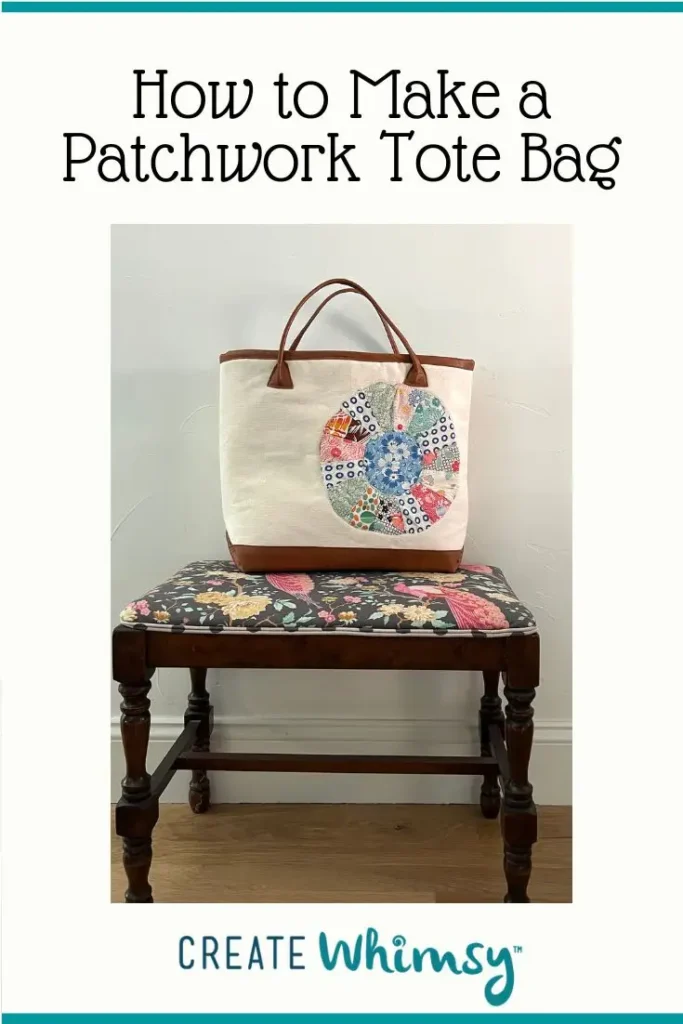
For the bag above, I appliquéd an orphan vintage Dresden plate quilt block to canvas. I used leather for the bottom, top trim, and handles. With this bag, I used a clothesline as the core for the handle.
Frequently asked questions
Yes. An unfinished quilt top is one of the best materials for this project. Quilt or stabilize the piece as needed before cutting your two 12″ x 20″ panels.
The finished tote is approximately 12″ wide x 12″ high x 6″ deep.
Quilting cotton works well when it is quilted or paired with a suitable stabilizer. You can also use canvas, lightweight upholstery fabric, vintage quilt pieces or other sturdy fabrics.
A foam bag stabilizer such as Soft and Stable works well for this design because it gives the bag structure without making it extremely heavy.
No, but it is helpful. A walking foot can make it easier to sew through the patchwork, foam stabilizer and other layers without shifting.
Absolutely. Add pockets to the lining before assembling the bag. You can make a simple slip pocket, a divided pocket, or a zipper pocket.
And you can add pockets to the outside of the bag, too. Again, add the pockets while the outside pieces are flat.
Yes, but changing the size will require adjusting the dimensions of the patchwork panels, bottom, stabilizer, lining and handle pieces. If you want a completely custom bag with specific pockets and dimensions, start by deciding the finished width, height and depth.
Yes. Leather handles are a great way to change the look of the tote. You can sew them on or use rivets for a no-sew handle attachment.
Yes. If you prefer a flat tote, skip the boxed-bottom folds and sew the side seams straight.
You can make this tote with a single fabric, canvas, a vintage quilt, a finished quilted piece or fabric decorated with appliqué, embroidery or other surface design.
More Bag Projects to Sew
If you enjoyed making this patchwork tote, keep sewing!
For a simpler tote, try our basic tote bag tutorial. If you’re ready to play with different shapes and handles, explore the Japanese knot bag or our other handmade bag projects.
And don’t overlook the little bags. A zipper pouch is a perfect companion for keeping small items organized inside your new tote.
EXPLORE all of our bag projects and inspiration
Final Thoughts
The next time you find an unfinished quilt top or a stack of orphan blocks in your sewing room, don’t automatically put them back in the drawer.
Turn them into something you can use.
A patchwork tote is a small enough project to finish without committing to another full-size quilt, and there are so many ways to make it your own. Change the pockets, handles, fabrics or bottom. Add leather. Try big-stitch quilting. Use a vintage quilt.
Most importantly, have fun cutting into those pieces and giving them a second life.
Explore more bag projects and inspiration on Create Whimsy.